
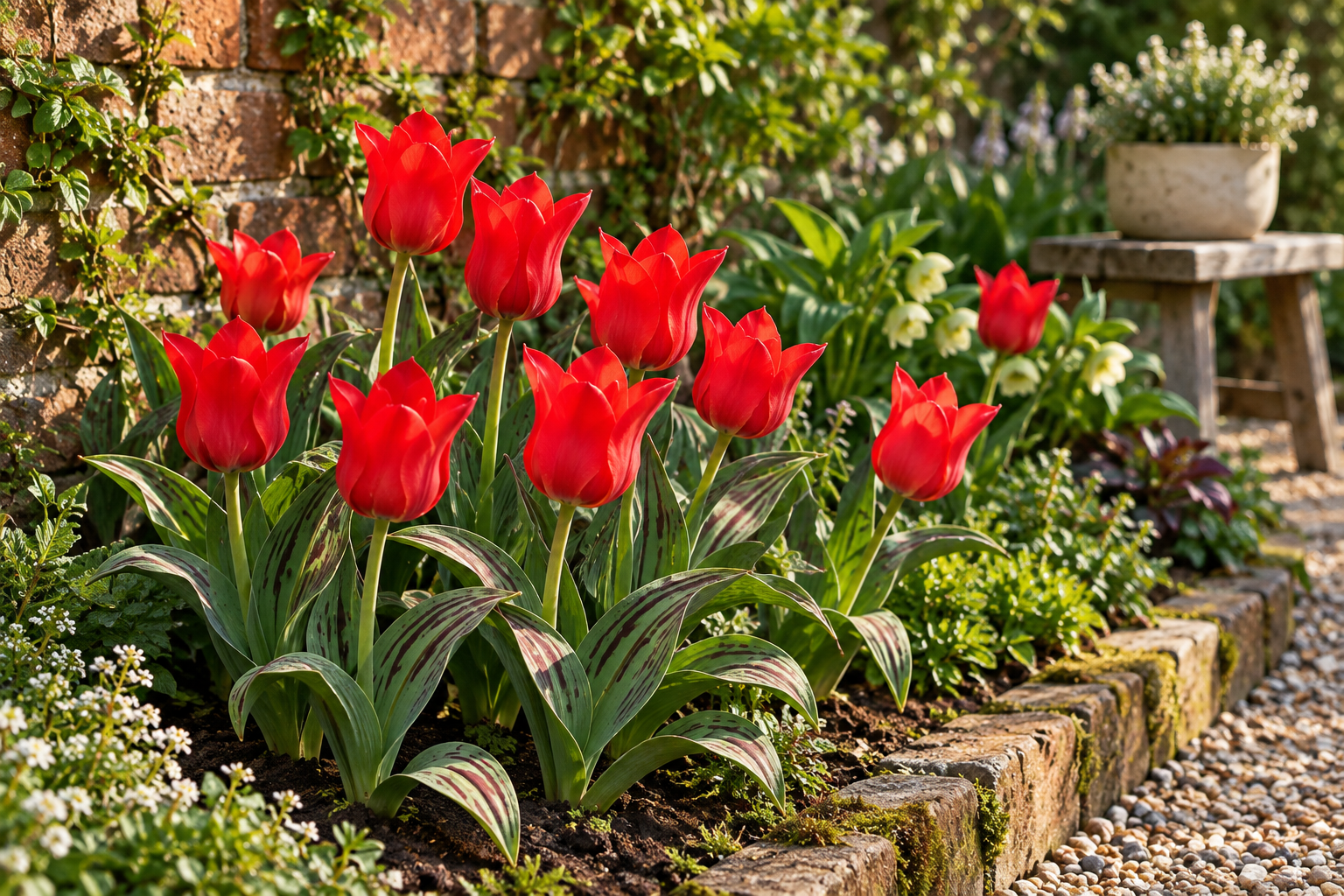
This plant at Exotenherz
Check the shop offer for current availability, price and what is included.
Product and delivery details are given in the individual offer.
Your care table
| Topic | What to do | Why it helps |
|---|---|---|
| Light | Choose a sunny sheltered position. | Strong wind can damage flowers. |
| Soil | Prepare nutrient-containing free-draining soil. | Consider winter wet especially. |
| Timing | Plant in autumn into open ground. | Store cool, dry and airy until planting. |
| Depth | Roughly two to three bulb heights as guidance. | Consider packet instructions and soil too. |
| Spacing | Allow at least roughly two bulb widths. | Later foliage needs room. |
| Water | Supply during growth when soil is dry. | Check container drainage and moisture together. |
| Nutrients | Feed during growth according to the label for continued cultivation. | Do not respond to wet soil with extra fertiliser. |
| After flowering | Remove spent heads and preserve green foliage. | Accompany the annual cycle until natural dieback. |
For young plants, feel the soil directly at the root ball. The surface and deeper soil may have different moisture levels.
Water thoroughly after planting; later, water according to the soil, weather and establishment rather than a fixed calendar.
Avoid standing water. For plants in containers, also check that water runs out of the drainage hole.
Spring begins with the foliage
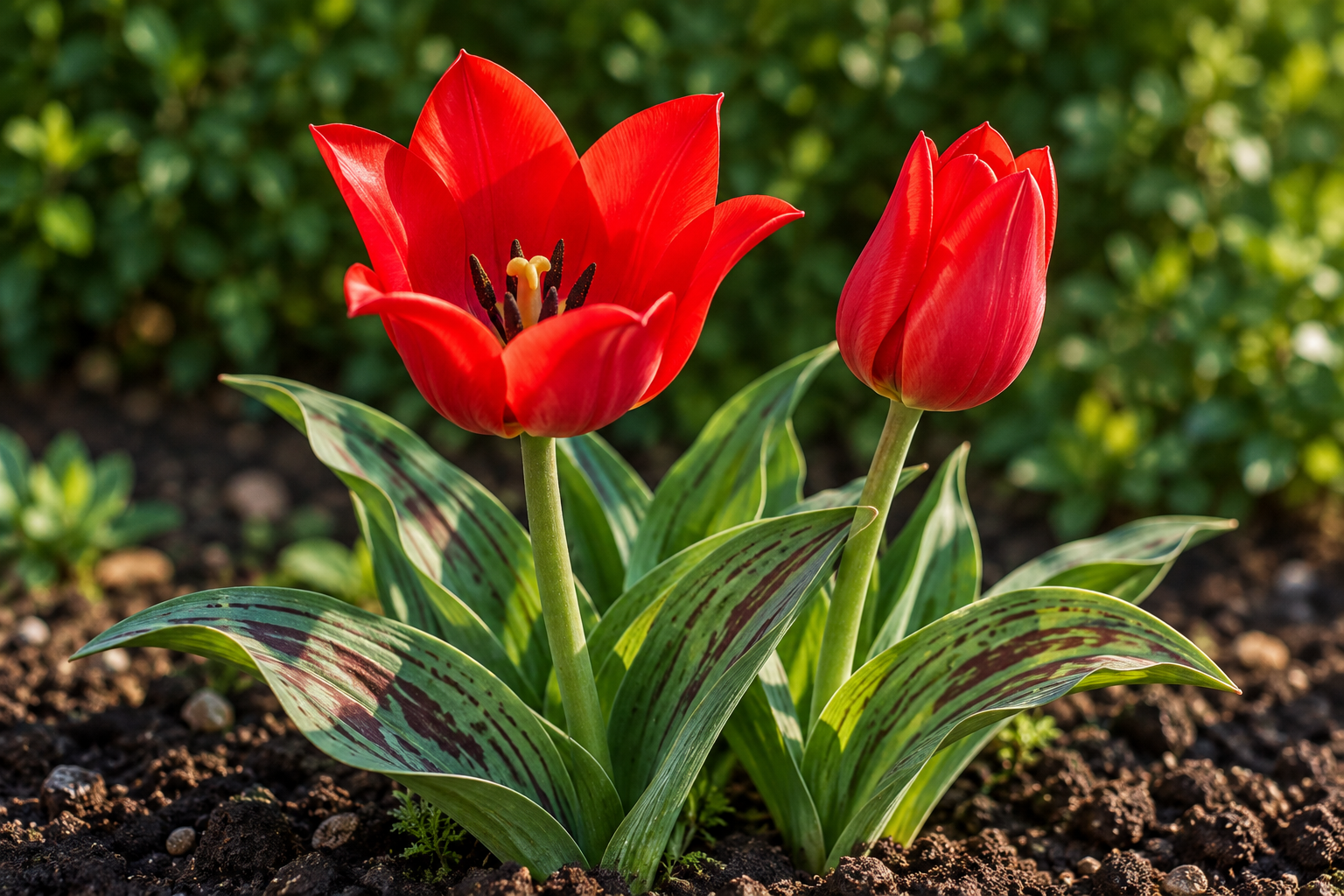
With Greigii tulips, flowers are not the only reason to look closely. Broad green leaves carry dark purple spots and stripes, making young growth interesting before the red flowers open. Single flowers stand above as upright cups. The shop calls this selection Greigii Red; we do not assume a more precise cultivar assignment. Its clear colour contrast looks especially attractive against a quiet wall or at a bright bed edge where patterned foliage stays visible.
Fifteen bulbs for a piece of spring
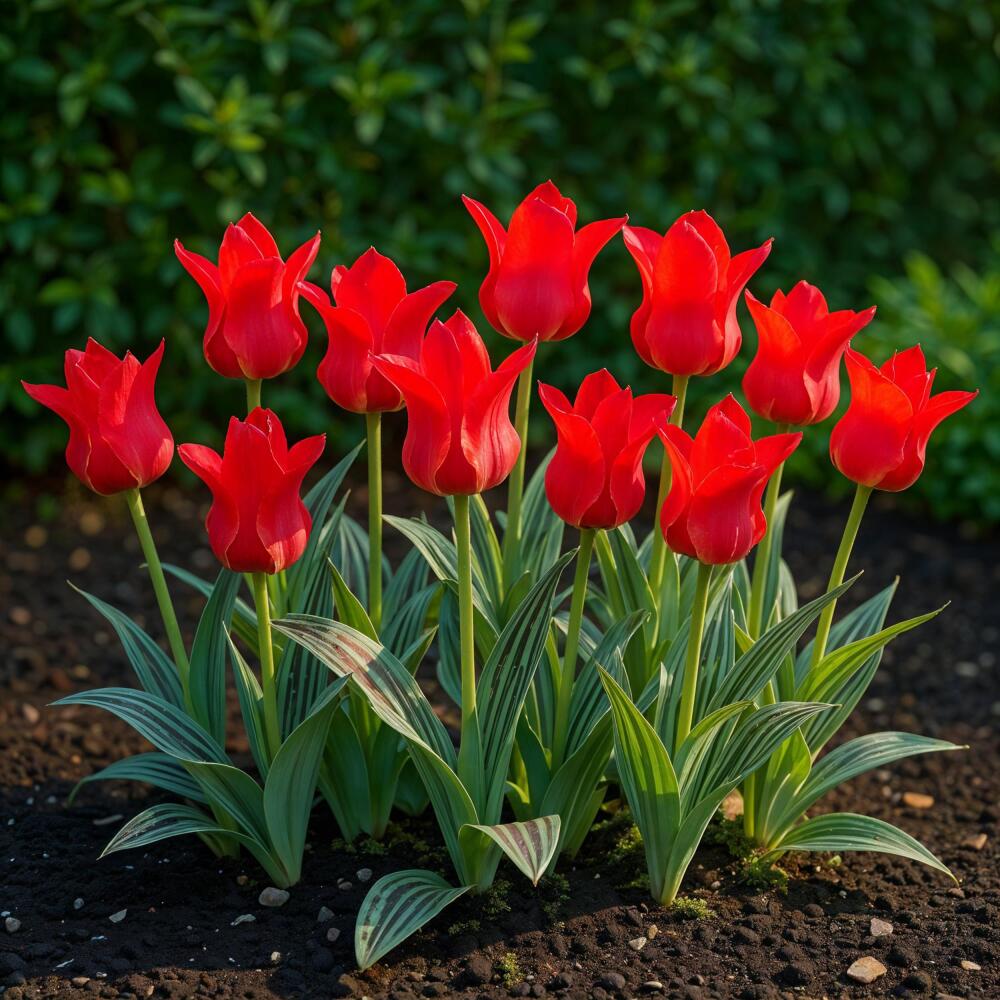
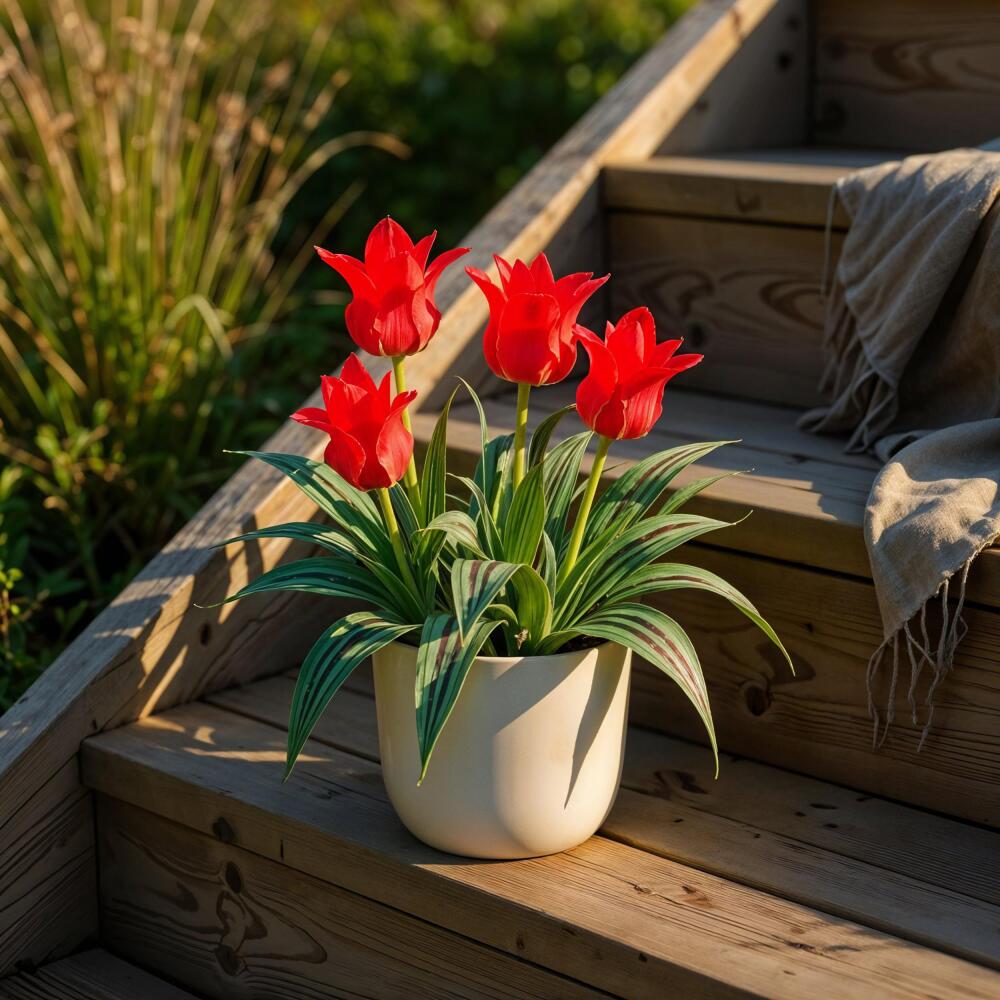
The offer contains fifteen bulbs for planting. Images show their possible later flowering effect, not already flowering delivered plants. Container and garden design are examples. The shop title’s commercial size grade is not bulb width measured by us. Before planting, think about the side from which you will see the group. Loose distribution beside a path makes leaves easy to see. On a terrace you can arrange several smaller groups instead of squeezing every bulb into one undersized pot.
A bright position that can dry in winter
A sunny position with good drainage suits the Greigii Group. Shelter protects flowers from strong wind. Consider the wet season when choosing the bed: an attractive spring area can retain water too long in winter. For a container, check holes and standing position together. Roots should be supplied during growth without becoming waterlogged. The RHS gives a broad height range for Greigii tulips; we do not turn it into an exact promise for every bulb of this trade selection.
Think of later growth in autumn
Plant bulbs in autumn into workable ground. Until then, store cool, dry and airy. Points face upwards during planting. General tulip guidance gives depth around two to three bulb heights and spacing at least roughly two bulb widths. The exact packet’s instructions also count. Make small groups in the bed rather than a rigid line. Mark the spot so later planting does not accidentally dig between bulbs.
Supply leaves and flowers together
As tulips emerge, check moisture at the root position. A dry spring or small sunny container can require additional water. An already wet root ball instead receives no precautionary second portion. To preserve planting for future years, suitable potassium-rich feed according to the label can help during growth. Remove spent flower heads; green leaves stay. Plan the later bed design so they need not be cut prematurely just because summer plants are moving in beside them.
Planting need not begin again each year
Greigii tulips belong to groups close to species. A well-chosen position offers the possibility of recurring planting; equally strong annual flowering is not promised. The RHS describes species tulips remaining in the ground for several years with suitable cultivation. After dieback, an overcrowded group can be lifted and divided through daughter bulbs. Check for slugs and conspicuous damage during emerging growth. Bulbs are not food; wear gloves for handling and store planting material apart from kitchen supplies.
A leaf pattern for your plant book
Record early growth and then the open flower. Purple leaf markings are a useful recognition feature even after the red flower cup has long faded. Note actual group height, the course of sunlight and moisture after rain. This provides a better foundation for the next planting than an assumed uniform measurement. Lower neighbours may suit the edge while the background stays quiet. The plant book can connect these observations over several springs.
One plant, several views
Good to know
What is delivered?
Fifteen bulbs for planting.
Is Greigii Red an exactly confirmed individual cultivar?
The shop uses this trade name. The portrait assigns it to the Greigii Group.
What is special about the leaves?
Green leaves carry dark purple to wine-red markings.
How tall does this selection grow?
The specialist source gives around 10–50 cm for Greigii tulips; exact selection and position determine actual growth.
When are bulbs planted?
In autumn while the soil is workable.
Must I cut foliage after flowering?
No. Leave green leaves until natural dieback.
Sources and editorial note
- Exotenherz: offer and original photographs (03.10.2026)
- RHS – Greigii tulips, leaf markings and cultivation (03.10.2026)
- RHS – planting tulips and supporting them after flowering (03.10.2026)
Shop offer, article number, GTIN, availability and original images checked directly on 02.10.2026; specialist acceptance 03.10.2026. Specialist sources read directly. Shop variant, quantity, SKU, current orderability and both original shop images checked directly. Specialist sources read on 03.10.2026. Images show later flowering, not the delivery state. Commercial size grades not adopted as measured bulb or tuber diameter. Specialist acceptance with published Pflanzenwelt portraits; no tool or Wawi changes.