
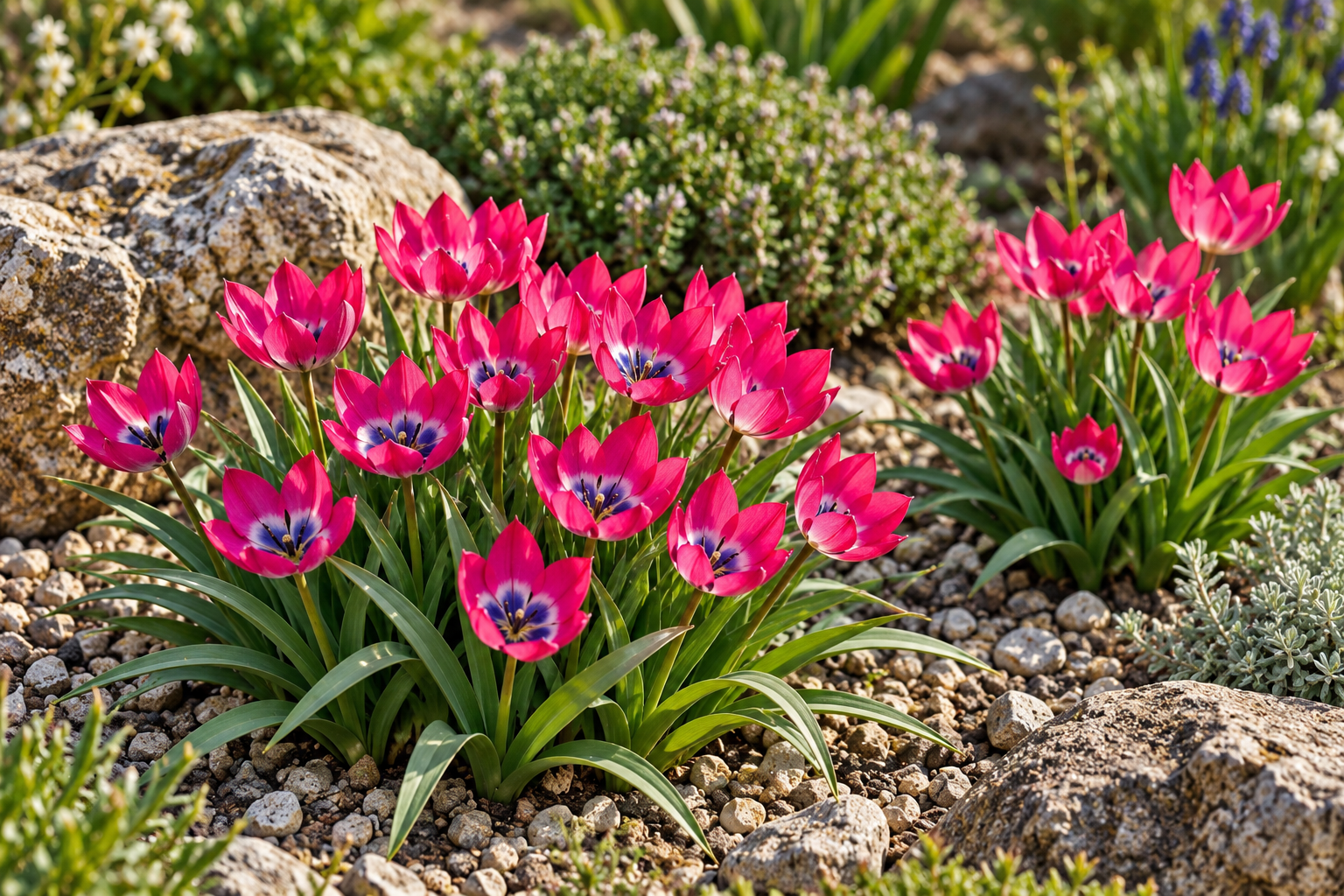
This plant at Exotenherz
Check the shop offer for current availability, price and what is included.
Product and delivery details are given in the individual offer.
Your care table
| Topic | What to do | Why it helps |
|---|---|---|
| Light | Choose a sunny sheltered place. | Neighbouring foliage should not cover the low plant early. |
| Soil | Prepare free-draining soil. | Winter wet is not a good dormant condition. |
| Planting | Plant in autumn with points upwards. | Mark the position during dormancy. |
| Depth | Consider roughly 10–15 cm and the packet. | Actual bulb size contributes to the decision. |
| Spacing | At least two bulb widths as guidance. | Plan bed groups and temporary bowls differently. |
| Water | Check during drought in the leaf phase. | A small bowl dries faster than a bed. |
| After flowering | Preserve foliage until natural yellowing. | The bulb remains active during this time. |
| Dormancy | Avoid a permanently wet container. | Reassess care after dieback. |
For young plants, feel the soil directly at the root ball. The surface and deeper soil may have different moisture levels.
Water thoroughly after planting; later, water according to the soil, weather and establishment rather than a fixed calendar.
Avoid standing water. For plants in containers, also check that water runs out of the drainage hole.
A tulip worth a second look
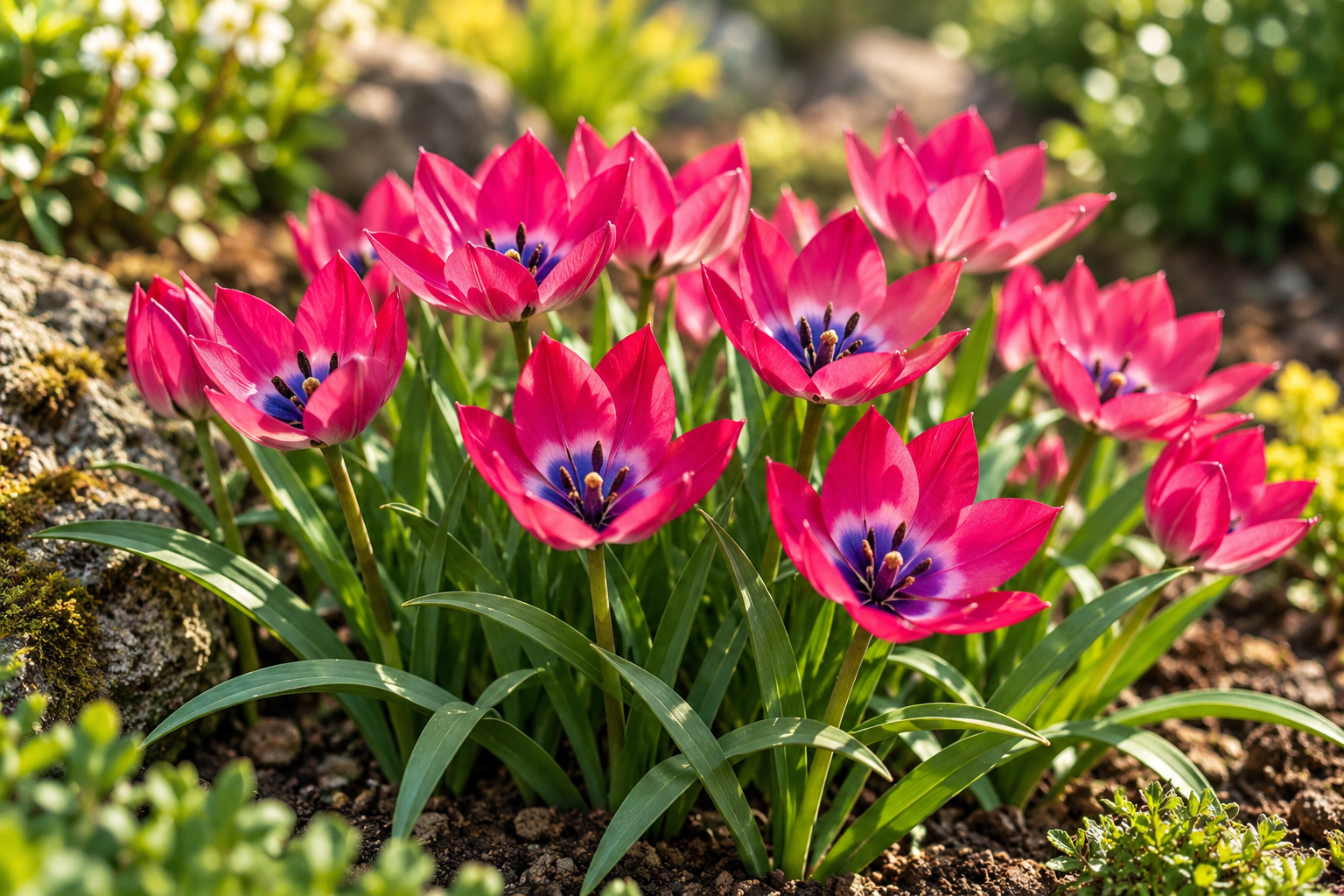
Little Beauty looks small, but its open flower has astonishing colour depth. On the outside, six petals shine carmine red to strong pink. Towards the centre are a pale transition zone and dark violet. Stamens stand above. At roughly twelve centimetres flowering height, colour sits close to the ground. A low stone edge or open place in a sunny gravel garden keeps the plant visible. It looks best where you can examine the flower close up without stepping between other plants.
Twenty-five bulbs can be distributed in groups
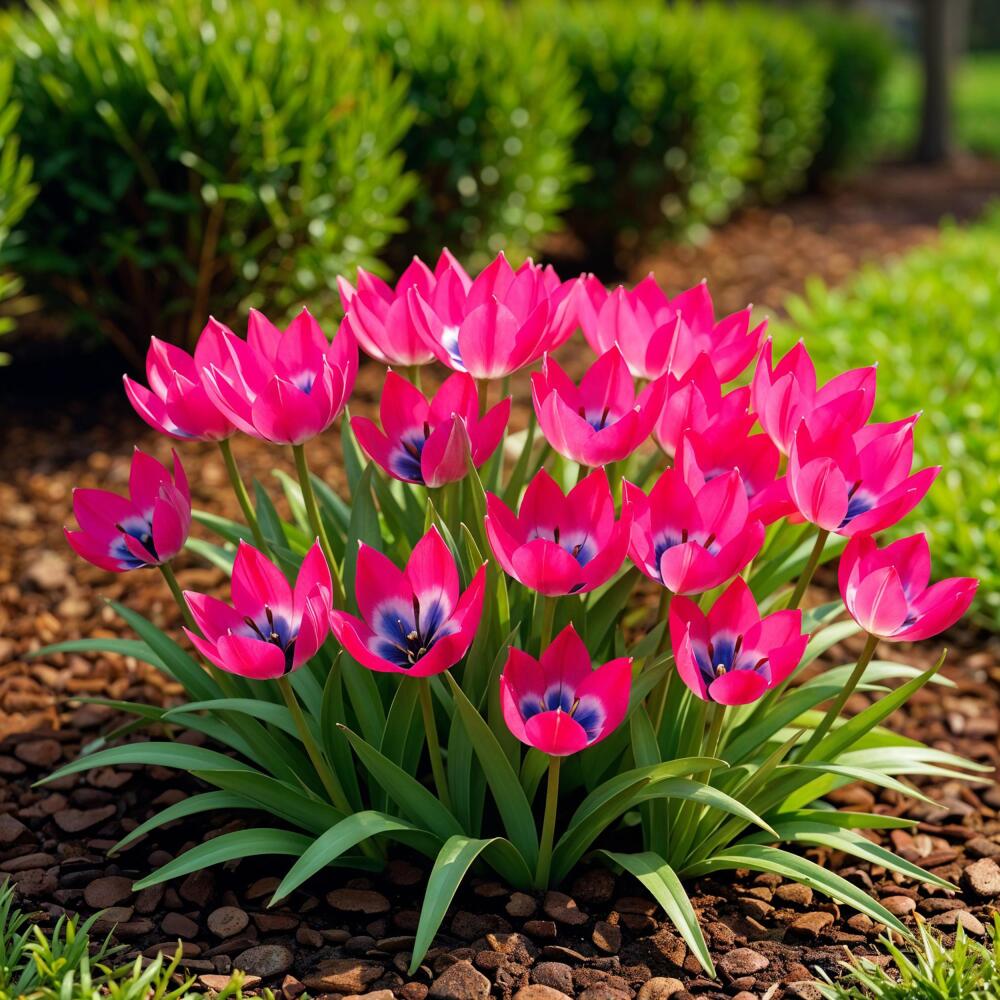
The shop lists 25 bulbs for planting. The scene shows later-grown flowering plants, not delivery height or an already planted container. Distribute the quantity over several small places beside a path, for example. This reveals flowers from different viewing angles. Allow at least two actual bulb widths between bulbs as initial guidance. A more densely planted bowl serves a different design purpose from a permanent bed group. In both cases, plan enough root space and room for leaves after flowering.
The sunny position should remain sunny in spring
This small tulip suits a sheltered sunny place with free-draining soil. Ensure tall neighbours do not cover emerging shoots too early. In a rock garden, a large stone can shade the small plant at the wrong time of day. Check the course of light at the actual position. Heavy wet soil needs improved drainage. Free holes and suitable substrate matter in a container. An attractive cover without drainage does not replace them, even for a small spring group.
Autumn planting without false size conversion
Plant in autumn into open ground. The cultivar profile gives roughly ten to fifteen centimetres depth. Packet instructions, actual bulb and soil conditions help the exact decision. Set the point upwards and close soil carefully. A commercial size grade must not be understood as a measured bulb or tuber diameter. Water lightly after planting if soil is dry. Mark the spot discreetly so it is not accidentally dug up in summer. The faded plant later disappears above ground while its bulb can remain in the soil.
Small leaves fulfil an important task
During emerging growth and green leaf phase, care follows actual soil moisture. Spring rain may suffice in a bed; a windy container dries considerably faster. Supplement nutrients only according to existing reserves and the fertiliser label. Leaves may keep taking in light after flowering and yellow naturally. Do not cut them prematurely for tidiness. Spent flowers can be removed if seed production is unwanted. This care is calmer than constantly moving planting positions but supports the bulb during its active time.
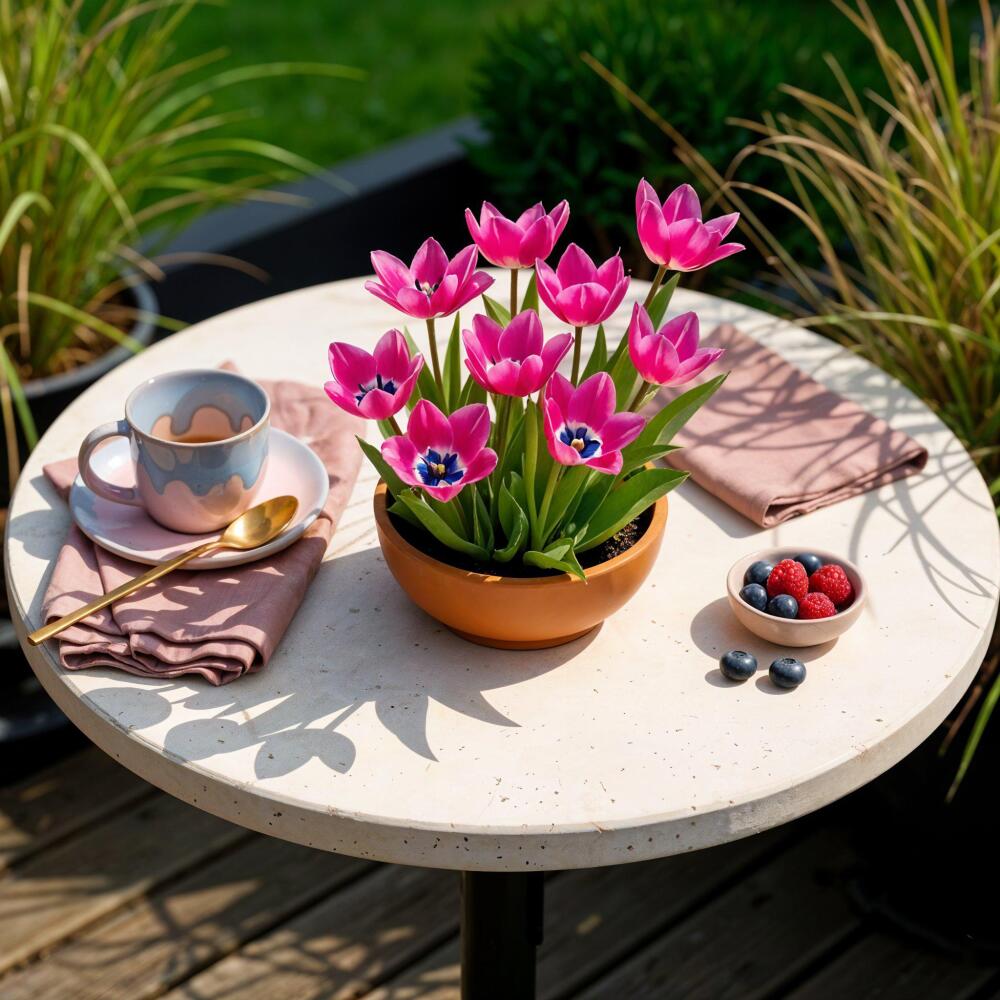
A bowl also needs a summer plan
A low planted bowl can bring flowers closer to your view. Choose sufficient depth for substrate, bulbs and roots. After foliage dies back, adjust water to dormancy; permanently wet compost is unfavourable. Position the container so it is not forgotten while avoiding continual irrigation spilling in from other planting. Tulips are ornamental plants, not food. Wear gloves when handling bulbs. This applies even when the cultivar looks delicate and harmlessly decorative.
Record your own spring rhythm
Little Beauty is a perennial bulb plant. Whether it flowers reliably again in your position nevertheless depends on cultivation, light and the preceding leaf phase. Small botanical tulips can develop and multiply under suitable conditions; a fixed result every subsequent year does not follow. Record flowering time and actual height in the plant book. A photograph of the open centre is especially helpful because closed flowers conceal the colour zones. Over the years this creates a personal picture of the small spring plant.
One plant, several views
Good to know
How tall is Little Beauty?
Around 12 cm at flowering. Bulbs are delivered, not twelve-centimetre-tall plants.
How many bulbs belong to the offer?
25.
What is the cultivar’s botanical name?
The RHS lists Tulipa humilis Little Beauty.
Why does the open flower look different?
The dark centre and pale transition zone become clearly visible only when open.
Can the small tulip grow in a bowl?
Yes, with enough root space and good drainage.
Should I cut green foliage after flowering?
No. Let it yellow naturally first.
Sources and editorial note
- Exotenherz: offer and original photographs (03.10.2026)
- RHS – Tulipa humilis Little Beauty (03.10.2026)
- RHS – planting and supporting tulips (03.10.2026)
Shop offer, article number, GTIN, availability and original images checked directly on 02.10.2026; specialist acceptance 03.10.2026. Specialist sources read directly. Shop variant, quantity, SKU, current orderability and both original shop images checked directly. Specialist sources read on 03.10.2026. Images show later flowering, not the delivery state. Commercial size grades not adopted as measured bulb or tuber diameter. Specialist acceptance with published Pflanzenwelt portraits; no tool or Wawi changes.