
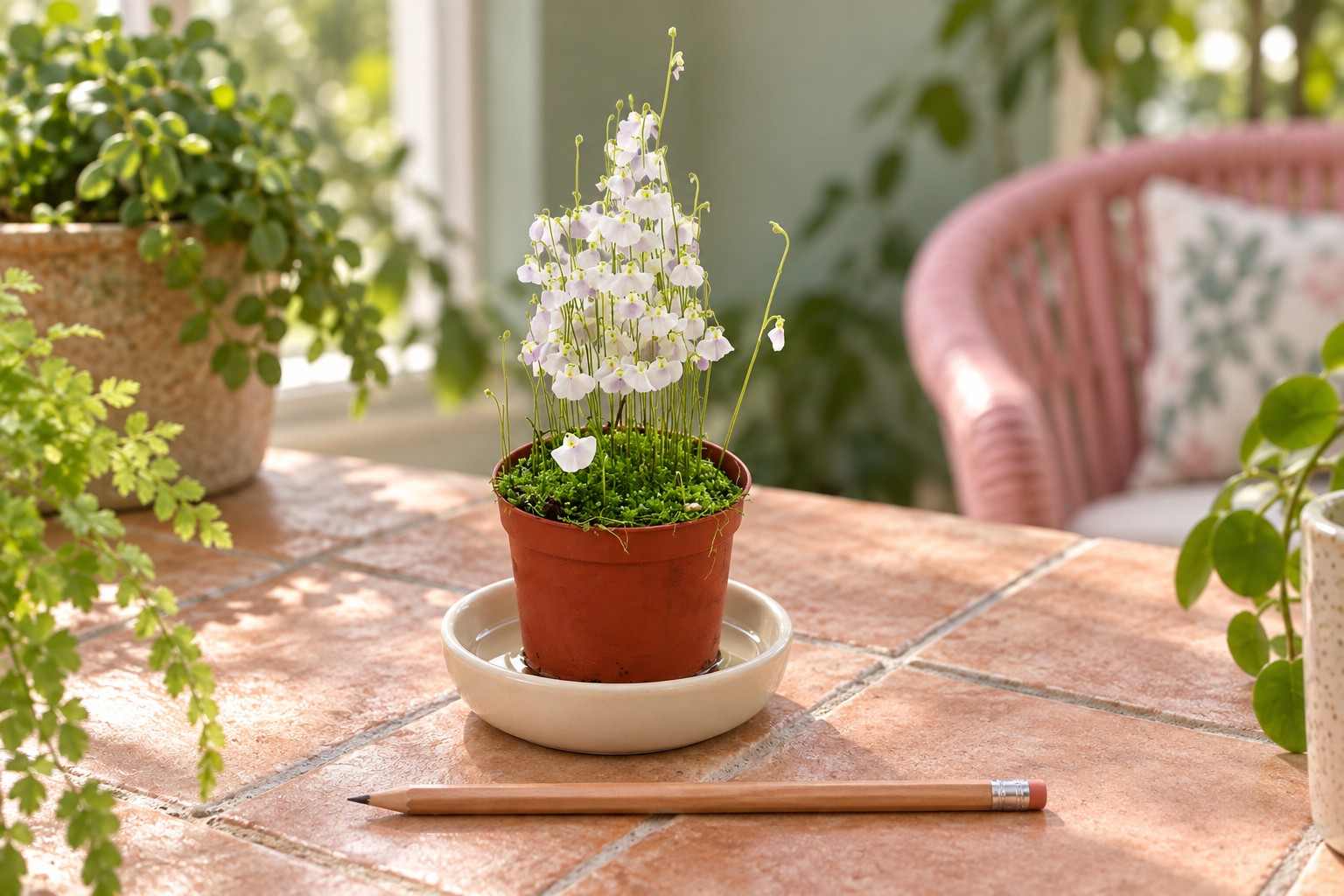
This plant at Exotenherz
Check the shop offer for current availability, price and what is included.
Check the shop for the price, current availability and what is included.
Your care table
| Topic | What to do | Why it helps |
|---|---|---|
| Light | Bright; introduce stronger sun slowly. | Good brightness supports flowers and dense growth. |
| Water | Use only clean low-mineral water. | Salts are unsuited to the low-nutrient habitat. |
| Water tray | Keep a little water in a shallow dish during growth. | The fine clump must not dry out. |
| Winter | Less reserve in cooler conditions, still moist. | Reduced consumption calls for adapted amounts. |
| Frost | Keep the small potted plant frost-free. | Brief cold tolerance is no winter guarantee. |
| Growing medium | Use suitable unfertilised carnivorous-plant mix. | Ordinary potting compost generally contains too many nutrients. |
| Propagation | Gently move healthy connected pieces. | Fine runners need contact and moisture. |
| Feed | Do not supply ordinary plant fertiliser. | Specialised cultivation needs no heavy salt additions. |
Use clean rainwater or suitable distilled water. An ordinary jug filter does not reliably remove dissolved salts.
Put a little water in the saucer. The base of the pot stands in water; the compost surface and centre of the plant remain well above it.
Keep the root ball moist and the saucer clean. Light, temperature and the species-specific winter care in the table determine its needs.
The striking flowers are not the traps
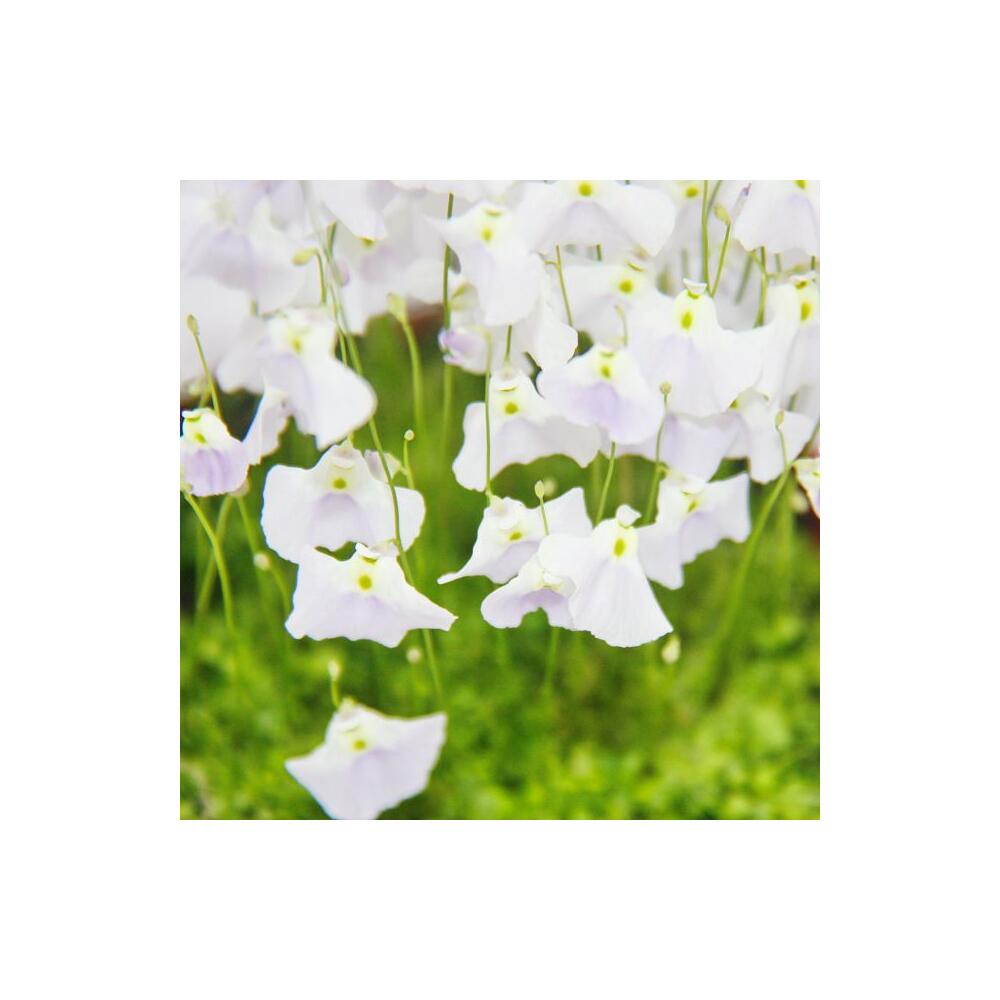
Small white to pale-violet flowers stand on thin stems above the green clump. Their delicate form may recall miniature flowers of other ornamentals, but Utricularia livida belongs to the Lentibulariaceae. Trap bladders sit on underground organs and catch tiny organisms in the wet habitat. Speaking of ordinary roots with attached traps would be botanically misleading. Utricularia has an unusual plant body with runners and specialised organs. Flowers serve reproduction rather than insect capture.
A small pot with a growing carpet
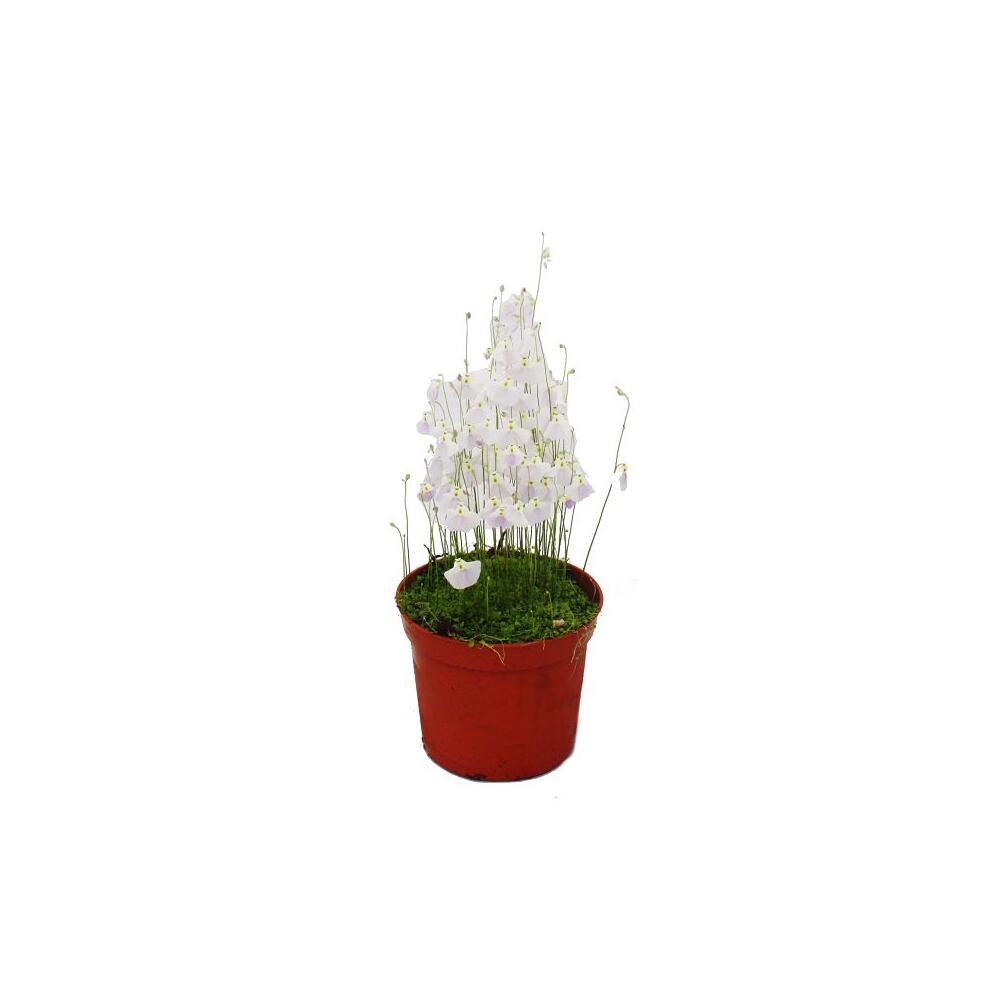
The shop states a 9 cm pot but no fixed delivery height or guaranteed flowering condition. Our scene shows a flowering example in this pot size. Without flowers the plant appears much lower. The green clump may gradually spread across the surface. Place it so small flowers can be viewed closely. In a shared carnivorous-plant bowl it may grow into neighbouring areas. A separate pot is clearer for a distinctly separated collection.
Bright light and a frost-free position
A bright position with good daylight supply promotes healthy growth and flowers. Introduce stronger sun slowly and avoid overheating behind glass. Cultivation can continue year-round indoors or in a frost-free greenhouse. A warm bright growth period helps; enforced cold winter dormancy is not needed. Consumption falls in cooler lower-light winter conditions. Even if some clumps tolerate brief cold, the small delivered root ball is not treated as a reliably frost-hardy outdoor plant.
Shallow water supports the moist habitat
During growth, place the pot in a shallow dish with a little water. The bottom may stand in water, but the surface need not stay deeply flooded. Use clean rainwater, suitable reverse-osmosis water or distilled water without additives. An ordinary table filter does not reliably remove dissolved mineral salts. Check water levels regularly so the fine clump never dries completely. In cool winter cultivation, reduce the reserve while keeping the medium moist. Keep dish and surroundings clean without introducing cleaning products into the plant area.
Low-nutrient medium rather than ordinary compost
A suitable unfertilised carnivorous-plant mix is the right foundation. Ordinary pre-fertilised potting compost and fertiliser sticks are unsuitable. Tiny traps supply themselves within the moist microhabitat; they need no manually inserted meat pieces or large insects. Small connected pieces from a densely grown healthy clump can be gently placed into fresh suitable medium. Do not fully expose fine underground runners or let them dry. A newly received plant can first establish before being distributed among several containers.
Observe small changes attentively
A healthy clump may continue growing without many flowers. Flower number and timing depend on light, temperature and individual cultivation. Carefully remove spent flower stems without pulling out the green carpet. If moss or algae heavily cover the plant, check water quality, nutrient input and light, gently limiting obstructive areas. Despite its name, this offered bladderwort is a terrestrial cultivated plant and should not simply be thrown free-floating into an aquarium. Its appeal combines delicate flowers with a hidden highly specialised trapping system.
One plant, several views
Good to know
Where are the traps hidden?
Tiny trapping bladders sit on underground organs in moist medium. Visible flowers are not traps.
Is Utricularia livida a floating aquatic plant?
This offer is a terrestrial bladderwort. It grows in moist medium, not floating freely in an aquarium.
Must I feed the plant?
Feeding meat or large insects makes no sense. Tiny traps use their moist microhabitat.
Is it always delivered with many flowers?
A fixed flowering condition is not guaranteed. The image shows a flowering example; without flowers a low green clump remains.
Sources and editorial note
- Product and delivery contents: Exotenherz
- Royal Horticultural Society: plant and care knowledge
- Royal Botanic Gardens, Kew: botanical classification
- Royal Botanic Gardens, Kew: plant knowledge
- Carnivorous Plant Nursery: cultivation knowledge
Sources checked: 15 September 2026. Product information and delivery contents follow the linked shop offer. Care has been checked against the stated specialist sources and remains subject to plant condition, position and season.