
This plant at Exotenherz
Check the shop offer for current availability, price and what is included.
Check the selected shop offer for price, availability and delivery contents.
Your care table
| Topic | What to do | Why it helps |
|---|---|---|
| Light | Plant sunny, warm and sheltered with room for an airy trellis. | Light and warmth help shoots and fruit ripen. |
| Planting | Set the root ball at its existing level; an existing graft union remains above soil. | The potted plant is not buried deeply with its entire trunk. |
| Water | During dryness, water the young root zone slowly and thoroughly. | Establishing vines and containers do not yet have large soil reserves. |
| Soil | Provide permeable well-supplied soil and clear drainage in containers. | Roots need air; persistent waterlogging harms them. |
| Support | Tie the main shoot loosely and check ties regularly. | Growing trunks must not be constricted by tight cords. |
| Fertiliser | Dose according to soil supply and actual growth. | More nitrogen and foliage do not automatically mean better grapes. |
| Pruning | Build the framework deliberately, combining annual dormant pruning with summer care. | Fruiting shoots grow from buds on the previous year’s wood. |
| Winter | Protect roots in small containers and guard new growth from late frost. | Dormancy of wood and sensitivity of fresh leaves are different things. |
For young plants, feel the soil directly at the root ball. The surface and deeper soil may have different moisture levels.
Water thoroughly after planting; later, water according to the soil, weather and establishment rather than a fixed calendar.
Avoid standing water. For plants in containers, also check that water runs out of the drainage hole.
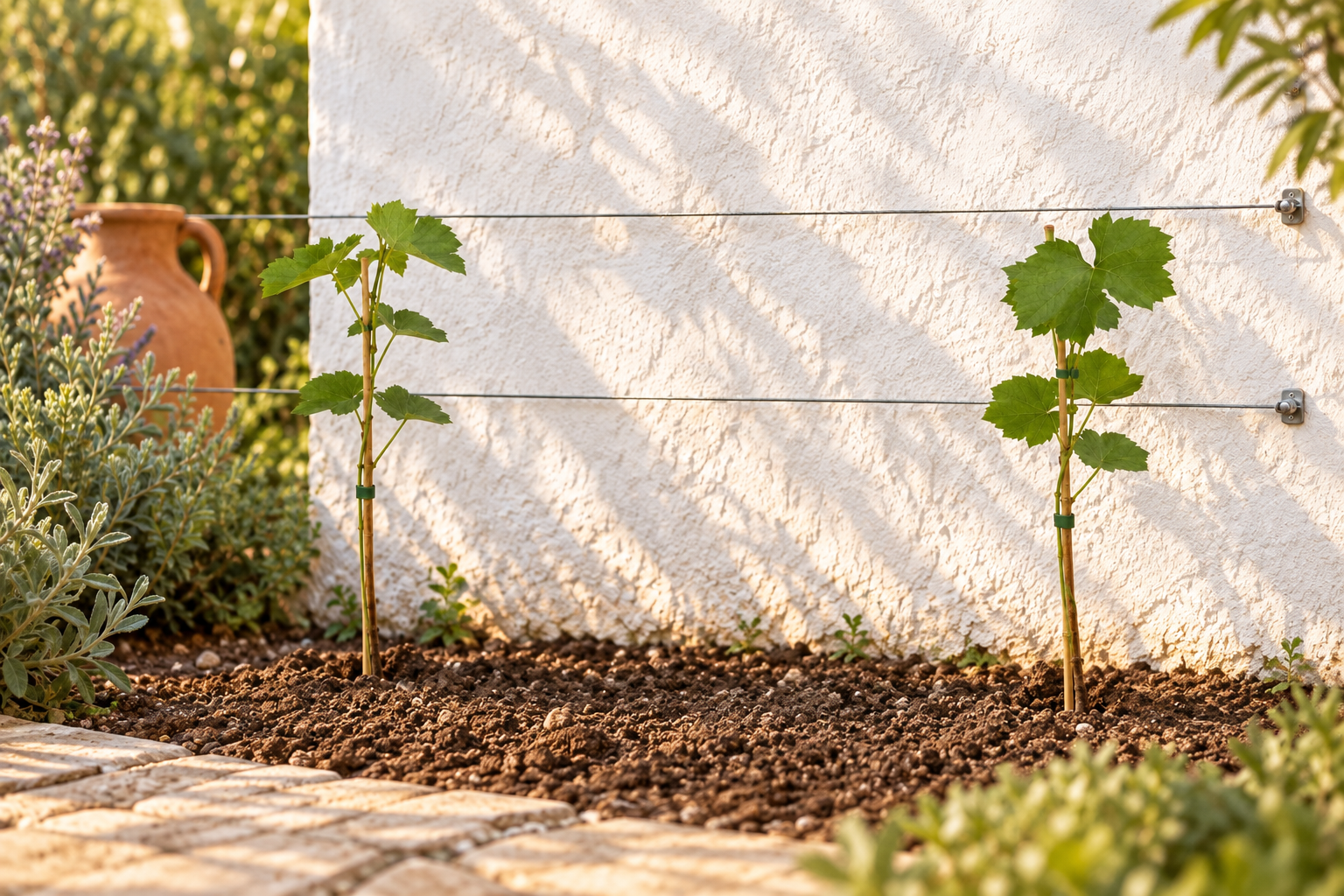
Two young vines against garden light
Vanessa is interesting with lobed green leaves long before the first grape. We like the idea of accompanying two young vines against a pale wall and recognising each new tendril. Colourful seedless table grapes can appear later. The variety has a mild fruity character and comparatively firm flesh. Nevertheless, our portrait begins with slender young plants. A freshly planted garden corner with an open framework shows their current size more honestly than a finished heavily laden vine wall that can develop only over years.
Connect shop name and fruit colour clearly
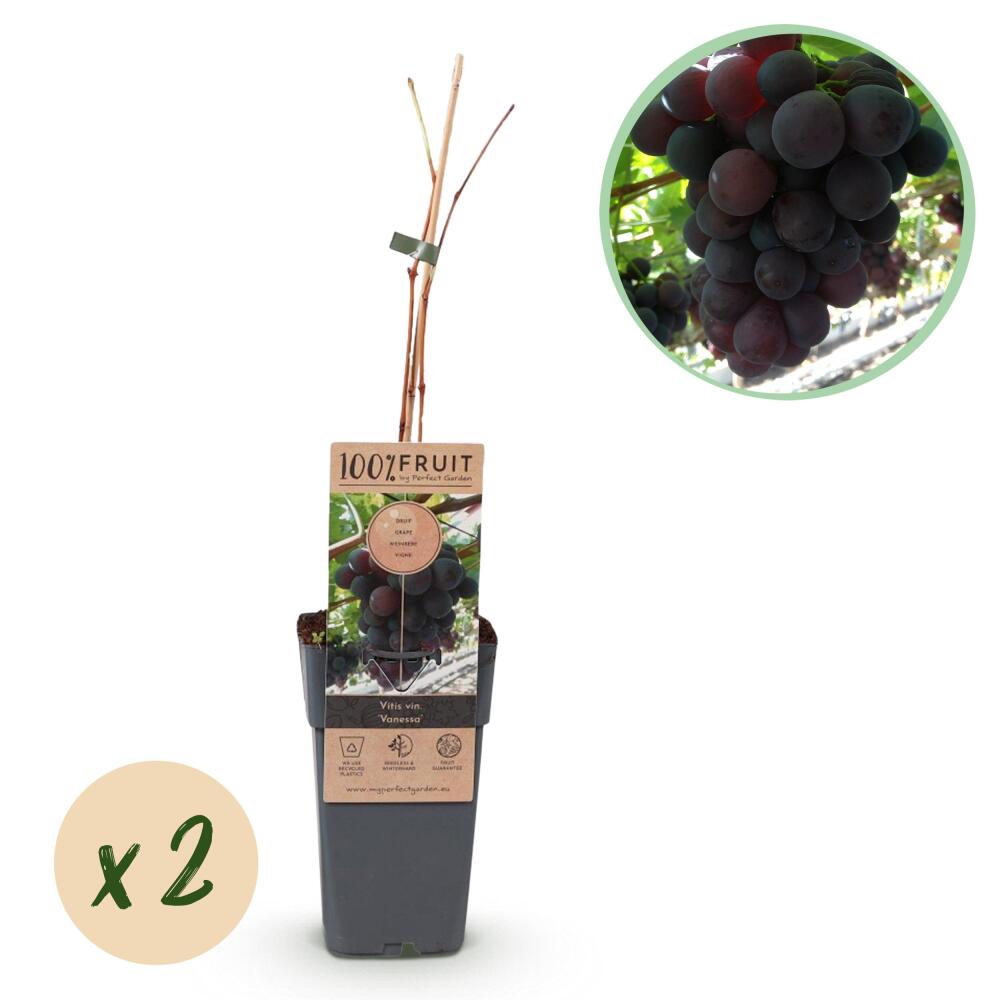
The offer calls Vitis vinifera Vanessa a seedless purple grape. Specialist descriptions classify the variety as a red to reddish-purple table grape. Different ripeness, light and natural bloom can change the colour impression. The shop name is retained for identification; this does not claim every berry shows exactly the same purple shade. Botanically Vanessa is a grape variety with ancestors from Vitis vinifera and Vitis labrusca. Small soft seed remnants can occur in seedless varieties. This classification describes later fruit and promises no crop on the delivered set.
The small set needs a long-term plan
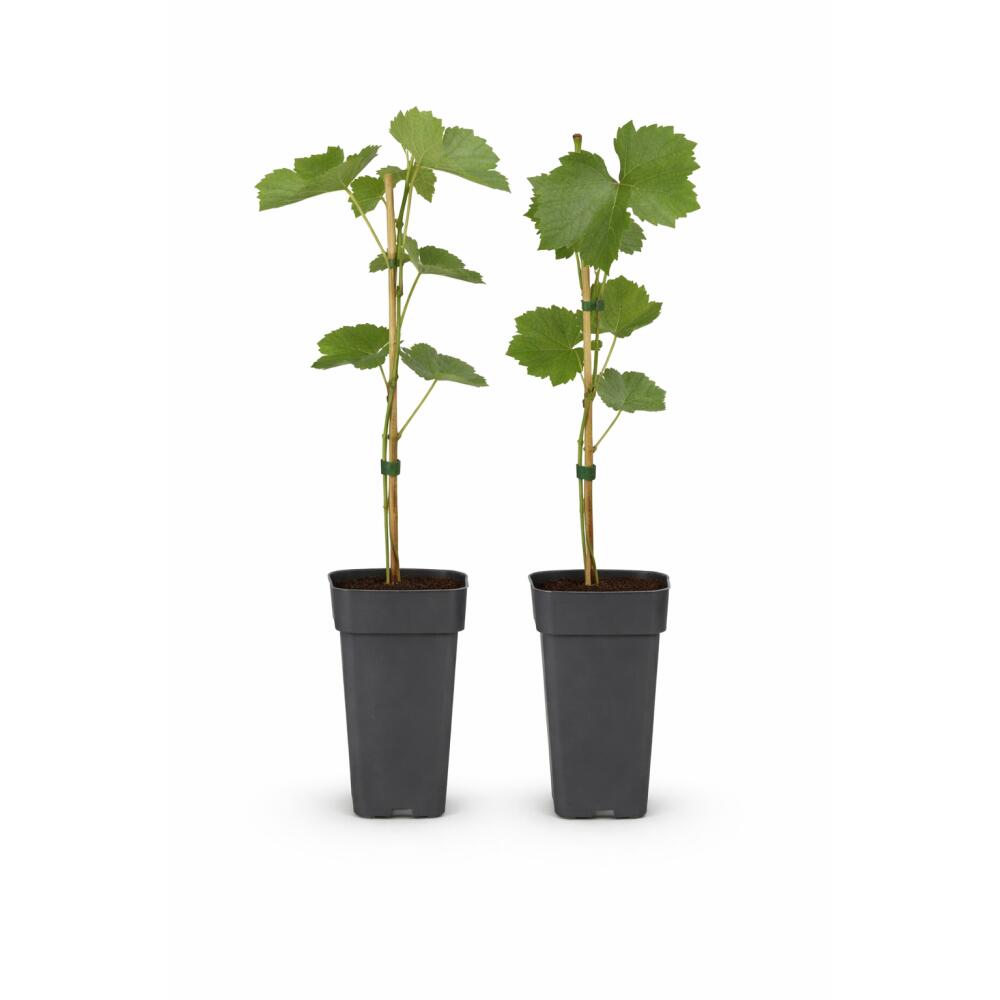
Two plants are delivered, each in a 15 cm pot and about 50 cm overall height. Both need their own root position and a direction for later shoots. For a trained trellis, roughly 1.2 to 1.5 metres of spacing is a guide; spreading training needs more room. The vine grows over several metres without appropriate guidance. Inferring a fixed final height from delivery size alone would therefore mislead. We define the planned framework before planting and leave enough air between later leaves for observation and care.
Plant when soil and season suit
Dormancy suits planting in frost-free soil that is not saturated. In cold areas, we prefer early spring. Plant the supplied root ball at its existing level, leave any graft union above soil and water slowly. Sunny, warm and sheltered suits better than a constantly shaded garden corner. Acclimatise newly leafy plants to stronger outdoor conditions first. The young delivered plant does not yet have far-reaching roots. Especially in the first year, therefore check its original root ball rather than relying exclusively on the general weather report or bed surface.
Water care stays at the roots
During dryness, water the root zone thoroughly and avoid waterlogging. Under a roof overhang, soil can be dry despite rain. A container needs adequate volume and clear drainage; the small delivery pot is just the starting point. We feed according to actual soil supply and plant development. Strongly elongated soft tendrils are no reason to give more nutrients as a precaution. Check leaf undersides and unusual coatings regularly. A clearly trained trellis helps compare individual positions and recognise emerging problems early without turning each harmless leaf change into a major intervention.
Retain a framework, accompany new fruiting wood
The permanent trunk and its arms are the foundation. Young fruit-bearing shoots develop from buds on the previous year’s wood. Dormant pruning follows the chosen system; in summer, new shoots are guided and excess growth organised. Cutting the vine equally everywhere each year like a hedge is not understandable fruit training. Build young plants steadily first and permit only a crop suited to their strength. Loose tying remains important. As the trunk thickens, cords must not cut into it. A photograph of the framework while leafless makes the next decisions easier.
From later grapes back to winter dormancy
Local ripeness determines harvest, not only red or purple skin colour. Carefully taste healthy berries, cut the whole bunch with its stalk and remove damaged fruit. Keep grapes and raisins away from dogs. In autumn the vine returns to dormancy as leaves fall, while wood remains. Protect small containers against severe root frost and maintain drainage. Watch late frost again when new growth starts. For us, Vanessa’s appeal lies in this combination: a lively green framework, the prospect of snacking grapes and a plant whose development can be followed for years.
One plant, several views
Good to know
Is Vanessa really seedless?
It is cultivated as a seedless table grape. Small soft seed remnants are possible.
Why is it called purple and elsewhere red?
The shop calls it purple; specialist descriptions classify it as a red to reddish-purple grape. Ripeness, light and bloom influence the impression.
Are grapes included in delivery?
Not guaranteed. The offer contains two young plants, each in a 15 cm pot.
Can I plant it directly against a wall?
A warm wall position can suit. Account for root space, distance from the wall and dry rain shadow in care.
How do I keep its size manageable?
With a deliberately chosen training form, suitable dormant pruning and regular summer guidance.
Is the vine still alive after leaf fall?
The perennial deciduous vine overwinters with its wood. Do not judge condition solely by missing winter foliage.
Sources and editorial note
- Exotenherz: offer and original images (02.10.2026)
- RHS: planting and caring for grapevines (02.10.2026)
- RHS: outdoor vines (02.10.2026)
- RHS: pruning and training (02.10.2026)
- RHS: cordon pruning (02.10.2026)
- University of Minnesota Extension: grapevines in the garden (02.10.2026)
- University of Maryland Extension: table grapes (02.10.2026)
- Iowa State University: Vanessa, variety classification (02.10.2026)
- NC State Extension: seedless table grapes in a variety trial (02.10.2026)
Shop offer, article number, GTIN, availability and original images checked directly on 02.10.2026. Specialist sources read directly. Shop colour purple not rewritten; specialist red classification explained. US harvest months not adopted for Germany.