
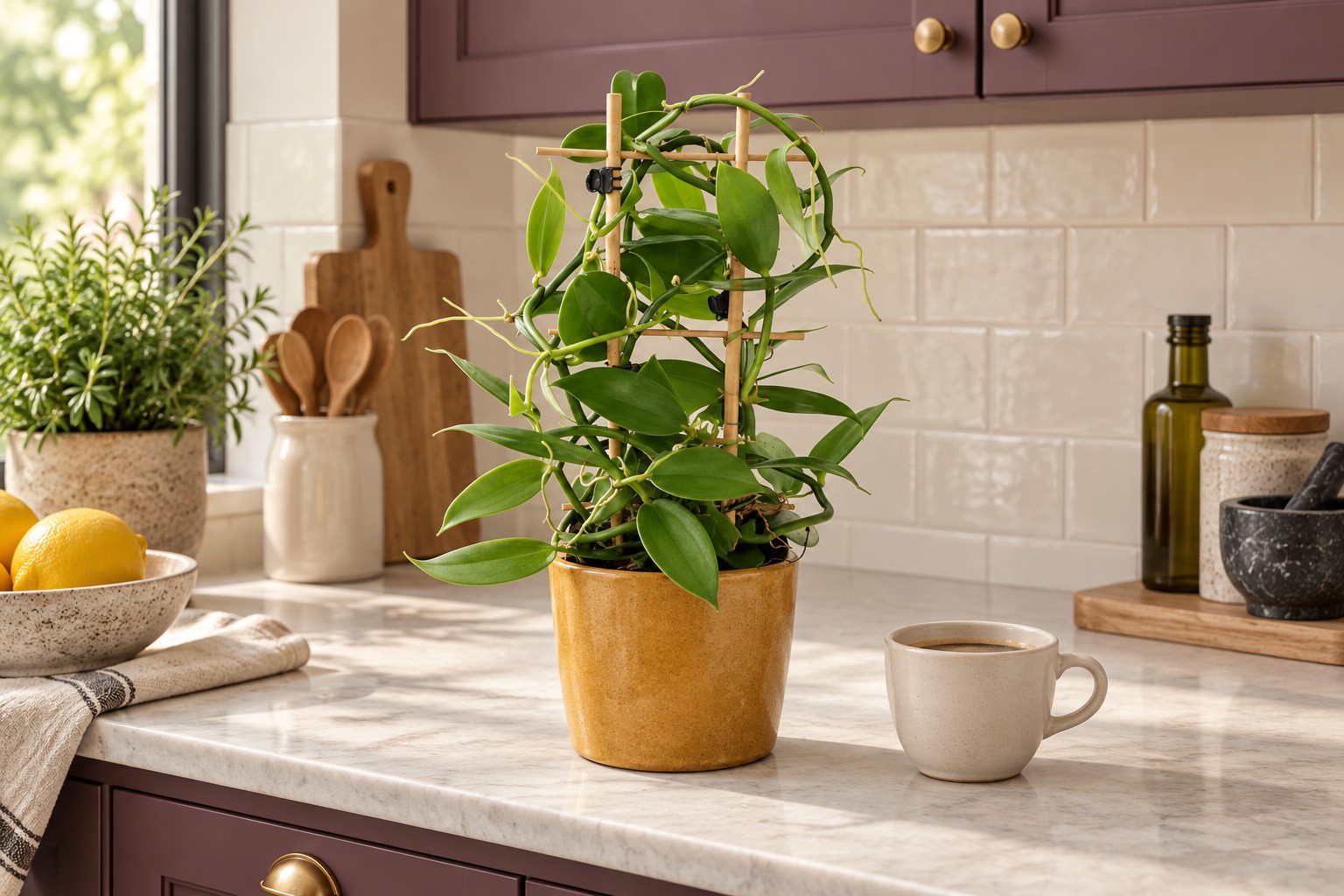
This plant at Exotenherz
Check the shop offer for current availability, price and what is included.
The linked shop is in German. Product details, availability and delivery information are provided in that shop.
Your care table
| Topic | What to do | Why it helps |
|---|---|---|
| Light | Position in bright, filtered daylight. | The tropical vine needs energy without hot midday sun. |
| Warmth | Keep warm, free from draughts and frost-free. | Cold can damage shoots and roots. |
| Water | Check that the surface dries slightly, then water with care. | Constant wetness increases the risk of rot. |
| Compost | Use an airy organic orchid mix with good drainage. | Roots need moisture and oxygen. |
| Climbing support | Guide shoots loosely and check ties regularly. | Thickening vines must not be constricted. |
| Fertiliser | Feed cautiously during growth, following a suitable product label. | Too many salts stress the root zone. |
| Winter | Maintain light levels and reassess water use. | Darker months often slow growth. |
| Harvest | Regard flowers and pods as a long-term possibility. | Pollination and ripening are not guaranteed indoors. |
Check the compost and pot weight. The care table explains how far the compost may dry.
Water only when needed. The water should reach the root ball without spilling over the rim.
Remove surplus water from the saucer or cachepot. Then return the plant to a suitable position.
The spice starts with a green vine
Vanilla planifolia is an orchid with long, fleshy shoots. Leaves and aerial roots develop at their nodes, helping the plant find support. Pollinated flowers develop into the capsules later known as vanilla pods. The familiar aroma emerges only after further processing. A young potted plant therefore does not automatically produce aromatic fruits soon. Growing it means initially caring for an interesting climber and discovering an unusual orchid growth form.
A small beginning on a trellis
This version is offered in a 12 cm pot with approximately 35 cm total height on a trellis. The height describes the displayed delivery form, not the vine’s full possible length. A warm, bright console can provide a good initial position. As growth increases, the support needs more space. The scene deliberately shows no invented pods or flowers. Decorative containers and furnishings are examples; the specific delivery contents follow the shop listing.
Bring warmth and filtered light together
A warm, draught-free position with plenty of indirect daylight is suitable. Strong midday sun behind glass can be harmful. The air should not remain permanently dry, but air exchange must still be possible. A closed, soaking-wet container is not a suitable shortcut. Keep the plant as bright as possible in winter and avoid cold roots. Protect it while airing the room. Make changes gradually so young leaves and roots can adjust.
Roots need moisture and air
Use a loose, organic orchid mix that can hold moisture while draining well. The surface may dry slightly between watering; avoid keeping the root ball constantly soaked. Water with room-temperature, low-lime water where possible and let excess drain away. Do not routinely cut off aerial roots. If shoot sections become soft and brown or the compost is unpleasantly wet, check the root zone first. Less growth usually means lower water use.
Guide vines rather than tying them tightly
Carefully guide healthy new shoots along a stable support and attach them only loosely. Tight loops may cut into the vines as they thicken. Roots can explore suitable surfaces on their own. Repot as needed with as little disturbance as possible. Supply nutrients cautiously during active growth and according to a suitable fertiliser label. Severe pruning to bring on rapid flowering is not the aim with a young indoor plant.
Realistic expectations for flowers and harvest
Several years may pass before the plant is mature enough to flower; flowering indoors is by no means certain. If flowers develop, suitable pollination, fruit ripening and processing are further demanding steps. A guaranteed harvest is therefore not promised. Check the plant regularly for pests and dead parts. Avoid sap contact when cutting and clean the tool. The most valuable progress initially is a healthy new shoot with strong roots.
One plant, several views
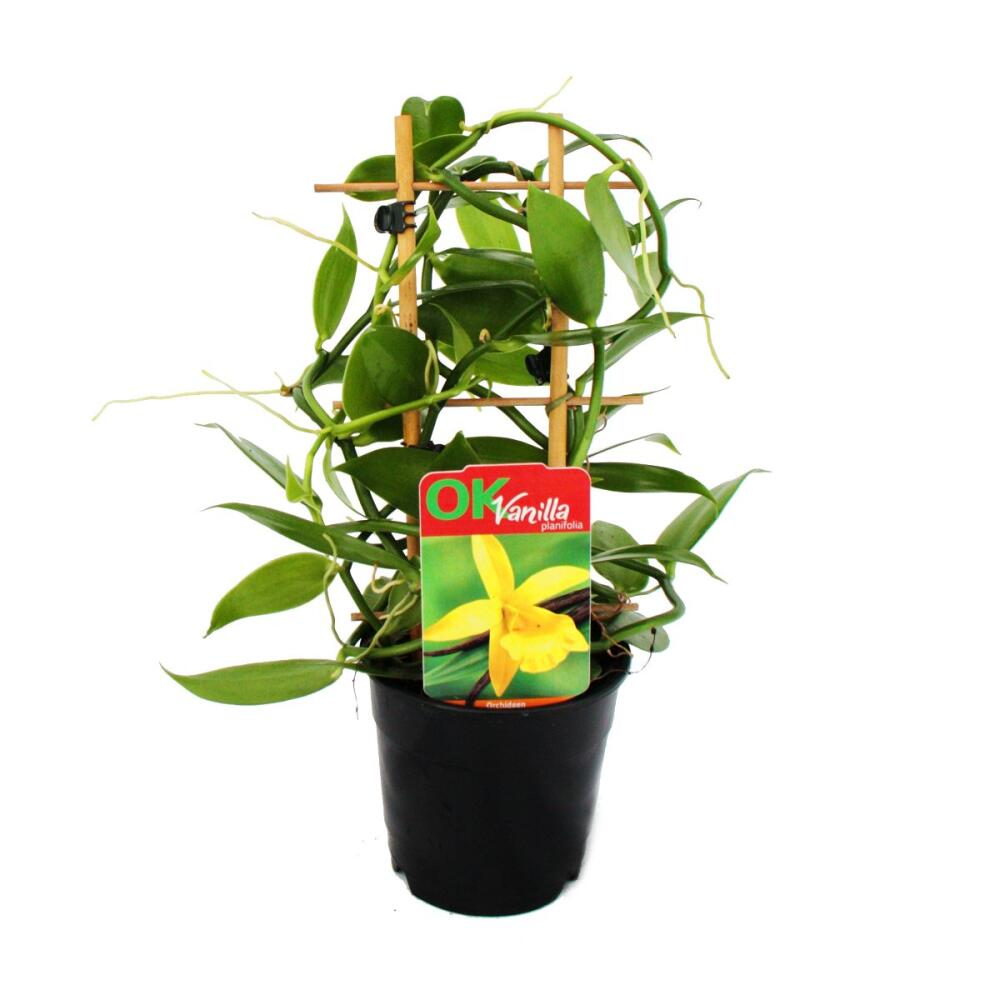
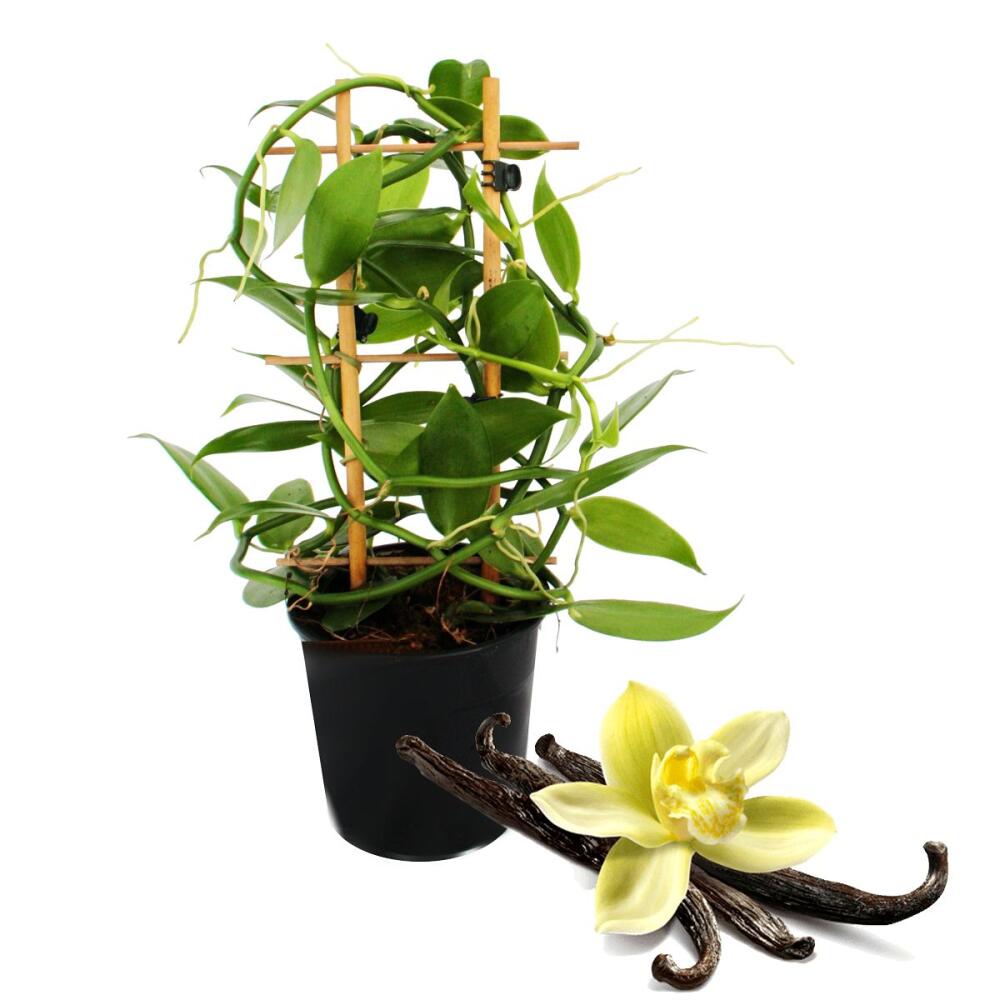
Good to know
Is vanilla really an orchid?
Yes. Vanilla planifolia is a climbing orchid with fleshy leaves and aerial roots.
When can I harvest pods?
A fixed promise is not possible. The plant must first become capable of flowering; pollination, ripening and processing are then needed.
Should I cut off aerial roots?
Keep healthy aerial roots. They are part of its natural way of life and help the plant climb.
Is 35 cm its eventual full size?
No. That is the offered height on the trellis. The vines can become considerably longer over time.
Sources and editorial note
Sources checked: 15 September 2026. Product details and delivery contents follow the linked shop listing. Care has been checked against the cited specialist sources and should be adapted to the plant’s condition, position and season.