
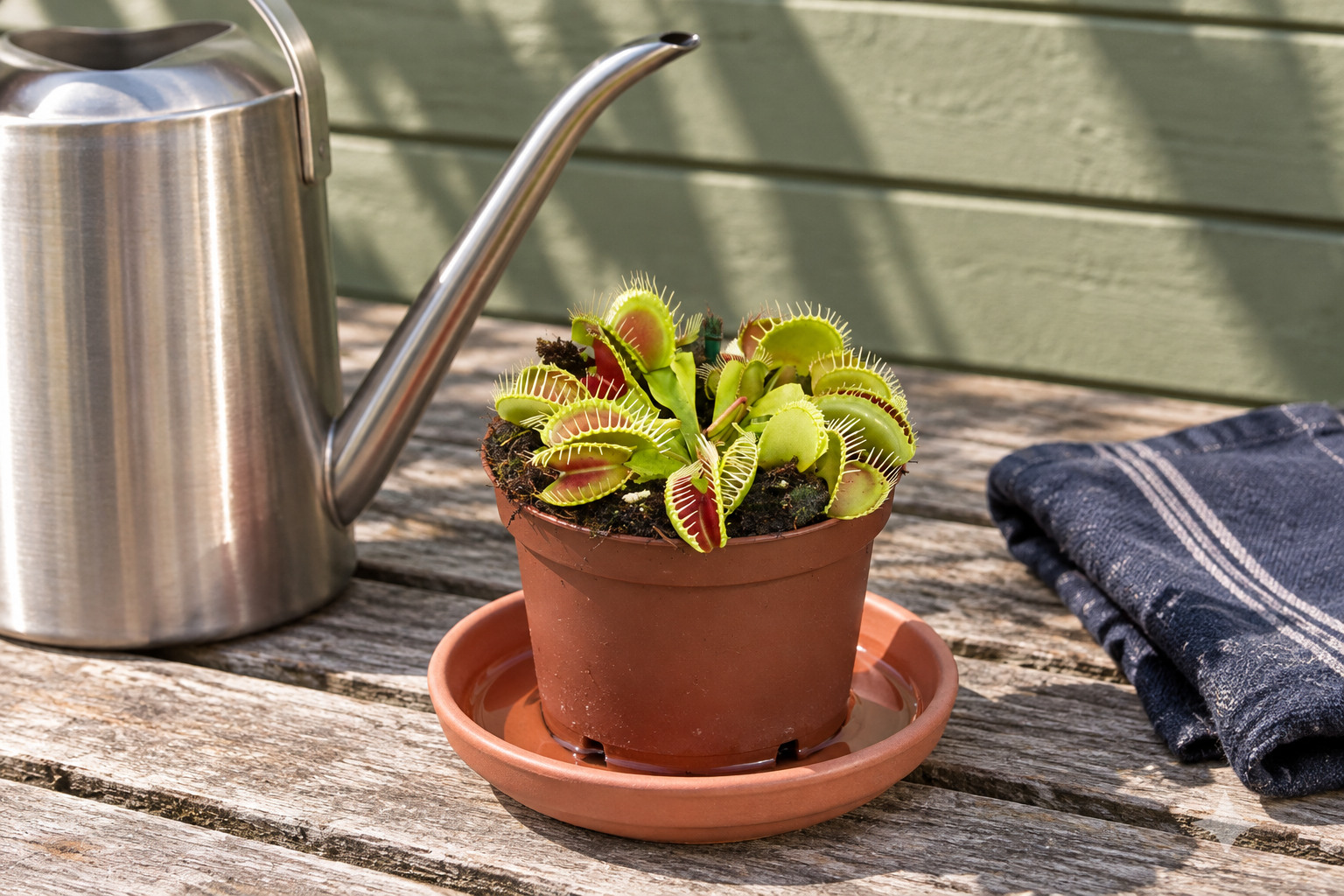
This plant at Exotenherz
Check the shop offer for current availability, price and what is included.
Link to the offer in German. Check the shop for the current price, availability and delivery contents.
Your care table
| Topic | What to do | Why it helps |
|---|---|---|
| Light | Keep very bright; outdoors in sun after acclimatisation, while preventing overheating behind glass. | The carnivorous plant needs plenty of light for strong growth. |
| Water quality | Use clean rainwater or suitable distilled or reverse-osmosis water. | Dissolved salts can build up in the small pot; an ordinary jug filter is not reliably sufficient. |
| Water tray | During growth, provide a little water in a shallow tray. | The root ball stays moist while the rosette centre and compost surface remain above water. |
| Compost | Use expressly suitable, unfertilised carnivorous-plant compost. | Ordinary fertilised flower and vegetable compost is unsuitable for this culture. |
| Feeding | Do not trigger traps for play or put meat, cheese or sweets in them. | Unnecessary closure strains leaves; unsuitable food can rot. |
| Fertiliser | For normal care, do not add houseplant fertiliser to the compost or tray. | The plant is adapted to nutrient-poor root conditions. |
| Winter | When grown with the annual cycle, allow rest bright and cool, protected against severe freezing. | Fewer, smaller leaves may be part of seasonal rest; the root ball must still not dry out. |
| Repotting | Move carefully when compost is cramped or spent, preferably at the start of growth. | The sensitive centre stays clear; roots and rhizome are not damaged unnecessarily. |
Use clean rainwater or suitable distilled water. An ordinary jug filter does not reliably remove dissolved salts.
Put a little water in the saucer. The base of the pot stands in water; the compost surface and centre of the plant remain well above it.
Keep the root ball moist and the saucer clean. Light, temperature and the species-specific winter care in the table determine its needs.
A leaf takes on an unusual task
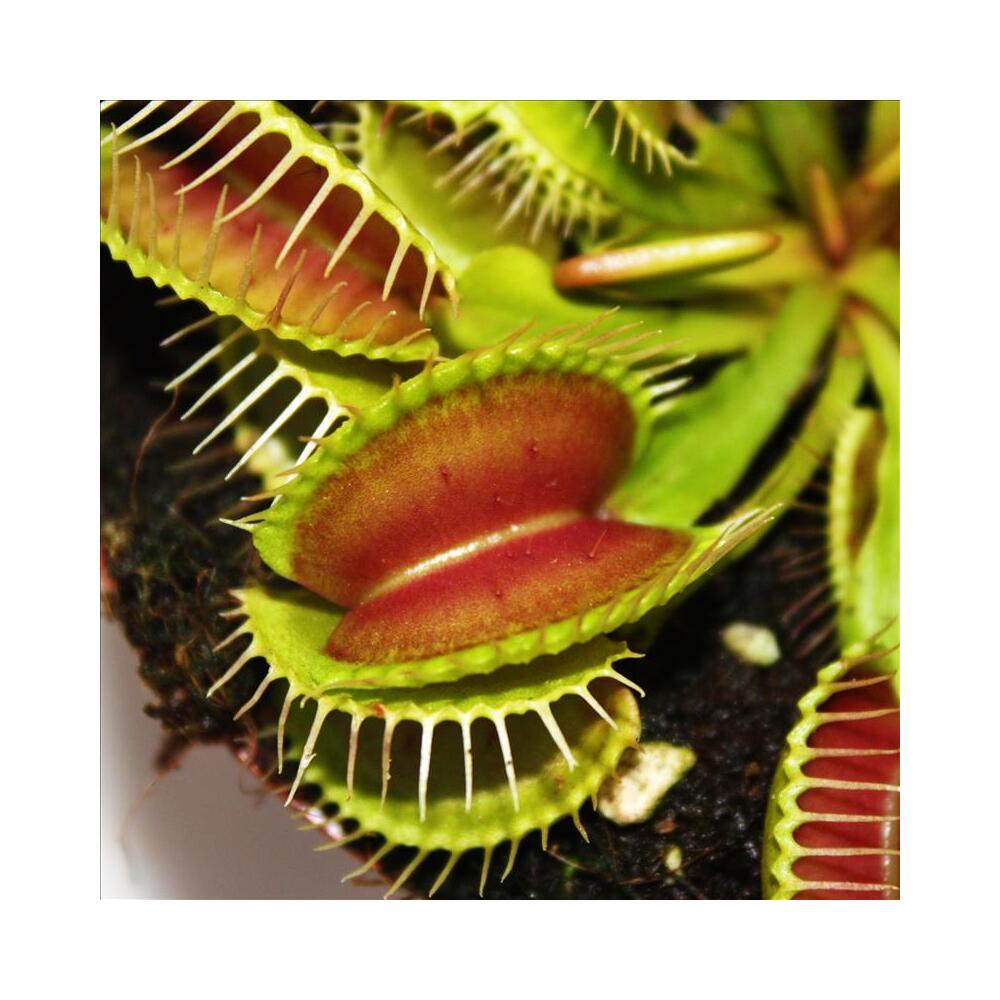
In a Venus flytrap, a leaf ends in two moving halves with conspicuous marginal bristles. Sensitive trigger hairs sit on the inside. Suitable stimulation can cause rapid closure; subsequent digestion is a separate, slower process. The plant obtains additional nutrients from prey. Its energy still comes from light. A captured fly therefore does not replace a suitable position. Dionaea is a low rosette plant from a small natural range in the southeastern USA. Its manageable size in particular invites close observation.
Two pot sizes, one plant portrait
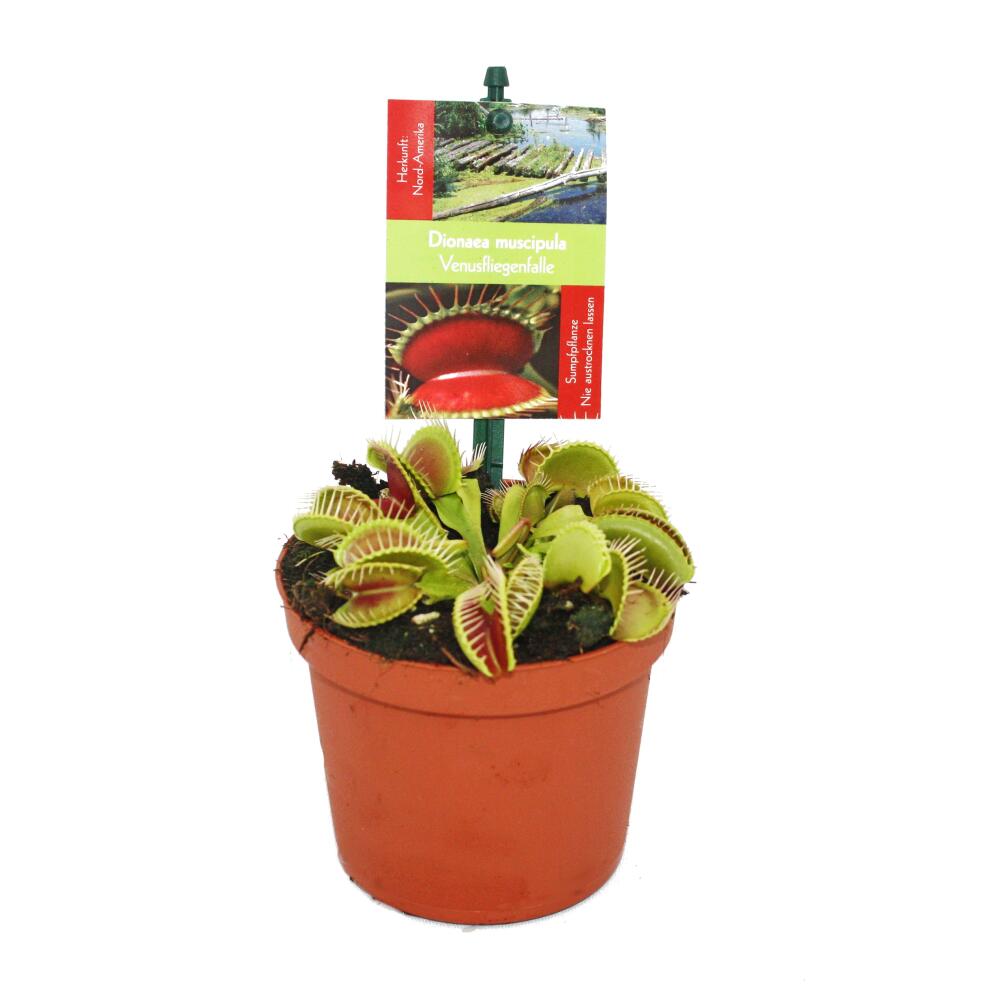
The shop has versions in 9 cm and 12 cm pots. They are explained together here and linked individually. The scene follows the 9 cm plant; the offer does not state a fixed overall height. Large close-ups of traps therefore do not indicate size. The red colour inside traps can also vary with plant, light and development. What matters is a healthy specimen appropriate to the species. The water tray in the scene shows one possible growing method and is not automatically part of the delivery.
Plan light first
Choose a very bright position. After careful acclimatisation, a Venus flytrap can stand outdoors in sun during the frost-free growing season. A small pot on hot metal or behind strongly heated glass needs particular attention, however. The root ball must neither dry out nor overheat. A position deep inside a room is usually insufficient. Suitable plant lighting may be needed for permanent indoor growing. A closed glass container is not a requirement and can make controlling heat and airflow harder. Plan the position before decorating so the attractive display works in the long term too.
Good water is the foundation
Use clean rainwater or suitable distilled or reverse-osmosis water. Mineral water and strongly mineralised tap water are not a good starting point. An ordinary jug filter does not automatically turn hard water into water for carnivorous plants. Keep a separate clean container so fertiliser residues from another watering can are not added accidentally. During growth, a freely draining nursery pot can stand in a shallow tray with a little water. The compost surface stays clearly above water level. Check the tray regularly, particularly on warm, windy days when small water reserves disappear quickly.
Watch traps without using them up
Rapid snapping invites experimentation. Repeated triggering with fingers, sticks or tools offers no benefit to the plant, however. Let traps perform their task themselves as much as possible. Outdoors, a well-positioned plant often catches its own prey. For permanent indoor growing, targeted sparing feeding with suitable insects can be part of a coordinated growing system; the specialist ICPS guidance is worth consulting. Food scraps are unsuitable. A carnivorous plant also does not replace finding the cause of a fungus-gnat or fly infestation. Enjoying observation remains its real value at home.
Winter care suited to the growing method
With a normal annual cycle and changing day lengths, Dionaea may slow down noticeably in autumn. Older traps die and the rosette appears smaller. A bright, cool, sheltered winter position makes sense for this method. Small pots should not be exposed unprotected to a long spell of hard frost. Keep compost moist without deeply flooding the pot. Specialist sources also describe year-round indoor growing without rest under strong supplementary lighting and adjusted care. That is a different growing system from a warm, dark windowsill. Do not switch thoughtlessly between the two approaches or automatically treat absent winter growth as fertiliser deficiency.
Black traps are a clue, not a finished diagnosis
Individual old trapping leaves turn black and die over time. This can also happen after catching prey or in autumn. Check for healthy growth in the centre. If many leaves suddenly turn soft, the compost smells unusual or new growth remains weak, consider water quality, warmth, light and root-ball condition. Fully dead leaves can be carefully removed with clean tools. Do not pull on still-firm leaf bases. A photo taken a few days apart often shows recovery better than daily repositioning.
Repotting and flowering with a steady hand
Fresh, unfertilised carnivorous-plant compost suits repotting. Peat-free products must be expressly suitable for these plants; ordinary peat-free potting compost is not automatically an alternative. Do not set the rosette centre deeper than before. A sufficiently tall pot makes a low water level below the plant base easier. A strong specimen can produce a flower stem in spring. On a weakened or recently moved plant, removing it early and cleanly can direct resources towards leaf growth. Whether you let a healthy plant flower is a conscious choice, not a general care mistake.
Curiosity can grow with good care
This plant is particularly exciting to explore together with children. A magnifying glass or enlarged original image shows more than repeatedly touching traps. Note in the plant book where it stands in summer, which water you use and what the winter position is like. Such simple notes help next year. Begin with one well-cared-for plant before putting different carnivorous plants together in a tray. Sundew, pitcher plant and Venus flytrap all look unusual but do not have identical requirements. Getting to know each species closely makes a collection more successful over time.
One plant, several views
Good to know
Do I have to feed every trap?
No. Overfeeding and unnecessary triggering are unfavourable. In permanent indoor growing, sparing suitable feeding should fit the whole lighting and growing system.
Can I use filtered tap water?
An ordinary jug filter does not reliably remove dissolved salts. Clean rainwater or suitable distilled or reverse-osmosis water provides a more dependable starting point.
Why do traps turn black in autumn?
This may be part of seasonal rest and normal leaf ageing. Also check the plant centre and growing conditions.
Does it have to go into a fridge?
No. A suitable bright, cool winter position makes sense for usual seasonal growing. A blanket fridge treatment is not a general care recommendation.
How large is the plant pictured?
The scene follows the version in a 9 cm pot. The linked offer does not state a definite overall height.
Sources and editorial note
- Product and pot size: Exotenherz
- Venus flytrap in a 12 cm pot
- NC State Extension: Dionaea muscipula
- ICPS: Venus flytrap growing and indoor culture
- RHS: getting to know Venus flytrap
- RHS: carnivorous plants and suitable composts
Sources checked: 14 September 2026. Product and delivery size are described from the shop offer; care takes account of the linked botanical specialist sources. Guidance applies to this species and should be adjusted to plant condition, position and season.