
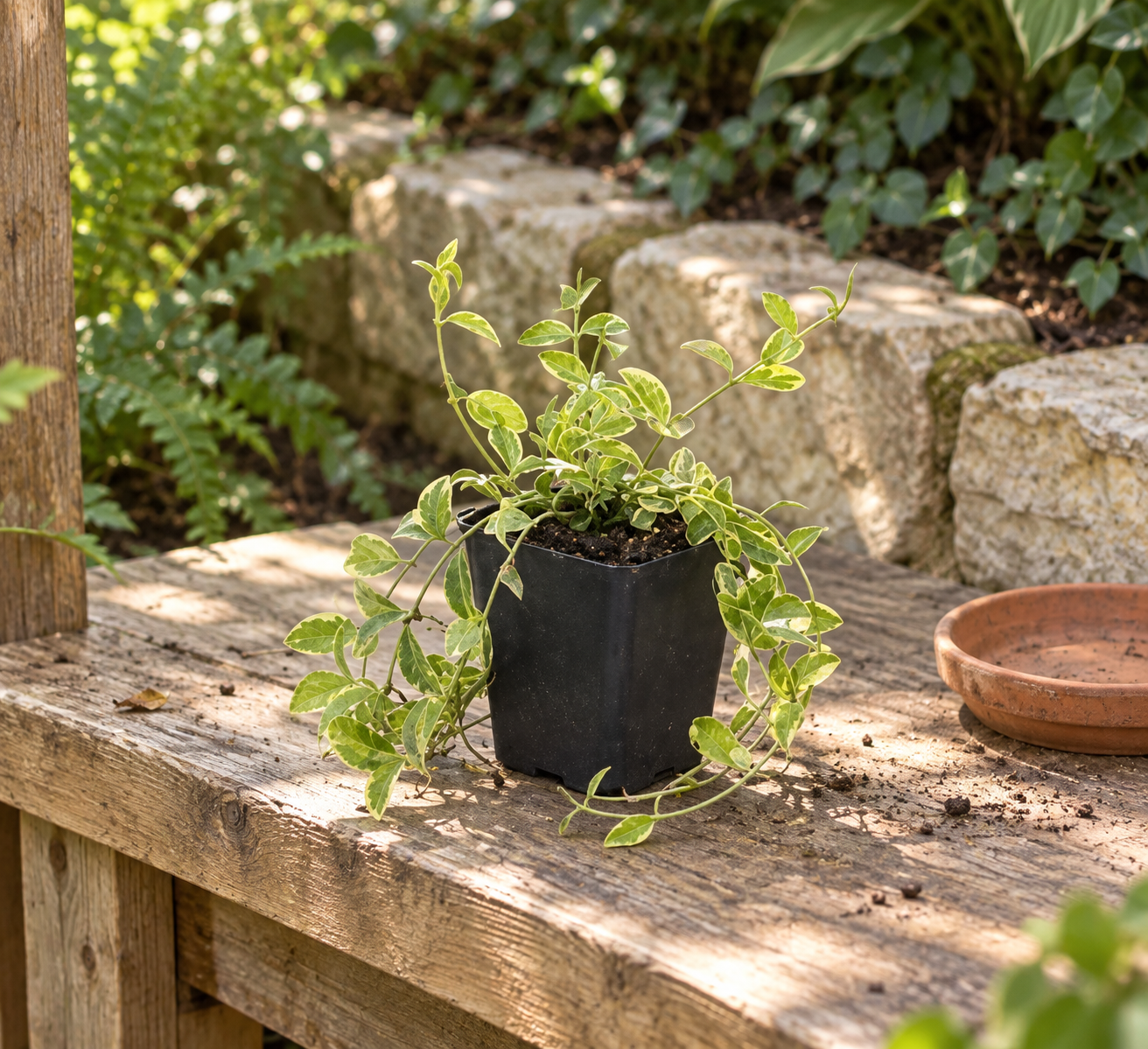
This plant at Exotenherz
Check the shop offer for current availability, price and what is included.
Check the selected shop offer for price, availability and delivery contents.
Your care table
| Topic | What to do | Why it helps |
|---|---|---|
| Light | Choose a partially shaded to shaded garden position. | Yellow-variegated foliage looks bright there; dry heat and winter sun may stress it. |
| Planting | Set the moistened pot rootball at its previous depth. | Fine roots need contact with prepared garden soil. |
| Water | During rooting check moisture at the rootball and water thoroughly as needed. | A young 9 cm rootball dries sooner than the surrounding area. |
| Soil | Use humus-rich well-drained soil without standing water. | Constant wetness and complete drying hinder healthy growth. |
| Feeding | If needed supply moderately in spring according to label. | Soil properties matter more than frequent strong feeds. |
| Pruning | In spring selectively cut back troublesome shoots and dead parts. | Creeping stems may root beyond intended area. |
| Leaf colour | Compare older and new leaves before intervening. | Yellow marking may become less prominent with leaf age and season. |
| Winter | Shelter containers; check rootball moisture on frost-free days. | Evergreen foliage may lose water as its small root space cools. |
Check the compost and pot weight. The care table explains how far the compost may dry.
Water only when needed. The water should reach the root ball without spilling over the rim.
Remove surplus water from the saucer or cachepot. Then return the plant to a suitable position.
A bright edge on every little leaf
Aureovariegata brings its effect even without flowers. Small green leaves sit in pairs on fine stems with yellow margins and occasionally irregular pale patches. Among quiet green garden plants this can become a friendly bright border. In spring blue-violet flowers complement foliage. Their five slightly twisted lobes resemble a little windmill. Look closely: appeal lies less in one large flower than in the combination of fine branches, leaf pattern and low area. A dense garden carpet develops only with time and good rooting.
Young plants and a later carpet are different pictures
In the shop choose the desired quantity as a set. Each young plant stands in a 9 cm pot; given total height about 10 to 25 cm includes the pot. For the developed cultivar around 10 to 20 cm above soil is guidance. Long creeping stems instead enlarge the area. Shop gives 30 to 35 cm planting distance. First distribute plants in their pots on the prepared bed so edge and neighbours stay free. Flowering planting images show later garden effect, not a guaranteed flower quantity when unpacking.
Consider the shaded position below ground too
Partial shade to shade suits this yellow-variegated cultivar. Beneath larger woody plants shaded soil is not automatically moist: neighbours’ roots and intercepted rain may dry it. Before planting check whether you can reach the young root zone and water as needed. Loosen compacted soil and incorporate suitable humus-rich improver without burying the base of an existing woody plant. More humus alone does not make a wet hollow suitable. Water should soak in and drain while soil retains some moisture between waterings.
Start with the rootball, not a watering calendar
Spring and early autumn simplify planting when soil is frost-free and workable. Fully moisten a dry pot rootball before setting. Remove the pot, do not use fine stems as handles and plant at previous depth. Then water slowly. Over following weeks check directly at the former pot rootball rather than trusting rainfall reports alone. If moisture remains there no precautionary extra watering is needed. On warm windy days we check more often. Only when new roots reach garden soil do greater reserves become available.
Leaf pattern may change
Not every leaf stays equally yellow-patterned. Young leaves can look paler, while in older foliage and towards autumn the margins may become less noticeable. One greener leaf therefore proves neither wrong cultivar nor a care error. Compare a whole shoot and fresh growth first. With dry leaf margins also check sun, wind and moisture. Strong winter sun on frozen soil can stress evergreen foliage. Cut damaged parts selectively in spring once living growth becomes recognisable; healthy foliage is not removed just because colour changed.
A groundcover needs a recognisable boundary
Aureovariegata grows lower than it can spread sideways. Ground contact allows creeping shoots to root. Check transitions to paths and small neighbouring perennials regularly. One overlong shoot is easier to cut back than an already deeply entangled edge. Remove unwanted rooted sections with their little roots. In older dense planting remove dead parts so soil and new shoots can be assessed again. Feed moderately in spring as needed; extra food replaces neither good drainage nor suitable area planning.
Manage outdoor containers horticulturally too
In a broad bowl or outdoor pot the cultivar stays more contained but needs its own moisture checks. Use a container with open drainage holes and well-drained soil; remove collected saucer water. The little sales pot soon becomes cramped as permanent accommodation. If the rootball is densely rooted move into a suitable larger container or plant in the bed. Shelter in winter and check for dryness in frost-free weather. A heated living room does not replace the garden position. After winter look at fresh growth before deciding further pruning.
One plant, several views
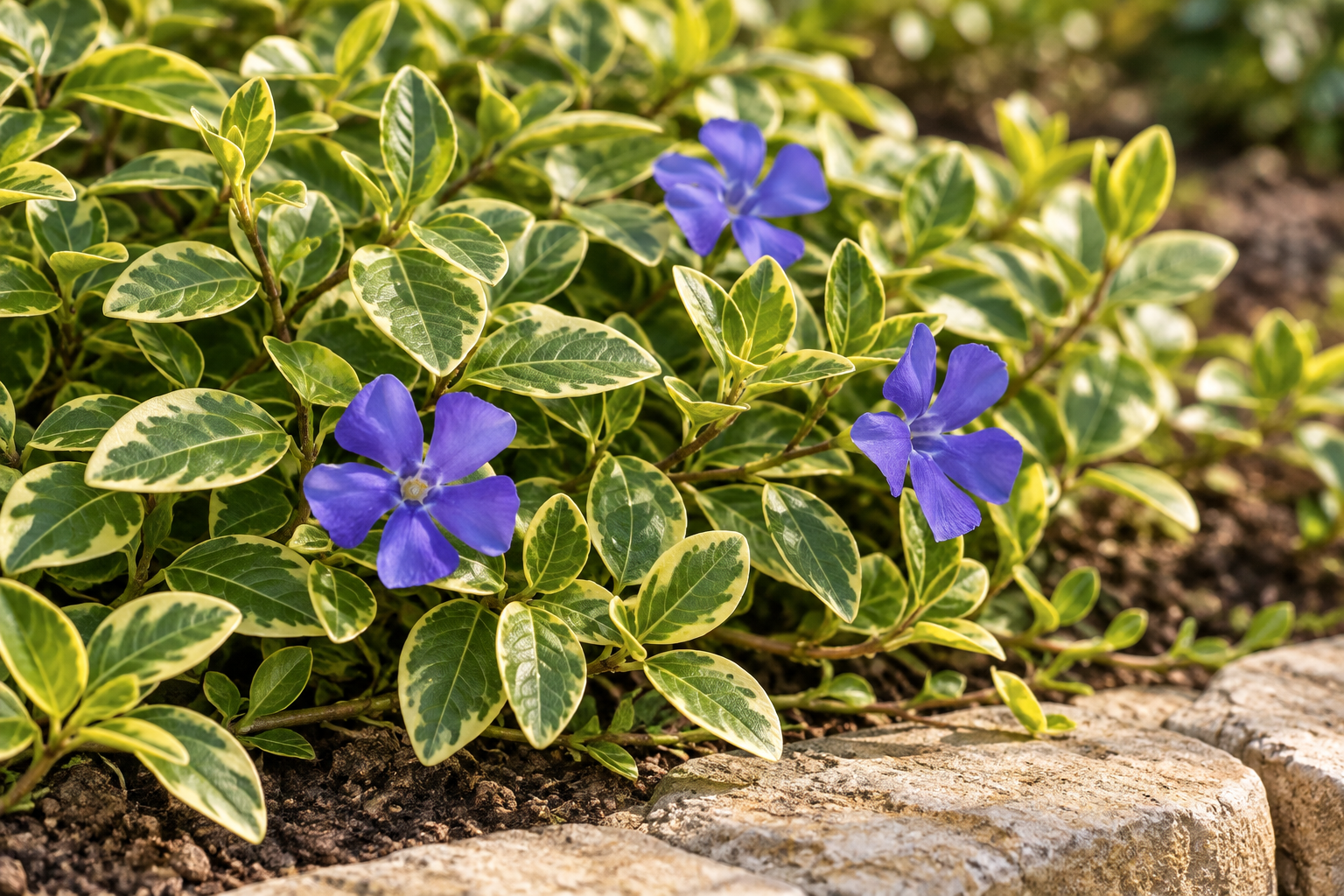
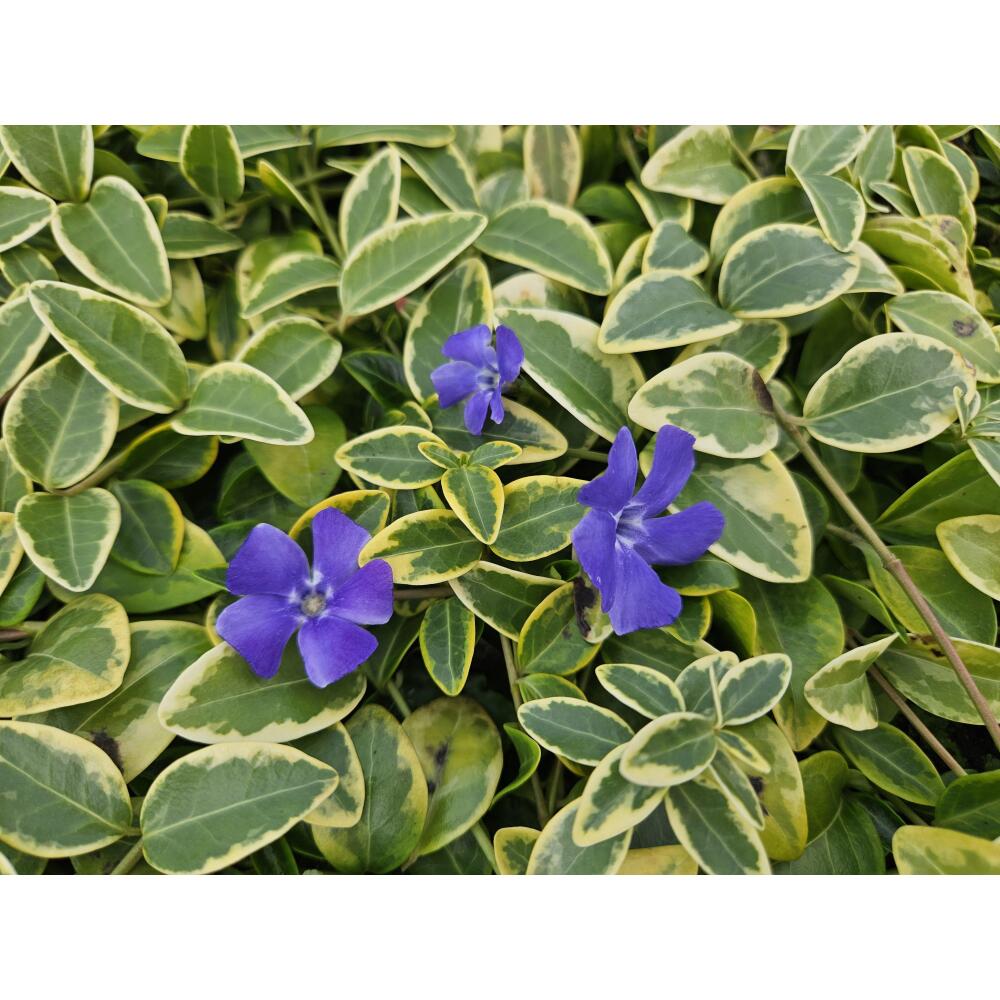
Good to know
When does Aureovariegata flower?
Mainly around April to June. Occasional later flowers are possible; young delivery plants need not yet flower.
Is delivery height its later height?
No. About 10–25 cm includes the sales pot. Developed planting stays about 10–20 cm above ground and spreads sideways.
Why is an older leaf less yellow?
Leaf age and season may change pattern. Compare new growth before classifying the plant as wrong or ill.
How closely should I plant?
Shop gives 30–35 cm as area guidance. Also consider neighbours and a free path edge.
Must I water every day?
No. Check moisture at the young rootball. Weather, soil and root development determine need.
Does the plant spread?
Yes, creeping shoots can root along the ground. Check intended boundaries and remove unwanted growth early.
Sources and editorial note
- Exotenherz: offer and original images (03.10.2026)
- Polish Nurserymen Association: Aureovariegata cultivar profile (03.10.2026)
- International Dendrology Society: Vinca minor and cultivars (03.10.2026)
- NC State Extension: Vinca minor growth and care (03.10.2026)
- Exotenherz: checked 6-plant child offer (03.10.2026)
- Exotenherz: checked 12-plant child offer (03.10.2026)
- Exotenherz: checked 20-plant child offer (03.10.2026)
- Exotenherz: checked 40-plant child offer (03.10.2026)
- Exotenherz: checked 60-plant child offer (03.10.2026)
Shop offer, article number, availability and original images directly checked on 03.10.2026. Specialist sources directly read. Polish nurserymen association cultivar profile directly read: yellow patterned age-dependent foliage, 10–20 cm height, April–June. Child articles and sizes individually checked. No blanket low-care or frost-temperature promise. Direct links lead to checked child offers; 20/40-plant sets were not orderable at check.