
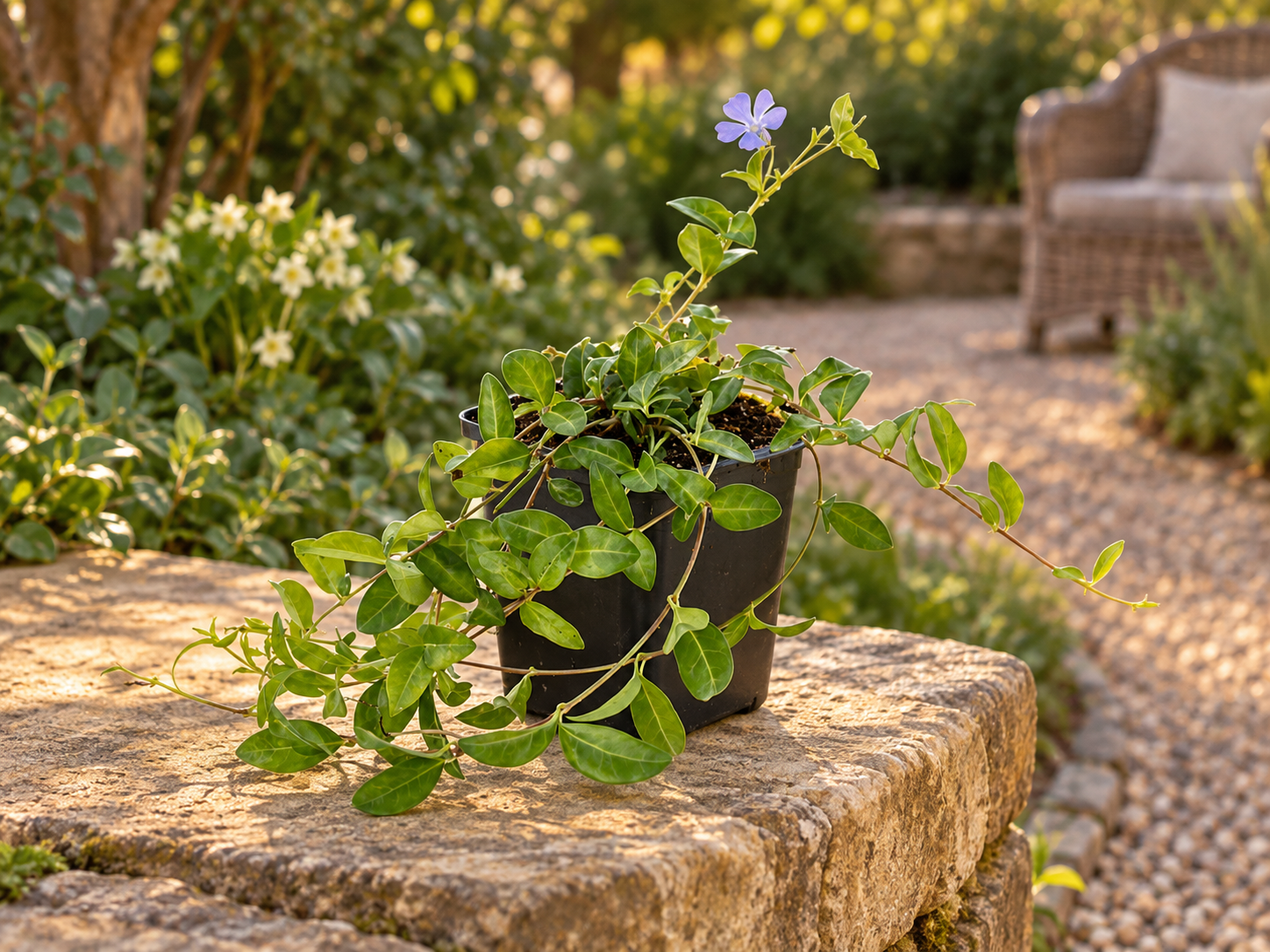
This plant at Exotenherz
Check the shop offer for current availability, price and what is included.
Check the selected shop offer for price, availability and delivery contents.
Your care table
| Topic | What to do | Why it helps |
|---|---|---|
| Light | Sun to shade is possible; check hot dry edge strips especially. | Flowers and rootball supply respond differently to light and warmth. |
| Soil | Prepare humus-rich, well-drained soil with good water drainage. | Creeping growth does not replace a healthy root zone. |
| Planting | Set moistened rootball at previous depth and water in. | The little pot rootball must connect with garden soil. |
| Water | During establishment check rootball; later water by soil moisture and weather. | Reserves of a young plant differ from developed garden planting. |
| Feeding | During growth feed moderately as needed according to label. | One flowering pause does not automatically mean nutrient shortage. |
| Pruning | In spring remove dead parts; shorten spreading edge shoots. | Area is easier to limit in time than after heavy overgrowth. |
| Checks | With wilting consider wetness, drainage and shoot state together. | Not every drooping tip lacks water. |
| Winter | Shelter containers outdoors and check moisture on frost-free days. | Evergreen foliage and a small pot react more strongly to drying wind. |
Check the compost and pot weight. The care table explains how far the compost may dry.
Water only when needed. The water should reach the root ball without spilling over the rim.
Remove surplus water from the saucer or cachepot. Then return the plant to a suitable position.
Lavender-blue against quiet green
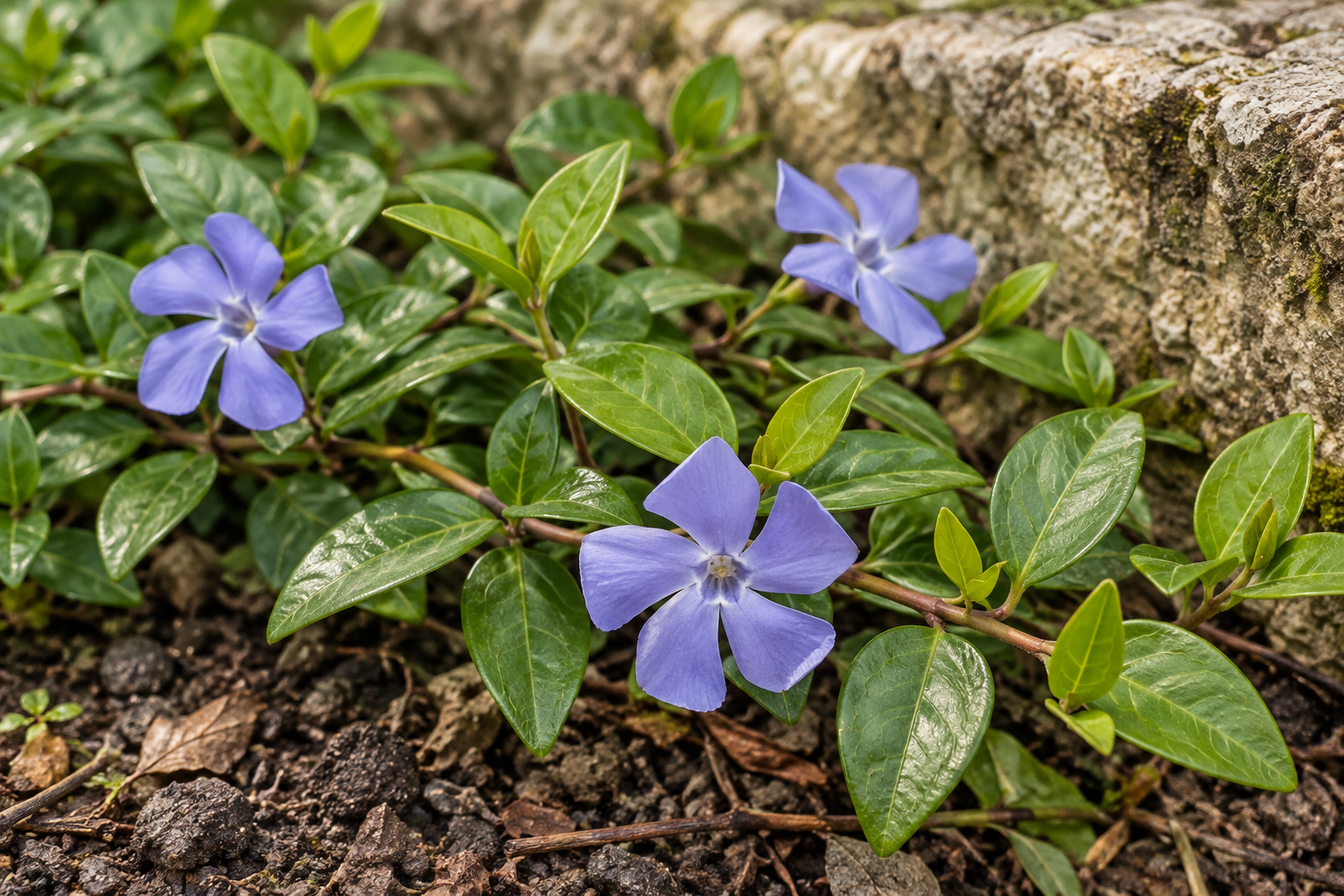
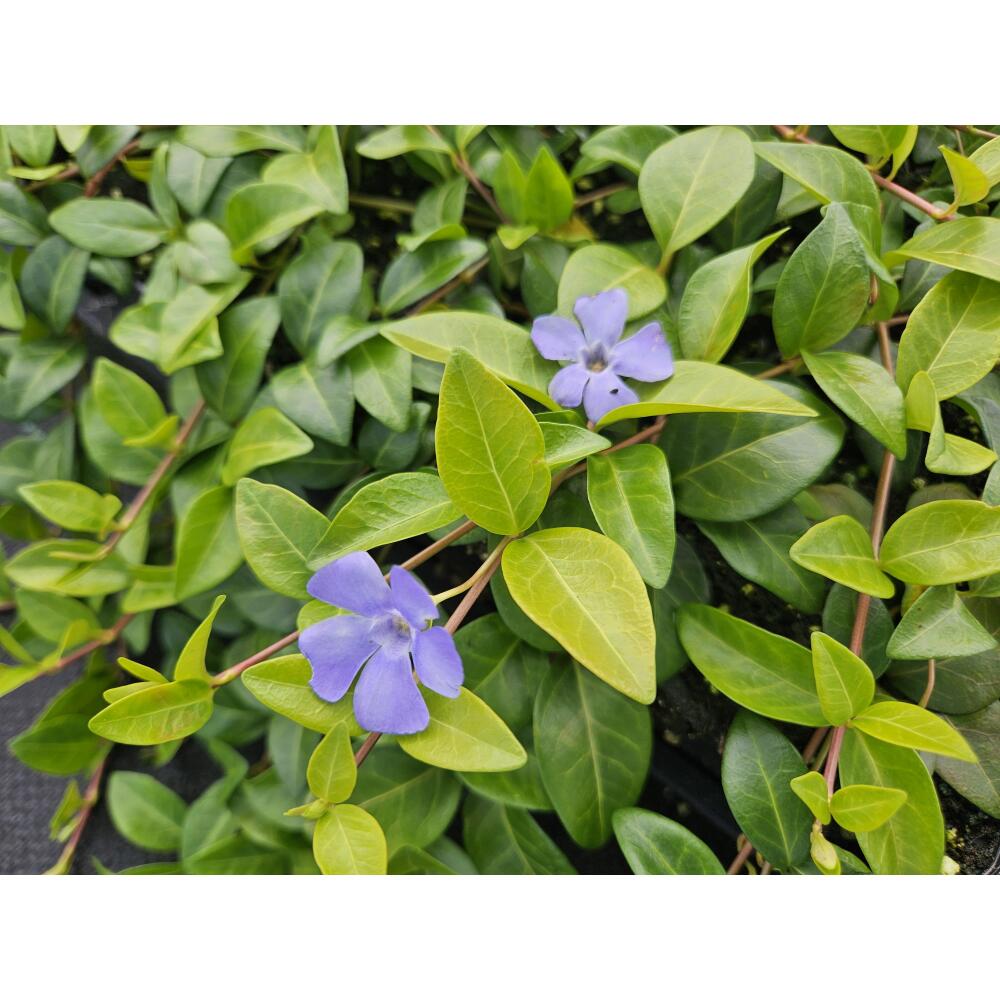
La Grave places its flowers like little colour points along shoots. Green of entire glossy leaves stays quiet while lavender-blue flowers draw the eye. Their five broad slightly twisted lobes form typical periwinkle shape. Compared with some other lesser-periwinkle forms La Grave is described with larger flowers and broader leaves. This makes the cultivar interesting close up: beside a path, beneath a loose shrub or in front of a low stone edge. It needs no tall backdrop. Later planting instead depends on being able to see its low lines well.
A cultivar name with a garden history
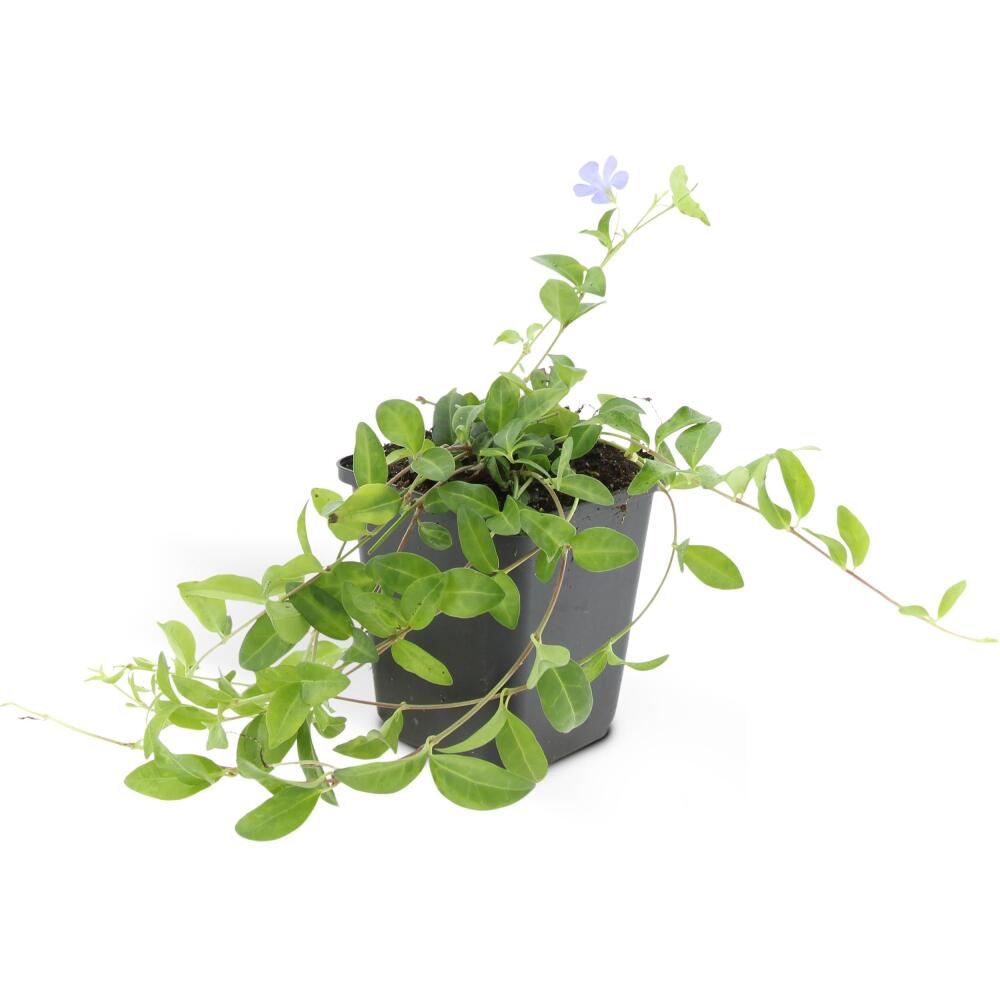
La Grave was collected in the 1920s by E. A. Bowles at a French site. In plant trade the name also appears in connection with Bowles’ Variety; historical names are not used uniformly everywhere. For this portrait the confirmed La Grave offer and assigned originals count. A different name is therefore not simply counted as an additional new plant identity. Shop offer comprises selectable quantity sets of young plants. Each stands in a 9 cm pot at about 10 to 25 cm total height. One potted plant in the scene provides size reference, not a different count from the selected set.
Width develops along the ground
Fine shoots later rest on soil and can root at contact points. For the species Vinca minor a planting about eight to fifteen centimetres low is rough guidance; no precisely documented final height specifically for La Grave is inferred. Sideways planting can extend much further than the little pot suggests. Shop gives 25 to 30 cm spacing for area planning. Include the path edge and free space for small neighbours. A dense start is not always the best lasting solution. Before planting decide where periwinkle edging should end.
Shade says nothing yet about soil moisture
A position from sun to shade is possible. Stronger light can increase flower effect while dry heat makes supply more demanding. Beneath woody plants roots compete for water; at a wall base rain does not reach soil equally everywhere. Look at the site at different times of day and after rain. Humus-rich, well-drained soil helps combine moisture and air in the root zone. A permanently wet depression is no good substitute for a sheltered garden place. Even beneath a shrub the young root zone must stay accessible for targeted watering as needed.
Prepare the first planting calmly
Spring or early autumn are easy to plan when soil is frost-free and workable. First moisten a dry rootball, then unpot carefully and set at previous depth. Place young shoots to the sides instead of burying them. After watering check moisture at the former pot rootball. A surface moistened only superficially does not yet supply fine roots reliably. As rooting increases reserves change and so does watering routine. Warmth, wind and soil are more helpful than a fixed weekly interval. If root zone already stands wet, with wilting look for drainage problems before adding water.
Keep flowers, manage edges
The species’ main flowering season is spring to early summer; occasional flowers may follow. La Grave is described through lavender-blue flowers but a young delivered article need not yet flower. In spring remove dead parts and shorten individual stems running outside the intended area. Preserve natural low branching. Release rooted sections beyond the area with their new roots. As needed during growth supply moderately according to fertiliser label. One flower-poor phase is not answered by additional concentrated doses; first consider light, season and development together.
After winter look at fresh growth again
La Grave stays outdoors. In an outdoor pot you need drainage holes, sufficient root space and a sheltered position for the rootball. Check moisture on frost-free days; wind and sun can stress evergreen foliage in winter too. Selectively remove damaged parts in spring once new growth gives a clear picture. With wilting shoots in wet soil check soil and drainage; densely tangled planting makes looking at the base harder. Some thinning can help identify dead parts. The plant is not treated as maintenance-free just because it is low-growing. A maintained edge and well-supplied roots preserve its quiet garden effect.
One plant, several views
Good to know
What colour is La Grave?
Flowers are described as lavender-blue. Leaves are green without yellow margins of other periwinkle cultivars.
Is 10–25 cm final height?
No. It is total young-plant height including pot. Later growth remains near ground and spreads sideways.
Is Bowles’ Variety definitely a second different plant?
Not from name alone. Historical and trade names overlap; here the checked La Grave offer is described.
When do I plant the set?
In frost-free workable soil, often easy to plan in spring or early autumn. Then manage rootball moisture.
Can I set La Grave beneath a shrub?
Yes, with suitable soil and accessible water supply. Shade beneath woody plants may still be very dry.
What should I consider beside a garden path?
Sideways spread. Check creeping stems and promptly remove unwanted rooted sections.
Sources and editorial note
- Exotenherz: offer and original images (03.10.2026)
- International Dendrology Society: Vinca minor and cultivars (03.10.2026)
- NC State Extension: Vinca minor growth and care (03.10.2026)
- Exotenherz: checked 6-plant child offer (03.10.2026)
- Exotenherz: checked 12-plant child offer (03.10.2026)
- Exotenherz: checked 20-plant child offer (03.10.2026)
- Exotenherz: checked 40-plant child offer (03.10.2026)
- Exotenherz: checked 60-plant child offer (03.10.2026)
Shop offer, article number, availability and original images directly checked on 03.10.2026. Specialist sources directly read. IDS La Grave cultivar section directly read: lavender-blue, larger flowers, broader leaves and Bowles collection background. NC height 3–6 inches only as explicitly named species guidance, no cultivar guarantee. Historical name mixing not turned into new identity; all child offers checked. Direct links to checked child offers; 20/40-plant sets not orderable at check.