
This plant at Exotenherz
Check the shop offer for current availability, price and what is included.
Check the selected shop offer for price, availability and delivery contents.
Your care table
| Topic | What to do | Why it helps |
|---|---|---|
| Light | Choose a bright, partly shaded garden corner. | In very deep shade, foliage usually matters more than abundant flowers. |
| Soil | Prepare humus-rich soil with a good water supply and drainage. | Young roots need to establish without standing in a wet planting hollow. |
| Planting | Moisten the root ball, plant at its previous height and water in. | No dry gap should remain between nursery compost and bed soil. |
| Spacing | Leave about 30–35 cm between plant centres as offer guidance. | The later planting grows well beyond the small delivery root balls. |
| Water | Check root balls and soil in dry weather during the first summer. | An established ground cover is not equivalent to a newly planted young specimen. |
| Edges | Regularly check stems that reach beyond the edge and take root. | Periwinkle can spread outside its planned space. |
| Cutting back | Cut back troublesome long stems appropriately in spring. | This keeps the planting at its intended bed edge. |
| Container | In a container, observe drainage and winter moisture. | A small pot offers less buffering than an established bed planting. |
For young plants, feel the soil directly at the root ball. The surface and deeper soil may have different moisture levels.
Water thoroughly after planting; later, water according to the soil, weather and establishment rather than a fixed calendar.
Avoid standing water. For plants in containers, also check that water runs out of the drainage hole.
White stands out among the green leaves
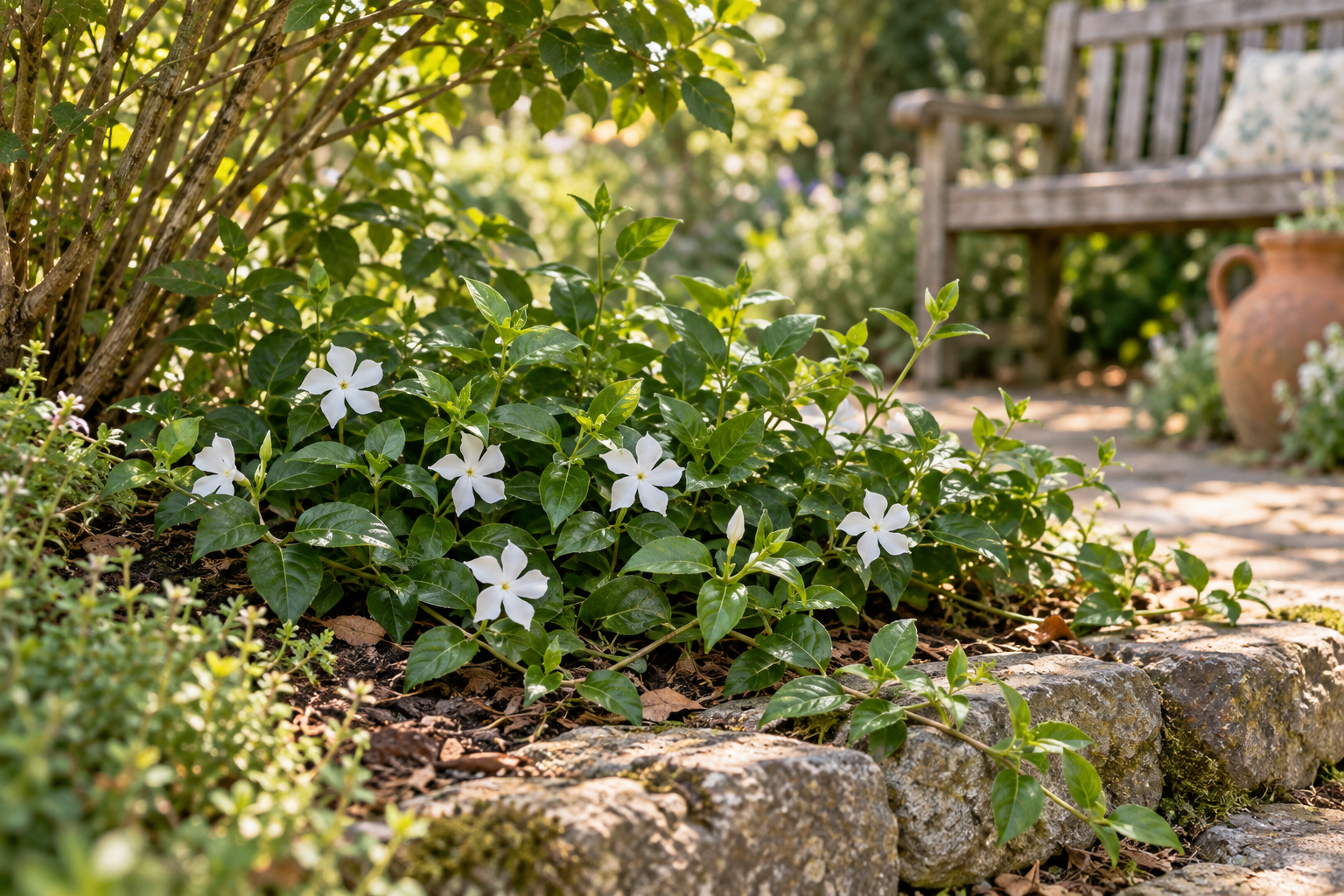
What I like about Alba is the quiet contrast: glossy green foliage and white flowers between it, their five slightly twisted lobes looking like small pinwheels. This is not a plant that fills a garden corner with tall flower spikes. It connects the ground below and lights up individual white spots. Long stems are part of the picture. They do not all grow firmly upwards, but later lie across the soil. A young 9 cm pot is still far from this. The offered set plants are approximately 10–25 cm tall; a flowering closed planting is a later garden picture, not a promise about the delivery stage.
Large leaves do not mean great height
Vinca major has broader leaves than lesser periwinkle. Its opposite pointed leaves and creeping growth make it recognisable. The species stays low to medium in height, roughly within 10–50 cm, while the stems may reach much further over time. Alba is offered in the shop as a white-flowering cultivar. For planning, I would therefore think less of one small bush than of a planting whose edge will later move. Space must remain between finer neighbouring perennials in particular. The stronger foliage should hold the planting together without covering everything else.
A good position also needs a recognisable edge
Alba can look appropriate beneath a loosely leafed tree or beside a shaded garden path. Partial shade is a good starting point. Sunnier spots are also possible if the soil does not keep drying out. Deep shade, however, does not automatically provide the same number of flowers as a brighter place. Before planting, I would look at the future edge: where may the planting spread, and where are smaller perennials that should remain visible? A clearly recognisable bed edge helps with later care. Near natural areas and outside the intended bed, I do not leave cut or rooted stems lying around.
First connect small set plants with the soil
The offer gives about 30–35 cm planting distance and roughly eight to eleven plants per square metre as guidance. I first arrange the pots over the area before digging the holes. A quantity figure thereby becomes an understandable arrangement. Then moisten the root ball, plant at its previous height and water well. Bed soil should make contact with the root ball. Hard dry soil beneath large trees needs special attention. Calling a plant ground cover does not alone make that soil a favourable planting place. Spring or suitable frost-free autumn gives young roots a sensible start.
Water according to condition, not the plant’s reputation
An older planting may withstand temporary drought differently from a recently planted specimen. During the first summer, I therefore check the small root ball itself, not just the surface beside it. If a fresh stem droops, it is worth looking into the soil before watering again. Beneath a dense tree canopy, sometimes little water arrives even when it rains. At the same time, constant soaking does not help establishment. Soil should provide moisture and pass on excess water. In a container, these changes are more confined: a dry pot root ball and a full saucer are two different problems, even if both initially show unhappy foliage.
Enjoy the flowers and keep long stems in view
Flowering is centred on spring; occasional later flowers are possible. I would therefore not promise Alba as a white-flowering carpet every day throughout the year. After flowering, evergreen foliage remains its main feature. Long stems can root where they touch soil. What is welcome in an open area can become troublesome beside the next small perennial. Old or overreaching stems can be cut back appropriately in spring. Rooted runners are selectively removed or replanted in a suitable place. This keeps the garden a designed planting rather than noticing its spread only once it becomes unwanted.
Evergreen foliage also tells the seasonal story
Evergreen does not mean that every leaf stays unchanged permanently. Old leaves, winter marks or a stem weakened after drought should be assessed together with the soil and the rest of the planting. Fresh green young stems are different from an entire sparse planting with no new growth. I also look beneath leaves and at conspicuous spots rather than immediately dismissing changes as a normal winter condition. Hard pruning, more fertiliser and extra water are not one standard response to every observation. In spring, you can organise the planting again, check its edge and identify where new young plants are genuinely needed.
One plant, several views
Good to know
Is Alba annual?
No, Vinca major Alba is a perennial evergreen ground cover. Individual older leaves may nevertheless be replaced.
Are the flowers white?
The Alba cultivar offered in the shop flowers white; the ordinary species is often described as blue-violet.
How tall does it grow?
The species stays roughly within 10–50 cm. Position and stem form affect its appearance; delivery size is separate.
What spacing makes sense?
The shop specifies about 30–35 cm centre to centre and roughly eight to eleven plants per square metre.
Does Alba grow in shade?
Yes, partial shade suits it particularly well. Flowering may be weaker in deep shade.
Do I need to limit the runners?
That makes sense at bed edges and between smaller neighbouring perennials. Long stems can form new roots where they touch soil.
Is the image the delivery stage?
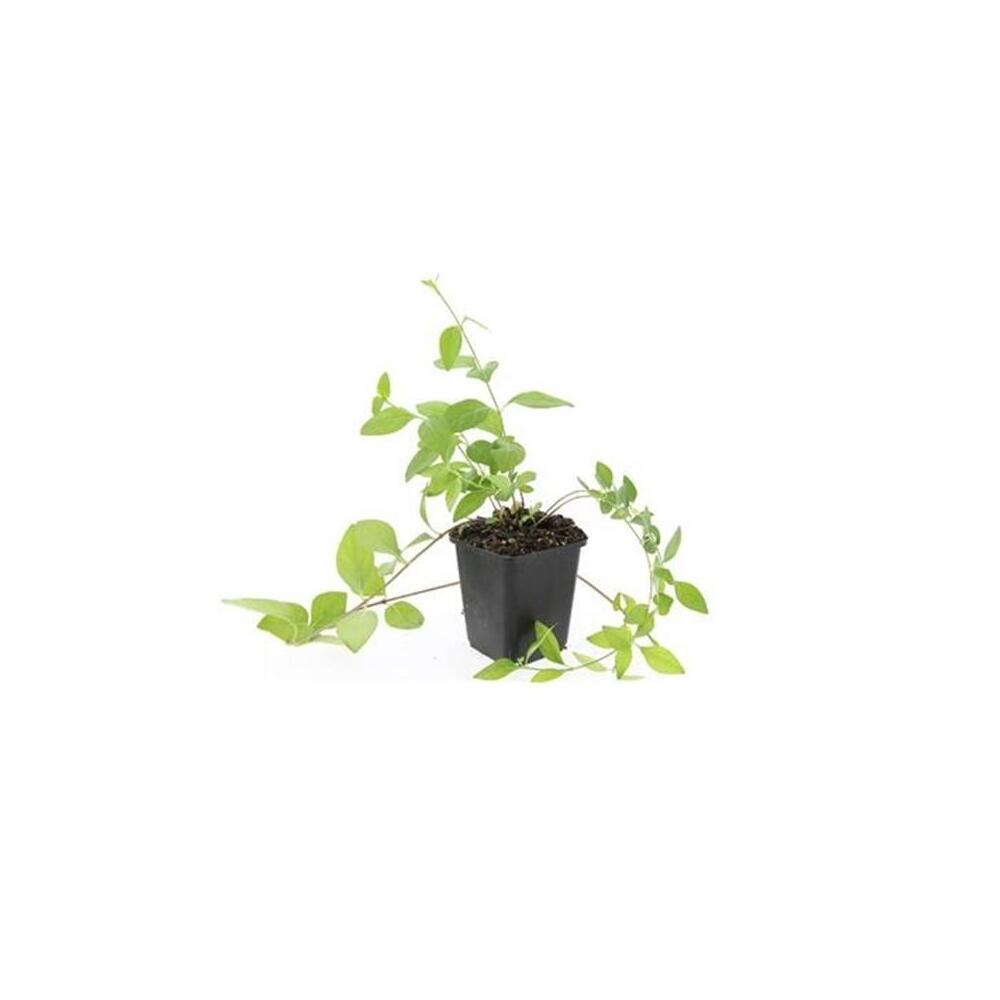
No. The scene shows a later flowering garden planting. The young plants in the respective offers are delivered in 9 cm pots.
Sources and editorial note
- Exotenherz: Alba, delivery size and directly checked quantity sets (01.10.2026)
- RHS: Vinca major, species features and cultivation (01.10.2026)
- NC State Extension: species description, position and spread (01.10.2026)
- Trees and Shrubs Online: Vinca major, leaves and growth (01.10.2026)
White cultivar colour from the shop; Vinca major species care from RHS, NC State and Trees and Shrubs, with no confusion with Vinca minor Alba. Five real sets checked; 6/12/60 available, 20/40 unavailable. RHS species height 10–50 cm, no exact Alba maximum. Seasonal height about 20–40 cm as guidance. No weed or environmental promises. Scene accepted: five white pinwheel-like flower lobes, opposite broad green foliage, creeping growth and soft garden light. Later planting explicitly labelled.