
This plant at Exotenherz
Check the shop offer for current availability, price and what is included.
Check the selected shop offer for price, availability and delivery contents.
Your care table
| Topic | What to do | Why it helps |
|---|---|---|
| Light | Plant sunny, warm and sheltered with room for an airy trellis. | Light and warmth help shoots and fruit ripen. |
| Planting | Set the root ball at its existing level; an existing graft union remains above soil. | The potted plant is not buried deeply with its entire trunk. |
| Water | During dryness, water the young root zone slowly and thoroughly. | Establishing vines and containers do not yet have large soil reserves. |
| Soil | Provide permeable well-supplied soil and clear drainage in containers. | Roots need air; persistent waterlogging harms them. |
| Support | Tie the main shoot loosely and check ties regularly. | Growing trunks must not be constricted by tight cords. |
| Fertiliser | Dose according to soil supply and actual growth. | More nitrogen and foliage do not automatically mean better grapes. |
| Pruning | Build the framework deliberately, combining annual dormant pruning with summer care. | Fruiting shoots grow from buds on the previous year’s wood. |
| Winter | Protect roots in small containers and guard new growth from late frost. | Dormancy of wood and sensitivity of fresh leaves are different things. |
For young plants, feel the soil directly at the root ball. The surface and deeper soil may have different moisture levels.
Water thoroughly after planting; later, water according to the soil, weather and establishment rather than a fixed calendar.
Avoid standing water. For plants in containers, also check that water runs out of the drainage hole.
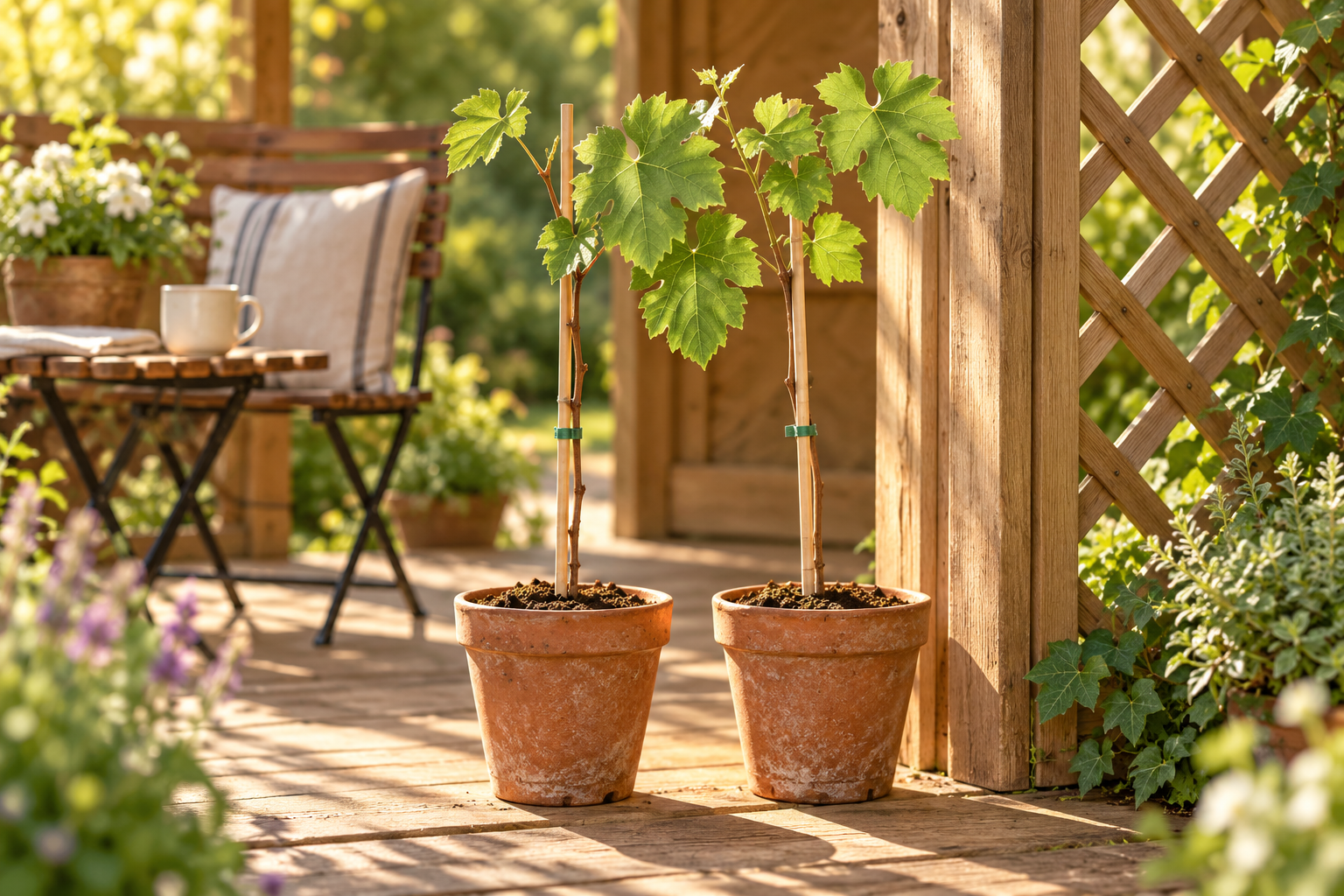
A young vine position beside the garden house
The pale grapes of Vroege van der Laan are an attractive later goal. But we already like the young leaves growing from a thin woody shoot and seeking support with tendrils. Beside a garden pavilion, this greenery can make a welcoming transition between seating area and bed. A climbing support remains freely visible instead of disappearing from the start behind an invented huge vine curtain. We prefer accompanying the little vine as it really begins and enjoying the next well-ripened shoot.
Two vines, not two finished bunches of fruit
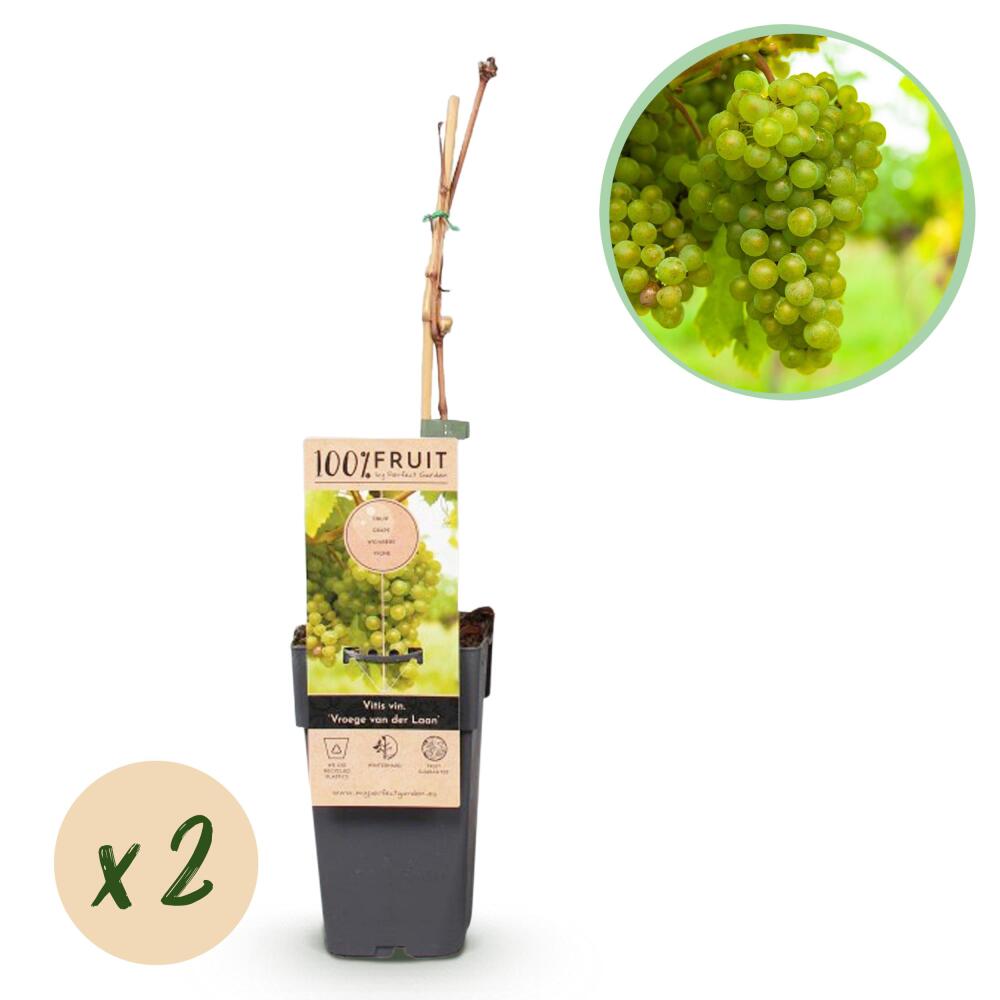
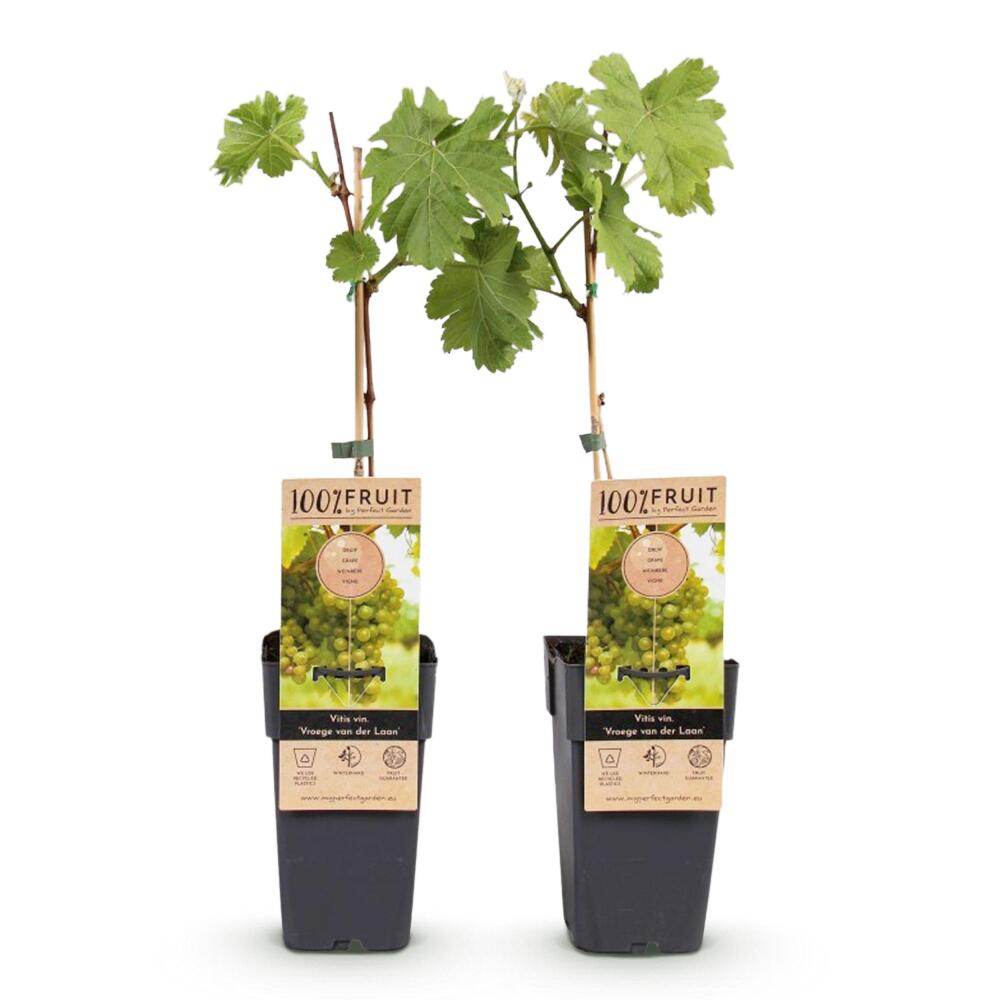
The offer contains two plants, each in a 15 cm pot and about 50 cm overall height. The shop describes the variety as early-ripening with pale grapes. A separate fruit detail in the product image illustrates these later fruits; it does not form part of a guaranteed delivery with bunches. The plant grows woody climbing shoots over several metres when space is available. A fixed small final dimension therefore cannot be inferred from delivery condition. Instead define the desired framework arms and their length before deciding how close the two young plants should remain.
Early-ripening does not mean no sun
This variety too needs warmth and a sunny sheltered position. Earlier ripening does not replace light or well-ripened shoots. A sturdy trellis can stand against a warm wall, on posts or a suitable garden structure. For trained vines, we plan roughly 1.2 to 1.5 metres of spacing as a guide; longer arms need more area. An airy framework helps with later harvest and observation. The small shipping support carries only the beginning. The permanent framework must bear substantially more weight and recurring growth for years.
Soil and planting time are part of the start
Well-drained, supplied soil suits better than a place with continuously standing water. During dormancy from late autumn to early spring, planting is possible in frost-free soil; in cold regions spring is often better. Set the supplied root ball at its existing level and water thoroughly. Do not bury a visible graft union. Especially by a garden house, a roof overhang can hold rain off. We therefore check the root ball directly, not just the weather. The young plant first has to extend its roots from the original pot area into new soil.
A pot remains a limited root space
Growing the vine in a container requires adequate volume, a stable position and reliable drainage. The small 15 cm pot is no lasting basis for mature tendrils. Check moisture in warmth or wind and water slowly and thoroughly when needed. An established bed vine can later use more soil reserves; in a pot care stays closer. Adapt nutrients to soil and growth. A vine with vigorous healthy foliage does not automatically need large additional feeds. A brief comparison of both vines helps us: where is the root ball drier, and which side actually receives more sun?
Pruning gives growth its direction
A clear framework of main trunk and chosen arms makes the next years easier. Flowers and fruiting shoots develop on new shoots from buds on the previous year’s wood. Dormant pruning therefore retains suitable positions. Summer care organises fresh tendrils before they become a dense tangle. Choose a suitable system and keep construction understandable. Let a young vine establish well first rather than expecting as much early fruit as possible. Keep ties loose and check regularly. Photographing the leafless framework is a simple way to recognise its form the next spring.
Recognise ripeness and prepare the next spring
The pale variety is offered as early-ripening; the actual harvest date remains dependent on region and weather. Yellowish green colour alone does not prove sufficient sweetness. Assess healthy berries by development and taste, then cut the bunch carefully with its stalk. Remove damaged fruit and keep grapes away from dogs. After autumn foliage, wood remains dormant. Protect roots in small containers and maintain drainage. In spring, watch fresh growth during late frosts. The young vine thus becomes a familiar part of the garden whose changes become better known year by year.
One plant, several views
Good to know
Is the variety early-ripening?
That is how the shop describes it. Warmth, region and weather still determine actual harvest date.
Are the fruits white as the name says?
White grapes here means pale fruit appearing greenish to yellowish when ripe.
Will the delivery already carry grapes?
Not guaranteed. The shop fruit graphic shows the later variety; the offer consists of two young vines.
How much spacing does the set need?
For a trained trellis, about 1.2–1.5 m is a guide. Also consider the planned width of the framework.
Can I plant in frozen soil?
No. Plant in frost-free soil that is not saturated; preferably in early spring in cold locations.
Why must I water by the garden house despite rain?
A roof overhang can keep the root position dry. Check the root ball directly and supply it when needed.
Sources and editorial note
- Exotenherz: offer and original images (02.10.2026)
- RHS: planting and caring for grapevines (02.10.2026)
- RHS: outdoor vines (02.10.2026)
- RHS: pruning and training (02.10.2026)
- RHS: cordon pruning (02.10.2026)
- University of Minnesota Extension: grapevines in the garden (02.10.2026)
- University of Maryland Extension: table grapes (02.10.2026)
Shop offer, article number, GTIN, availability and original images checked directly on 02.10.2026. Specialist sources read directly. Early ripening from original offer; no seedlessness, fixed harvest week or variety-specific frost temperature invented.