
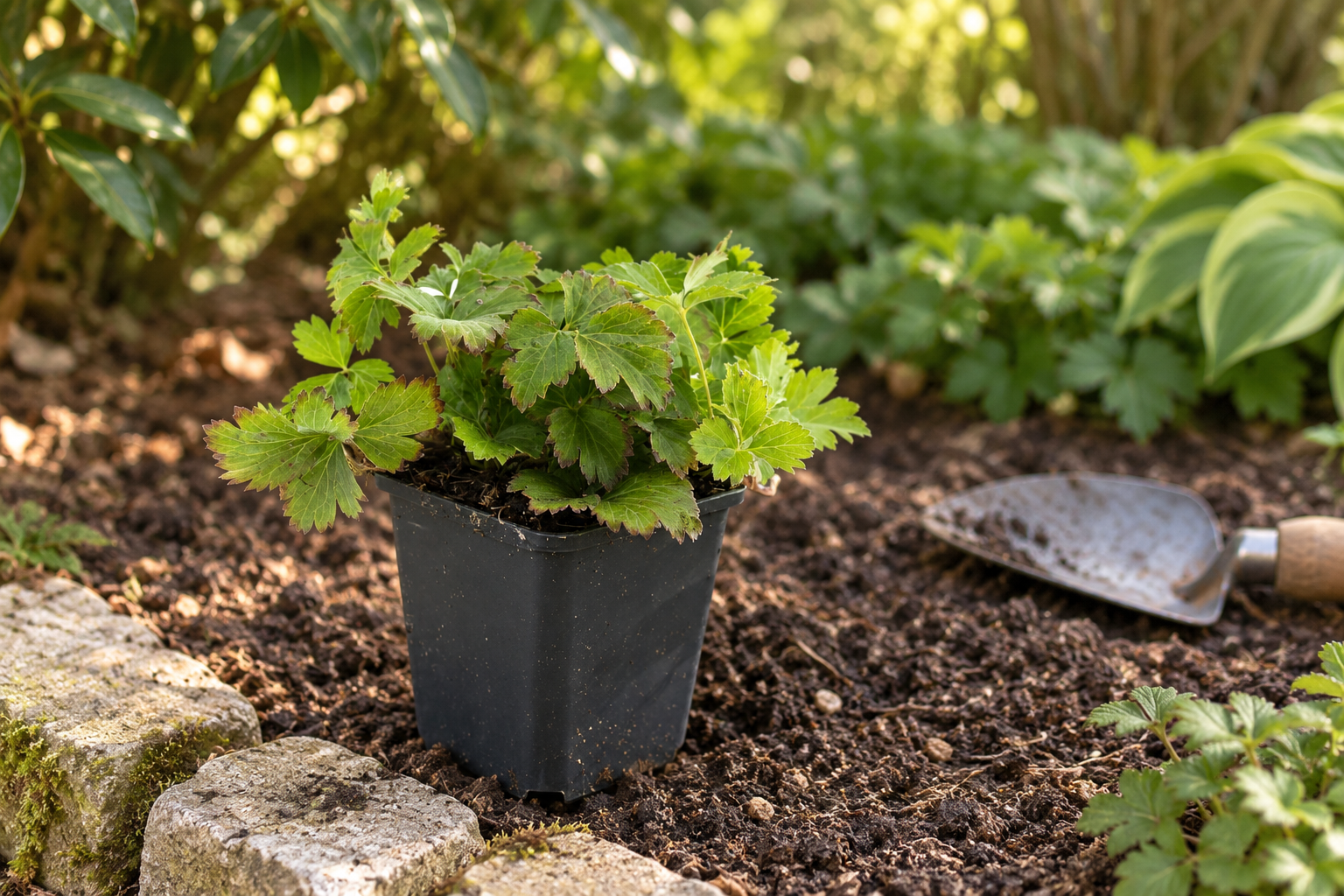
This plant at Exotenherz
Check the shop offer for current availability, price and what is included.
Check the shop for the current price, availability and offer contents.
Your care table
| Topic | What to do | Why it helps |
|---|---|---|
| Position | Plant in partial shade to shade; also check soil beneath woody plants. | Canopies often intercept rain although a position looks shady. |
| Planting | Set a moist rootball at its previous height and water thoroughly. | This connects the small pot rootball with garden soil. |
| Water | Check rootball and adjacent soil during establishment. | Garden soil and pot substrate may dry differently. |
| Soil | Prepare humus-rich moderately fertile soil; loosen strong compaction. | Good root space helps more than constant extra feeding. |
| Gaps | Carefully remove weeds until leaves close. | Young plants do not immediately cover the whole area. |
| Runners | Selectively remove rooted shoots outside the planned area. | The carpet should leave room for small neighbouring perennials. |
| Division | Divide older well-rooted stands in spring. | Freshly planted small rootballs may develop first. |
| Winter | Keep potted plants sheltered outdoors and check moisture in frost-free weather. | Small containers are more exposed than established bed plants. |
Check the compost and pot weight. The care table explains how far the compost may dry.
Water only when needed. The water should reach the root ball without spilling over the rim.
Remove surplus water from the saucer or cachepot. Then return the plant to a suitable position.
Three leaflets and small golden cups
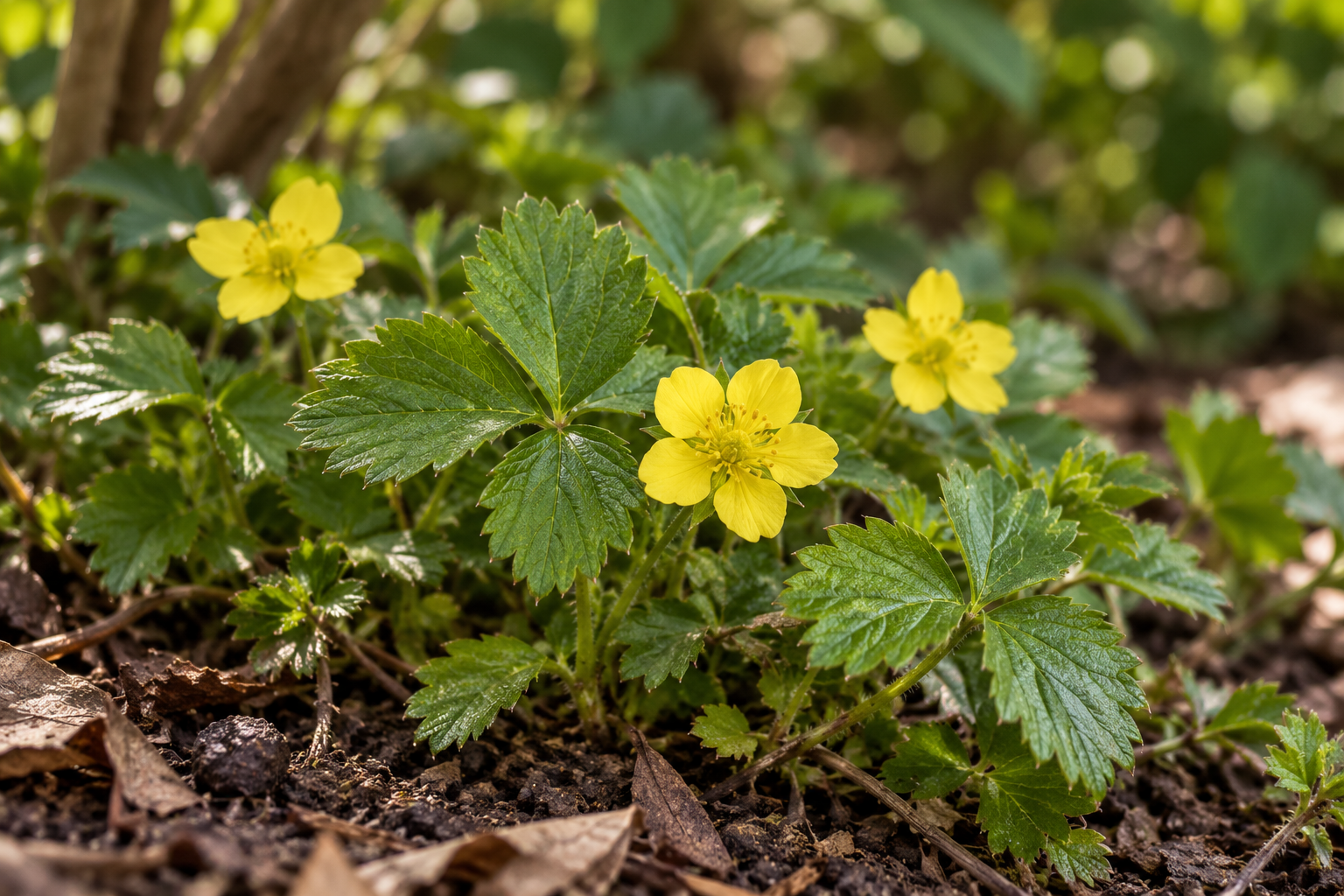
Even young barren strawberry shows where its name comes from. Three broad toothed leaflets form one green leaf; side lighting reveals fine veins. Some older leaves have reddish edges. Later, small golden-yellow five-petalled flowers open above low foliage. They resemble strawberry flowers but do not provide a strawberry harvest. Waldsteinia ternata is a perennial in the rose family. Its effect comes not from one tall plant but from many small leaves together. Under a loosely structured shrub, this green can quietly connect soil, stones and taller plants.
Small potted plants begin a carpet
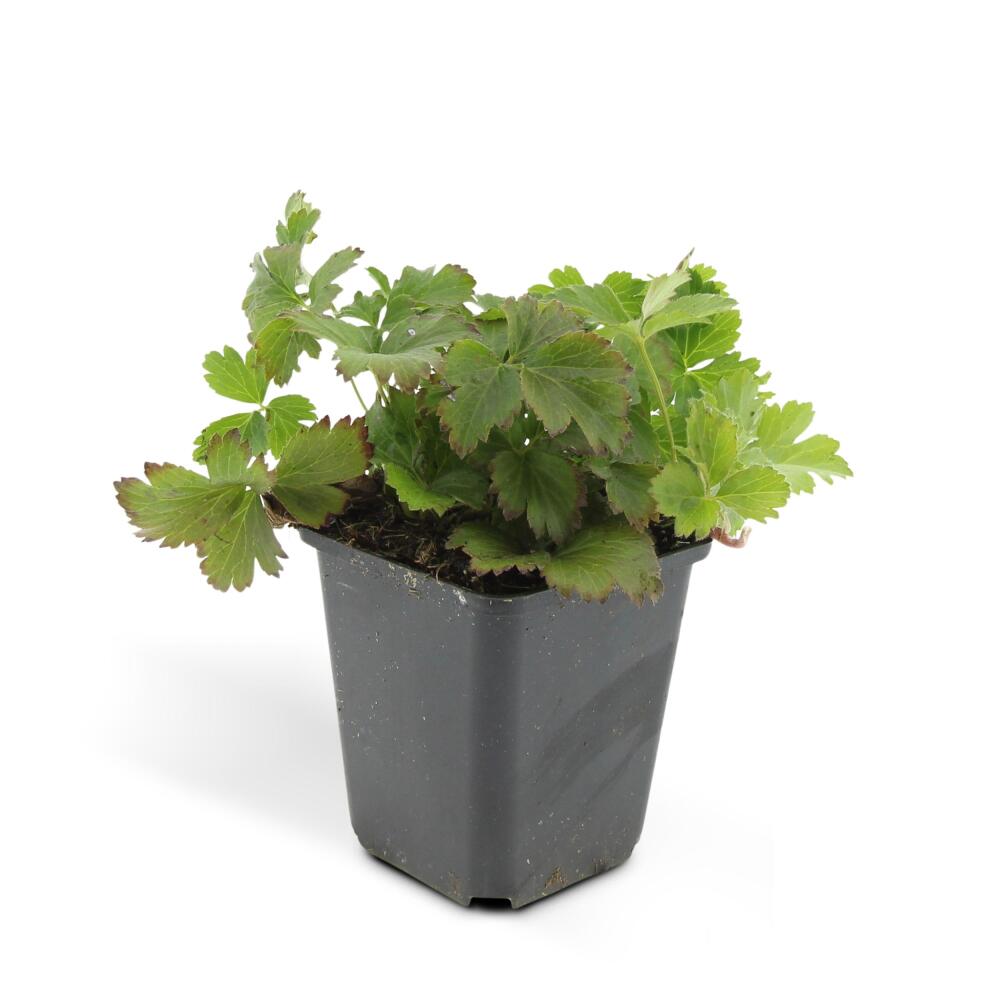
The shop offers the same species in quantity sets. Directly checked six- and twelve-plant sets each contain young plants in 9 cm pots; stated total height is 10–25 cm. This is a delivery measure including container, not later height of an established carpet. Leaves grow mostly low, about 10–15 cm high, while flower stems may stand above them. Runners develop sideways and gradually occupy ground. A newly planted set therefore does not cover every gap on the first day. The original shows a young plant; flowering detail illustrates a possible later garden phase and promises no flowers at delivery.
Under shrubs, more than sun hours matter
A partially shaded to shady garden site suits barren strawberry. Especially beneath open woody plants, inspect the soil: a canopy may provide shade while intercepting plenty of rain. Shade there does not automatically mean moist ground. Humus-rich moderately fertile soil facilitates establishment; continuously completely dry root competition makes starting harder. Some sun may work too if soil does not dry out. Hot afternoon sun on a shallow dry bed is less favourable. Beside a path, the low leaf edge should remain visible rather than constantly trodden on. A recognisable boundary makes later runner care easier.
Prepare the area calmly before planting
Mild spring or early-autumn periods suit planting. Soil should be frost-free and workable; during a hot dry week, wait for kinder conditions. Remove perennial weeds with their roots before setting small plants. Position pots on the prepared area first and view their distribution from the path. About 25–30 cm spacing creates a denser start; around 45 cm is also specialist guidance for a looser layout. More space means more patience and care between plants. Plant moist rootballs at their previous level, gently firm and water thoroughly afterwards.
Water must connect the small rootball with garden soil
During establishment, check both the original rootball and adjacent soil. They may dry at different speeds. A moist strip beside a dry rootball does not yet reliably supply the new plant. Water slowly at the base as needed, then check whether it reached the small root area. A fixed weekly routine suits woody cover poorly because rain, wind and root competition change. Established barren strawberries cope better with temporary drought than freshly planted ones. Still recheck during prolonged dry periods. Until leaves close, carefully remove emerging weeds among young shoots without continually loosening their roots.
Spring flowers, checks at the edge
Yellow flowers appear from late spring to early summer; exact timing shifts with region and weather. A flowering carpet makes a lovely foreground for shrubs or spring bulbs with matching site needs. Allow small neighbouring perennials enough space of their own. Runners make barren strawberry a groundcover but may also spread beyond the intended area. Selectively lift unwanted rooted stems at the edge. Regular cutting over the whole area is usually unnecessary. In older stands, a well-rooted section may be divided and moved in spring. After setting young plants, let them grow first instead of immediately splitting the still-small rootball again.
A green winter depends on the site
Barren strawberry is described as wintergreen to semi-evergreen. Plenty of leaves may remain in mild winters; after hard frost, brown or damaged leaves are possible. That does not automatically mean this perennial stand has failed. Watch bases and new shoots in spring before removing a rootball too quickly. Newly delivered pots should not winter uncared for on a windy stone surface; their small soil volume is much more exposed than an established stand. If plants temporarily remain in containers, they need shelter outdoors, drainage and moisture checks in frost-free periods. In beds, support new growth with suitable soil care, not continual heavy fertilisation.
One plant, several views
Good to know
Does barren strawberry bear edible strawberries?
No. Leaves and flowers resemble strawberries, but barren strawberry is planted as an ornamental perennial and groundcover.
Is it a houseplant for a dark place?
No. A shady or partially shaded garden position is meant. This perennial is cultivated outdoors.
Does the garden become weed-free immediately?
No. Young plants leave gaps at first where weeds must be removed. The carpet develops with growth.
Why is a different height stated from the shop offer?
10–25 cm describes total delivery height including pot. Later low foliage in beds and flower stems above it are considered separately.
Does a shady bed need water at all?
Yes, especially during establishment if rootball or soil dries. Woody plants may intercept rain and consume water through roots.
Must the whole area be cut back yearly?
Regular cutting over the entire area is normally unnecessary. Remove unwanted runners at the edge and selectively remove damaged leaves in spring.
Sources and editorial note
- Exotenherz: directly checked six-plant set, identifiers and delivery dimensions (retrieved 03.10.2026)
- Exotenherz: directly checked twelve-plant set (retrieved 03.10.2026)
- RHS: Waldsteinia ternata, position, growth and winter leaves (retrieved 03.10.2026)
- NC State Extension: leaves, flowers, establishment and cultivation (retrieved 03.10.2026)
- RHS: groundcover, spacing and care until the stand closes (retrieved 03.10.2026)
Shop offers and specialist sources directly read on 03.10.2026. Quantity sets are variants of one plant identity. Leaf and flower detail actually compared with clean originals. Later bed development separated from delivery dimensions. Central page, PDF and publication evidence still required.