
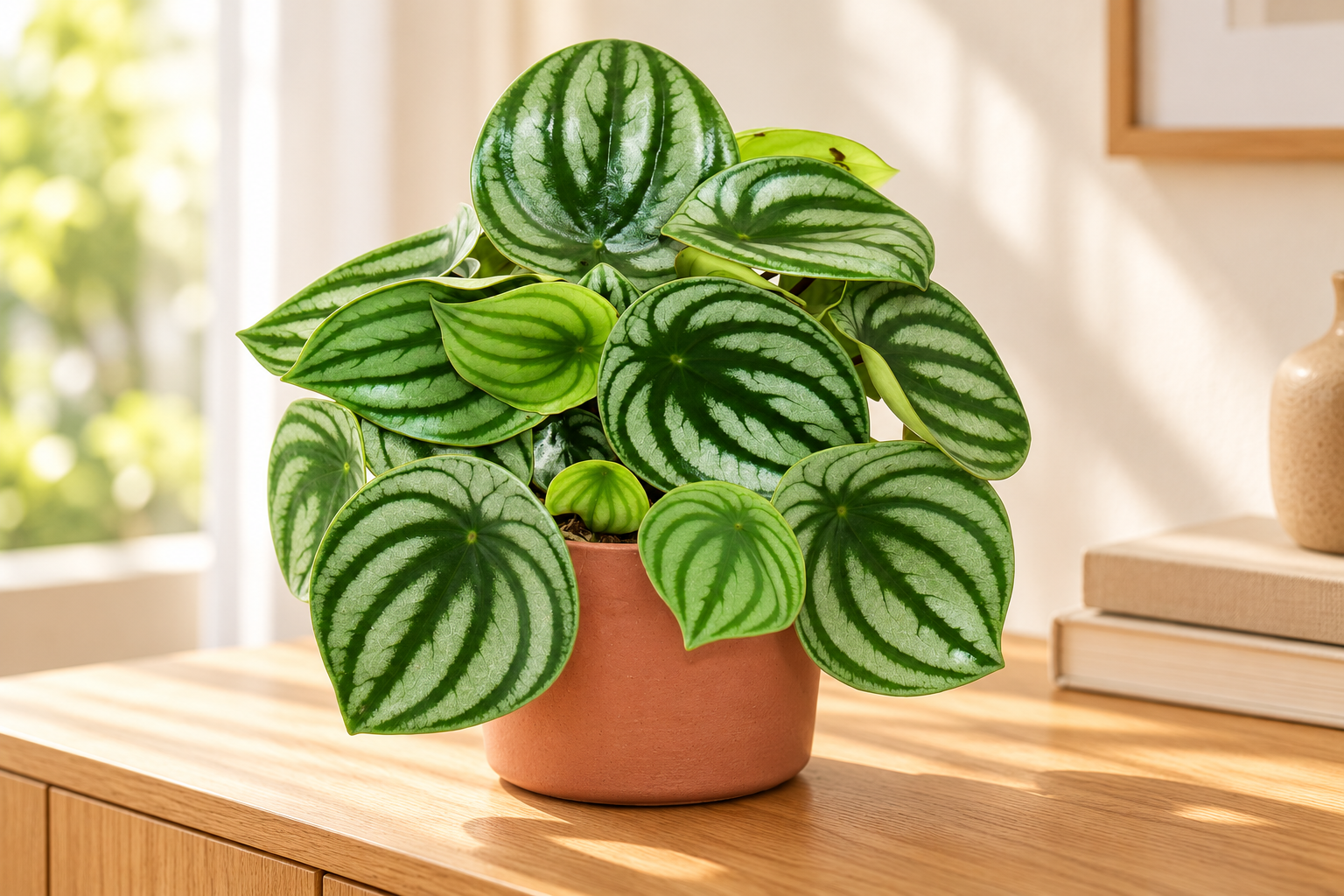
This plant at Exotenherz
Check the shop offer for current availability, price and what is included.
Product details, availability and delivery information are provided in the shop offer.
Your care table
| Topic | What to do | Why it helps |
|---|---|---|
| Position | Choose bright filtered daylight, such as near a window without hot midday sun. | Markings stay clear while strong direct summer sun can harm foliage. |
| Temperature | Keep evenly warm indoors and avoid cold draughts and cold glass. | This tropical peperomia is no frost-hardy garden plant; a calm warm position supports growth. |
| Water | Before each watering check upper soil and pot weight, then water thoroughly and empty the decorative pot. | It needs moisture but roots are sensitive to permanently wet airless medium. |
| Growing medium | Use loose well-draining houseplant medium and a nursery pot with a drainage hole. | Air between components protects the small root area from prolonged wetness. |
| Repotting | Not straight after purchase; only with well-rooted ball in spring, choose a slightly larger pot. | An unnecessarily large pot retains water longer than the compact plant consumes. |
| Feeding | During visible growth in the bright half-year, give measured liquid houseplant fertiliser. | Active new leaves need nutrients; demand is lower in low-light winter. |
| Air and leaf | Avoid heating airflow directly on leaves and gently dust large leaves occasionally. | Balanced room conditions and clean leaves make changes easier to observe. |
| Winter | Keep as bright as possible, keep checking root ball and water less often with slower growth. | Less light and slower growth usually mean less water consumption. |
Check the compost and pot weight. The care table explains how far the compost may dry.
Water only when needed. The water should reach the root ball without spilling over the rim.
Remove surplus water from the saucer or cachepot. Then return the plant to a suitable position.
A leaf pattern instantly recognised
With this peperomia I first look at one leaf. Dark-green stripes run from the stalk attachment over a silvery shimmering surface. Round shape recalls a little watermelon, hence the shop name. The plant remains a compact bush, not a trailing peperomia. One Peperomia argyreia in a 12 cm pot is offered at around 20–25 cm total height. The original photograph shows several large leaves and fresh smaller ones closely above. This ratio says much more about the delivered young plant than an enlarged specimen picture. When unpacking, I check leaves for pressure marks, let the pot settle and give it a few days to adapt to new light.
Bright light reveals the pattern
Watermelon peperomia wants brightness, but not hours of hot summer sun behind glass. Near an east window or slightly back from a bright south window fits better than a dark room corner. In winter it may move closer to daylight as sun weakens. I turn the pot a little occasionally when leaves clearly grow towards the window. Unusually long new leaf stalks and a loose crown mean checking incoming light first. Dry pale patches on silver areas after moving may mean the leap into direct sun was too quick. It belongs in a warm home; avoid cold draughts and immediately cold window glass.
Check the small root ball before watering
Fleshy leaves store some water, but no rigid weekly plan follows. A 12 cm pot dries differently in bright warmth and low-light winter. I first feel upper growing medium and lift the nursery pot briefly. If the surface has slightly dried and the ball no longer feels heavily wet, water slowly until water can drain below. It must not stay in the decorative pot. Constantly moist soil removes air from fine roots; excessive dryness often shows as reduced leaf firmness. Before responding to a yellow or drooping leaf with more water, check root ball and position. Both problems may look similar but need different responses.
An airy pot rather than rushed repotting
The delivered nursery pot is the right starting point. Only once roots emerge underneath, fill the ball densely or growing medium loses structure do I plan a gentle spring change. The new pot should be slightly larger with a drainage hole. Loose houseplant medium with coarse components retains moisture without becoming a permanently wet mass. Set peperomia at roughly its previous height without firm compression. After repotting watch rather than immediately feeding heavily. Later in the brighter half-year, a measured supply during new leaf formation suffices. A long flower stalk may appear; inconspicuous green flower spikes are normal, but foliage remains the main show.
When heating and winter light change the rhythm
Growth often declines with shorter days. Even if the room stays warm, peperomia usually consumes less water then. I let upper soil dry a little further before watering and also check whether light still suffices. Directly over a radiator, leaf edges may suffer despite moist soil; a bright position without hot airflow is more comfortable. Gently dust round leaves with a soft slightly damp cloth. Inspect undersides and stalk bases too, where possible mealybugs can be detected early. Individual old leaves can be cleanly removed; regular shaping cuts are unnecessary for this compact species.
A small plant rewarding careful looks
Peperomia argyreia remains manageable indoors. A stable place where you can observe new leaf development is therefore worthwhile. Leaves emerge small and paler from the centre, unfolding characteristic silver bands over time. If one looks different, I do not immediately seek pest treatment but first inspect light, temperature and root-ball moisture. Watermelon describes the pattern, not a separate care category and certainly no edible fruit. Bright filtered light, warmth and an airy root zone give more enjoyment of this small foliage plant than a fixed watering calendar.
One plant, several views
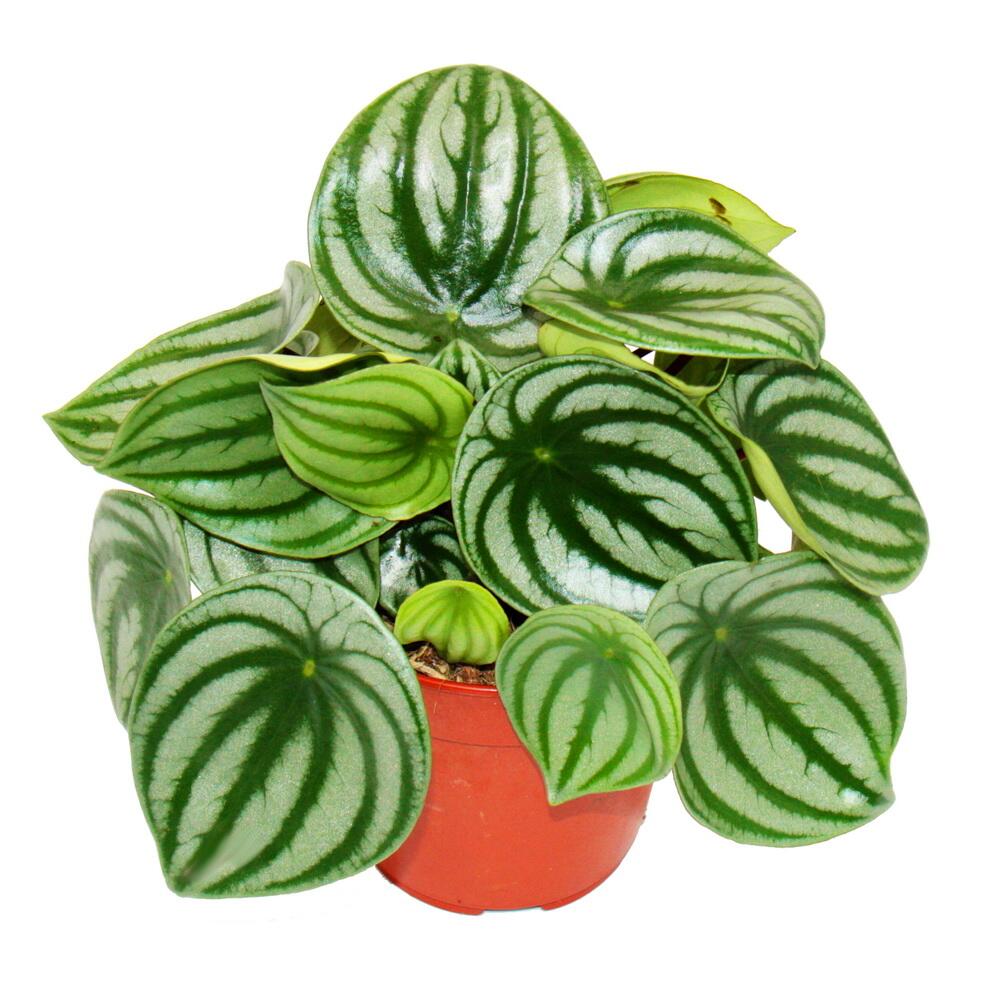
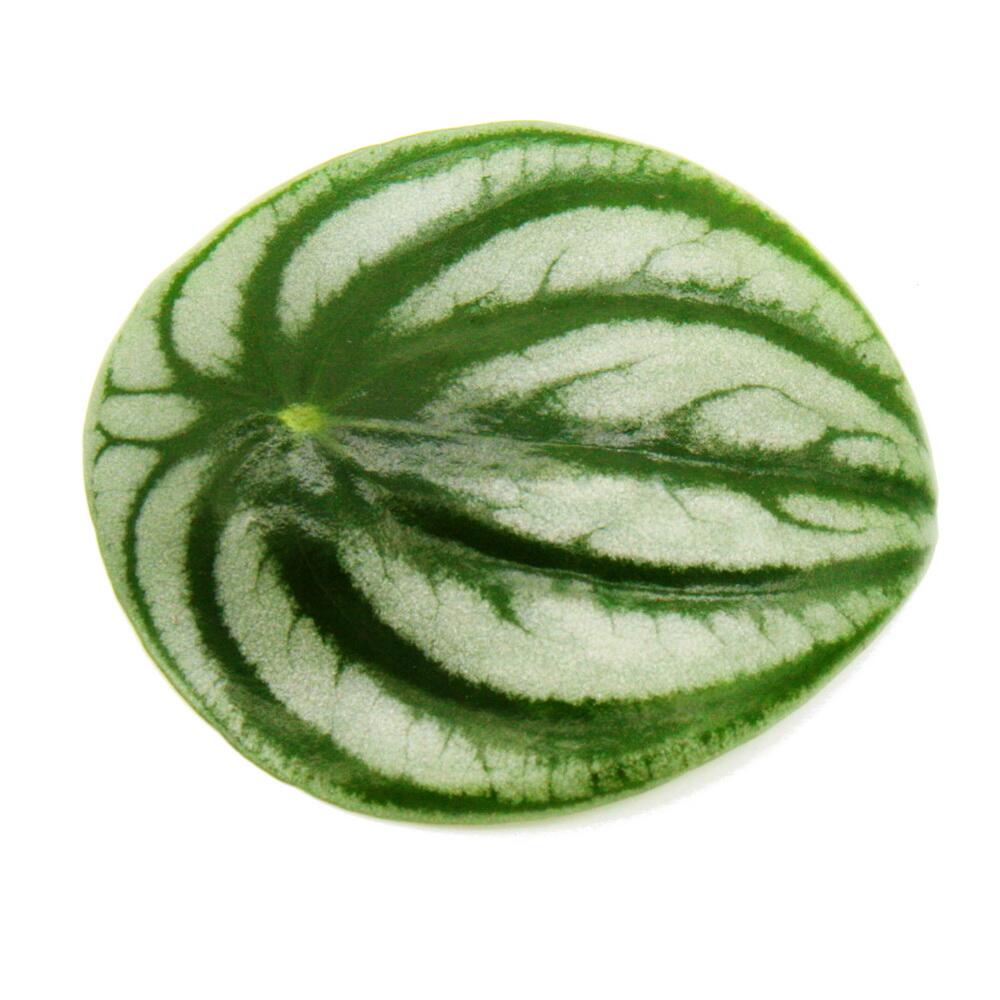
Good to know
Why is it called watermelon peperomia?
Round leaves show silver areas and dark-green stripes recalling a watermelon rind. It is a leaf pattern, not a fruit.
Can it sit right at a south window?
Bright light is good, but hot direct summer sun behind glass can harm leaves. Some distance or a light curtain is usually more sensible; it may move closer in winter.
How often should I water?
Not by weekday. Check upper soil and pot weight, water thoroughly as needed and remove excess from the decorative pot.
Must I immediately replace the 12 cm pot?
No. Only with dense roots or spent medium, move in spring to a slightly larger pot with drainage.
What are the thin spikes between leaves?
Peperomias can form small inconspicuous flowers on narrow spikes. Striped foliage is central to this plant.
Is it a succulent for completely dry soil?
Its leaves are somewhat fleshy but it is not for months of dry culture. Supply the root ball as needed and give it air between waterings.
Sources and editorial note
- Exotenherz: exact shop variant, size, stock and original images (accessed 30 September 2026)
- RHS: Peperomia argyreia, growth, light and culture (accessed 30 September 2026)
- RHS: Peperomia care, growing medium, water and winter (accessed 30 September 2026)
Shop checked live on 30 September 2026: article number 207519112021, GTIN 4019515917624, 12 cm pot, around 20–25 cm total height, immediately available at that time. Both originals checked. Watermelon is used as trade name; botanical species is Peperomia argyreia. RHS species profile and Peperomia guide directly read. Shop sunny/warm guidance is refined for this foliage plant by RHS bright indirect light; no harsh summer sun promised as position. Recheck availability before publication.