
This plant at Exotenherz
Check the shop offer for current availability, price and what is included.
Product details, availability and delivery information in the shop.
Your care table
| Topic | What to do | Why it helps |
|---|---|---|
| Position | Sunny to lightly partly shaded and easily accessible. | Enough light makes fruit development and care easier. |
| Moisture | Supply water evenly while establishing and during dry periods. | Small pots have only limited water reserves. |
| Soil | Humus-rich and well drained; protect shallow roots. | Avoid deep hoeing in the root zone. |
| Feeding | Moderately in spring, according to nutrient supplies. | Do not combine several fertilisers at once on suspicion. |
| Pruning | Thin out and preserve older fruiting wood. | Whitecurrants do not follow the blackcurrant pruning pattern. |
| Harvest | Assess pale, translucent ripe berries by taste. | The variety does not turn red when ripe. |
| Aftercare | Continue watching foliage and soil moisture after harvest. | The plant is already preparing for further growth. |
| Winter | Overwinter outdoors; protect containers and drainage. | Leaf fall is normal; prevent the root ball from drying out. |
Check the compost and pot weight. The care table explains how far the compost may dry.
Water only when needed. The water should reach the root ball without spilling over the rim.
Remove surplus water from the saucer or cachepot. Then return the plant to a suitable position.
White fruits with an effect of their own
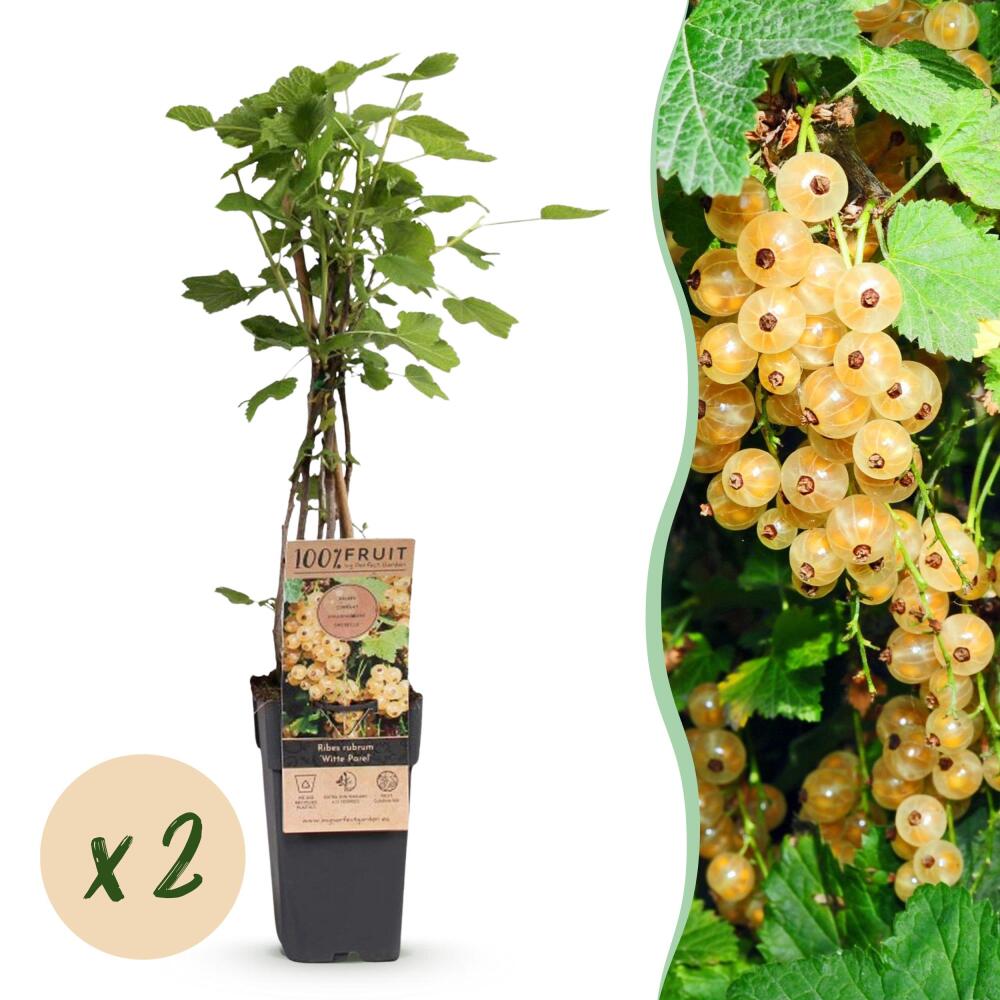
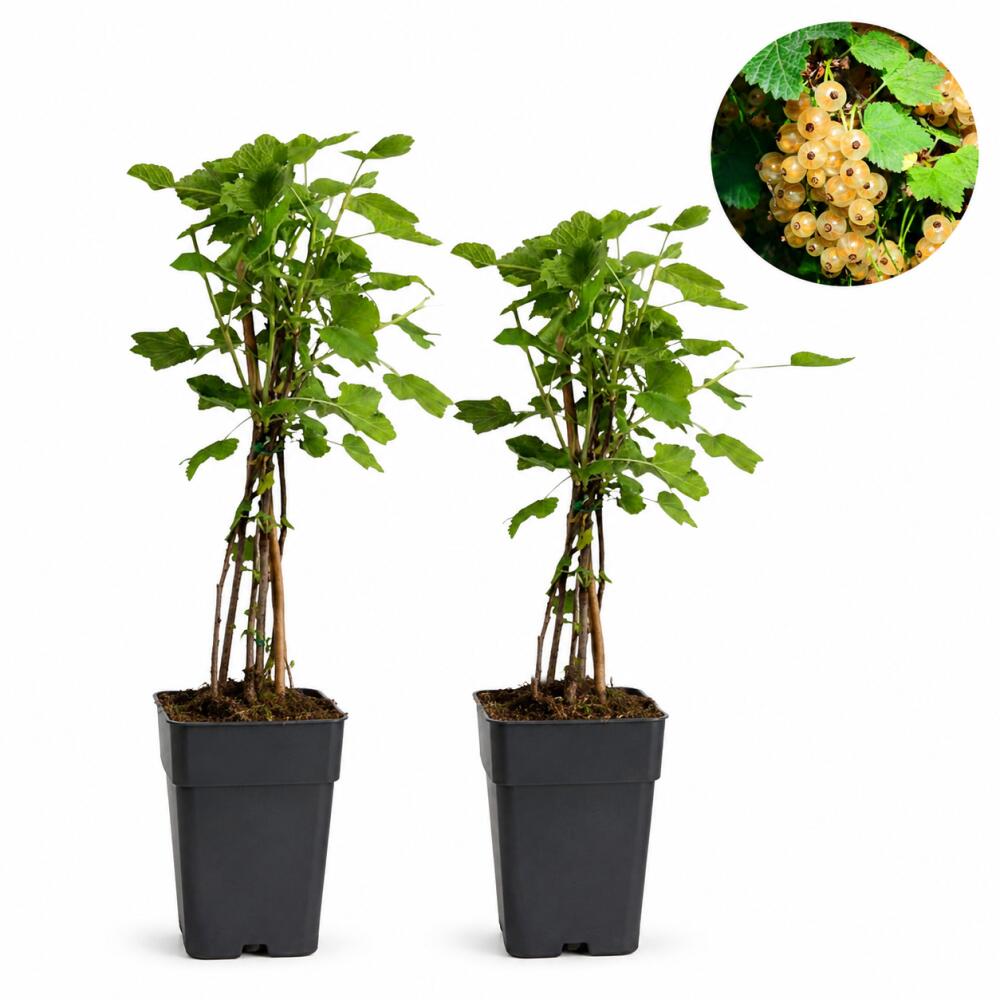
Witte Parel means White Pearl. The name suits the pale, slightly translucent currants that can later hang in clusters. Botanically, the variety is placed in the redcurrant group. Pale fruit colour therefore does not make it a fundamentally different plant species to care for. Its flavour, which seems milder, is a lovely addition to the edible garden. Acidity and sweetness nevertheless also depend on ripeness, position and personal taste.
Two small shrubs for a lasting planting
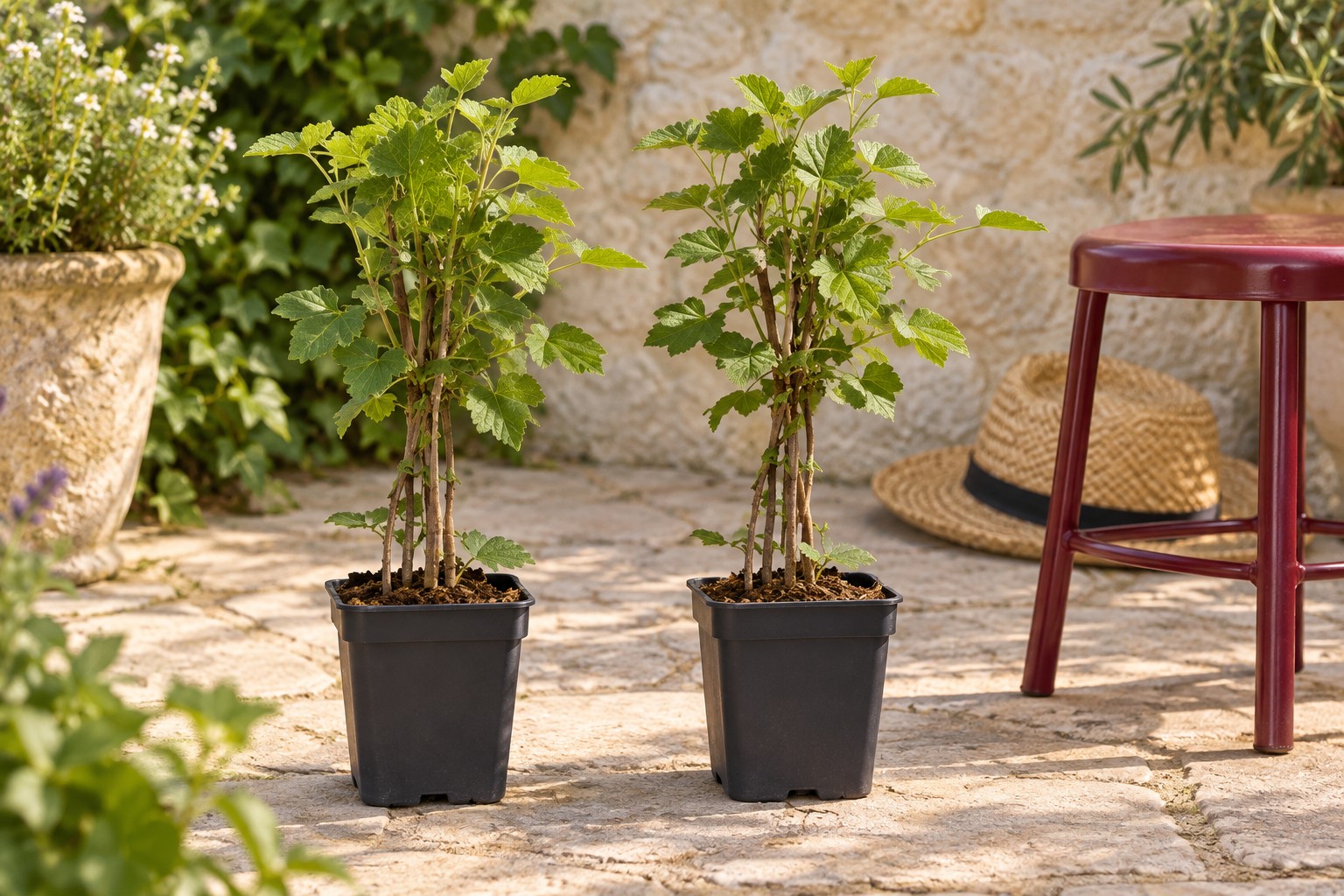
The offer contains two young plants, each approximately 50 cm tall and in a 15 cm pot. A fruit picture is a variety example and does not mean that the delivery already carries ripe berries. We would consider the eventual harvest position from the start: the clusters should be within easy reach, and the plant needs air to the sides. A decorative row of small pots can be a temporary arrangement; permanently, the shrub requires more soil and space.
A good position need not be complicated
Sun to light partial shade, moisture-retentive soil and reliable drainage provide the basis. If the soil dries very quickly, organic matter during preparation and a suitable mulch afterwards help. Keep vigorous weeds away from the young root area without hoeing deeply there. In containers, check moisture more frequently. On a hot terrace, a small plant can use its water reserves faster than its delicate growth suggests.
Make harvesting easier with pruning
The structure should remain clear. Remove over-aged and poorly placed shoots gradually; retain useful older wood bearing short fruiting shoots. The rules for stronger ongoing renewal of blackcurrants cannot be transferred unchanged. With a young plant, it is often enough initially to observe its natural branching. A deliberately narrow form chosen later can save space, but requires regular tying-in and pruning adapted to it.
Recognise ripeness without waiting for red
Whitecurrants do not turn red even when ripe. Look for the characteristic pale translucence, a pleasant texture and the taste of individual fully developed berries. Pick clusters carefully rather than squeezing each fruit between your fingers. They look particularly attractive in a pale fruit salad, but are equally suitable for processing. Clean shallow containers and brief, cool storage preserve these delicate fruits better than a deep warm bucket.
Healthy through summer and winter
Water and leaf health remain important even after harvest. When spots or feeding damage appear, look at the entire shrub, not just one conspicuous leaf. If it is very dense and dries slowly after rain, careful thinning may help. The foliage naturally falls for winter. In the garden, the plant stays outside; in containers, protect the root ball against extreme temperature fluctuations and check on frost-free days that it is still slightly moist.
One plant, several views
Good to know
Are whitecurrants simply unripe?
No. Witte Parel remains pale when ripe. Colour, texture and taste are assessed together.
Why does the botanical name say Ribes rubrum?
Whitecurrants belong to the cultivated redcurrant group. The name describes the botanical classification, not every individual fruit colour.
Can I prune it like blackcurrants?
Not unchanged. Preserve suitable older fruiting wood and thin selectively.
Will a large pot on the terrace work?
Yes, with enough root room, clear drainage and a reliable water supply. The 15 cm delivery pot is not sufficient permanently.
Sources and editorial note
- Product and delivery contents: Exotenherz
- Hoogeveen Plants nursery: variety profile
- Royal Horticultural Society: plant and care information
- Bundessortenamt: variety catalogue
Sources checked: 16 September 2026. Product information and the contents of delivery follow the linked shop offer. Care advice was checked against the cited specialist sources and should still be adapted to the plant’s condition, position and season.