
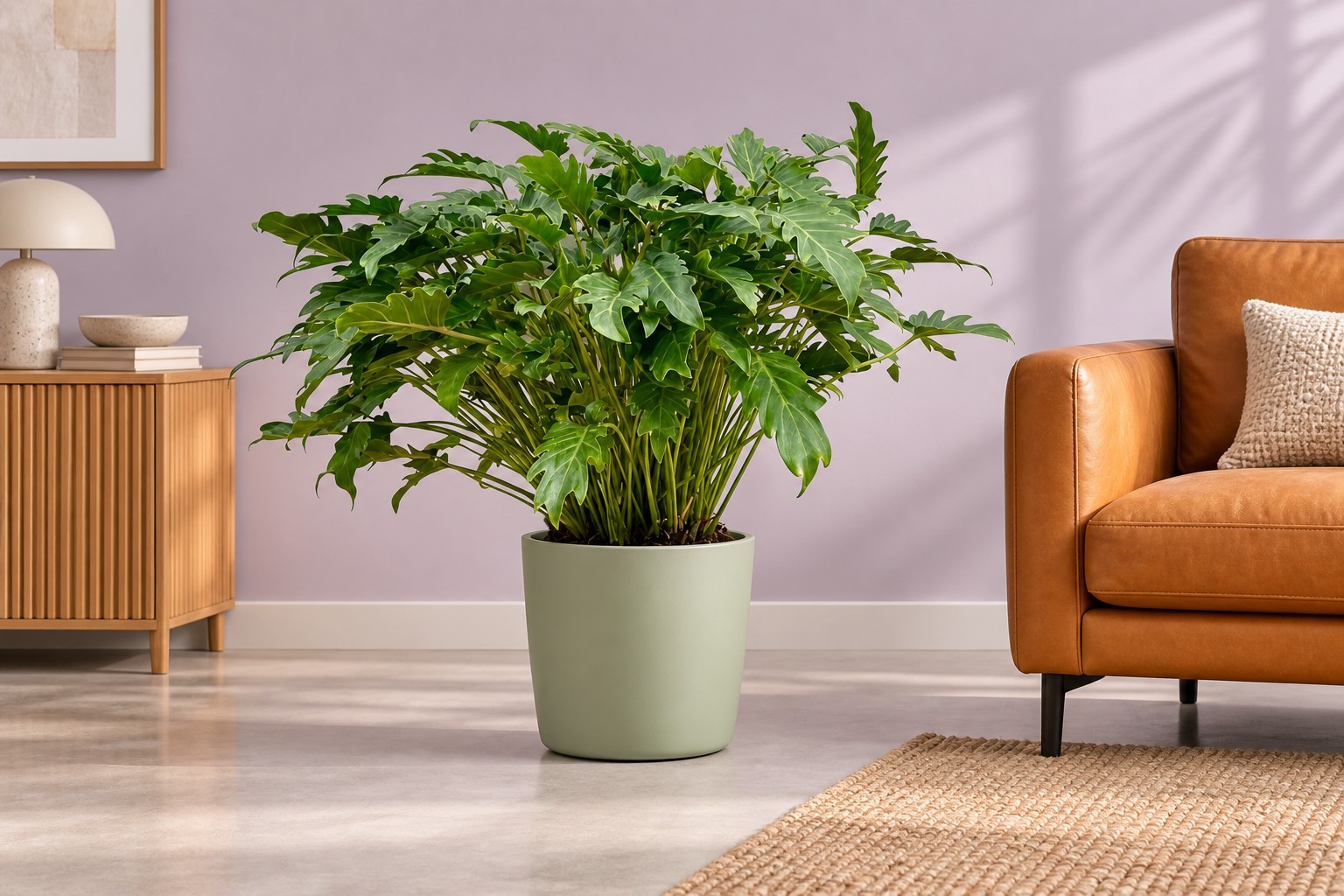
This plant at Exotenherz
Check the shop offer for current availability, price and what is included.
The linked shop is in German. Product details, availability and delivery information are provided in that shop.
Your care table
| Topic | What to do | Why it helps |
|---|---|---|
| Light | Bright to partial shade without hot direct sun. | Sufficient brightness supports even leaf development. |
| Water | Let surface compost dry slightly and check the root ball. | Remove excess and account for reduced winter consumption. |
| Compost | Use a humus-rich, airy mix with stable structure. | Strong roots need good drainage. |
| Feeding | During growth, feed moderately according to product instructions. | Do not automatically respond to yellow foliage with more fertiliser. |
| Temperature | About 18–26 °C according to the shop, without cold draughts. | Keep tropical indoor culture frost-free. |
| Growth | Provide sufficient lateral space; no usual climbing support is needed. | The crown grows densely and broadly. |
| Leaf care | Remove dust gently and take off dead foliage. | Preserve healthy, deeply lobed leaf surfaces. |
| Safety | Avoid sap contact and keep children and pets away. | Arum plants may irritate on contact or ingestion. |
Check the compost and pot weight. The care table explains how far the compost may dry.
Water only when needed. The water should reach the root ball without spilling over the rim.
Remove surplus water from the saucer or cachepot. Then return the plant to a suitable position.
A broad crown rather than long vines
Xanadu’s deeply divided leaves sit on long stalks and form a dense, broad structure. The species is listed as both Philodendron xanadu and Thaumatophyllum xanadu. At the current source check, Kew assigns it to Philodendron; the alternative name remains widespread. It belongs to the arum family. Unlike climbing philodendrons, Xanadu grows without a long, trailing main stem. A moss pole is therefore not the central requirement for its typical growth.
Leaf lobes create light and shade
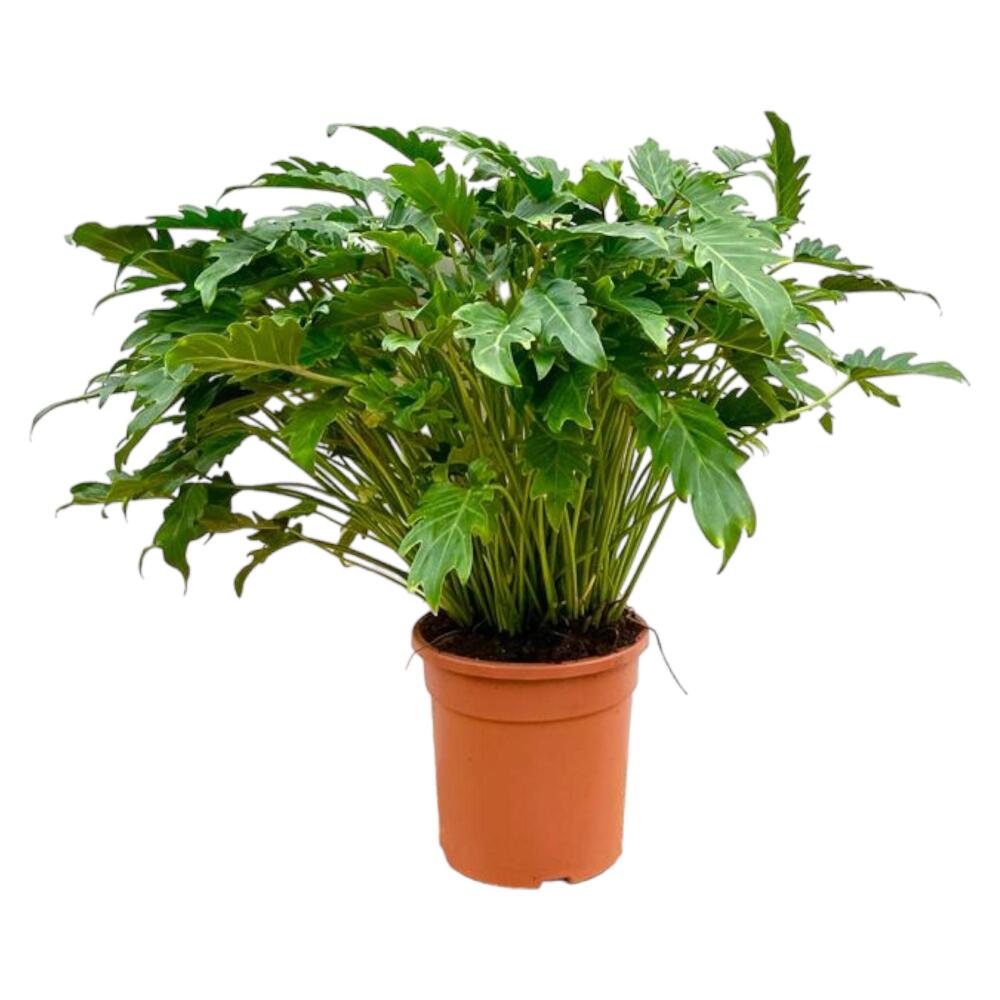
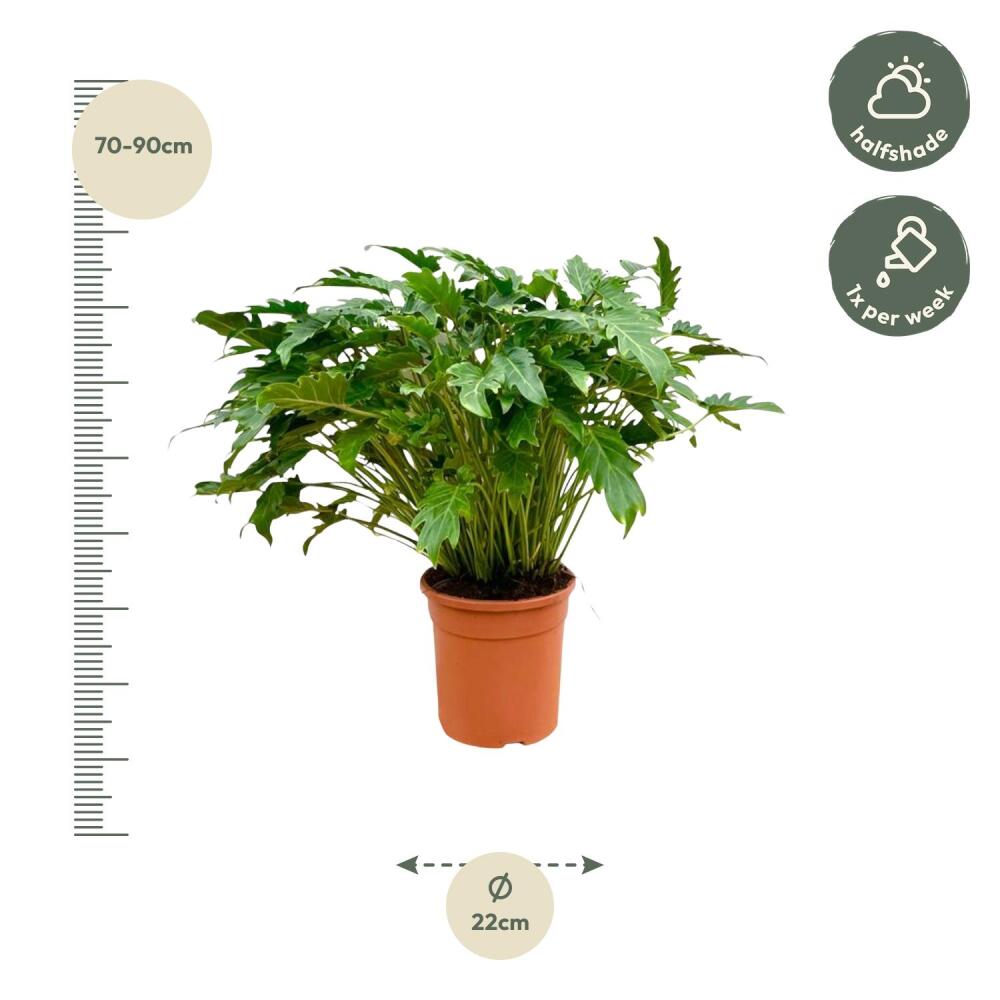
The glossy leaves are deeply lobed along their central axis. This continuous leaf surface with incisions differs from the window-like holes in some Monstera leaves. The offered plant measures approximately 80 cm total height in a 27 cm pot. Its crown can be much wider than the container. Free space around the pot shows the leaf contours particularly well. The scene displays the compact delivery form; older plants may develop stronger stems and aerial roots.
Warm and indirectly lit
Choose a bright to partially shaded position without sudden hot midday sun. The shop recommends approximately 18–26 °C and protection from draughts. A comfortable living room can suit it if enough light reaches the crown. Higher humidity is beneficial, but should not be replaced by constantly wet foliage in still air. Let new leaves unfurl undisturbed. Regular, careful turning can limit one-sided growth without constantly carrying the plant to different places.
Reassessing moisture before each watering
Let the upper compost layer dry slightly, then check the root ball. Water slowly and thoroughly when needed and remove excess. The large pot retains moisture inside longer than a small propagation container. Particularly in winter, an unchanged frequent watering rhythm quickly produces unnecessary wetness. Yellow leaves may indicate overly wet roots, but have other possible causes too. Observe and check first before adding water, fertiliser or undertaking extensive repotting.
Aerating roots and preserving leaf surfaces
A humus-rich, airy mix with stable structure suits the strong root system. Repot when the root ball is clearly well rooted, choosing only a suitable next size. Feed moderately during growth according to product instructions. Remove dust carefully from glossy leaves with a damp cloth, supporting the leaf from below. Fully dead foliage can be removed. Aerial roots are part of the structure, not proof that the pot must be too small.
Opening dense growth for inspection too
Look regularly between leaf stalks and beneath leaves. Mealybugs, scale insects, thrips or spider mites can hide there. Constantly damp leaf surfaces with little air movement may encourage spots. Water preferably onto the compost. If a leaf must be removed, work cleanly and consider the irritating sap. Xanadu is not food and should not be within reach of young children or nibbling pets. A healthy, broad structure develops through suitable conditions and sufficient space, not constant thinning of green leaves.
One plant, several views
Good to know
Does Xanadu need a moss pole?
Its typical broad, self-supporting upright growth does not require a climbing support.
Why do I find two genus names?
Philodendron xanadu and Thaumatophyllum xanadu are used in different botanical classifications. Both are stored in our search.
Are the incisions holes like in Monstera?
The leaf surface is deeply lobed. This differs from enclosed, window-like holes within a leaf blade.
How much space does the offered form need?
It is approximately 80 cm tall in a 27 cm pot. Also allow sufficient room for the broad crown.
Sources and editorial note
- Product and delivery contents: Exotenherz
- NC State Extension: plant profile
- Royal Botanic Gardens, Kew: botanical classification
Sources checked: 15 September 2026. Product information and the contents of delivery follow the linked shop offer. Care advice was checked against the cited specialist sources and should still be adapted to the plant’s condition, position and season.