This plant at Exotenherz
Check the shop offer for current availability, price and what is included.
Check the selected shop offer for price, availability and delivery contents.
Your care table
| Topic | What to do | Why it helps |
|---|---|---|
| Light | Place very brightly and accessibly. | View young upper sections from several directions. |
| Sun | Increase gradually after transport. | Build strong new conditions gently. |
| Root ball | Let it dry well between supplies. | Consider moisture inside the larger pot. |
| Watering | Slowly onto soil, remove excess. | Several columns do not require a water reserve. |
| Soil | Permeable mineral-structured cactus substrate. | Preserve air and pot drainage. |
| Stability | Choose a safe pot and lateral space. | Avoid a narrow frequently touched walkway. |
| Repotting | When space is needed, use suitable gripping aids. | Protect arms and root ball together. |
| Winter | Bright and frost-free, less water during rest. | Keep checking development and moisture. |
Check the compost and pot weight. The care table explains how far the compost may dry.
Water only when needed. The water should reach the root ball without spilling over the rim.
Remove surplus water from the saucer or cachepot. Then return the plant to a suitable position.
Small side arms already belong to the young shape
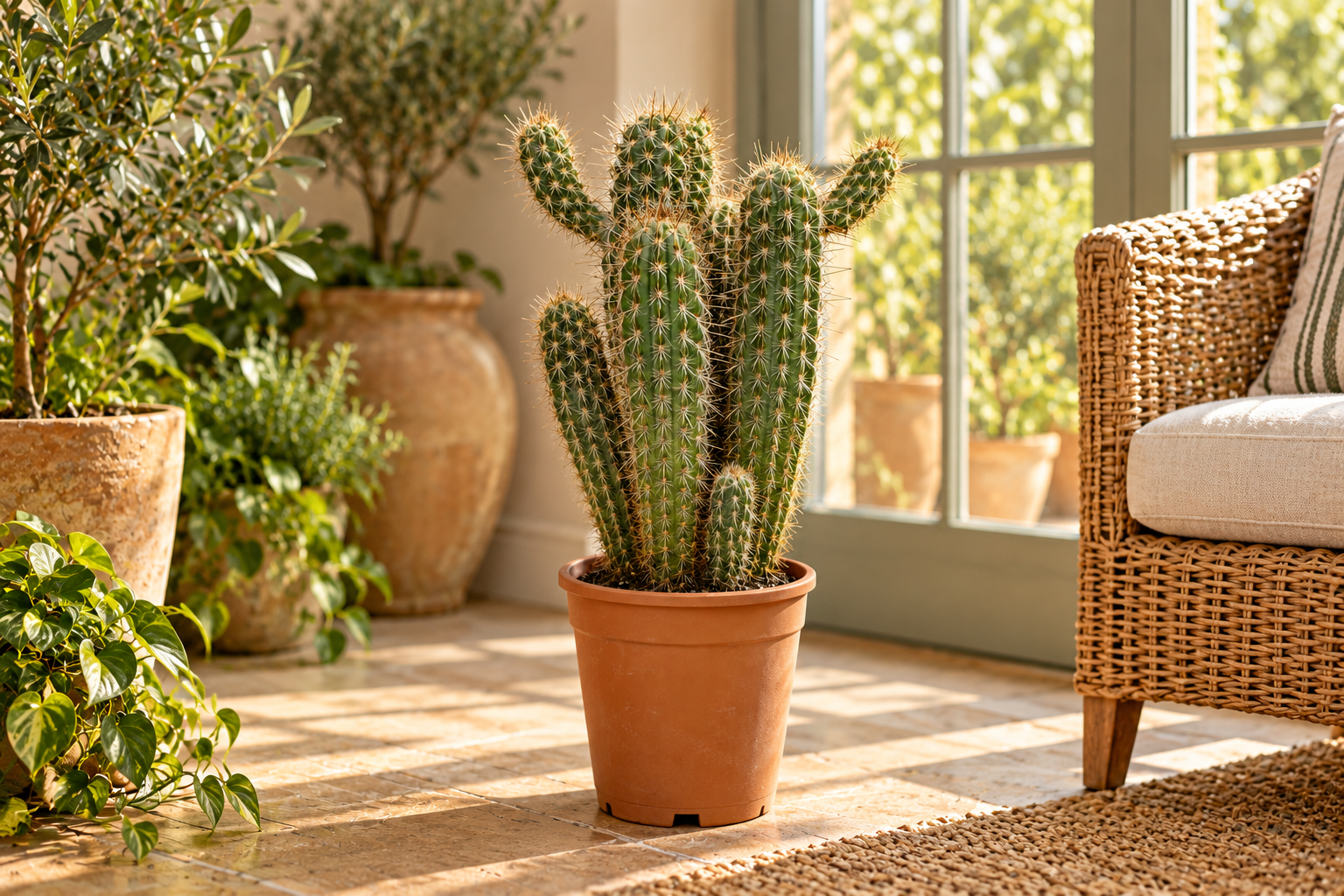
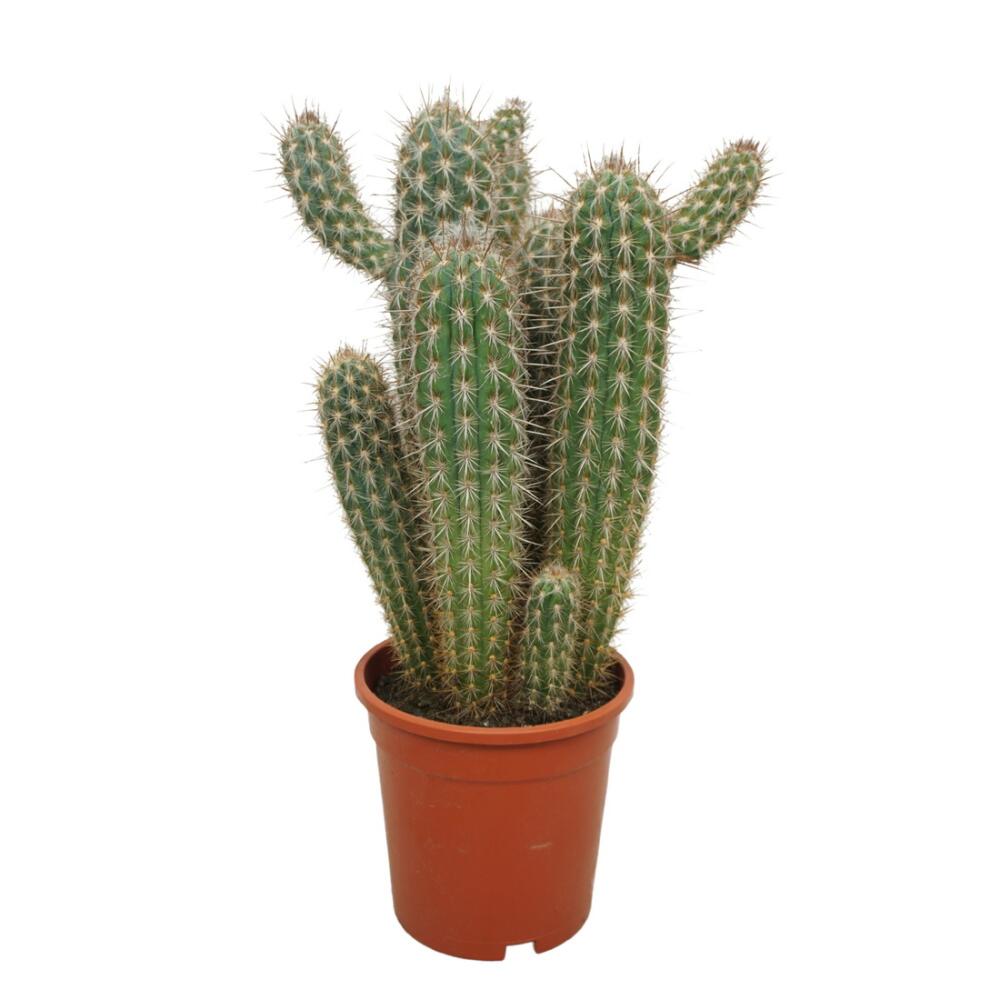
Several slender ribbed columns stand closely together. Some upper sections lean slightly sideways, while fine yellowish spines divide the green surface. The young plant looks livelier than one straight line. The shop calls it Pilosocereus gounellei, also Xique-Xique. Kew lists the species as Xiquexique gounellei, native to eastern Brazil. That botanical connection explains the name without turning a young pot portrait into a photograph of an already large free-standing cactus shrub.
A branched cactus is still one offer
The container measures seventeen centimetres and stated total height is about forty to forty-five centimetres. Several columns in the pot do not mean several separate delivered pots. Branching needs some lateral space. Carry by supporting the container rather than reaching between columns. A bright floor position beside low furniture can show the shape if light and soil access are right. Avoid a narrow walkway. Secure positioning prevents finely spined arms from touching neighbours with every small contact.
Brightness acts on every new section
The cultivation position should be very bright. Acclimatise gradually to stronger direct sun after transport or repositioning. Watch youngest upper sections and the side receiving less room light. Handle by the pot, rather than turning by a small lateral shoot. A dark decorative corner cannot replace a proper light position. Observe natural branching rather than hastily shortening it to make it seem tidy. Further development depends on actual cultivation, not a predetermined later number of arms.
Several columns do not mean a permanent water reserve
The root zone may dry well between supplies. Before watering, look beneath any gravel cover and check pot weight. During growth pour slowly onto soil and remove excess. The larger root ball may stay moist internally longer than a tiny cactus pot. Column number alone therefore does not reliably measure quantities. Reassess consumption in winter or less bright days. Examine a changed body segment together with light and roots before reflexively adding more water.
Protect the branched crown during repotting
Mineral-structured permeable cactus soil and free drainage holes make container care easier. Repot for space needs, preferably at growth onset. Suitable gripping aids support the plant without bending arms apart or pressing them against the rim. Choose the next pot for roots and stability. Feed sparingly by cactus-fertiliser label during growth. Check less visible starts between columns. A bright side view reveals changes that might otherwise remain hidden behind close bodies until the next larger care task.
Follow the architecture in the plant book
In winter keep Xique-Xique bright and frost-free. Water more cautiously during rest while continuing to observe body and root ball. No current bloom or exact eventual height is promised for this young range plant. Two overall views from different directions suit the plant book. Note new side shoots and position to see which sections actually developed. Give young branching time, rather than cutting it to resemble a much older specimen or urging faster growth with ever more water.
One plant, several views

Good to know
What is the present botanical name?
Kew lists Pilosocereus gounellei as a synonym of Xiquexique gounellei.
Are several separate plants included?
The portrait describes the branched range plant in its single assigned container.
Can I use an arm as a handle?
Support the pot; young arms and spines stay protected.
How many arms will it get?
No fixed further branching is promised.
May it overwinter outdoors?
No garden frost-hardiness is promised for this offer; cultivate brightly and frost-free.
Sources and editorial note
- Exotenherz – offer and original pictures, 03.10.2026
- RHS – potted cactus cultivation, roots and seasonal rhythm, 03.10.2026
- Kew – Xiquexique gounellei, origin and synonyms, 03.10.2026
Shop offer, article number, GTIN, availability and original images checked directly on 02.10.2026; specialist acceptance on 03.10.2026. Specialist sources read directly. SKU, original pictures, dimensions and orderability checked directly in the shop on 03.10.2026. Relevant specialist passages read. Shop name and botanical reference remain distinguishable. Images compared with the original photographs; no Wawi, server or tool changes. Currently not orderable: knowledge portrait without a purchase link; social drafts not cleared for sending.