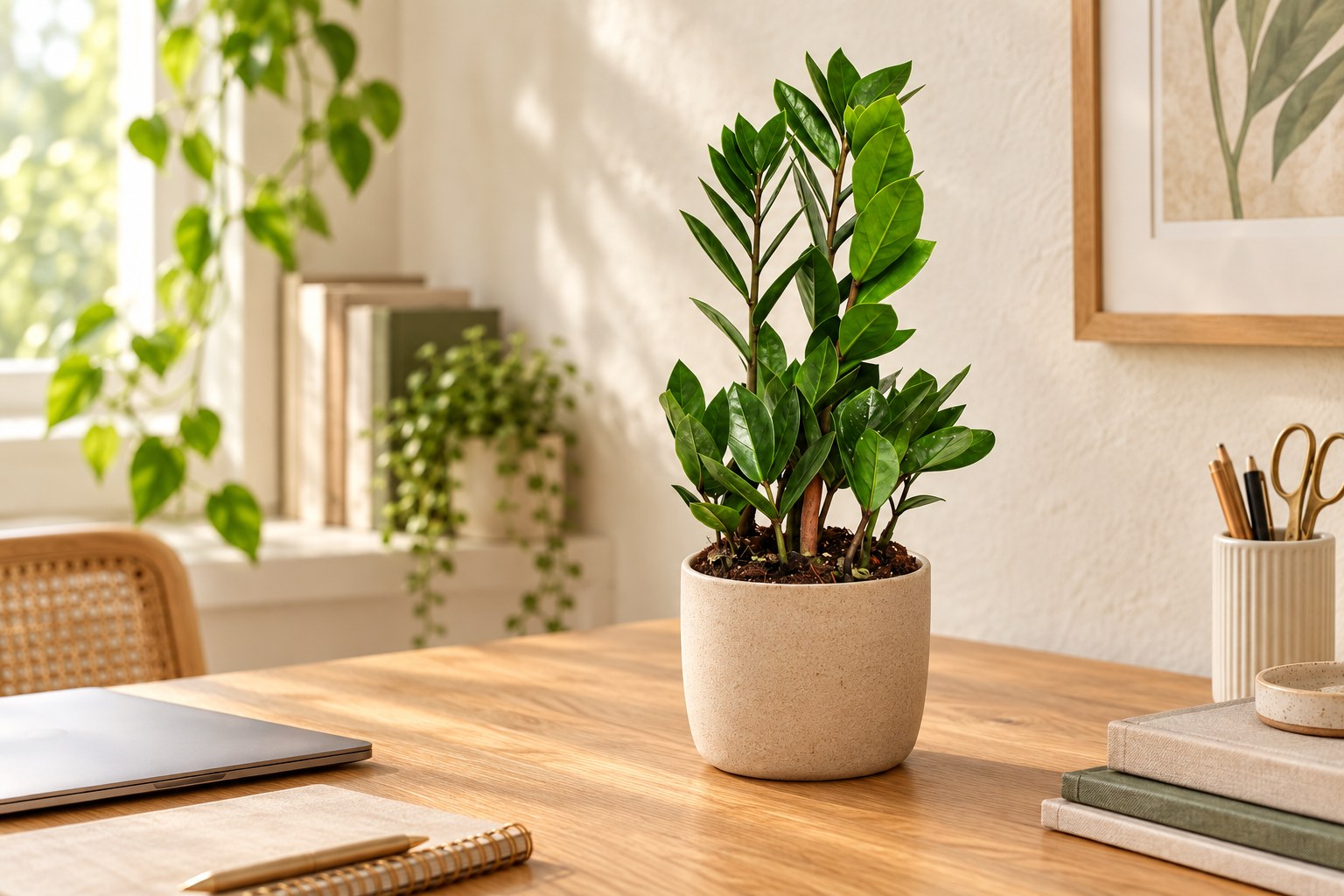
This plant at Exotenherz
Check the shop offer for current availability, price and what is included.
Link to the offer in German. Check the shop for the current price, availability and delivery contents.
Your care table
| Topic | What to do | Why it helps |
|---|---|---|
| Light | Place in bright to moderately bright light; acclimatise gradually to intense direct sun or filter it. | Low light is tolerated but usually means slower growth and lower water use. |
| Water | Allow the growing medium to dry well between waterings; check deeper in the root ball too. | Thickened underground plant parts store water. Constant moisture is therefore particularly unfavourable. |
| Pot and compost | Free-draining houseplant compost and a pot with drainage; remove water from the decorative pot. | A dry surface can sit above a wet pot bottom. |
| Fertiliser | During active growth, feed sparingly according to the manufacturer’s instructions. | Slow growth is typical of the species and cannot sensibly be accelerated with large amounts of fertiliser. |
| Temperature | An evenly warm interior, protected from cold and draughts. | A cold root ball dries more slowly and cannot cope with continued heavy watering. |
| Leaf care | Clean with a soft, damp cloth; inspect the undersides as well. | Clean leaves make changes and possible pests easier to recognise. |
| Repotting | In spring, when root space becomes clearly tight, move to a moderately larger pot. | Do not crush the storage organs. A very large pot holds unnecessarily large amounts of moisture. |
| Winter | Adjust watering intervals to slower drying. | An office can seem bright in winter while giving the plant substantially less daylight. |
Check the compost and pot weight. The care table explains how far the compost may dry.
Water only when needed. The water should reach the root ball without spilling over the rim.
Remove surplus water from the saucer or cachepot. Then return the plant to a suitable position.
What makes the ZZ plant special
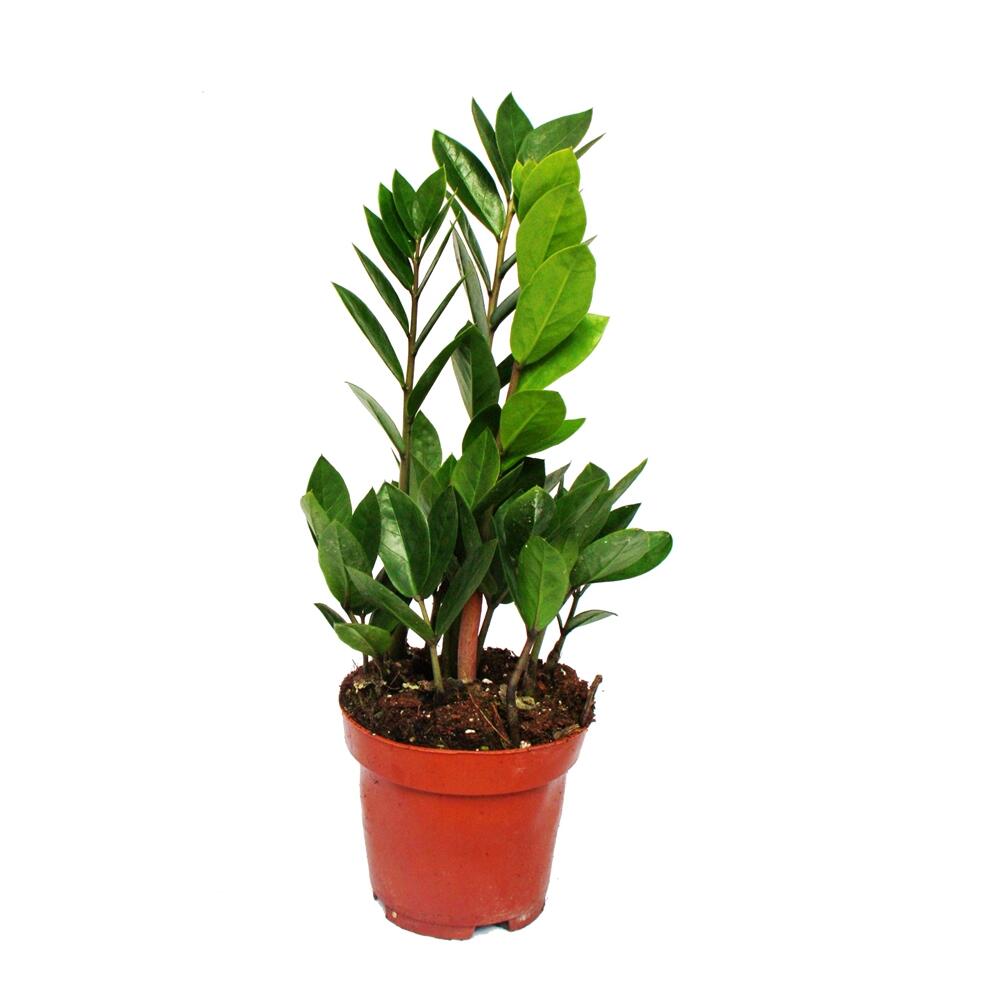
Zamioculcas zamiifolia comes from tropical Africa and belongs to the arum family. Trade names such as Zamio palm or Zamio fern describe only the impression of its pinnate leaves: botanically, it is neither a palm nor a fern. Below ground it has thickened storage organs. Together with its strong leaf structures, they explain why a well-established ZZ plant copes better with temporary dryness than constant wetness. The shop plant in a 12 cm pot, approximately 30 to 40 cm tall, is a manageable starting size. It suits a sufficiently bright sideboard or a well-lit workstation, but over the years needs more room for new leaves emerging at the sides.
Shade-tolerant does not mean independent of light
The ZZ plant is often recommended for difficult corners indoors. It is easy to overlook that it too needs light for its metabolism. It can remain for a long time in a moderately bright position, but often grows more slowly there. For a lasting attractive shape, a bright position without sudden intense midday sun is the better starting point. A windowless office is not a reliable permanent position without suitable plant lighting. Check how much real daylight reaches the intended spot and whether blinds stay mostly closed. Slow development is normal for this plant, but it is not a reason to leave an obviously too-dark position unchanged.
The most important watering decision comes before the watering can
For a ZZ plant, good care begins by asking whether water is needed at all. If compost below the surface still feels moist or the pot remains noticeably heavy, wait at first. Water only when the root ball has dried well. The water can then moisten the compost evenly, but must drain away completely afterwards. Water left in the decorative pot is particularly deceptive: everything looks tidy from above while the roots are standing in water below. Check the bottom of the decorative pot after every watering. Use automatic irrigation only if its moisture behaviour suits this drought-tolerant plant.
Holidays, offices and different carers
Its reserves make the ZZ plant interesting for people who do not want to think about plant care every day. They do not, however, give a blanket guarantee for any number of weeks away. A small pot at a warm window dries differently from a large plant in a cooler room. Before an absence, check its actual condition, water only if needed and do not stand it in water as a precaution. If several people share its care, a short note directly on the pot helps: last checked, root ball dry or still moist, and watered if applicable. Particularly in offices, many problems arise from several well-meant extra waterings.
Repot without giving too much extra space
Repotting is useful when roots run short of room or the growing medium has lost its structure. A distorted nursery pot may be a reason to inspect more closely. Release the root ball gently so the thickened storage organs are not crushed, and choose only a moderately larger pot. New compost should fit loosely, not be packed down hard. The plant does not need an artificially cramped pot to be allowed to grow; conversely, a very large supply of wet compost does not automatically promote stronger shoots. Division is possible if suitable rooted portions can be separated cleanly. It is not a necessary routine for a healthy plant.
Yellow leaves: check moisture and firmness first
If several leaflets turn yellow while the root ball feels constantly wet, more watering is the wrong first response. Check remaining water, smell and the firmness of plant parts at compost level. Soft, rotting areas call for closer inspection of the root ball; simply changing position will not resolve them. A single older leaf, by contrast, may gradually reach the end of its life. Bends sometimes arise from knocks in a walkway and have nothing to do with nutrient deficiency. Photograph changes and watch their progression. This lets you show more than one isolated yellow leaf when asking for specialist advice.
Little effort, but an attentive eye
Occasionally wipe the glossy leaflets gently with a damp cloth. Extra leaf shine is unnecessary. Cleaning reveals small changes early, and you can check compost moisture at the same time. Needs often decrease in autumn: not every previous watering needs to be followed by another. Use fertiliser only in line with growth and the product instructions. Plant parts can cause irritation if eaten; keep the ZZ plant out of reach of small children and nibbling pets. Its strength is calm, reliable development. Observing purposefully rather than constantly helping often comes closest to its needs.
One plant, several views
Good to know
Is a ZZ plant suitable for dark rooms?
It tolerates less light than many other houseplants. A very dark or windowless position is still not a good permanent solution. Brighter indirect light supports growth.
Why does it go a long time without new leaves?
It naturally grows slowly and not evenly throughout the year. Check light, season and root condition first. Adding water or fertiliser on suspicion can cause harm.
Should I water heavily before a holiday as a precaution?
Only if the root ball actually needs water. A water reserve in the decorative pot is unsuitable. Pot size, position and length of absence are what matter.
Sources and editorial note
- Product and delivery contents: Exotenherz
- NC State Extension: Zamioculcas zamiifolia
- RHS: Houseplants for shade
Sources checked: 14 September 2026. Based on shop information and the linked specialist sources. Always adapt care to the plant’s condition, position and season.