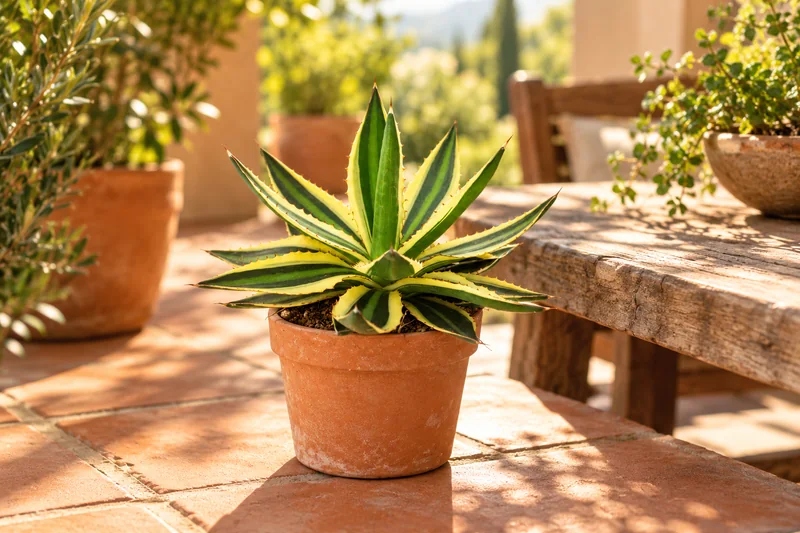
This plant at Exotenherz
Check the shop offer for current availability, price and what is included.
Check the shop for the current price, availability and offer contents.
Your care table
| Topic | What to do | Why it helps |
|---|---|---|
| Planning | Choose summer position and bright frost-free winter room together. | The broad 30 cm bowl must move safely before cold. |
| Light | Grow in sun and reacclimatise slowly after shipping or winter. | Strong light suits the species; abrupt hot sun can damage the surface. |
| Water | During growth, water thoroughly after drying and remove excess. | A larger root ball needs a different quantity and drying time from a miniature cactus. |
| Rain | Place under protection and check saucers after rain. | A shallow bowl stays unfavourably wet if drainage is blocked. |
| Compost | Choose very free-draining gritty cactus compost. | The broad rosette must not conceal a compacted wet root ball. |
| Nutrients | During growth, feed occasionally and moderately with low nitrogen. | Strong soft growth is not a care objective for the firm rosette. |
| Handling | Use suitable gloves and protection; do not carry by leaves. | Edge and terminal spines and skin-irritating sap require careful work. |
| Winter | Keep cool, very bright, frost-free and nearly dry. | Consumption falls during rest while damp compost can stay wet for a long time. |
Check the compost and pot weight. The care table explains how far the compost may dry.
Water only when needed. The water should reach the root ball without spilling over the rim.
Remove surplus water from the saucer or cachepot. Then return the plant to a suitable position.
The broad rosette needs its own space
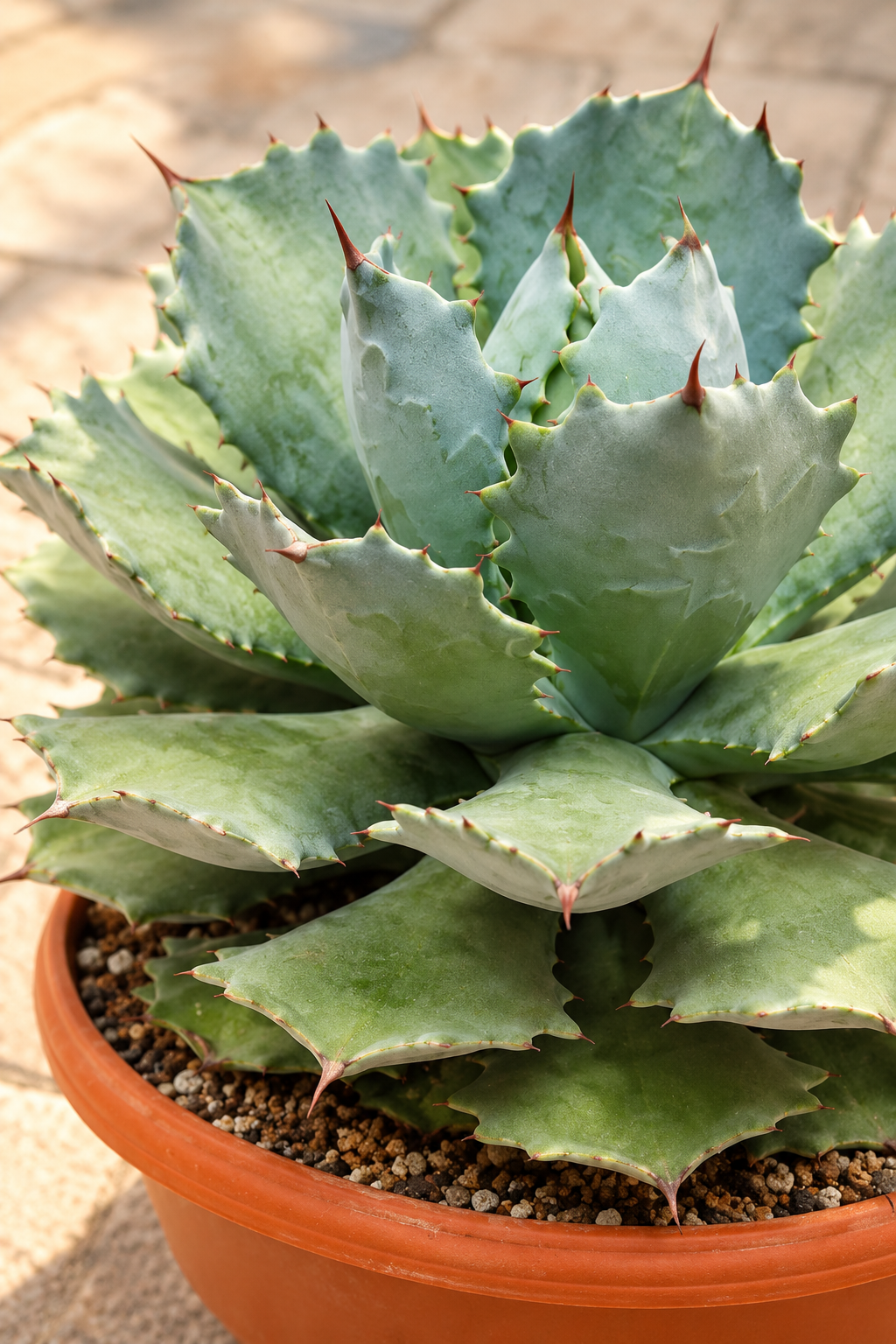
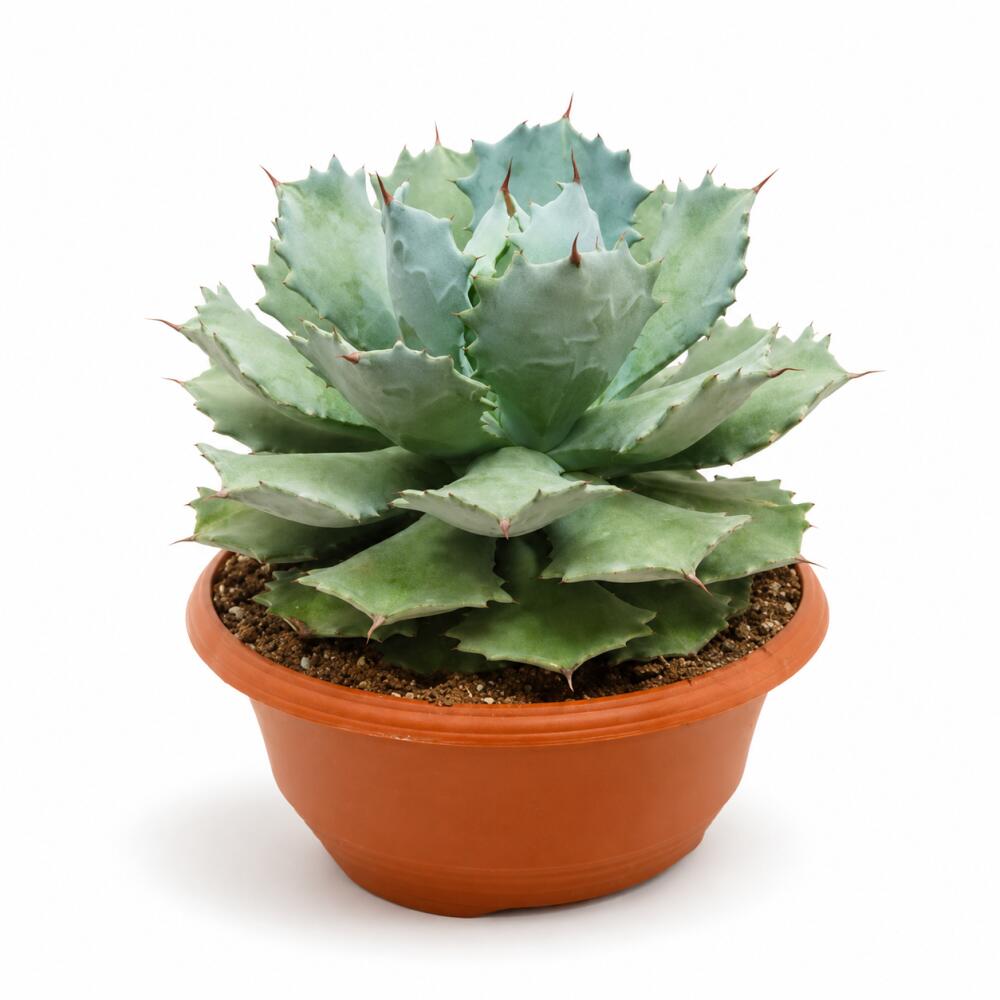
Agave potatorum has thick broad leaves whose matt green may turn grey-blue. Margins are wavy and toothed, with reddish-brown spines along the edges and at the tips. The specific original shows a single open rosette in a shallow 30 cm bowl at approximately 40 cm total height including the container. Its space requirements therefore differ from small rosette succulents in a windowsill collection. Start it in an open position and observe its outer leaf edges. A sideways-spreading plant does not become narrower because the bowl just fits between other pots. Its visible leaf outline and spines belong together in position planning.
A variable species, an identified plant
Agave potatorum comes from Mexico. Colour and structure may vary within the species; not every specimen has exactly the same blue shade or leaf opening. This portrait follows the non-variegated plant in the specifically read offer. Actual rosette features matter in care: leaf width, weight and root space in the container determine its suitable position. Normal colour variation differs from a new soft or damaged patch. The portrait stays with the broad matt rosette and toothed margins in the original. Approximately 50–100 cm later spread is species guidance for suitable conditions. It helps plan room but guarantees neither a particular size nor age.
Plan leaf size and flower stalk separately
Developed Agave potatorum may produce very tall flower spikes after long maturity. This stalk is clearly different from the usual leaf rosette. Metre-high figures are therefore used neither as delivery height nor as the everyday height of the leafy plant. The flowering rosette enters its final life stage; beforehand the vegetative structure determines appearance for a long time. No imminent flowering is promised for this offer. First plan actual leaf space, container transport and later spread. A bright conservatory may be the growing room for years without immediately needing space for a flower stalk several metres high. The young delivery specimen remains a foliage plant.
Choose the winter room before the summer position
A sunny rain-sheltered terrace suits summer provided the plant is slowly accustomed to stronger light. First decide where the 30 cm bowl can stand very brightly and frost-free in winter. A heavy broad container cannot simply be squeezed among any window plants. Plan the carrying route so that spines do not catch hands or door frames. The summer spot also needs air and clear space beside the rosette. Beside a narrow walkway even short marginal spines can be troublesome. Mexican origin does not give blanket cold tolerance to a wet outdoor bowl. A suitable year-round arrangement therefore begins with both seasonal spaces.
A larger root ball dries differently
During growth, water the agave thoroughly after drying. A larger compost volume needs enough time to absorb water and then dry; do not copy a 6.5 cm cactus’s watering rhythm. Check root-ball moisture and free drainage. Dry surface grit may conceal damp compost below. Empty saucers and outer pots, including after rain outdoors. Very free-draining gritty cactus compost supports the cycle. Keep the previous planting level when repotting. Increase container volume only appropriately. If moisture persists long after watering, inspect compost, drainage and position rather than simply drizzling a little less onto the surface every time.
Handle spines and matt leaves carefully
Carry the plant by its container, not its leaves. Suitable gloves and further protection help for repotting and other tasks; spines and skin-irritating sap require care. Keep the agave out of pets’ nibbling reach. Healthy leaves do not need shaping, and their matt surface is not polished. During visible growth, feed occasionally and moderately with a low-nitrogen fertiliser according to the product instructions. Pause nutrients during rest. Check leaf bases for scale insects and unusual new deposits. Hard older edge marks differ from a newly soft base. Rosette size must not displace practical inspection.
Cool and bright through rest
In winter Agave potatorum stays cool, very bright, frost-free and nearly dry. Water consumption decreases, and moisture lasts longer in the larger root ball. A dark cellar is no substitute for a bright growing position. Nevertheless inspect the container regularly rather than leaving the plant unattended until spring. Judge strong new shrivelling or soft patches together with root-ball condition. As spring progresses, adjust supplies to renewed noticeable growth. Moving outdoors again begins with gentle sun acclimatisation. The broad toothed structure remains understandable through the seasons while the plant receives the room its actual leaves require.
One plant, several views
Good to know
How large is the offer?
A 30 cm bowl at approximately 40 cm total height including the container, according to the directly read shop offer.
Do metre-high figures refer to the leaf rosette?
Very tall figures concern a possible later flower spike; delivery size and leaf space are separate.
How wide can it become?
Approximately 50–100 cm as species guidance; specimen and cultivation influence actual later spread.
Can it stand outdoors in summer?
In a sunny rain-sheltered position after gradual sun acclimatisation, with free drainage.
Can it overwinter outdoors?
This portrait plans a very bright frost-free winter room and gives no blanket frost-hardiness promise.
Should I cut marginal spines or leaves?
Healthy leaves need no shaping. Clear space and careful protected handling are the better basis.
Sources and editorial note
- Exotenherz: currently orderable individual offer (accessed 03/10/2026)
- RHS: Agave potatorum, variable rosette, flower spike and cultivation (accessed 03/10/2026)
- RHS: succulents in containers (accessed 03/10/2026)
Current individual offer and specialist sources read directly on 03/10/2026; botanical identity/SKU checked against the 642-article reference catalogue and new parallel portraits. RHS 112211 primary full profile read directly; 50–100 cm spread distinguished from 3–5 m description/4–8 m inflorescence class. No invented leaf-rosette height. Larger in-stock 30 cm species offer replaces branded Haworthia; variegated 13 cm offer not counted separately.