This plant at Exotenherz
Check the shop offer for current availability, price and what is included.
Product and delivery details are given in the individual offer.
Your care table
| Topic | What to do | Why it helps |
|---|---|---|
| Light | Place very close to well-lit glass; increase stronger sun slowly. | The upright rosette needs light for firm growth and must not abruptly overheat after shipping. |
| Water | Water only after noticeable partial drying and drain excess. | Thick leaves store water, while continuously wet soil deprives roots of air. |
| Watering point | Give water to soil, not leaving it in the rosette centre. | Closely overlapping leaf bases stay easier to check. |
| Soil | Use structurally stable gritty succulent soil and a container with a drainage hole. | Free drainage prevents soil remaining wet for a long time. |
| Pot change | For genuine space needs, choose only slightly larger in spring and work with the root ball. | Leaf tips are not handles and too much new soil may stay wet for a long time. |
| Nutrients | Feed sparingly according to instructions during visible growth; pause in quiet phases. | Strong fertiliser does not replace suitable light. |
| Winter | Keep bright and frost-free; check moisture before each modest watering. | Less light and activity lower water use. |
| Inspection | Check leaf bases for deposits and soft spots; do not cut healthy leaves. | A firm centre matters more than an artificially trimmed form. |
Check the compost and pot weight. The care table explains how far the compost may dry.
Water only when needed. The water should reach the root ball without spilling over the rim.
Remove surplus water from the saucer or cachepot. Then return the plant to a suitable position.
Dark green gives the rosette its calm
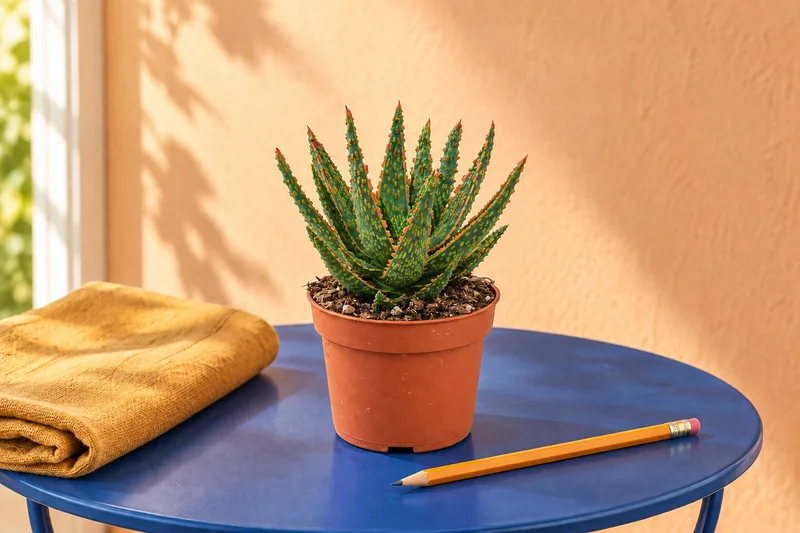
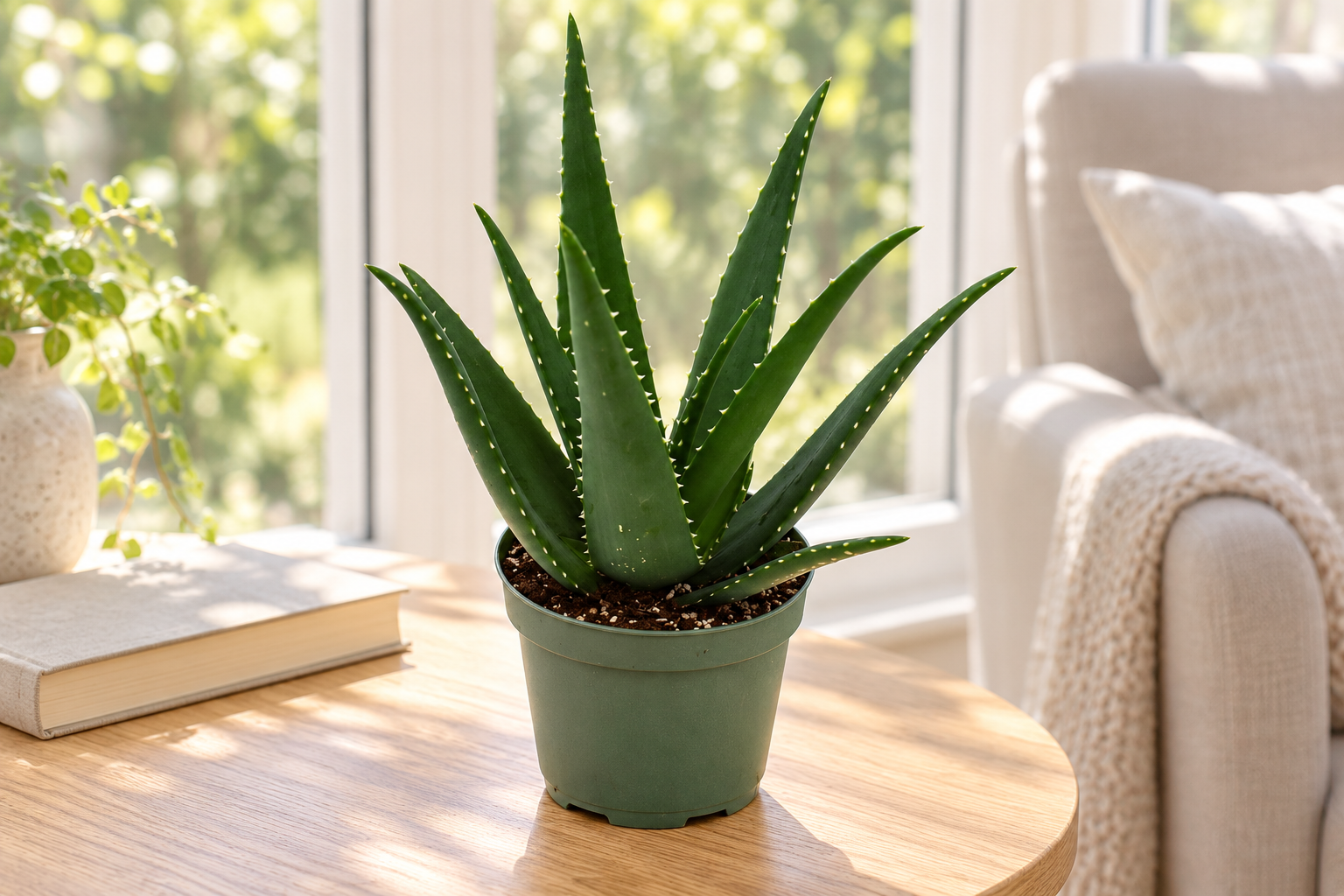
In the original image, Equator looks markedly different from heavily speckled Aloes. Broad triangular leaves stand mainly upright, their dark-green surfaces largely understated. Small pale teeth trace the edges; few pale spots occur mainly in lower areas. This form is easy to view on a bright table immediately beside glass. The young plant needs no large decorative pot to look like a rosette. When unpacking, hold the 14-cm nursery pot and protect leaf tips from pressure. A healthy leaf centre and firm bases tell more about its condition than one dark colour in a photograph.
A documented name within MEDIVERA
Equator is pictured as a separate named selection in Amigo Plant’s original MEDIVERA catalogue. The German shop also spells it Äquator. It denotes a breeding selection within Aloe, not a separate botanical species. Public information does not allow a certain statement about all parent species involved. For the care portrait, a traceable link between name and visible rosette suffices. The particular offer gives 14 cm pot diameter and approximately 30 cm total height including pot. This is neither leaf length alone nor a final adult height. Instead, plan some air around the rosette and watch its own further development.
At the reading table, the plant must see the window
Its clear form suits a quiet living space, but decorative effect does not determine light demand. A table immediately beside well-lit glass differs from a seemingly bright position several metres inside the room. Aloes prefer plenty of light and good ventilation. After shipping or sheltered cultivation, introduce direct sun gradually. Light shading may initially help behind hot glass. Dark-green leaf surfaces are not recoloured through deliberate drought stress. A summer stay outdoors must also be bright, warm and protected from prolonged wet phases. When frost threatens, return the plant indoors. A comfortable place should also make care conveniently accessible.
Do not confuse a little water reserve with wet soil
Thick leaves store water. Still inspect the root ball during growth rather than forgetting the rosette for months. After noticeable partial drying, water the soil so it reaches roots then drains freely. Empty a closed decorative pot or saucer. Between waterings, the root ball may grow drier again. Do not intentionally leave water in the tight centre. Pot weight and moisture deeper in soil are more reliable than a dry gritty surface alone. If a leaf becomes unusually soft or its base conspicuously dark, first inspect the whole condition. Extra water does not help an already wet root environment.
Protect upright leaves when working
The existing pot can remain initially if drainage and root space suit. Only when genuinely crowded, prepare a slightly larger container in spring. Use gritty well-draining succulent soil. Hold the root ball when removing it, not individual leaf tips. New leaf bases should remain as open as before rather than disappearing into fine wet soil. Decorative gravel replaces neither substrate structure nor a drainage hole. Modest nutrients during visible growth support development. If the rosette hardly grows, pause feeding. Retain healthy leaves; regular shortening would damage the clear form without improving the position.
Winter is about light and activity
Equator overwinters bright and frost-free. Shorter days and slower growth lower demand; water more sparingly and only after checking moisture. A dark warm corner with an unchanged watering plan makes compact growth harder. Watch cold ventilation draughts and keep a suitable distance from hot heating air. The MEDIVERA name does not alter these horticultural needs. Flowering is not promised for the young shop offer. Instead, watch whether the central rosette stays firm and unfolds new leaves in brighter spring. Green intensity may vary with light and the living plant.
The firm centre remains the key focus
Small deposits may initially be hidden between overlapping bases. Look there occasionally in good light and check unusual spots before returning the plant among other pots. Completely dry outer leaves can be removed carefully; healthy surfaces are not cut for supposedly perfect symmetry. Small marginal teeth remain a reason to work at the container and keep tips away from narrow passages. This makes the dark rosette easy to accompany in everyday life: location and root ball accessible, water draining and new growth visible. Its appeal lies in this clear leaf structure, highlighted by calm surroundings.
One plant, several views


Good to know
Is Equator a new Aloe species?
No, a separately named MEDIVERA selection in the original breeder catalogue. No precise parent line is claimed here.
Why does the shop say Äquator?
Äquator is the German shop spelling for the selection named Equator in the breeder catalogue.
What size is evidenced?
14 cm pot diameter and about 30 cm total height including pot. A final plant height is not securely established for this offer.
Should I put water in the leaf centre?
Water the soil and let excess drain freely. Water should not remain in the tight centre.
Is a dark room enough?
The Aloe needs a very bright place near well-lit glass; a decoratively bright wall does not replace light.
What changes in winter?
Grow bright and frost-free, watering more sparingly after checking the root ball when activity decreases.
Sources and editorial note
- Exotenherz: currently orderable individual offer (accessed 03.10.2026)
- Amigo Plant: original MEDIVERA catalogue, Equator and named selections (accessed 03.10.2026)
- RHS: Aloe, light, ventilation, compost and frost protection (accessed 03.10.2026)
- Giromagi: named Aloe MEDIVERA Equator selection, classification as hybrid (accessed 03.10.2026)
Current individual offer and specialist sources read directly on 03.10.2026; botanical identity/SKU checked against Canon642 and new parallel portraits. Producer’s original6pages read directly and all rendered pages viewed. Page5 name/code14.805 exact plant morphology matches shop original. Shops differ on vera versus hybrida; no species/parentage or final height asserted. All health/air/purity claims rejected; fourth branded claim image excluded. General Aloe care sourced separately.