This plant at Exotenherz
Check the shop offer for current availability, price and what is included.
Check the shop for the price, current availability and what is included.
Your care table
| Topic | What to do | Why it helps |
|---|---|---|
| Light | Very bright, gradually acclimatise to direct sun. | An abrupt change can damage leaf surfaces. |
| Water | Water evenly after good root-ball drying. | Storage leaves allow watering pauses. |
| Drainage | Remove water from the outer pot. | Wetness at roots and base is unfavourable. |
| Compost | Loose with mineral drainage. | The small root ball should not stay wet. |
| Winter | Bright and frost-free, less water in cool conditions. | Light and temperature determine consumption. |
| Feed | Restrained during growth according to the label. | Plenty of feed does not replace brightness. |
| Repotting | When needed only slightly larger; do not bury the base. | Healthy roots and leaf bases remain intact. |
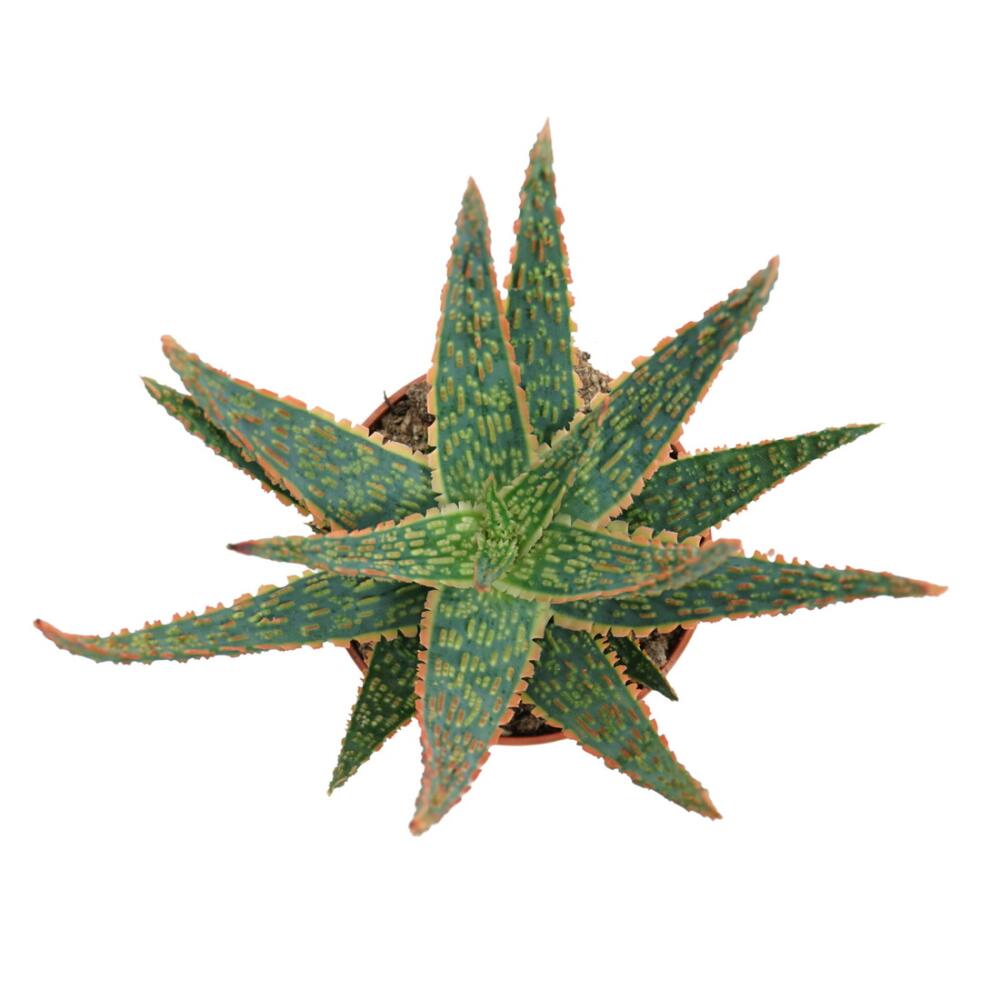
| Leaf care | Do not rub away natural raised spots. | Colour and structure belong to the plant. |
Check the compost and pot weight. The care table explains how far the compost may dry.
Water only when needed. The water should reach the root ball without spilling over the rim.
Remove surplus water from the saucer or cachepot. Then return the plant to a suitable position.
A small aloe with many details
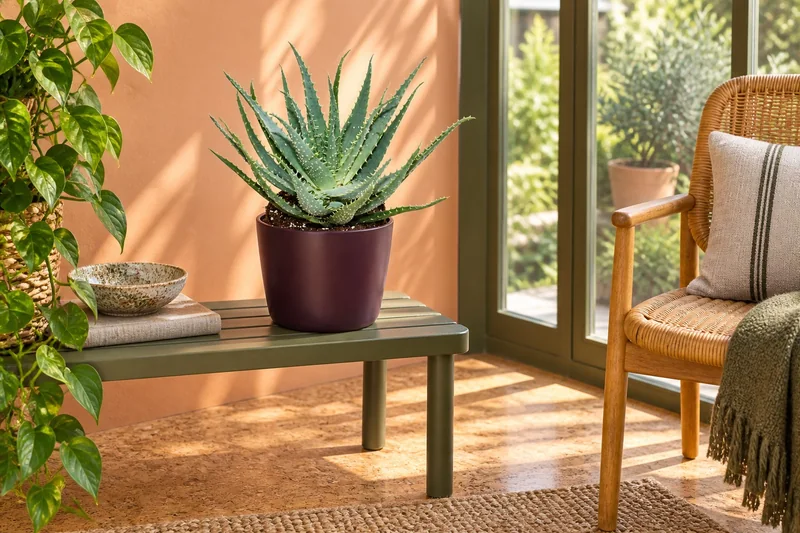
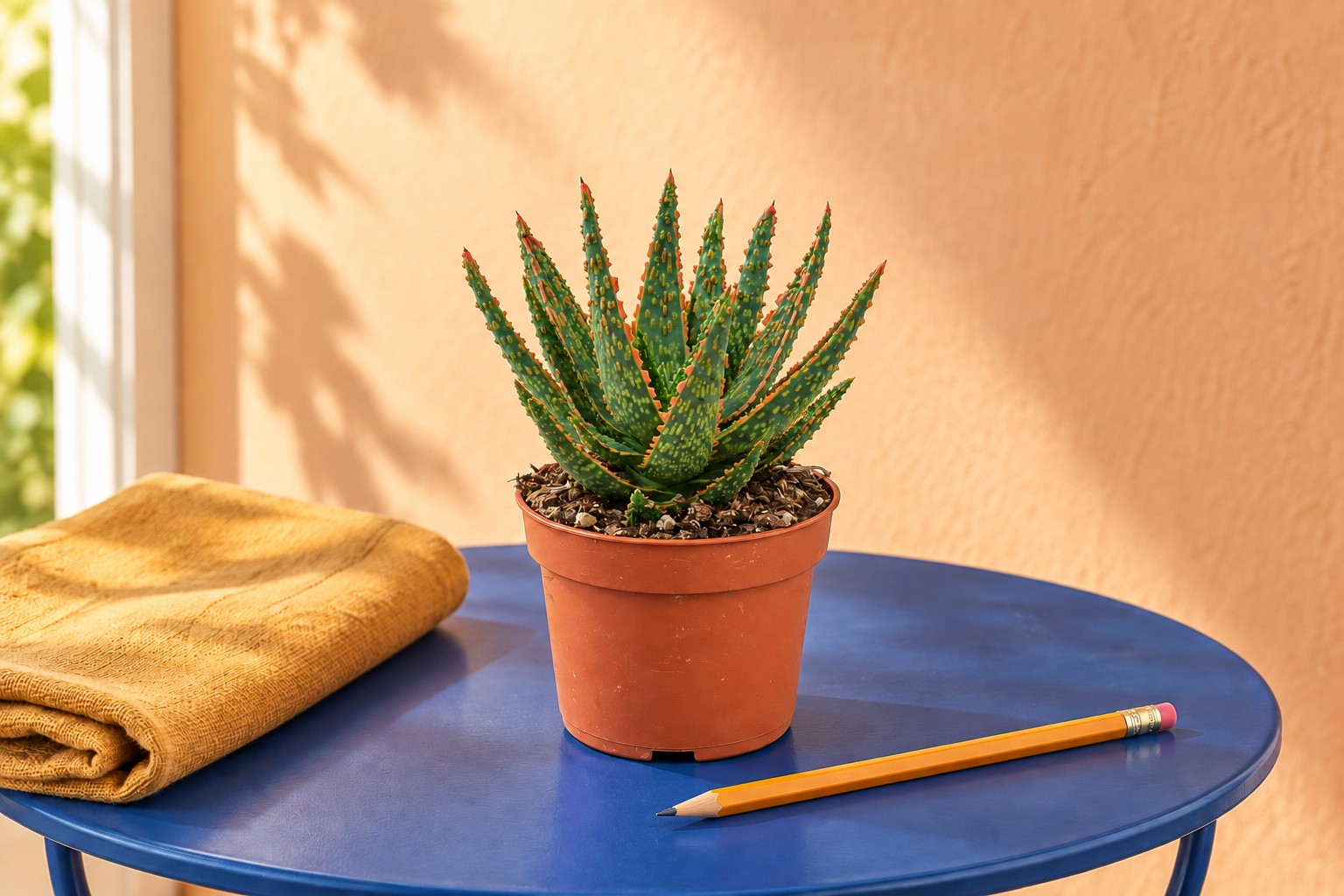
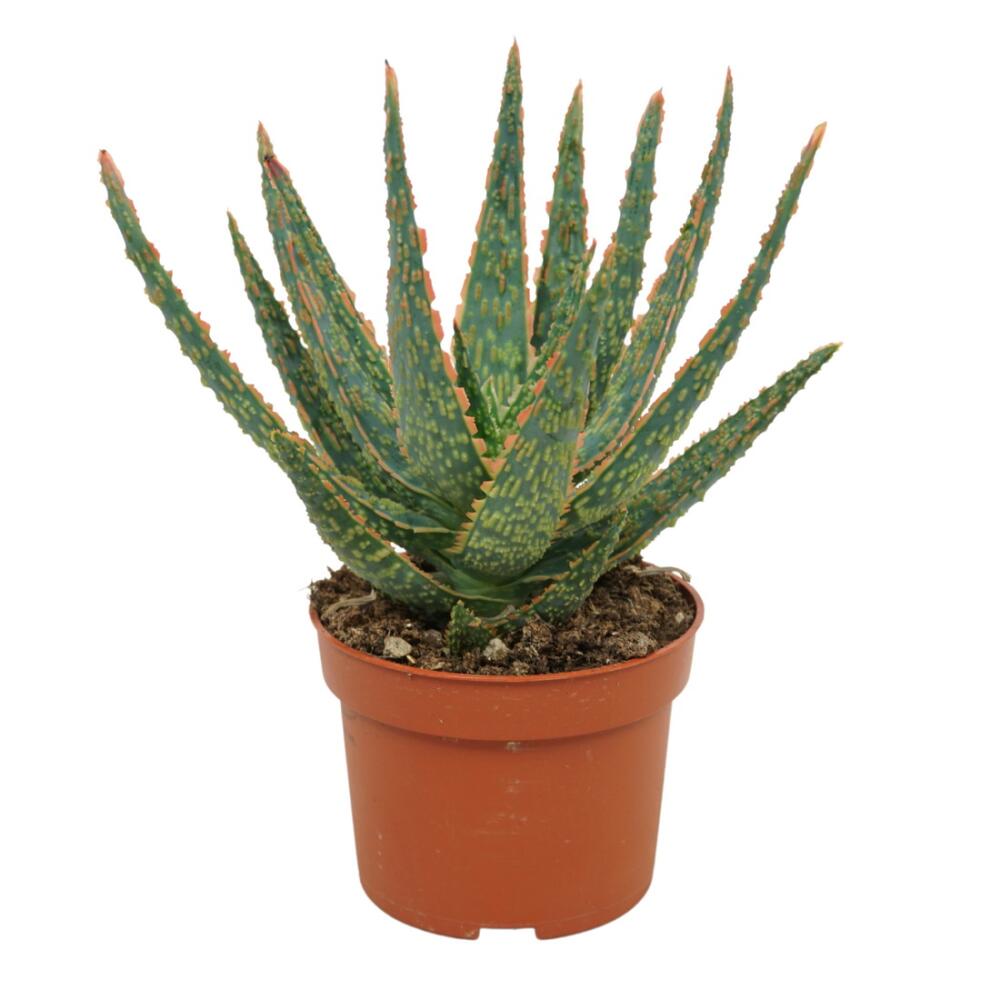
Danyz deserves a second look at its leaf surface: striking raised spots sit among green areas and edges show orange to reddish tones. Pointed leaves stand relatively upright and form a modest rosette. The offer gives a 10.5 cm pot, approximately 18 to 20 cm overall height and an age around three to four years. These details describe a small plant for a bright display. Colour and arrangement can naturally differ on individual living specimens.
What Danyz reveals and what remains open
The shop calls the plant Aloe zebrina Danyz. The checked sources do not independently confirm exact breeding ancestry for this commercial form. We therefore do not automatically transfer a specific flowering period or all wild-species traits. Aloes belong to Asphodelaceae. Their fleshy leaves store water, making them succulents but not cacti. Aloe zebrina is botanically known from Africa. Danyz remains an ornamental plant with its own trade name here, without promises of healing effects or edible plant parts.
Preserve brightness and change sunlight slowly
A very bright place supports compact growth. Do not suddenly put a newly bought aloe for several hours behind hot south-facing glass. Gentle morning light and gradual acclimatisation are a good beginning. A warm rain-sheltered outdoor place may suit in summer. A permanently dark shelf is unsuitable: long loose leaves and growth leaning towards light call for better light supply. Coloured margins are not improved by deliberate water shortage or sunburn. Healthy firm leaves take priority over maximum red colour.
The next watering starts with inspection
Before watering check not just the upper crust but also pot weight and moisture deeper in the root ball. Once well dried, water evenly and let all excess escape. Remove surplus from the outer pot. Little daily sips unnecessarily keep the surface moist and often reach roots unevenly. Cooler low-light weeks lengthen the intervals. Wrinkled leaves over dry compost need a different response from soft leaves over a wet heavy root ball.
Match compost, feed and repotting to the rosette
A loose succulent-suitable mix with mineral ingredients helps root-ball drying. The container needs a drainage hole. Repot only when well rooted or compost is exhausted and provide only a little more root space. The base stays at the same height; leaf bases must not disappear deeply into damp compost. During active growth moderate feeding according to the label is enough. If strong daughter rosettes form, they may be carefully separated once sufficiently developed. Regular pup formation or a particular propagation rate is not promised for the trade form.
Winter care and typical warning signs
Overwinter Danyz bright and frost-free. In cooler conditions water considerably less without imposing a fixed monthly calendar. Completely dry old outer leaves may be removed gently; preserve firm healthy ones. Soft dark patches at the base, unpleasant smell or a root ball wet for long need closer investigation. Check leaf axils for mealybugs. Firm coloured leaf bumps are not a coating to rub away. Flowers can be a later addition but are no care promise at this delivery size.
One plant, several views
Good to know
Is Danyz an Aloe vera?
No. This offer is traded under Danyz or Aloe zebrina. It is not intended for gel extraction or consumption.
Are orange spots pests?
Firm raised areas belonging to the leaf surface are a feature of the shown specimen. Check soft removable deposits separately.
Why do leaves become long and loose?
An overly dark position can contribute. Also check care and growth speed; move gradually to brighter conditions.
Must an aloe be completely dry in winter?
Need depends on temperature, light and root ball. Water very sparingly during cool rest; in warm active growth, after actual drying.
Sources and editorial note
- Product and delivery contents: Exotenherz
- SANBI PlantZAfrica: plant profile and cultivation
- Royal Horticultural Society: plant and care knowledge
Sources checked: 15 September 2026. Product information and delivery contents follow the linked offer. Care has been checked against the stated specialist sources and remains subject to plant condition, position and season.