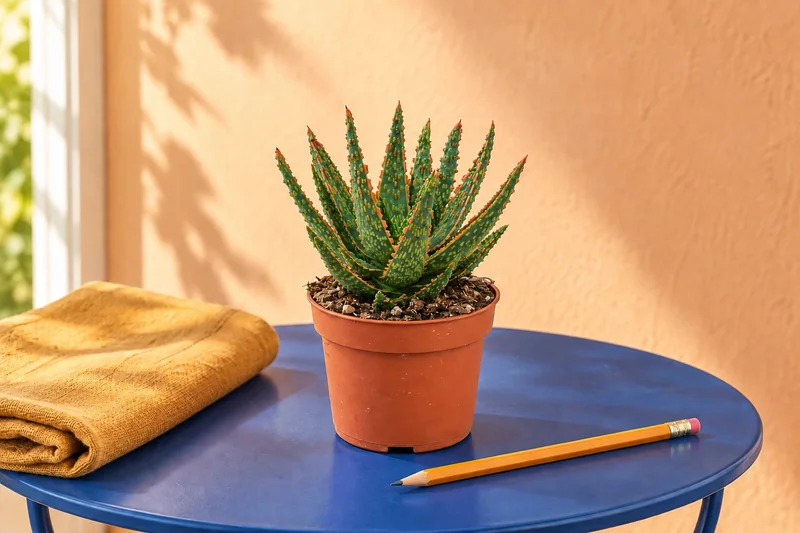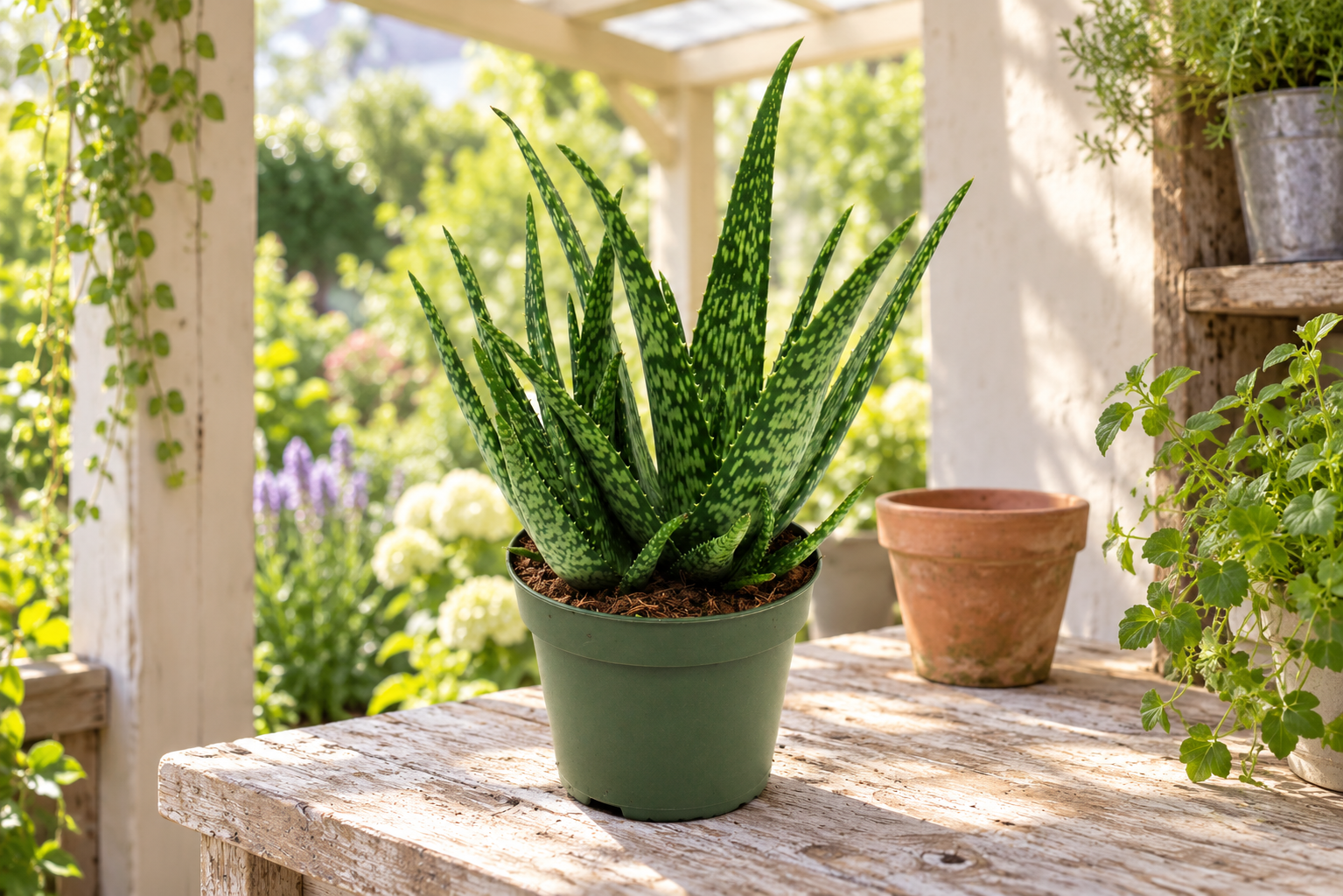
This plant at Exotenherz
Check the shop offer for current availability, price and what is included.
Product and delivery details are given in the individual offer.
Your care table
| Topic | What to do | Why it helps |
|---|---|---|
| Summer light | Allow more direct sun slowly before moving outdoors. | Greenhouse or shipping conditions differ from a summer terrace. |
| Rain | Place under light-transmitting protection without moving into deep shade. | Leaves need light, but roots must not stay wet for days. |
| Watering | Water after noticeable partial drying of the root ball; empty the saucer. | Slender fleshy leaves store water; standing wetness harms roots that need air. |
| Soil | Use gritty structurally stable succulent soil. | A loose root ball dries more reliably after watering. |
| Repotting | If space is needed in spring, choose only slightly larger with open drainage. | An oversized pot would retain unnecessarily much moist soil around the rosette. |
| Nutrients | Feed sparingly according to instructions during visible growth; pause during rest. | Feeding follows plant activity, not calendar alone. |
| Autumn and winter | Bring indoors before frost; keep very bright and frost-free with much more sparing watering. | A sheltered summer position does not mean year-round outdoor overwintering. |
| Leaf care | Do not carry by tips; inspect centre and leaf bases regularly. | Long pointed leaves break easily with awkward handling, and tight bases may conceal deposits. |
Check the compost and pot weight. The care table explains how far the compost may dry.
Water only when needed. The water should reach the root ball without spilling over the rim.
Remove surplus water from the saucer or cachepot. Then return the plant to a suitable position.
Many pale spots on upright leaves
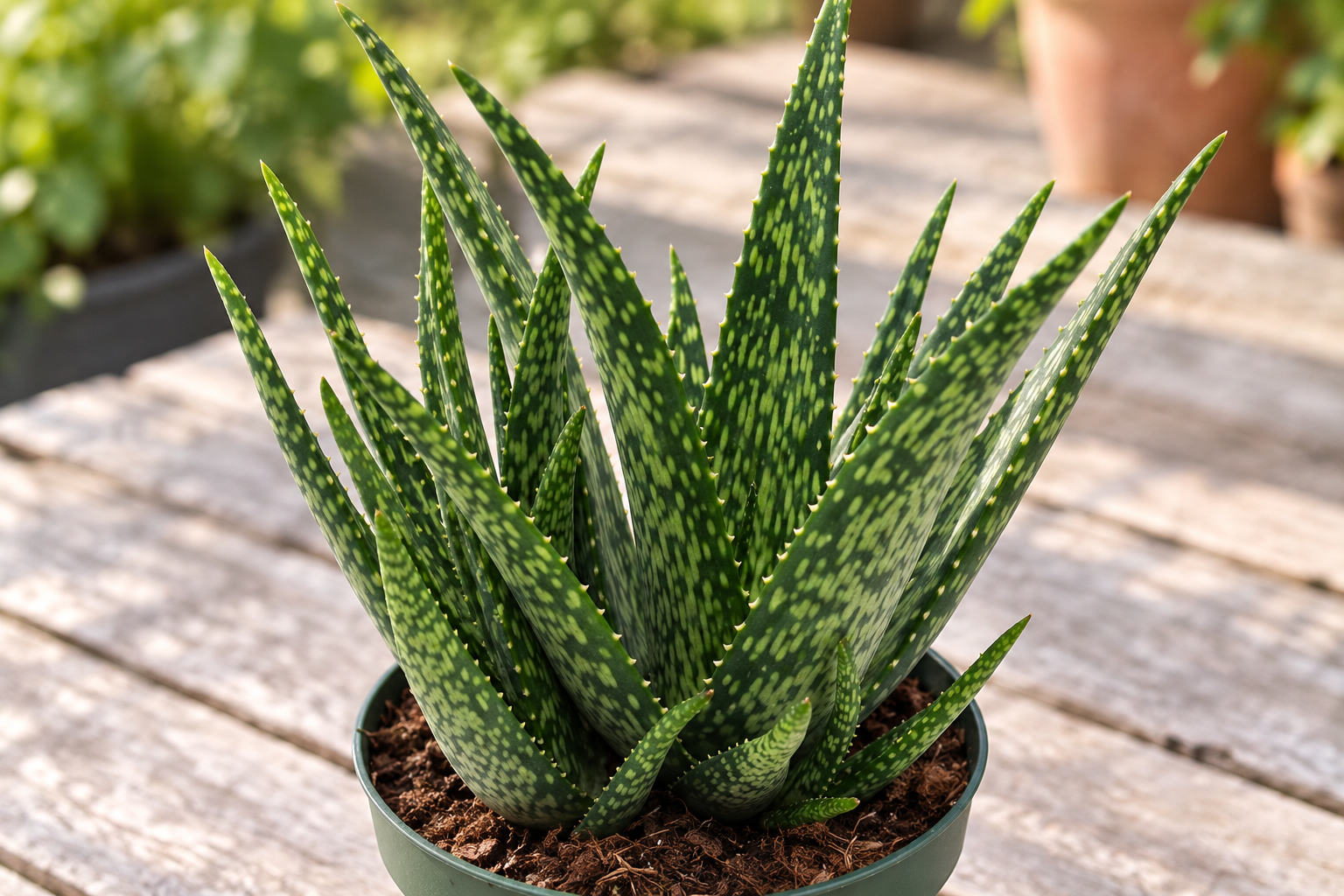
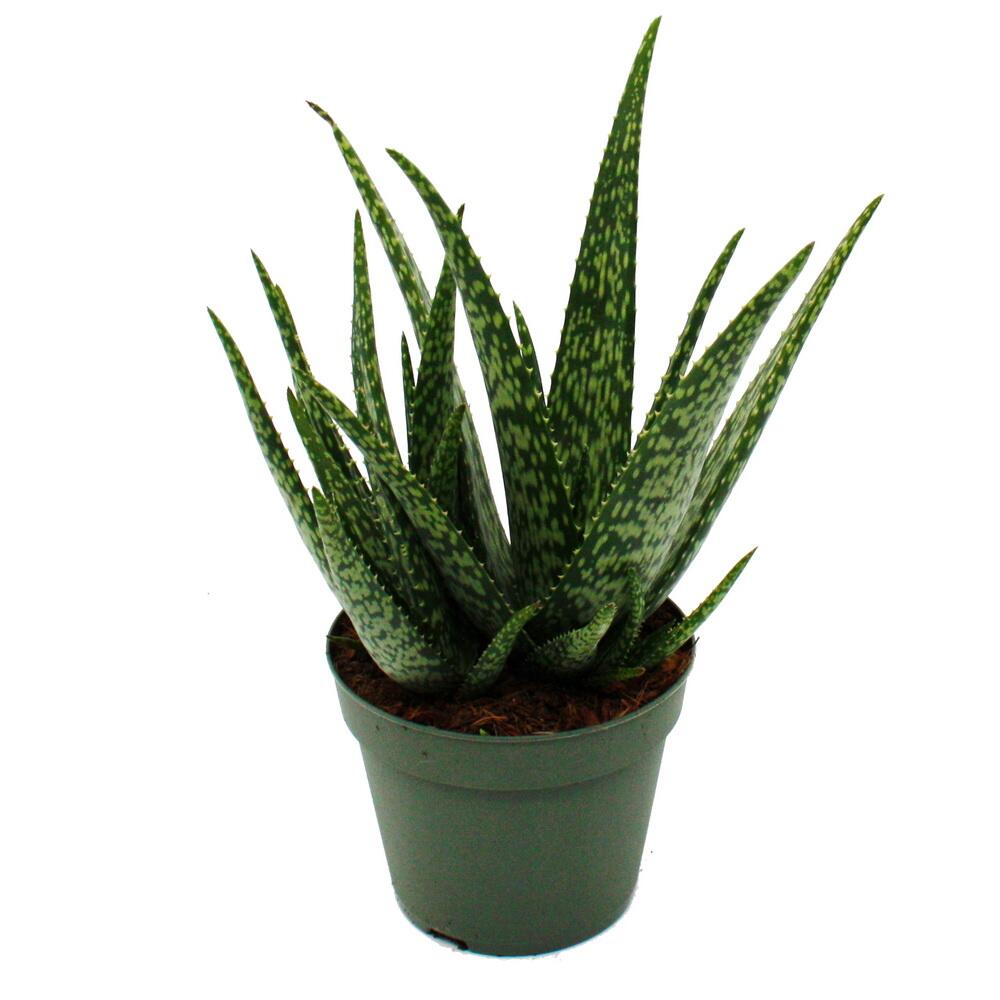
On Meridiaan, the eye moves upward from close-set bases to long tips. Original leaves are relatively slender, fleshy and covered in many irregular elongated pale spots. Small pale teeth line the edges. Some outer leaves spread slightly while the centre stays more upright. This young structure is easy to view on a bright potting table. Move the pot when unpacking, not the tips; a creased leaf will not become whole again. Initially give enough space to see the centre and soil condition. Spots are leaf markings, not applied decoration.
Meridiaan and Meridian belong to the same offer
The original Amigo Plant catalogue lists the named selection as Meridiaan. The German Exotenherz offer uses Meridian. The different spellings identify the same offer. MEDIVERA denotes a breeding series within Aloe; no extra species or particular parent line is claimed. The offer has a 14-cm pot and about 30 cm total height including container. A secure final height cannot be inferred. For its later place, watch the individual rosette width and continuing leaf-tip growth. A little clear space all around eases handling pointed toothed leaves.
A terrace needs a gentle start
A bright sheltered summer position can suit the Aloe. On arrival, it should not immediately start in unfamiliar strong midday sun. Increase direct exposure slowly and watch leaf surfaces. A light-transmitting roof or suitably bright rain shelter lets air and light reach the rosette while avoiding long wet phases at the root ball. A deep dark porch would trade rain shelter for too little light. The plant stays potted so it can move with weather changes and return indoors in autumn. The summer terrace scene illustrates a frost-free season, not a border plant overwintering outside.
Free drainage matters after watering
Check soil and pot weight before watering. The surface can look dry while moisture persists below. After noticeable partial drying, water can reach the root ball then drain completely. Empty saucers and closed decorative pots. This matters especially after rain on a terrace: weather-supplied water belongs to the same moisture balance as your watering can. Fleshy leaves provide a reserve allowing dry phases between waterings. Unusually soft or damaged bases do not automatically call for more water. First check for wet roots, a position change or another injury. A rigid weekly schedule helps little.
Keep slender tips free when repotting
Repot when the root ball has genuinely become crowded. Spring is favourable; a slightly larger container and gritty succulent soil suffice. Protect the intact root ball and leave long tips free rather than pressing them against the table edge. Replant at roughly the same depth. Keep a drainage hole open, not blocked by a tight outer pot. Thick gravel over heavy wet soil does not solve the water path. Feed sparingly according to product instructions during visible growth. During rest or after a stressful change, do not try strong fertiliser to produce new leaf rows faster.
Prepare the return indoors in time
Before frost threatens, bring Meridiaan to a bright frost-free indoor place. The terrace can still feel warm by day while individual nights become unsuitable. After moving, check leaves and bases carefully so small deposits do not enter the collection unnoticed. Weaker winter light lowers demand; water more sparingly and only after noticeable partial drying. A warm dark place does not encourage compact growth. Keep the centre visible to recognise fresh spring development. Flowering is not promised for this young delivered plant. Its long speckled foliage remains the selection’s recognisable character regardless.
Distinguish leaf pattern from plant condition
Many pale spots can be distributed differently on individual leaves. Natural pattern variation differs from a new dry damaged patch or a softening base. Inspect in good light, including between tight bases. Completely dried outer leaves can be removed carefully; healthy leaves need not be cut for an even silhouette. Avoid tips projecting into narrow passages. An accessible pot, controlled drainage and bright winter place keep care manageable after summer too. Every new leaf surface adds its own piece to the pattern.
One plant, several views
Good to know
Are Meridiaan and Meridian two cultivars?
No. Meridiaan is the original breeder-catalogue name, Meridian the spelling of the specific German shop offer.
What size is evidenced?
14-cm pot and about 30 cm total height including container. Final mature height is not secured.
Can it spend summer on a terrace?
In a warm frost-free bright place protected from prolonged rain, after slow sun acclimatisation.
What should I check after rain?
Root-ball moisture and standing saucer water. Rain counts as water supply and must not create continual wetness.
Can it overwinter there too?
The potted plant comes indoors before frost to a bright frost-free place.
Must pale spots be removed?
No, they belong to leaf pattern. New damaged or soft areas are distinguished from them.
Sources and editorial note
- Exotenherz: currently orderable individual offer (accessed 03.10.2026)
- Amigo Plant: original MEDIVERA catalogue, Meridiaan selection (accessed 03.10.2026)
- RHS: container aloes, light, drainage and frost protection (accessed 03.10.2026)
- RHS: seasonal culture, repotting and supply of succulents (accessed 03.10.2026)
Current individual offer and specialist sources read directly on 03.10.2026; botanical identity/SKU checked against Canon642 and new parallel portraits. Original producer names Meridiaan/code14.806; shop Meridian exactSKU separate offer. No extra identity counted for transliteration. Supplier spot pattern and slender young leaf shape directly compared. No species/parentage/final height inference or health claim.