This plant at Exotenherz
Check the shop offer for current availability, price and what is included.
Product and delivery details are given in the individual offer.
Your care table
| Topic | What to do | Why it helps |
|---|---|---|
| Arrival | Gently unpack the pot, check root-ball moisture and trapped shoots. | The small plant is carried by the container. |
| Position | Choose plenty of gentle daylight and warm conditions. | A dark shelf does not support strong new growth. |
| Sun | Increase stronger direct sun gradually. | Do not abruptly heat freshly transported plants and small pots. |
| Watering | Keep slightly and evenly moist; water according to actual root-ball condition. | The 5.5 cm root ball holds only a small water reserve. |
| Drainage | Let water drain freely and check the outer pot afterwards. | Moisture should supply roots without standing there. |
| Repotting | Once the root ball is well rooted, choose a moderately larger pot with loose compost. | A lot of unrooted wet soil makes moisture checks harder. |
| Nutrients | During active growth, feed sparingly according to a suitable label. | Account for existing fertiliser and actual development. |
| Shape | Gently shorten individual long shoot tips. | Light pinching can encourage branching. |
| Winter | Keep bright and frost-free; check moisture even during slow growth. | Heating and cold draughts alter conditions around the small pot. |
Check the compost and pot weight. The care table explains how far the compost may dry.
Water only when needed. The water should reach the root ball without spilling over the rim.
Remove surplus water from the saucer or cachepot. Then return the plant to a suitable position.
Pink and yellow are already on the leaves
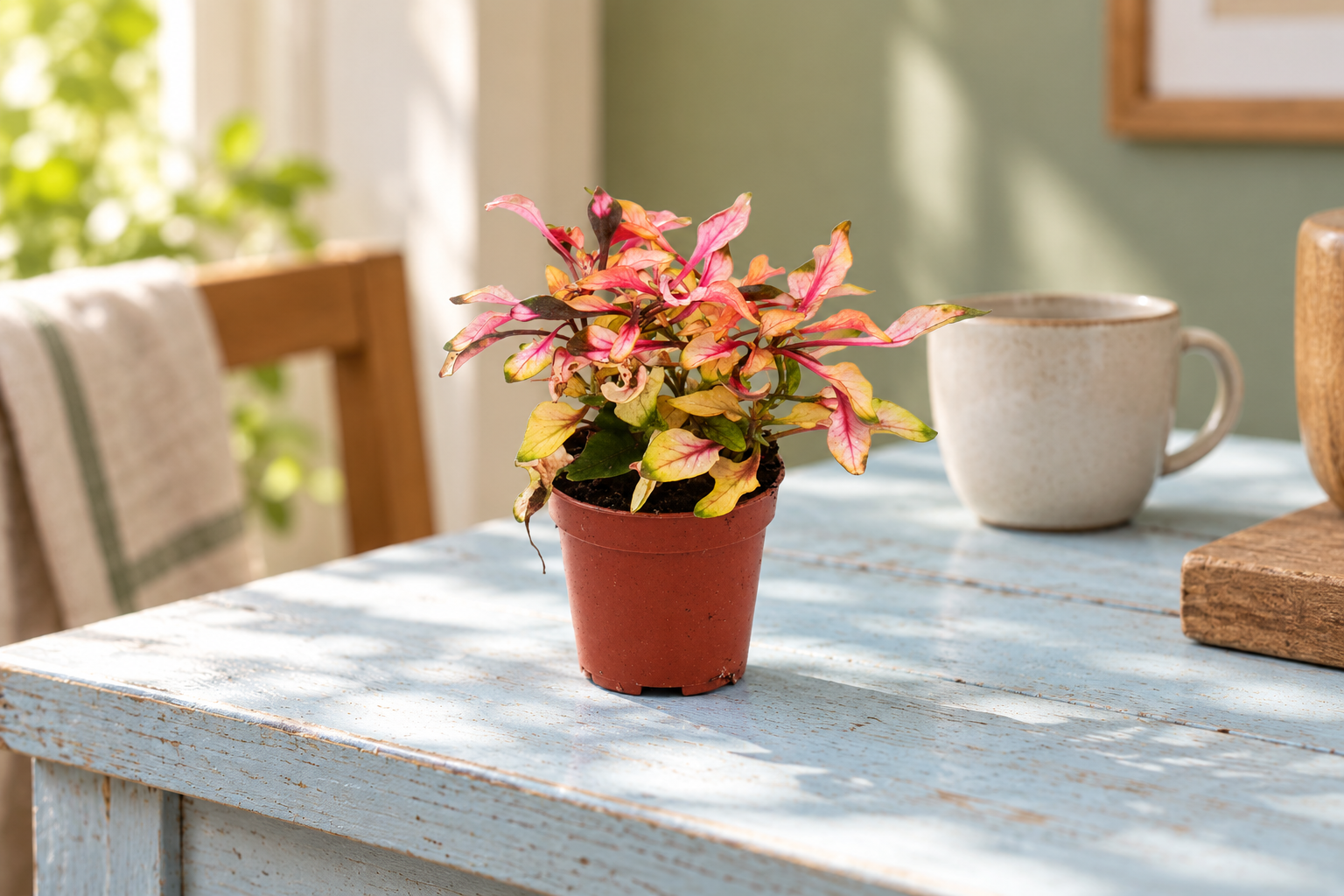
Colourful Alternanthera needs no flowers to invite a closer look. Small pointed leaves sit on reddish branched shoots, with yellow, pink and green distributed irregularly. Some areas are almost a single colour, others look like colour patches flowing into each other. The original shows a young Alternanthera with lively foliage; this very yellow-pink-green commercial selection is the focus here. The shop calls it Alternanthera dentata, also Joseph’s coat or parrot leaf. The genus contains foliage plants in different colours, and their commercial names are not always used consistently. This selection is therefore given no uncertain cultivar name. Its horticultural appeal initially lies in the observable leaves and branched structure. It stands out among quiet containers on a small bright plant shelf. Its colour is living foliage, not applied shine or paint.
A 5.5 cm root ball needs an accessible position
The specific offer states a 5.5 cm pot and approximately 10–12 cm total height including pot. This is a young mini plant. These measurements describe neither its eventual size nor a flower stem. After unpacking, grasp the small pot by its container, release trapped shoots and check soil moisture. The limited root space can dry quickly, especially by a warm pane. Initially place the plant where you can easily reach both its colourful leaves and the root ball. Decorative glass may surround the container; a closed vessel without a controllable outlet, however, is unfavourable for everyday care. In a shared dish, Alternanthera must remain accessible between its neighbours. It needs the same attention as a larger foliage plant, but with a much smaller water reserve.
Plenty of light, a gentle introduction to stronger sun
A bright warm position supports strong new growth. Specialist descriptions of Alternanthera emphasise light for the foliage effect, but this does not mean abrupt midday sun for the newly unpacked mini plant. Begin with plenty of gentle daylight and gradually introduce stronger sun. Leaves and the small pot can rapidly be stressed behind hot glass. A warm plant table near a bright window is usable; a deep dark shelf gap is not. Compare new growth in particular: long thin shoots and large spaces between leaves give reason to reassess the light position. Leaf colours can change with light and development. They cannot be fixed by one dose of fertiliser. A sheltered outdoor position is possible in summer if nights stay warm; before cool weather, bring the plant back into a bright frost-free room.
Slight moisture and open holes belong together
The root ball should stay slightly and as evenly moist as possible. Do not regularly wait for this small foliage plant to dry completely. Check the soil between shoots and the container’s weight. As the root ball becomes drier, water slowly onto the soil until moistened and let excess water drain freely. Afterwards remove water collected in the decorative container. A small daily sip without checking can still leave lower roots wet and upper areas dry. The amount needed depends on light, warmth, air movement and rooting. There is therefore no fixed weekday. Limp foliage calls for a root-ball check: a dry pot needs a different response from heavy wet soil. Spraying the colourful leaves does not replace supplying their roots. Keep the root ball in view even in winter, although it may use water more slowly.
More root space only when actually needed
Loose humus-rich potting compost should retain moisture while also letting water out. Open drainage holes matter more than a decorative container shape. When the root ball is well rooted and dries very quickly, a moderately larger nursery pot may make sense. Carefully lift the young plant out, preserving healthy roots; the old root ball sits at roughly the same level in the new soil. A very large pot with a lot of unrooted substrate makes moisture harder to judge. After repotting, ensure calm warm conditions and good drainage. During visible growth, restrained feeding with a suitable foliage-plant fertiliser according to its label is an option. Account for existing fertiliser. Neither more nutrition nor constantly wet soil replaces a bright place. No fixed later height from another Alternanthera cultivar is transferred to the unnamed selection offered here.
Accompany branching with small cuts
If an individual shoot grows far beyond the young plant, its tip can be gently shortened. Light pinching encourages more compact branching in Alternanthera. Cut with clean tools and retain enough healthy leaves. After transport, settling in matters more initially than immediate shaping. Heavy pruning in low light does not solve the cause of long thin shoots. Remove dead leaf remains without pulling neighbouring small stems. This also leaves soil and lower shoots easier to see. The portrait covers a foliage plant: small inconspicuous flowers occur in the genus, but they are not a promised delivery condition or fixed flowering calendar for this selection. A young plant need not stay as dense as on the photo date. Occasional photographs from a similar angle make its development easy to compare.
Through the darker months with an eye on new growth
For overwintering, a bright warm frost-free position away from cold draughts during ventilation matters. A pot immediately above hot heating air can dry quickly even in winter. Water according to root-ball condition and reduce nutrient supply when hardly any new growth appears. If leaf loss or dry edges accumulate, first check light, warmth and actual moisture. Individual old leaves alone do not allow a clear diagnosis. With sticky areas or unusual deposits, inspect leaf undersides and shoot nodes more closely; move an affected plant away from other pots until clarified. Its commercial name makes no promise of suitability as food or tolerance for animals. Stand the small pot securely and outside unsupervised reach. The unchanged original view and your own dated photograph help distinguish real changes from normal differences between young leaves.
One plant, several views
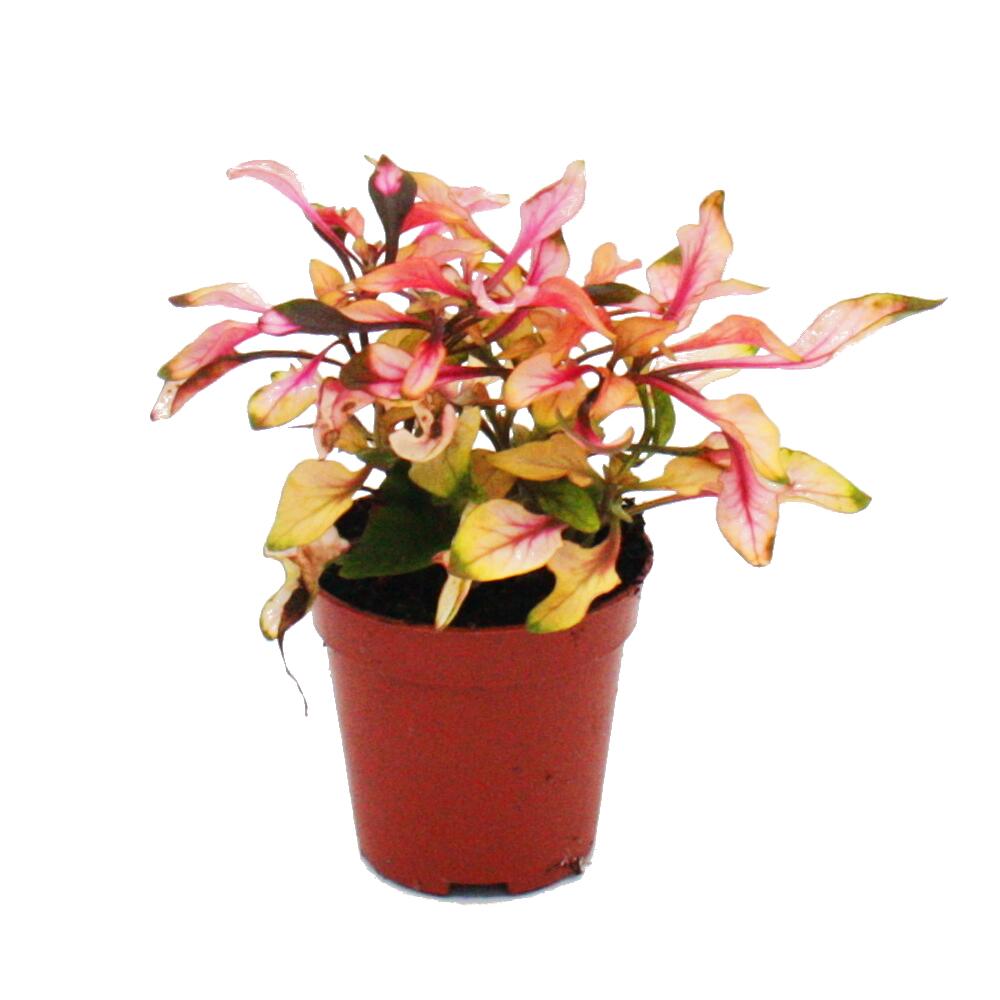

Good to know
Is the leaf colour a flower?
No. Yellow, pink and green are in the foliage of the offered selection. Small inconspicuous flowers of the genus are separate from this.
Which cultivar is this colourful Alternanthera?
The shop states Alternanthera dentata. No particular cultivar is named; this portrait describes the shown yellow-pink-green Alternanthera selection without an additional cultivar name.
Is 10–12 cm the later mature height?
No. It means the offered total height with the 5.5 cm pot. No fixed later size of this selection is promised.
Should the root ball dry completely between waterings?
Avoid regular complete drying. Keep the soil slightly and evenly moist and let excess water drain freely.
Can it stay permanently in closed glass?
Glass replaces neither light nor moisture and drainage checks. For ordinary pot cultivation, an accessible nursery pot with free drainage is easier to supply.
Why do shoots become long and thin?
First check the actual light position. Gentle pinching can accompany the shape, but does not correct a dark position.
Can it overwinter outside?
Choose a bright frost-free indoor place for this warmth-loving commercial selection. A summer outdoor position is no promise of winter garden cultivation.
Sources and editorial note
- Exotenherz: own delivery form and original photograph
- RHS: Alternanthera dentata and genus description
- NC State Extension: Alternanthera dentata, foliage and cultivation
- NC State Extension: Joseph’s coat selections, light, moisture and pinching
Own shop details, unchanged original and directly read specialist sources compared on 4 October 2026. The portrait describes the shown Alternanthera commercial selection; the species name remains recognisable as the shop designation. Check availability in the shop.