This plant at Exotenherz
Check the shop offer for current availability, price and what is included.
Check the shop for the current price, availability and offer contents.
Your care table
| Topic | What to do | Why it helps |
|---|---|---|
| Position | Choose a permanently suitable position in sun to partial shade. | An established autumn anemone is sensitive to frequent moving. |
| Soil | Prepare humus-rich moisture-retentive soil and drain excess water. | Flower development needs moisture, but persistent winter wetness is unfavourable. |
| Planting | Plant a moistened root ball at its previous level and water thoroughly. | The small delivery root ball first needs root contact with garden soil. |
| Watering | Check roots in the first summer and later during prolonged dryness. | Even vigorous autumn anemones flower poorly with regularly dried-out roots. |
| Feeding | Assess spring soil supply; appropriate compost mulch may help. | Well-prepared borders usually need no constant heavy additions. |
| Spread | Watch edge shoots and keep enough distance from weaker perennials. | Robustissima can spread strongly after establishment. |
| Pruning | Remove dead stems in late autumn or before spring growth. | Healthy winter stems may remain; fresh shoots should start undamaged. |
| Division | Divide only when needed in spring and support new pieces again. | Frequent disturbance is unwelcome and recovery may take time. |
For young plants, feel the soil directly at the root ball. The surface and deeper soil may have different moisture levels.
Water thoroughly after planting; later, water according to the soil, weather and establishment rather than a fixed calendar.
Avoid standing water. For plants in containers, also check that water runs out of the drainage hole.
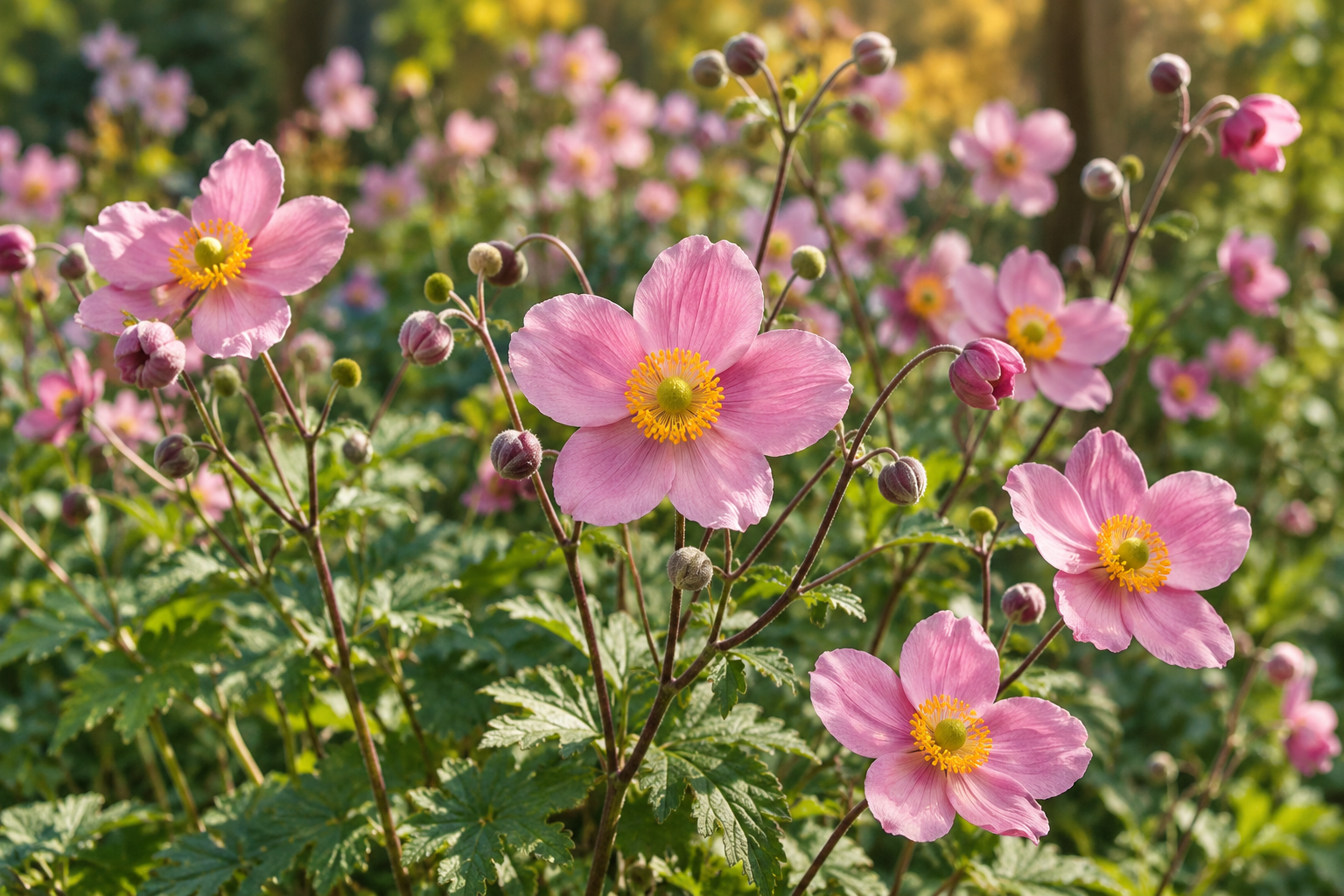
Pink cups float above the green structure
Robustissima sets open pink flowers on slender reddish stems in the late garden. Cups usually comprise five broad petals; yellow stamens surround a small green centre. Air remains between buds and open flowers, making the tall display look light. Strong green leaves below have clearly lobed toothed structure. This combination of calm foliage and moving flowers suits a bright woodland edge or a broader perennial backdrop. Flowering belongs in late summer and autumn. How rich it becomes in the first year also depends on how well the small plant establishes.
Shop name and current specialist profile belong together
The offer names the cultivar Anemone tomentosa ‘Robustissima’. The current RHS profile lists Anemone × hybrida ‘Robustissima’, naming tomentosa and an older vitifolia assignment as synonyms. The same known garden perennial is intended, not another offered identity. The common felted autumn-anemone shop name remains understandable while the portrait explains specialist classification. Robustissima is perennial and deciduous. Above-ground parts die later while roots continue the annual rhythm. Its small start must not be confused with later colony vigour: once established, it may spread strongly sideways into neighbouring areas.
Delivery size does not yet measure tall autumn flowers
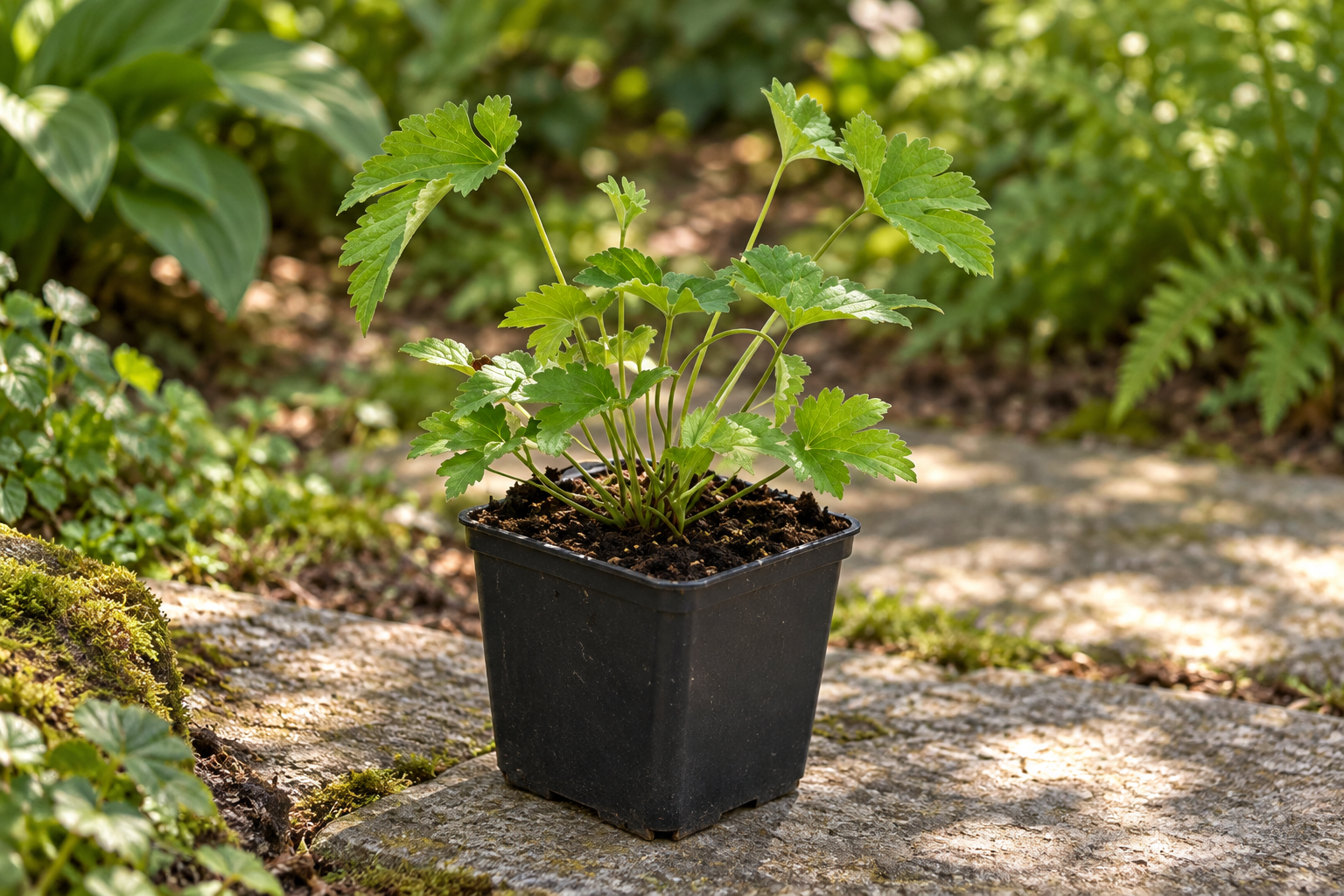
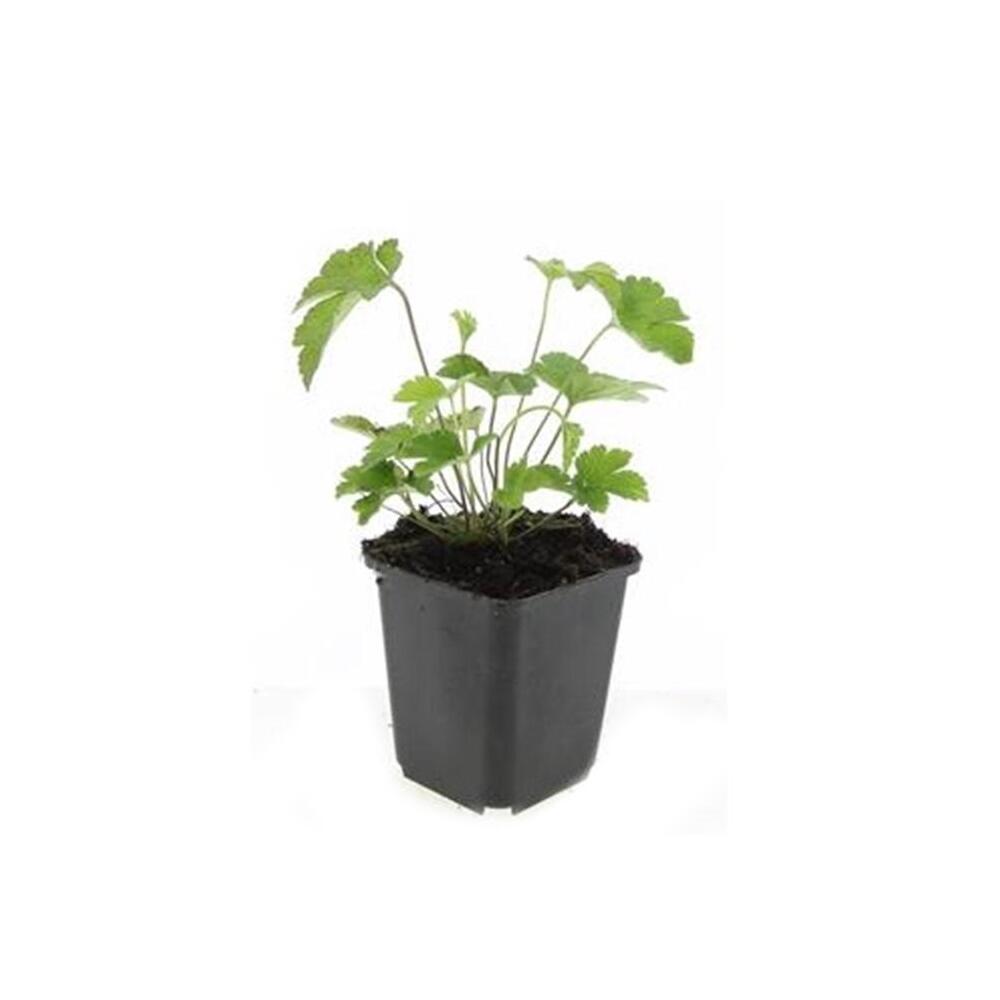
The unchanged original photograph shows a young flowerless plant with lobed leaves and long leaf stalks in a small black pot. Each set plant has a 9 cm pot and approximately 10–25 cm total height including the container. The shop gives about 100–120 cm later development guidance; the specialist profile describes about 120 cm. This explains the tall garden presence without guaranteeing exact final dimensions. The offer suggests about 45 cm planting spacing. A long-lived group also needs planning for lateral spread. Small weaker neighbours should not immediately surround the entire future root space.
A position where it can remain for years
Sun to partial shade suits it if soil holds enough moisture. Humus-rich moisture-retentive soil with good drainage provides a favourable root-system basis. Dry competition directly beneath large trees differs from a bright well-supplied woodland edge. A hollow staying wet for long periods in winter is equally unfavourable. Observe the area after rain and in summer before choosing it. Prepare root space thoroughly because an established colony is best not constantly moved. This choice needs foresight: height above neighbours, watering access and edge space belong together.
Support the anemone while it establishes
Spring and autumn suit planting in frost-free workable soil. Spring planting gives the young perennial more time before the next winter. Moisten the root ball before unpotting, plant at its previous level and firm surrounding soil well. Then water slowly and thoroughly. Check directly at the root ball during the first summer, especially in warm dry weather. Roots initially use little surrounding soil. Later, also inspect the root zone in longer dry periods and water according to demand. Permanently saturated soil is not the goal. An appropriate spring compost mulch may support soil nutrition; do not bury the immediate growing area under a thick wet layer.
Recognise and guide later strength at the edges
An established Robustissima needs neither moving nor dividing every year. Instead, observe where new edge shoots grow. If it leaves the intended area, remove unwanted pieces with roots and protect weaker neighbours. Spring division can help when more space is needed. This intervention requires new pieces to establish carefully again; an immediately equally rich display is not automatic. Large containers restrict room but water demand and root growth require more checking than a border. A generous garden position is usually easier to manage for a lasting tall autumn group than the small delivery container.
Preserve the base for the next growth
Remove dead stems in late autumn or before new spring growth. Healthy dry winter stems may initially remain; diseased material should leave earlier. Protect fresh basal shoots while cutting. Winter drainage remains decisive to prevent a permanently wet root zone. Shelter containers outdoors and keep drainage free. In spring, observe new growth rather than hastily replanting every open spot. Robustissima rebuilds its green foundation before tall flowers. With a well-chosen permanent position and attentive edge care, it develops into a strong late-summer group with open pink cups.
One plant, several views
Good to know
Is Robustissima tomentosa or × hybrida?
The shop uses tomentosa. The current RHS profile lists Anemone × hybrida Robustissima and names tomentosa as a synonym. The same cultivar is transparently reconciled here.
Does it arrive with pink flowers?
The clean original shows a flowerless young plant. Pink detail flowers show later garden development, not a delivery promise.
How tall does it grow?
Shop and specialist profile state approximately 100–120 and 120 cm respectively. Actual height depends on development and position.
Is 45 cm permanently enough room?
That is shop starting guidance. An older colony may spread strongly sideways; weaker neighbours need extra room.
How often should I water after planting?
No rigid calendar: regularly check the root ball during the first summer and water thoroughly when dry. Avoid permanently wet roots.
Can it grow beneath a tree?
A bright moisture-retentive woodland edge may suit. Strong root competition and dry dense shade are less favourable.
Should I divide every year?
No, frequent disturbance is unfavourable. Divide in spring for space problems or renewal and support pieces afterwards.
When should it be cut back?
Remove dead stems in late autumn or before spring growth. Protect new basal shoots while cutting.
Sources and editorial note
- Exotenherz: offer and original photographs (03/10/2026)
- RHS: current × hybrida classification, tomentosa synonym and cultivar features (03/10/2026)
- RHS: older tomentosa profile of the same cultivar (03/10/2026)
- RHS: planting, watering and managing autumn anemones (03/10/2026)
- Exotenherz: directly orderable set of 6, own SKU/GTIN (03/10/2026)
- Exotenherz: directly orderable set of 12, own SKU/GTIN (03/10/2026)
- Exotenherz: directly orderable set of 60, own SKU/GTIN (03/10/2026)
Shop offer, article number, GTIN, availability and original images checked directly on 03/10/2026. Specialist sources read directly. Current RHS profile 171692 with accepted name status saved and read directly. Tomentosa synonym, not a separate identity. Spread and sensitivity to moving explained. Clean young flowerless original.