This plant at Exotenherz
Check the shop offer for current availability, price and what is included.
Product and delivery details are given in the individual offer.
Your care table
| Topic | What to do | Why it helps |
|---|---|---|
| Position | Place near a bright window with filtered light. | The pale pattern shows well there; hot direct sunshine can damage leaves. |
| Water | Keep the root ball evenly slightly moist but allow free drainage every time. | The zebra plant tolerates neither complete drying nor a wet root space. |
| Checking | Check soil and pot weight before watering again. | Dense foliage hides the surface; a weekly calendar detects no remaining wetness. |
| Soil | Use loose slightly acidic houseplant compost and a draining container. | Roots need moisture and air together. |
| Room air | Choose warm culture away from hot radiator air and cold draughts. | Very dry air and abrupt temperature changes stress leaves. |
| Nutrients | Feed moderately during visible growth according to the houseplant fertiliser label. | A weak or wet root ball does not become healthy through extra feeding. |
| Repotting | When roots fill their space, move only suitably larger in spring. | A large unrooted soil reserve stays wet longer than the compact shrub needs. |
| Monitoring | Regularly check leaf undersides and shoot angles for coatings and webbing. | Mealybugs, scale insects and spider mites may first appear there inconspicuously. |
Check the compost and pot weight. The care table explains how far the compost may dry.
Water only when needed. The water should reach the root ball without spilling over the rim.
Remove surplus water from the saucer or cachepot. Then return the plant to a suitable position.
A pale leaf pattern that lives between the veins
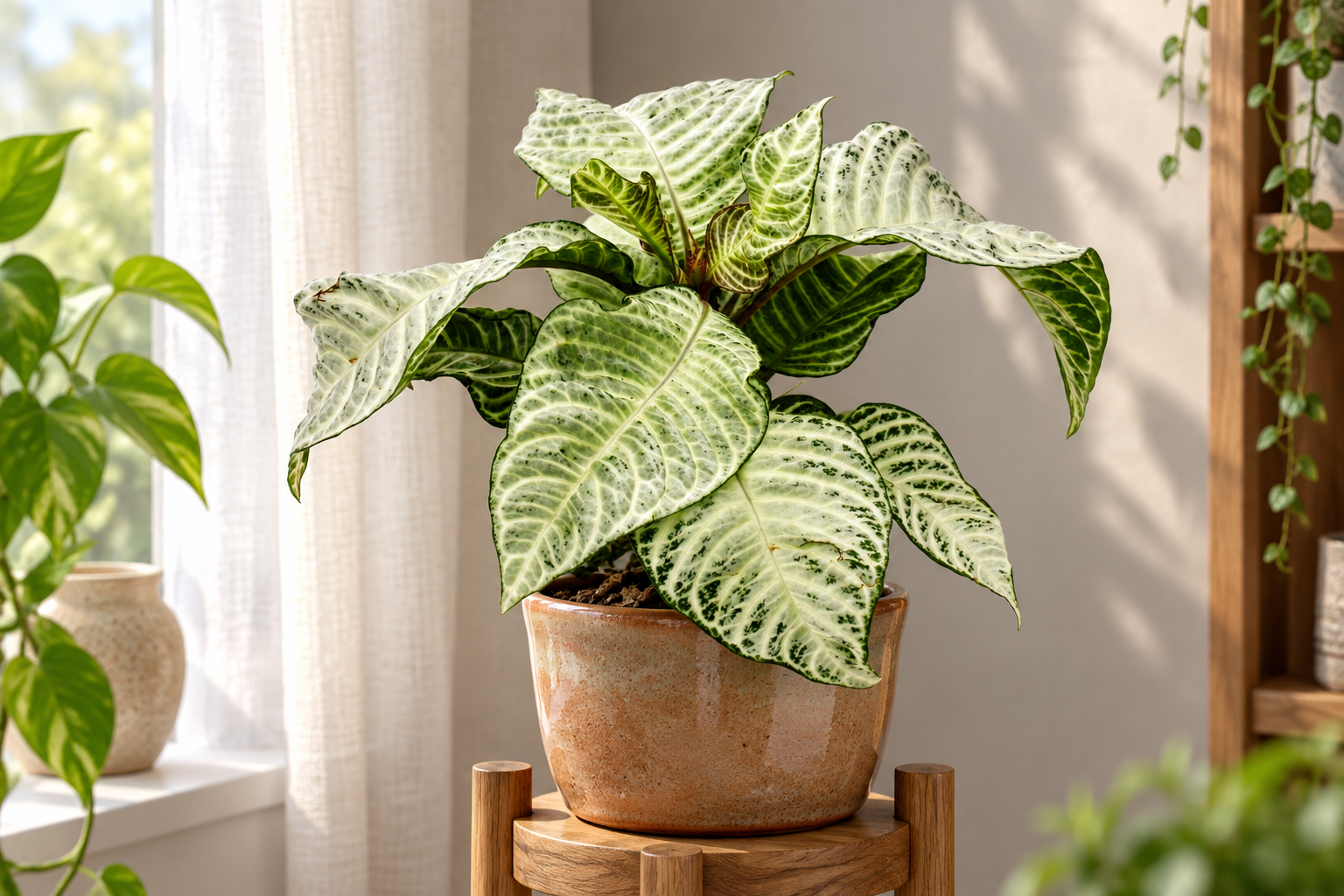
Close up White Wash looks like a small collection of differently patterned leaves. Creamy white, beige and green lie alongside each other on broad pointed surfaces. A strong vein network and slightly wavy surface give depth to the pattern. Leaves stand in pairs on short upright shoots and form a dense compact plant. It is therefore easy to view on a clear bright window surface without long vines or a tall support. The specific shop original shows a young flowerless plant; its character is already entirely in the foliage. Patterning need not look exactly identical on every leaf. Different distribution of green and pale areas is part of a natural product. Calm surroundings and some distance from other foliage plants make fine waves and veins especially easy to see.
White Wash is a zebra plant selection
Botanically White Wash belongs to Aphelandra squarrosa, the zebra plant in the acanthus family. The species comes from Brazil. White Wash is a named horticultural selection with its own described leaf appearance; it is neither a botanical subspecies nor a climber. Its compact upright structure explains why the small shrub works well on a table and needs no climbing support. The linked offer states a 12-cm pot and about 15 to 20 cm total height. These details describe the offered young plant, not permanently fixed miniature growth. With new shoots the plant can grow larger and wider. Position it so leaves do not touch hot glass or repeatedly get bent when opening the window. A bright position with some air around the canopy is more practical than a crowded decorative corner.
Bright light, even warmth and a calm start
Choose a bright position with indirect or filtered light. Hot southern midday sunshine directly behind glass is no good starting point for sensitive leaf surfaces. A bright place with gentle morning sun can suit it if the plant is carefully acclimatised. Temperature should also remain as steady as possible. After transport, White Wash initially stays protected from bursts of cold draught, hot radiators and unnecessary moving back and forth. Darker corners are no substitute for a suitable window position, even if the white-green pattern looks decorative there. If new leaves remain small or shoots weaken, first check actual brightness and root condition. More fertiliser does not offset insufficient light. The zebra plant is intended for warm indoor culture; a frosty night on the balcony is not part of its care.
Keep slightly moist without drowning the roots
The most important action is a regular root-ball check. White Wash does not want to dry completely but must equally not stand in constantly wet soil. Feel the upper compost layer and lift the pot: a heavy moist root ball needs no new watering yet. When the surface starts drying slightly and root-zone moisture has decreased, water the soil evenly. Let excess drain and then empty saucer or outer pot. Water soil rather than repeatedly filling dense leaf angles with water. Warmth, light, pot material and new growth determine how quickly water is used. A fixed weekday is therefore not enough to decide. Hanging leaves are not an automatic watering signal either: they may occur with a dry root ball but also with damaged roots in wet soil. Check the root ball before topping up.
Airy soil and restrained nutrient supplies
Loose slightly acidic houseplant compost combines moisture with an airy root space. Free drainage matters. A stone layer does not turn closed glass or a watertight outer pot into a drained planting container. The nursery pot, by contrast, can be taken out to water and then returned. Once roots fill the available space well, spring is a suitable repotting time. Choose the next pot only moderately larger and keep a healthy root ball together while working. A much larger container holds long-moist soil that is not yet rooted. While the plant visibly forms new leaves and shoots, feed moderately according to a suitable houseplant fertiliser label. After shipping stress, leaf loss or an unusually wet root ball, clarify the cause first. Extra fertiliser is no quick repair for this.
Leaf care without permanent mist or a closed glass cover
The zebra plant likes warm surroundings with air that is not too dry. A position directly over an operating heater can nevertheless be unsuitable even with plenty of light. Keep clear of the heat source and avoid leaves remaining in warm airflow. Occasional misting replaces no lasting suitable room air and does not justify constantly wet leaves. A closed glass cover without controlled ventilation is not a necessary solution for the young shrub either. Dust can be removed carefully with a soft slightly damp cloth, supporting each leaf from below. Work without leaf-shine products and without pulling leaf tips. Completely dead leaves can be removed with clean tools. Calm handling during pruning and repotting protects dense young shoot tips. White Wash is an ornamental plant and is not presented here as edible or safely pet-friendly.
Remain attentive in winter and interpret leaf loss
Less winter light often slows growth and therefore water consumption. This means shorter intervals between root-ball checks, not necessarily more frequent watering. Continue keeping the plant bright and warm and do not let the root ball dry completely. At the same time, soil must not stand in water for days after watering. If leaves fall, check recent changes: was a window open for long, was the pot against cold glass, did the root ball become too dry or remain very wet? Do not change everything at once; correct the specific unfavourable condition. Look beneath leaves and into shoot angles too. Fine webbing, sticky patches or cotton-like coatings deserve closer checks and, if needed, distance from other plants. Healthy new leaves are then a better guide than perfect appearance in an old damaged leaf. With reliable bright warm surroundings, the individual white-green pattern remains the true eye-catcher.
One plant, several views

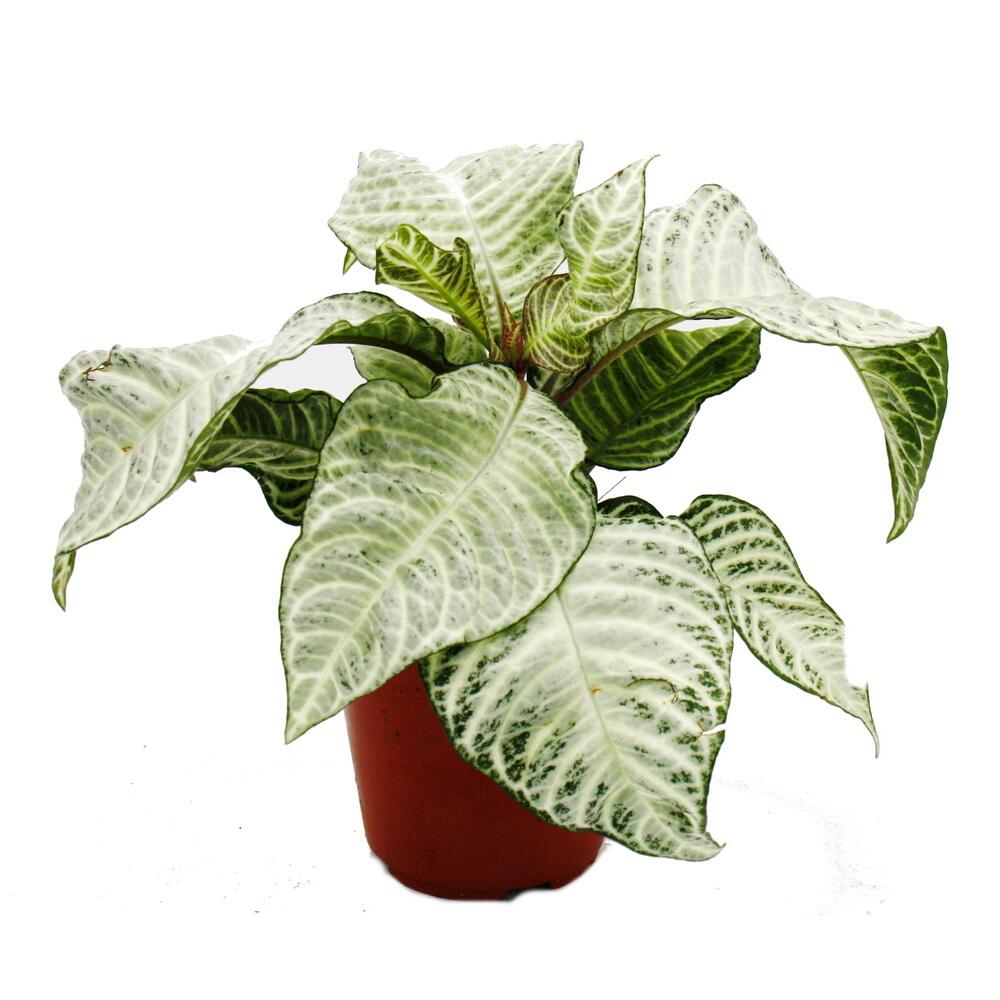
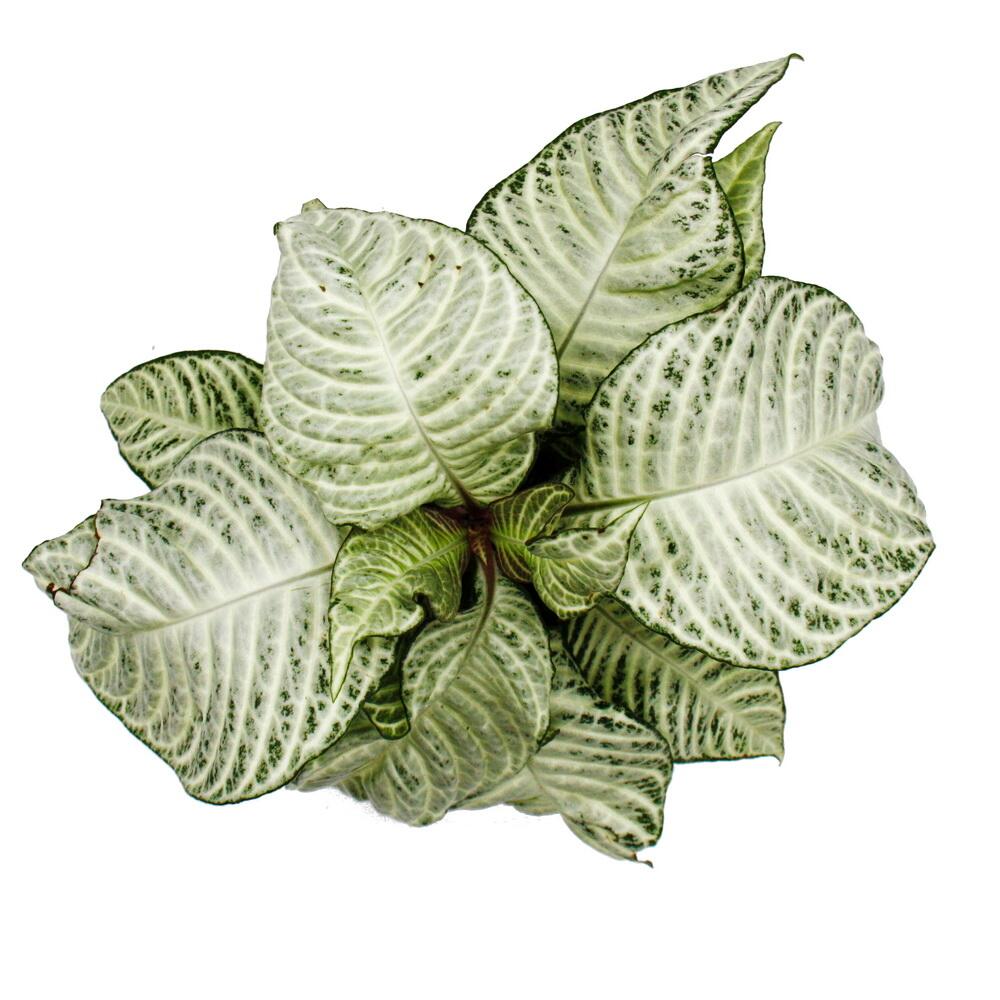
Good to know
Is White Wash a subspecies?
No. White Wash is a named horticultural selection of Aphelandra squarrosa.
Does it need a climbing support?
No. The zebra plant grows as an upright shrub and is not a climber.
May the root ball become completely dry?
Avoid complete drying. Keep it evenly slightly moist and let excess water drain freely.
Why are leaves hanging?
Check the root ball first. Both dryness and damaged roots in wet soil can make foliage hang.
Is 15–20 cm the final height?
This figure describes approximate total height of the linked offer, not a fixed later final size.
Must I spray daily?
Spraying replaces no suitable position. Even warmth, distance from heaters and a properly cared-for root ball are more important.
Sources and editorial note
- Exotenherz: complete own offer and unchanged original gallery
- NC State: Aphelandra squarrosa, species profile and indoor cultivation
- US plant patent PP29564P3: original White Wash description
Sources compared: 4 October 2026. Own complete shop offer and clean original gallery read and viewed. Offer measurements describe the offered young plant, not a later final size.