This plant at Exotenherz
Check the shop offer for current availability, price and what is included.
Check the shop for the current price, availability and offer contents.
Your care table
| Topic | What to do | Why it helps |
|---|---|---|
| Light | Very bright; gently increase direct sun after transport. | The plant needs a growing position, not a dark room corner. |
| Watering | Let soil dry well between supplies and check moisture inside. | A dry surface says little about moisture lower down. |
| Supply | Water soil evenly when needed and drain completely. | Free outflow allows the root zone to receive water without permanently storing water beneath. |
| Container | Use a drainage hole and empty outer pot or saucer afterwards. | Hidden residual water may keep roots wet too long. |
| Substrate | Well-draining succulent mix with granular mineral components. | Prolonged saturation increases root damage and rot risk. |
| Repotting | Only when roots fill space or plant outgrows it, with moderate extra room. | Unused soil stays moist longer; larger is not automatically better. |
| Winter | Bright and frost-protected; water by drying and visible growth. | Moisture lasts longer under lower consumption, not a fixed resting calendar. |
| Feeding | Only in active growth, suitable succulent feed by instructions. | Nutrients cannot replace light or force useful growth in an inactive plant. |
| Checks | Assess altered shoots, moisture and outflow together. | Overwet roots and prolonged drought can both impair growth. |
| Care position | Keep pot reachable and protect pale scales when handling. | Regular observation belongs to low-water plants too. |
Check the compost and pot weight. The care table explains how far the compost may dry.
Water only when needed. The water should reach the root ball without spilling over the rim.
Remove surplus water from the saucer or cachepot. Then return the plant to a suitable position.
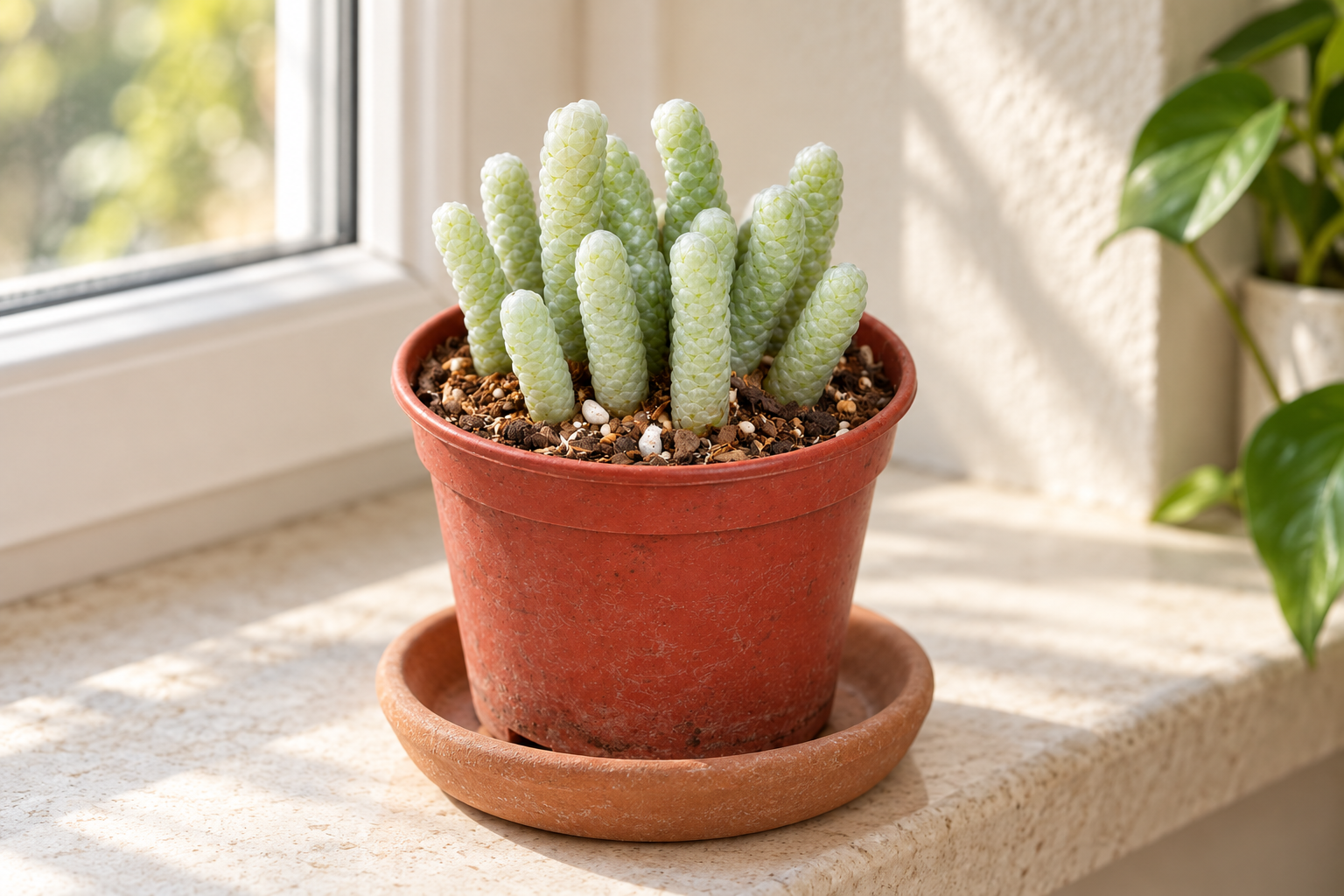
The pale wrapping reveals every shoot
From a distance paper avonia looks almost like little pale cords. Close inspection reveals green cylindrical shoots beneath numerous overlapping papery scales. This special structure is no reason to rub it off during unpacking. Release wrapping carefully, holding the container without pulling individual shoots. Then look calmly from the side: green and pale covers together make the fine pattern. Simple surroundings reveal details. Originals show the offered plant form; exact shoot distribution and posture may vary on individuals.
Paper avonia and Anacampseros papyracea
The shop calls it Avonia papyracea or paper avonia. Botanically the same species also bears the accepted name Anacampseros papyracea; Avonia papyracea is its synonym. It belongs to Anacampserotaceae. Natural distribution runs from Namibia to the Cape provinces, in desert and dry shrubland. This succulent subshrub’s origin helps explain bright positions and careful water use. At home, however, container soil forms a separate root space: it should drain well, and its condition decides the next supply. An attractive name therefore replaces no moisture check.
A bright place looking towards daylight
Choose a genuinely bright indoor position. Sunny cultivation suits if the plant can first adjust after transport. Increase direct sun gently, watching shoots rather than immediately choosing the hottest spot behind glass. Tables or shelves suit only if plenty of daylight arrives. Deep in a room an attractive decorative idea quickly becomes unsuitable culture. Low light may encourage weak or misshapen growth. Watch air movement too: an open airy place helps more than closed damp glass. Keep bright and conveniently accessible for care.
Watering begins with soil, not scales
The pale papery surface is no reliable water indicator. Check soil instead and let it dry well between supplies. A dry top crust does not mean little moisture remains inside. If the root zone is still moist, postpone water. When needed, supply soil evenly and drain all excess. Remove the growing pot from an outer pot, replacing only after dripping stops. The next drier phase begins. Constant little sips may complicate checks. Conversely an actively growing plant should not remain completely dry excessively long. Brightness, warmth and mix condition change how soon water is needed.
The root zone needs free outflow
Use well-draining succulent mix with granular mineral components. It should take up then release water without prolonged saturation. Drainage hole and empty saucer belong together: draining soil helps little if outflow stands underneath. Immediate repotting is unnecessary while plant and roots are sound. It becomes useful when roots fill the container or the plant outgrows it. Then provide only moderately more space, supporting the root ball. Much unused soil may remain damp too long and increase rot risk.
Less growth needs less water
Watch for new shoot parts and soil drying speed. Low light or reduced growth may lower water use. The interval before watering increases; equal quantity at equal spacing would not suit. In winter paper avonia remains bright and frost-protected. Lower consumption is recognised by plant and soil, not imposed on a fixed date. Continue checks rather than neglecting it. With clear renewed growth, adjust supply again as needed. Feed only during active growth: a suitable succulent product by instructions is enough, without trying to drive growth with frequent doses.
Read changes alongside the position
If soil stays wet long or shoot portions soften, first check outflow and moisture. Extra water is no safe response. Excess can damage roots and encourage rot. Prolonged shortage may likewise cause succulent shrinking and weak growth. Appearance and roots are therefore assessed together. With unusual growth also inspect brightness. Examine shoots closely for new cotton-like gatherings or small animals; mealybugs can occur on succulents. Uniform pale scales, however, belong to appearance. Before removing anything, compare with healthy portions and the original photo.
A plant for close observation
A calm bright corner on an accessible plant table or beside separately potted succulents suffices. Each can be watered appropriately instead of all together. A decorative outer pot can complement the view if empty after care. Note position and how quickly soil dries after watering in the plant book. Such observations help more than fixed weekly rituals. Low water use still means attentive care: light, outflow and growth are regularly examined. Fine scales remain the motif worth a second look.
One plant, several views
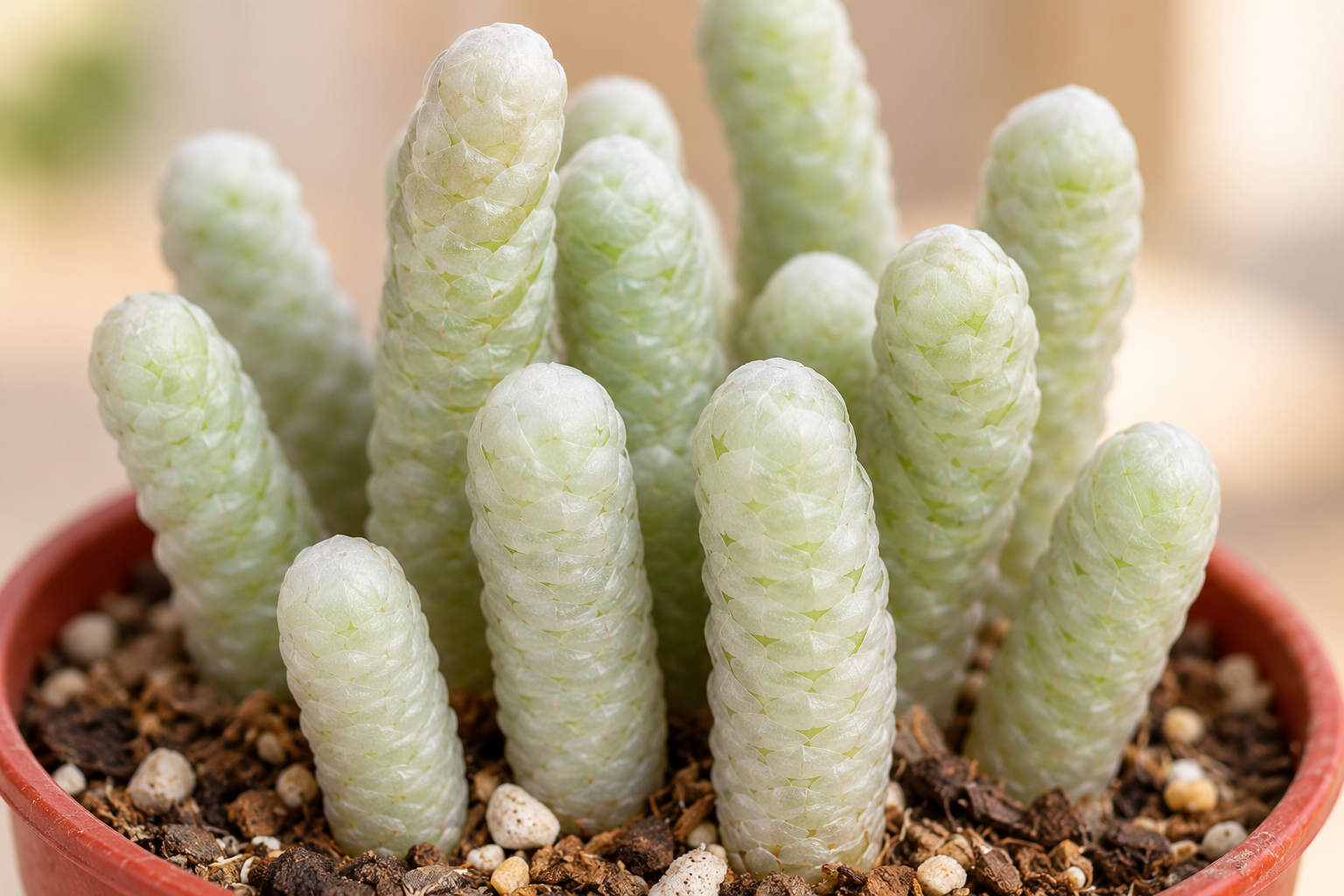
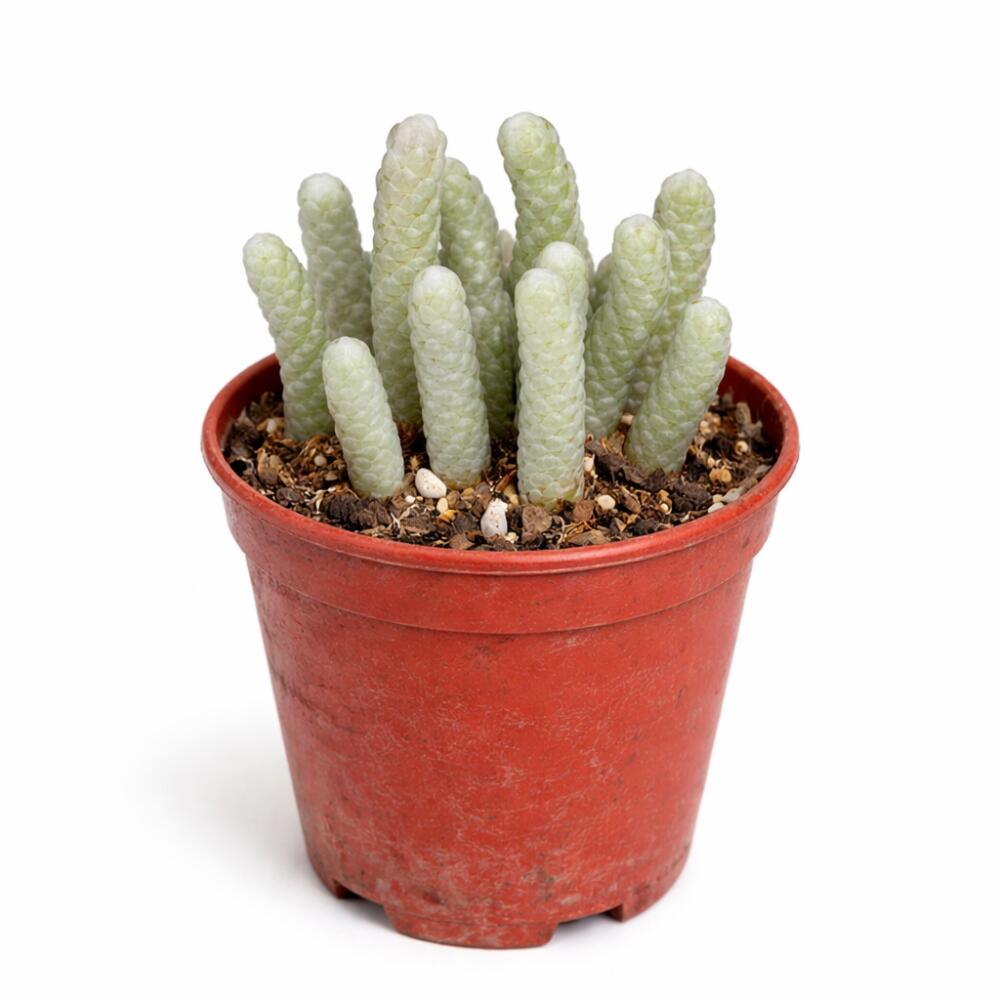
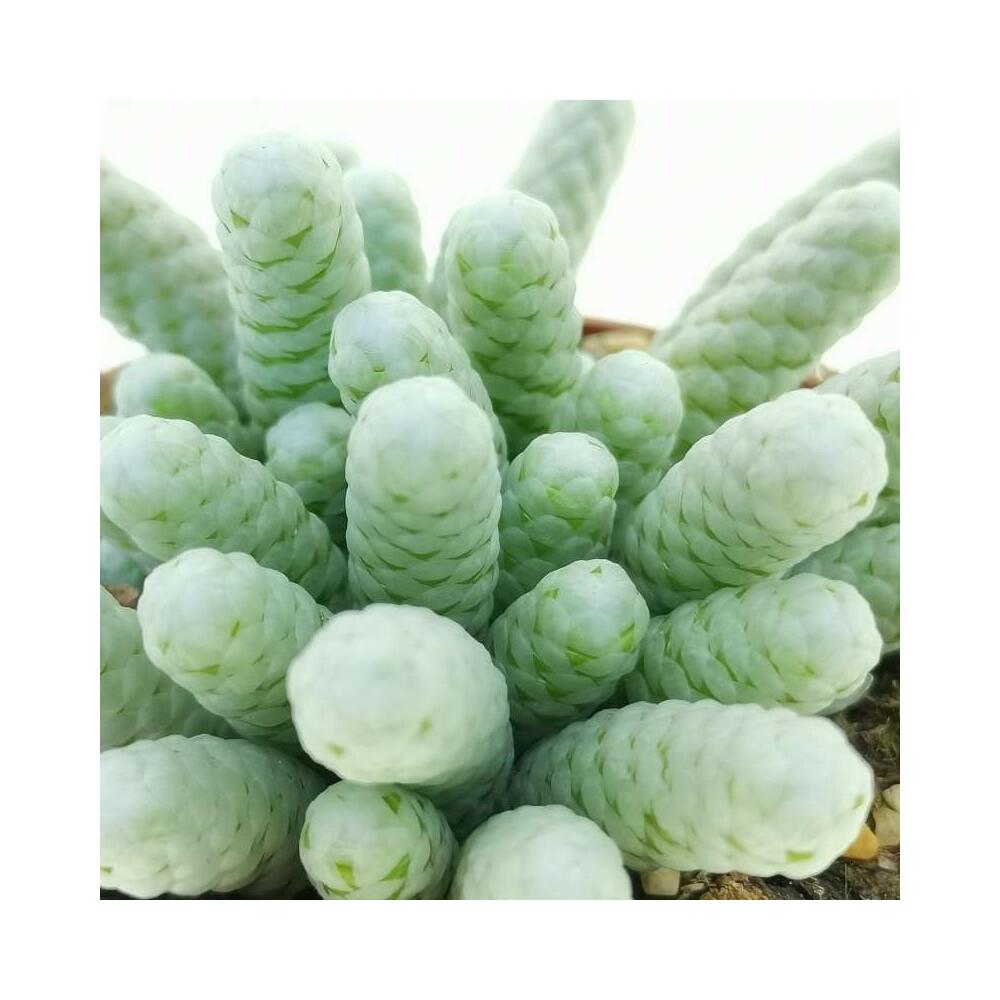
Good to know
Are Avonia papyracea and Anacampseros papyracea different plants?
The names denote the same species here. Anacampseros papyracea is accepted; Avonia papyracea is its synonym used by our offer.
Should I remove pale papery scales?
No. They belong to its appearance. Unpack and inspect carefully without pulling shoots.
How do I know when to water?
Check soil inside and let it dry well. Pale shoot covering and a dry top crust do not replace checks. Water as needed and remove surplus.
Can it stand on a dark shelf?
A lasting dark place is unsuitable. It needs much daylight; a sunny place is possible after gentle adjustment.
Must I repot on arrival?
Not simply because of delivery. While roots and plant are sound, let it settle. Plan a change when roots fill the pot or the plant outgrows it.
Do I keep the same winter rhythm?
Continue checking soil. Lower growth and slower drying extend intervals. Keep bright and frost-protected; no fixed resting months are prescribed.
Why is little water not little care?
This succulent also needs suitable light, free drainage and regular checks. Water demand is only one part.
What if soil stays wet long?
Do not automatically water again. Check outflow, residual water and mixture. Assess soft or altered parts with roots before changing supply.
Sources and editorial note
- Exotenherz: offer and originals (checked 6 October 2026)
- Royal Botanic Gardens, Kew: Anacampseros papyracea, names and origin (checked 6 October 2026)
- Royal Horticultural Society: indoor cacti and succulents (checked 6 October 2026)
Own offer and originals checked on 6 October 2026. Care follows light, drying and visible growth.