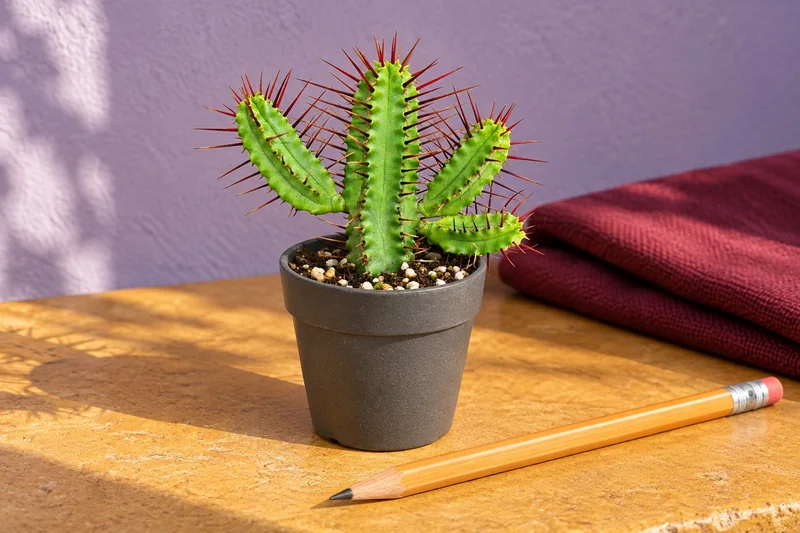
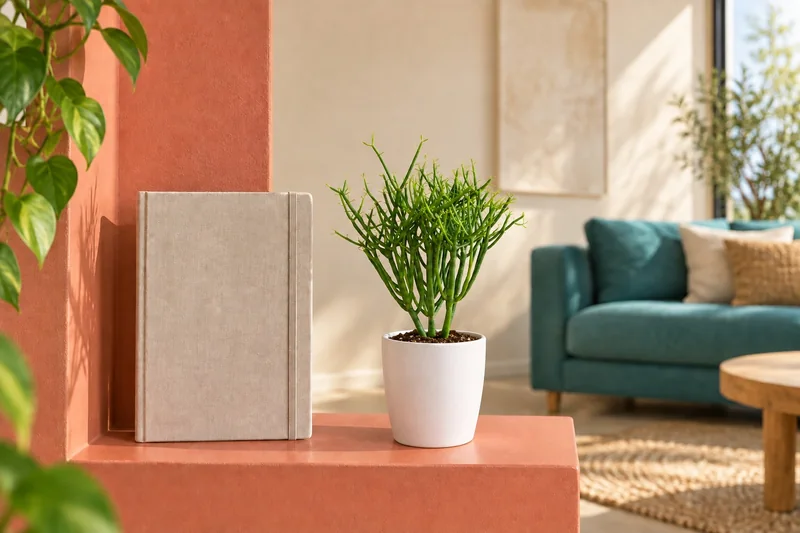
This plant at Exotenherz
Check the shop offer for current availability, price and what is included.
Check the shop for the price, current availability and what is included.
Your care table
| Topic | What to do | Why it helps |
|---|---|---|
| Light | Very bright; gradually acclimatise to direct sun. | Abrupt change from shade may cause burns. |
| Water | Let the root ball dry thoroughly between waterings. | The body stores moisture. |
| Drainage | Remove water residue from the cover pot. | Standing wetness threatens roots. |
| Compost | Free-draining mix with mineral structure. | Air in the root ball supports safe drying. |
| Winter | Bright, frost-free and very dry in cool conditions. | Water consumption falls markedly at rest. |
| Fertiliser | Very sparingly during growth; pause in winter. | Slow growth needs no strong supply. |
| Form | Keep normal ageing growth without pruning. | An older sphere may gradually elongate. |
| Milky sap | Protect skin and eyes; do not injure the plant. | Sap is irritating and poisonous. |
Check the compost and pot weight. The care table explains how far the compost may dry.
Water only when needed. The water should reach the root ball without spilling over the rim.
Remove surplus water from the saucer or cachepot. Then return the plant to a suitable position.
Round as a ball but botanically not a cactus
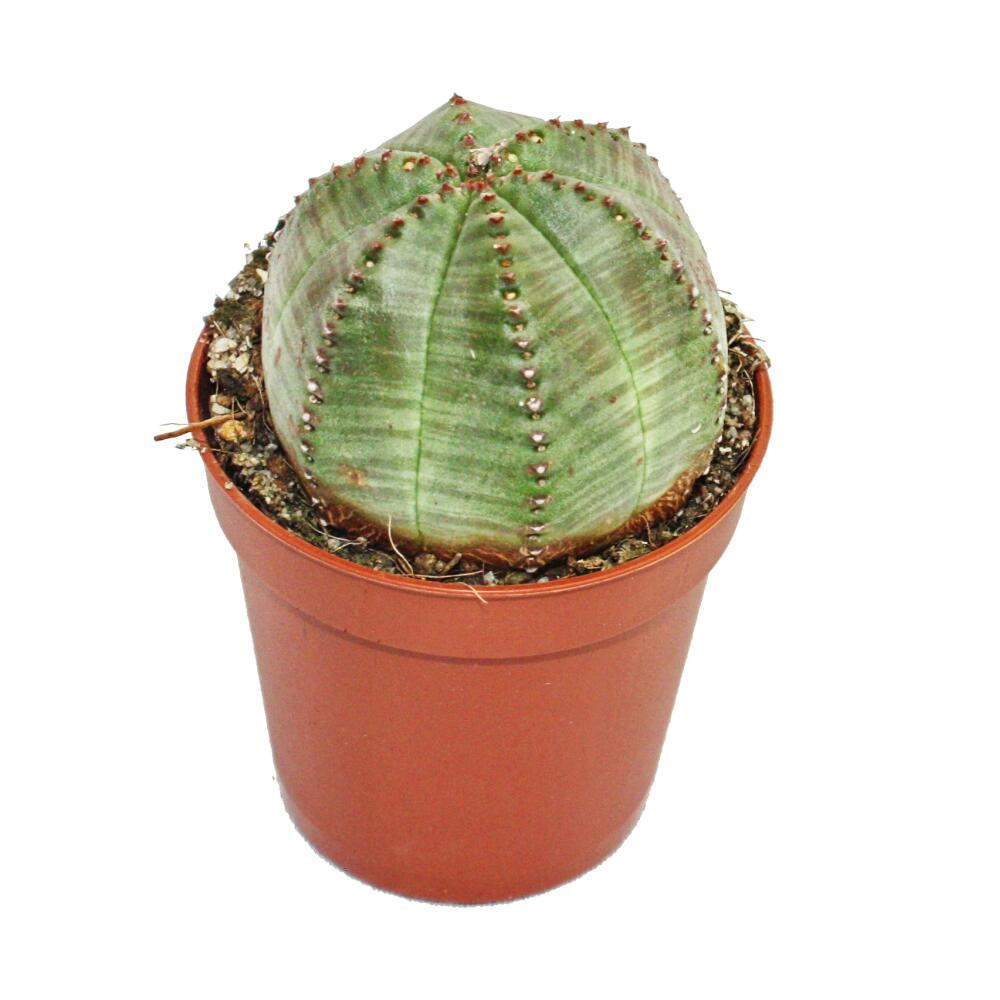
Euphorbia obesa belongs to the spurge family. Its usually single ribbed body recalls a small ball and often carries fine grey-green to brownish-violet transverse markings. Young plants are particularly round; the body may become more elongated with age. That is not automatically a care mistake. The species comes from a limited area of the South African Karoo. For indoor cultivation, it is especially important to understand the water-storing body as an adaptation to limited moisture.
The 5.5 cm pot shows the actual small format
The offer states a 5.5 cm pot and around 10 cm total height. The scene accordingly shows a tiny young plant, not a large sphere for the floor. Fine differences in markings and ribs are normal for living plants. Keep the body free rather than surrounded by constantly damp moss or a dense decorative layer. Hold the pot rim instead of squeezing the plant. Decoration and additional pictured objects are not part of the plant delivery.
Plenty of light with gentle acclimatisation
Choose a very bright position. Direct sun is possible after gradual acclimatisation, but a plant from shaded cultivation may burn in sudden strong radiation. A living-room position must therefore offer sufficient daylight. Keep as bright as possible and frost-free in winter. A somewhat cooler position around 10 to 15 °C, as stated in the shop, eases the rest phase. Conditions at a South African natural site do not permit frost exposure for a small pot in Germany.
Check dryness before the next watering
Let the root ball dry well between waterings. During active growth, water deliberately and drain completely afterwards. The small pot should neither stand in water residue nor be topped up a little daily. Keep very dry in cool winter conditions. A firm old discolouration at the base is different from a new soft wet area. With suspicious softness, do not immediately give more water; first inspect compost, temperature and roots.
Few interventions and airy root room
A free-draining succulent mix with plentiful mineral structure is suitable. The pot needs drainage and should only be moderately enlarged when repotting. A slow-growing plant initially scarcely uses large amounts of fresh damp compost. Very sparing feeding following product instructions suffices during growth; pause during winter rest. Shaping is not necessary for normal spherical growth. Shine products and polishing are also unnecessary and may damage the surface.
Small flowers and careful handling
Inconspicuous inflorescences sit near the tip. Male and female flowers normally appear on separate plants in this species; suitable flowering partners are needed for seed formation. Flowering delivery or a particular sex is not guaranteed. Milky sap may escape with injury and must especially be kept away from skin and eyes. Do not puncture to check the plant family. Seeds suit propagation; the usually unbranched sphere gives no reason for routinely taking cuttings.
One plant, several views
Good to know
Is the baseball plant a cactus?
No. It is a succulent spurge in the Euphorbiaceae family.
Why is my old plant becoming elongated?
That may be normal ageing growth. Very thin pale new growth instead calls for checking brightness.
Is the plant 10 cm wide?
Around 10 cm refers to total height. A 5.5 cm pot is offered.
Must I eventually cut the sphere?
No. Shaping is unnecessary with normal growth and would also release irritating milky sap.
Sources and editorial note
- Product and delivery contents: Exotenherz
- SANBI / PlantZAfrica: plant profile and cultivation
- Royal Horticultural Society: plant and care knowledge
Sources checked: 15 September 2026. Product information and delivery contents follow the linked shop offer. Care has been checked against the stated specialist sources and remains subject to plant condition, position and season.