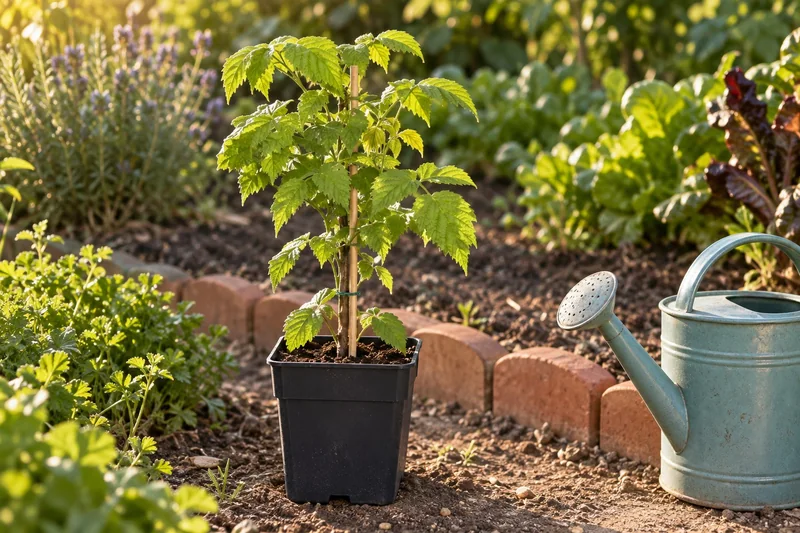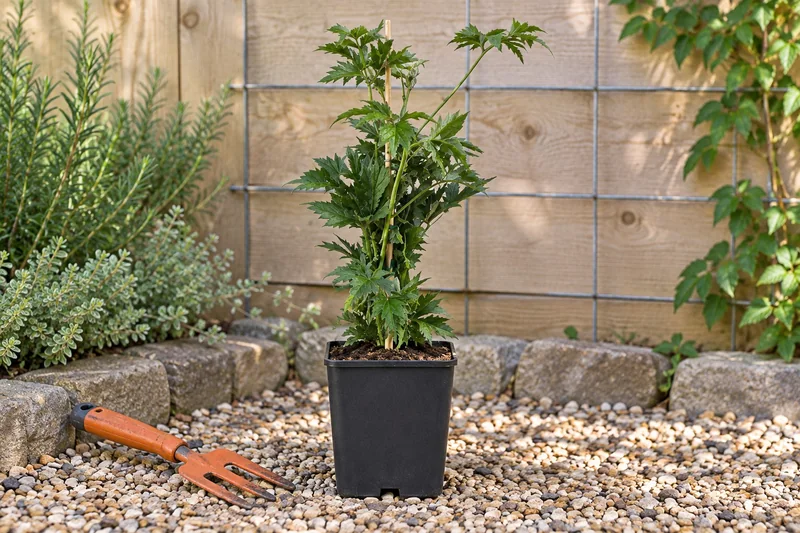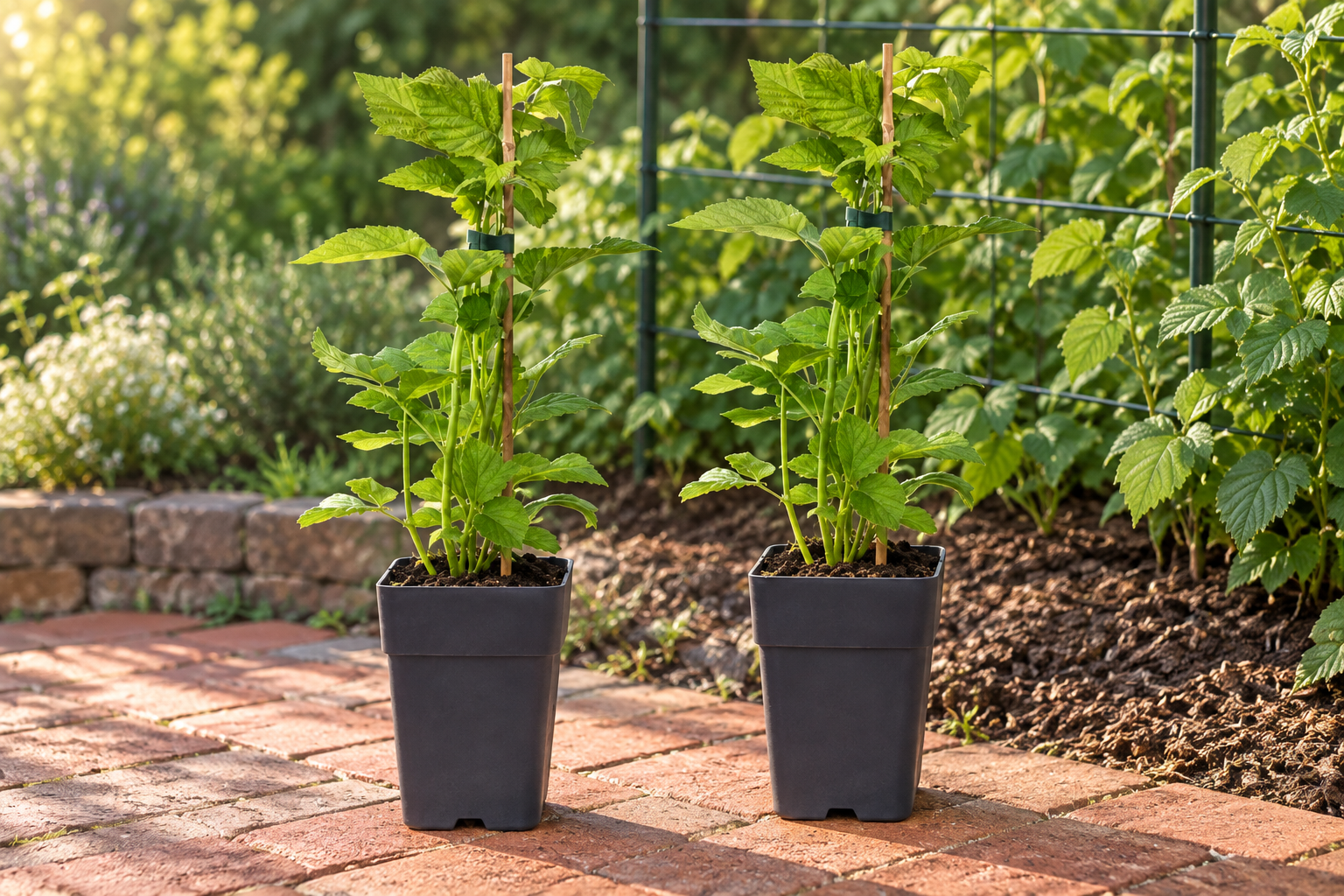
This plant at Exotenherz
Check the shop offer for current availability, price and what is included.
Check the selected shop offer for price, availability and delivery contents.
Your care table
| Topic | What to do | Why it helps |
|---|---|---|
| Classification | Treat Rubus ‘Black Jewel’ according to evidenced shop and hybrid classification. | No pure species or precise parentage is added. |
| Position | Sun or bright partial shade with accessible canes. | Light and access support care and fruit ripening. |
| Soil | Humus-rich moist well-drained soil. | Wet compacted soil burdens roots. |
| Planting | Plant potted subjects at existing rootball height. | Young roots should connect with prepared ground. |
| Training | Fasten longer canes loosely in a clear arrangement. | A dense bundle obstructs pruning and inspection. |
| Water | Check rootball moisture during establishment and fruit development. | Small delivery rootball initially explores little soil. |
| Feed | During growth supply as needed by label. | Discolouration can also relate to roots and moisture. |
| Pruning | Remove fruited canes and retain healthy new growth. | Summer-fruiting black raspberries are not automatically cut like autumn raspberries. |
| Winter | Protect containers and check dryness on frost-free days. | Leafless perennial still needs an intact rootball. |
For young plants, feel the soil directly at the root ball. The surface and deeper soil may have different moisture levels.
Water thoroughly after planting; later, water according to the soil, weather and establishment rather than a fixed calendar.
Avoid standing water. For plants in containers, also check that water runs out of the drainage hole.
Selection name is clearer than species line
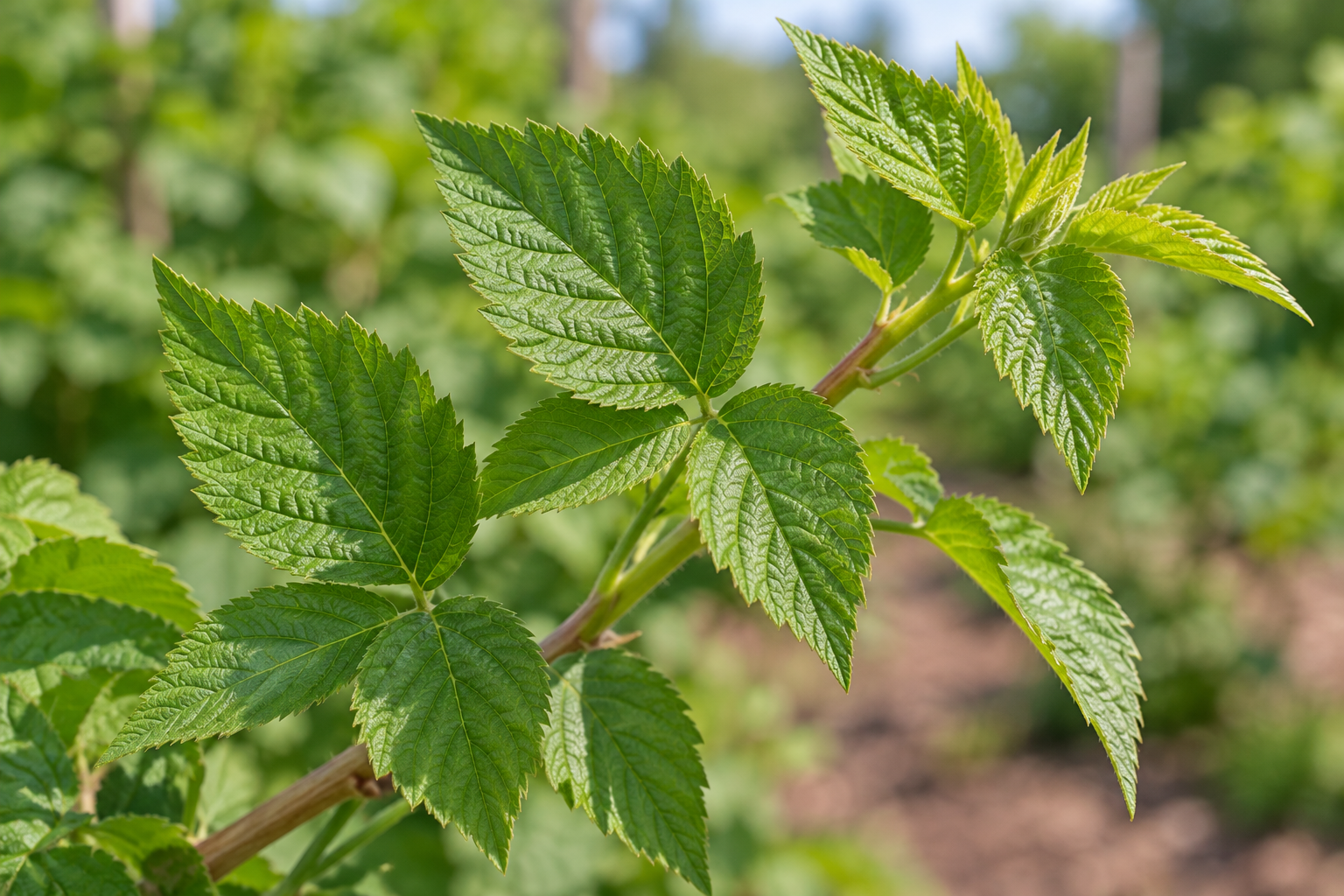
Black Jewel here denotes the explicitly confirmed black-raspberry selection in linked offer. Shop classifies it as Rubus occ.; RHS profile lists Black Jewel as a hybrid raspberry under Rubus idaeus. Botanical reference therefore stays Rubus ‘Black Jewel’, without asserting a proven pure species or precise parentage. Evidenced features are green deciduous leaves, small white spring flowers and later black summer fruit.
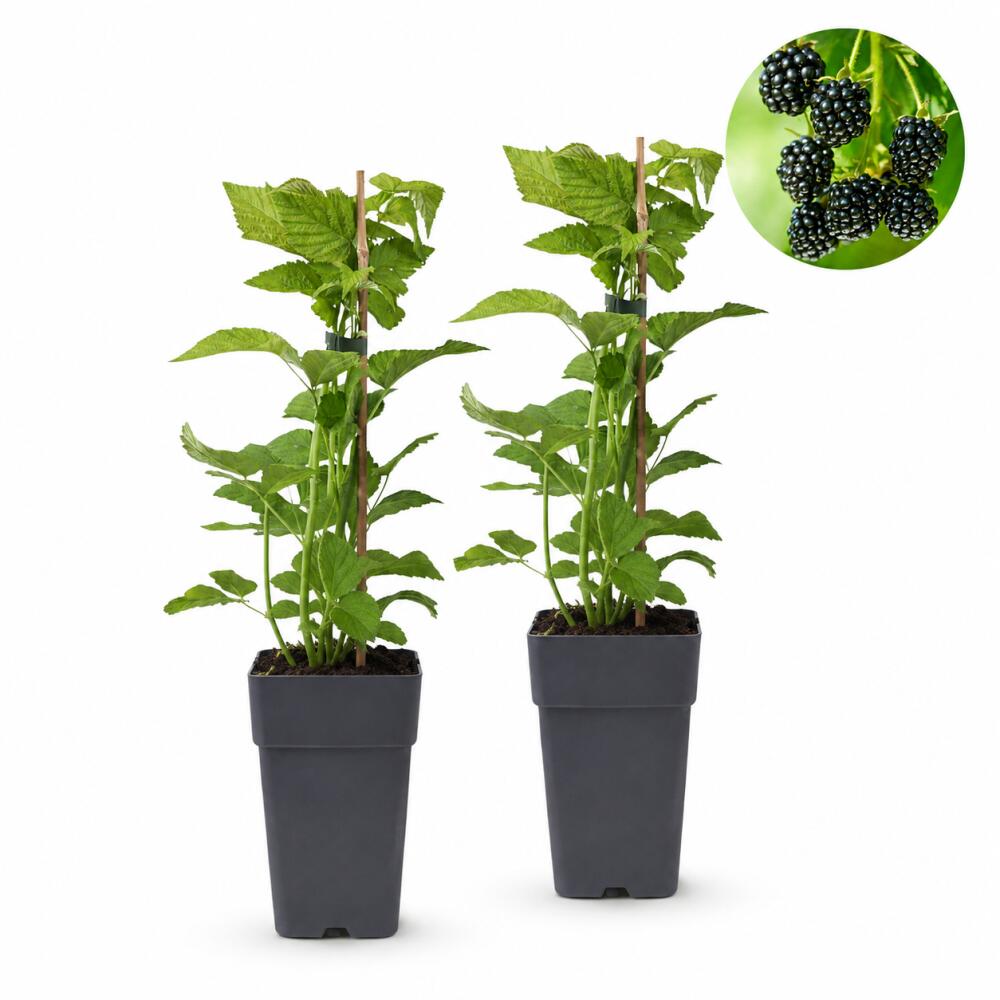
A set of two young plants
Offer supplies two plants in fifteen-centimetre pots at about fifty centimetres total height including pot. Slender young canes are not yet a large fruiting patch. Cultivar profile gives about one-and-a-half to two-and-a-half metres height and one to one-and-a-half metres width for developed plants. Unpack canes gently and check stability and moisture. Empty or merely leafy shoots are unsurprising in a young plant outside fruit phase. Later fruiting appearance develops with season, growth and retention of suitable canes.
Moist roots and a free outlet
A sunny or bright partially shaded garden position with humus-rich draining soil suits. Choose ground where rainwater does not stand permanently. Prepare compacted ground across the area rather than making a small loose planting funnel in wet soil. Plant at existing height in frost-free workable ground and water in. Mild spring or early-autumn days ease establishment. About one to one-and-a-half metres spacing guides later cultivar width, with extra room to train and care without crowding.
Keep canes accessible
A simple firm support keeps longer shoots off ground and reveals new basal canes. Tie loosely, distributing shoots rather than pulling tightly into a green bundle. Black-raspberry training is closely linked to later branching. Shortening young canes can encourage side branches; extent depends actual plant form and chosen support. Begin with observation and healthy structure in a small delivery plant. A pruning rule for a large production patch cannot be transferred unchanged to two slender nursery pots.
Distinguish summer harvest and new canes
Cultivar profile places Black Jewel harvest in early to midsummer. Summer black raspberries distinguish fruiting previous-year canes and new shoots for the next cycle. After harvest remove fruited canes and preserve healthy new growth. Complete annual ground-level cutting as for an autumn raspberry would remove that structure. Mark fruiting canes if needed while still recognisable. Later distribute strong new shoots and inspect damaged sections without defoliating the entire plant together.
Support the rootball during growth
Newly planted raspberries initially explore only a small root area. Check moisture there and water slowly thoroughly when dry. Reliable supply matters during flowering and fruit development. Containers require more checking and nutrients as leaf volume rises; the fifteen-centimetre delivery pot is insufficient for permanent cultivation. Feed during growth according to actual needs and suitable label. Yellow foliage first calls for examining moisture, roots and damage too. Extra nutrients cure neither a continually wet base nor a bent broken shoot.
Pick, check and allow rest
A ripe black raspberry is dark and can be gently picked at suitable maturity. Raspberry receptacle remains on plant, distinguishing picked fruit from a blackberry; black colour alone does not determine species. Inspect dense foliage, damaged canes and mouldy fruit and maintain airiness. Leaves fall in autumn while healthy canes for next summer stay. Shield containers from hard freezing and check dryness on frost-free days. Early harvest period is cultivar guidance, not a promise of fruit quantity or fruit in first delivery year.
One plant, several views
Good to know
Why not just Rubus occidentalis?
Shop says Rubus occ.; RHS lists Black Jewel as a hybrid under Rubus idaeus. Rubus ‘Black Jewel’ names confirmed selection without unsupported pure species.
Is it identical to every Jewel raspberry?
That equivalence is not asserted. This portrait explicitly covers Black Jewel from linked offer.
How large are the young plants?
Set includes two plants with 15 cm pots and about 50 cm total height including container; later height is considerably greater.
Can all canes be removed to ground in spring?
Not automatically for a summer-fruiting black raspberry. Retain healthy new canes and specifically remove fruited canes after harvest.
Does black fruit prove it is a blackberry?
No. Raspberries may also be black. Their receptacle stays on plant so picked fruit is hollow.
Will the set reliably fruit in delivery year?
Not promised. Development, retained canes and position affect first fruit phase.
Sources and editorial note
- Exotenherz: current parent offer, delivery dimensions and original gallery (03.10.2026)
- Whole directly read reference: Black Jewel, RHS (03.10.2026)
- Whole directly read reference: raspberry cultivation, OSU (03.10.2026)
- Whole directly read reference: raspberry, NC (03.10.2026)
Identity and SKU compared against Canon642 and shared/isolated portraits. Public parent offer, child sets and whole sources read directly03.10.2026; exact URLs/file-hash evidence isolated. Delivery total height separated from later habit. Sets/colour offers do not create additional identities. Historical publication not authorised: Root handles common site build and acceptance.