This plant at Exotenherz
Check the shop offer for current availability, price and what is included.
Check the shop for the price, current availability and what is included.
Your care table
| Topic | What to do | Why it helps |
|---|---|---|
| Light | Place very brightly and introduce sun slowly. | An unprepared surface may scorch. |
| Water | Water again only after complete drying. | The stem stores water. |
| Drainage | Remove water from saucer and outer pot. | Persistent wetness threatens the stem base. |
| Compost | Choose airy cactus compost with mineral components. | The root zone should regain air quickly. |
| Winter | Bright and frost-free; largely dry during cool rest. | Cold and wetness are an unfavourable combination. |
| Feed | Sparingly during growth according to the label. | Extra nutrients do not produce a more attractive special form. |
| Inspection | Regularly check hollows for mealybugs. | Small pests easily go unnoticed there. |
| Handling | Carry by the pot and protect from accidental touching. | Even short spines can injure. |
Check the compost and pot weight. The care table explains how far the compost may dry.
Water only when needed. The water should reach the root ball without spilling over the rim.
Remove surplus water from the saucer or cachepot. Then return the plant to a suitable position.
The unusual shape belongs to the plant
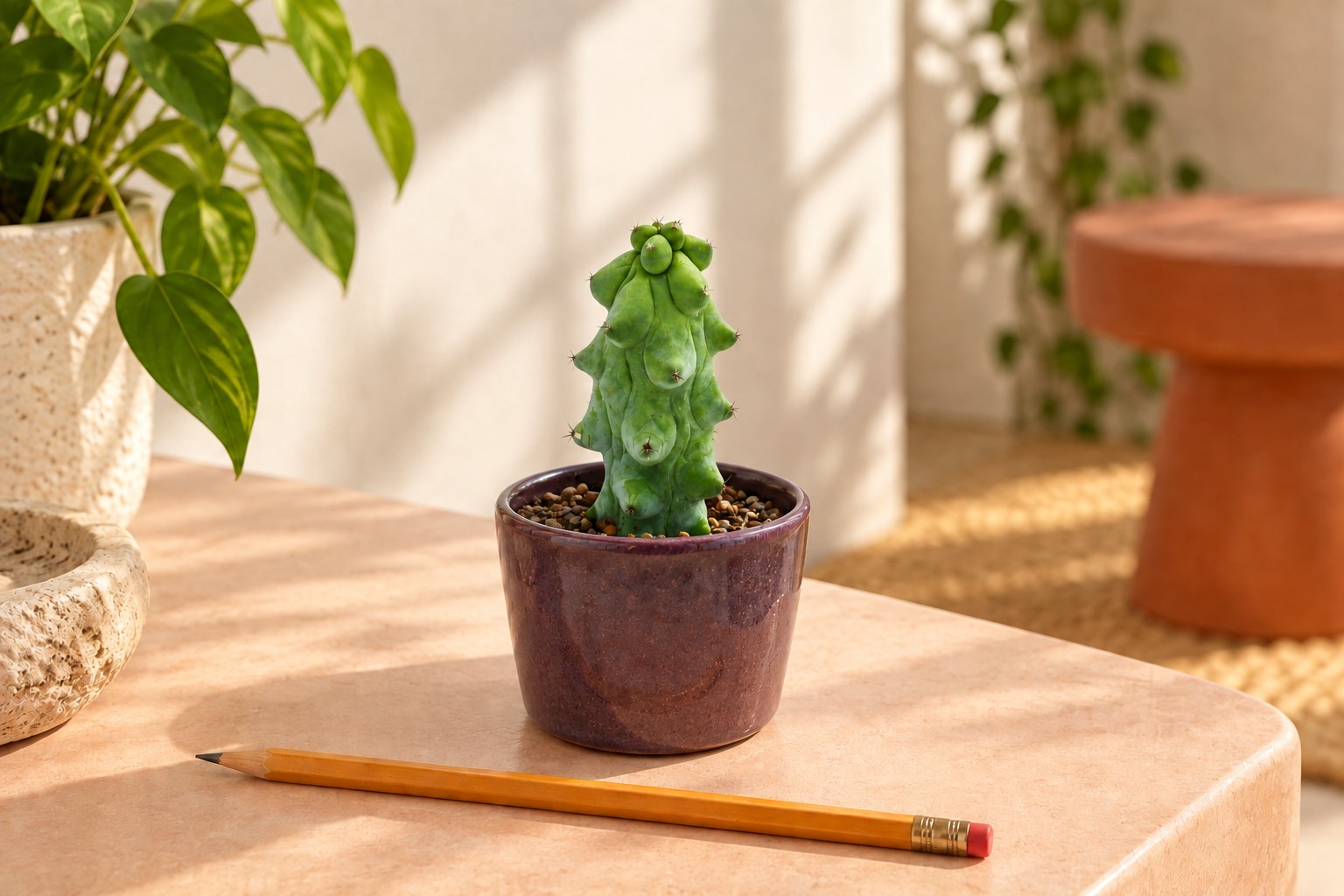
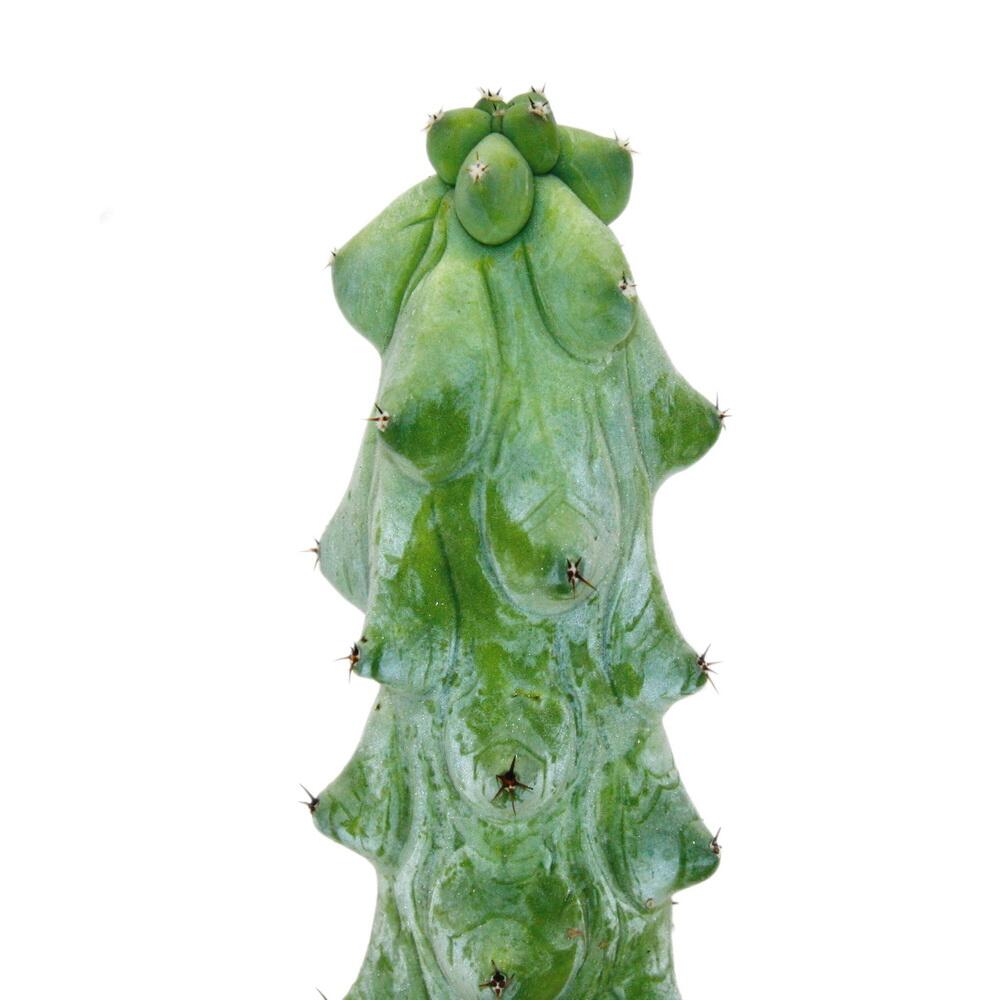
Fukurokuryuzinboku is a horticulturally maintained ornamental form of the Mexican bilberry cactus. Rounded swellings alternate along the ribs, giving the stem its distinctive profile. On a healthy firm specimen they do not indicate incorrect watering. This form differs markedly from crested Cristata. Even two Boobie cacti need not look alike: arrangement, size and distance of projections develop individually. That very irregularity creates its appeal.
A small specimen with its own presence
The offer states a 10.5 cm pot and approximately 15 to 20 cm total height. This delivery size should be distinguished from later growth. A single small cactus can look attractive on a bright console if its surroundings allow space. The depiction follows young size and shows no collector’s plant already metres tall. Decorative outer pot and furnishings provide a design idea. Place steadily and so nobody catches the short spines while walking past.
Light matters more than a particularly warm dark spot
Choose a very bright position and gradually introduce direct sun after shipping. A sudden move behind hot south-facing glass can damage the surface. A rain-sheltered outdoor summer position is possible if nights remain reliably mild. In winter keep bright and frost-free; approximately 10 to 15 °C is a useful guide for a dry rest period. A warm room requires particularly high light so new sections do not grow thin and weak.
Water by the root ball rather than the calendar
During growth, water thoroughly again after complete drying. Let drain afterwards and empty the decorative pot. Do not feel only the surface: the core of a compact root ball may still be moist though the top looks dry. Pot weight helps judgement. In cool winter rest the cactus remains largely dry. Small wrinkles first call for inspection, not automatically a large watering. A soft dark stem base together with wet compost is a warning sign instead.
A stable mineral mix supports the stem
Use free-draining cactus compost with structurally stable mineral components such as pumice or lava granules. The pot needs clear drainage; a closed decorative bowl alone is insufficient. Repot when the root ball fills the existing pot or the plant stands unstably. Choose the next size moderately and injure roots as little as possible. Do not immediately water heavily after fresh root injuries. Use cactus feed sparingly in active growth according to the label; omit during rest.
Accompany slowly rather than force the form
Neither extra feed nor deliberate water shortage reliably strengthens projections. The small healthy cactus needs no pruning. Later, suitable stem sections can root after the cut surface dries; seed does not reliably retain this special growth form. Inspect protected hollows for mealybugs without rubbing the surface. Flowers and fruit are possible but by no means certain later developments of this ornamental form. The young specimen is offered as an ornamental plant, not a promised fruit crop.
One plant, several views

Good to know
Are the rounded projections a disease?
In this form, firm healthy projections are typical growth. Distinguish newly appearing soft dark areas from them.
Is this the same cactus as Cristata?
Both belong to Myrtillocactus geometrizans but show different unusual growth forms. Cristata grows in crests.
What size is delivered?
A 10.5 cm pot and approximately 15 to 20 cm total height are stated.
Can feed produce more curves?
No. Healthy cultivation maintains the plant; its individual growth appearance cannot be deliberately shaped this way.
Sources and editorial note
- Product and delivery contents: Exotenherz
- Giromagi cactus nursery: botanical form description
- Royal Horticultural Society: plant and care knowledge
Sources checked: 15 September 2026. Product information and delivery contents follow the linked shop offer. Care has been checked against the stated specialist sources and remains subject to plant condition, position and season.