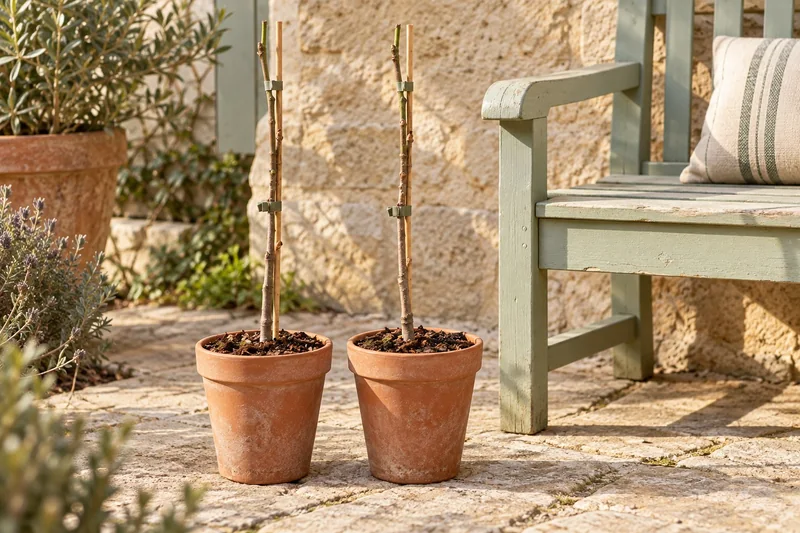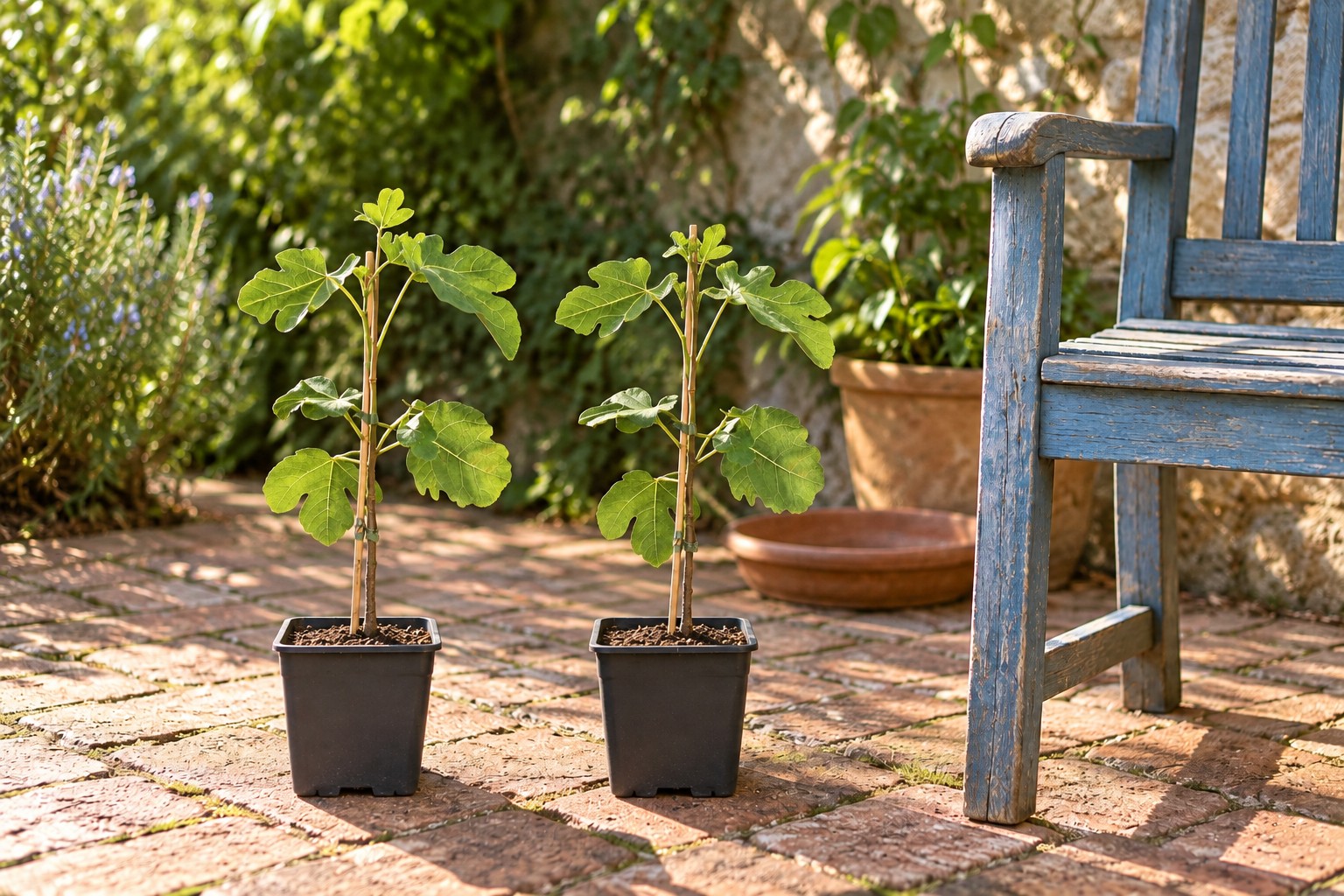
This plant at Exotenherz
Check the shop offer for current availability, price and what is included.
Product details, availability and delivery information in the shop.
Your care table
| Topic | What to do | Why it helps |
|---|---|---|
| Position | Sunny, warm and wind-sheltered outdoors. | Fruit ripening depends strongly on summer warmth. |
| Water | During growth, water thoroughly after the top starts to dry. | Large leaves and small pots increase water use. |
| Compost | Structurally stable container-plant compost with reliable drainage. | Avoid prolonged waterlogging. |
| Nutrients | Feed moderately during growth onto a moist root ball. | Abundant nitrogen may mainly encourage leaf growth. |
| Repotting | Gradually give more space as roots develop. | The delivery container is too small for permanent cultivation. |
| Fruit set | Plan warmth, even care and patience. | A second fig is not necessary for Brown Turkey. |
| Pruning | Thin selectively and maintain shape; wear gloves. | Heavy pruning can remove existing fruiting wood. |
| Winter | Allow leaf fall; overwinter young pots sheltered and cool. | Do not let roots freeze heavily or dry completely. |
Check the compost and pot weight. The care table explains how far the compost may dry.
Water only when needed. The water should reach the root ball without spilling over the rim.
Remove surplus water from the saucer or cachepot. Then return the plant to a suitable position.
A fruiting woody plant with striking foliage
Brown Turkey is a variety of the common fig, Ficus carica. Its large lobed leaves already give a terrace a special character. Fruit ripening brown-purple may follow later. The plant is deciduous and drops its foliage for winter rest. Its cultivation must therefore follow the seasons. A permanently warm, dim living room does not meet its needs, even if the leaves would look decorative there.
Two young plants and a plan for the future
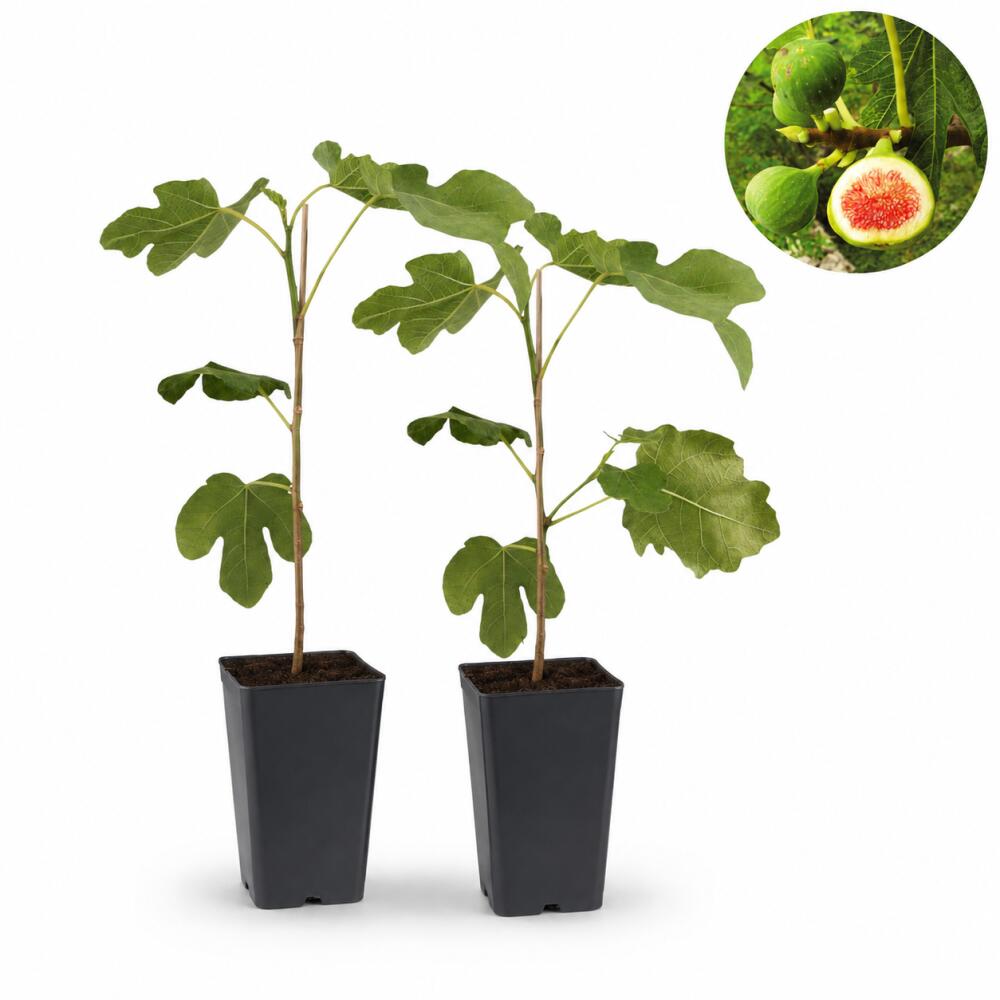
According to the offer, two plants are delivered, each in a 15 cm pot and approximately 50 cm total height. The pictures of ripe figs show the possible harvest goal, not a guaranteed fruit load on young plants. Development is easy to observe on a sunny terrace. A 15 cm pot is not, however, permanently sufficient living space. Plan suitable larger containers or a planting site; mature figs may reach several metres in height and width.
Collect warmth without overheating roots
A sunny sheltered position before a warm wall favours fruit ripening. Acclimatise a newly received plant gradually to intense sun. Small dark pots heat strongly; suitable outer protection may help as long as irrigation water drains freely. In the garden, we check not only the summer position but also cold winter winds and wet hollows. A good outdoor position saves many later unsuccessful attempts at correction with fertiliser.
Consistency during growth
Large leaves can lose plenty of water on warm days. Check containers regularly and water thoroughly as soon as the upper compost layer has dried. A small watering rim helps moisten the root ball completely. Drought stress may cost leaves and young fruit; constant water in the saucer also causes harm. Use structurally stable container-plant compost. Adjust nutrients moderately to growth. Deliberately depriving the roots of water is not a sensible method of forcing fruit set.
Harvest results from several good conditions
Brown Turkey does not need a second fig tree as a pollinator for normal fruit set. Nevertheless, not every small developing fruit becomes a ripe fig. Age, summer warmth, water and preserved fruiting wood work together. In cooler locations, one ripe harvest is more realistic than expecting two certain harvests each year. Pick only fruit that has softened and coloured characteristically for the variety. A still-firm fig picked too early does not reliably become sweet like a banana.
Winter rest and measured pruning
Water needs decrease markedly after leaf fall. Container roots are more exposed to cold than roots in garden soil. A sheltered cool winter position and a root ball that does not dry completely are particularly sensible for young plants. Selectively cut dead and poorly positioned wood rather than heavily resetting the whole crown each year. Do not let milky sap released during pruning reach the skin. Gloves and clean tools make the work more pleasant and safer.
One plant, several views

Good to know
Is Brown Turkey a houseplant?
It is a fruiting woody plant for sunny outdoor cultivation with winter rest. A permanently heated living room is not a suitable year-round position.
Do I need both plants for pollination?
No. Brown Turkey can develop fruit without a second fig tree. The pair is not a necessary pollinating couple.
Will it definitely fruit twice a year?
Two ripe harvests are not reliable in our climate. Position and the course of summer play major roles.
Why do the leaves fall in autumn?
The fig is deciduous. Autumn leaf drop belongs to winter rest; sudden summer wilting instead needs inspection.
Sources and editorial note
- Product and delivery contents: Exotenherz
- Royal Horticultural Society: plant and care information
- Royal Horticultural Society: plant and care information
- NC State Extension: plant profile
Sources checked: 16 September 2026. Product information and the contents of delivery follow the linked shop offer. Care advice was checked against the cited specialist sources and should still be adapted to the plant’s condition, position and season.