This plant at Exotenherz
Check the shop offer for current availability, price and what is included.
Check the shop for the current price, availability and offer contents.
Your care table
| Topic | What to do | Why it helps |
|---|---|---|
| Light | Choose bright filtered daylight without strong direct sun. | Leaf patterns need light; hot sun may damage foliage. |
| Water | Supply root balls evenly and check the surface before watering. | The small root zone should not dry out completely. |
| Water quality | Use room-temperature water with as little lime as possible. | Suitable water quality helps stable pot cultivation. |
| Drainage | Let every inner pot drain and empty covers. | Moist soil should not stand in water without air. |
| Room climate | Keep warm with more humid surrounding air, away from heat sources. | Dry heat stresses thin leaf surfaces. |
| Soil | Choose a loose moisture-retentive, well-drained houseplant mix. | Roots need moisture and air simultaneously. |
| Feeding | During fresh growth, feed moderately according to the fertiliser label. | Excess food does not help light or moisture problems. |
| Winter | Keep bright and warm; water more cautiously as growth decreases. | Lower consumption may leave the root ball moist longer despite dry room air. |
Check the compost and pot weight. The care table explains how far the compost may dry.
Water only when needed. The water should reach the root ball without spilling over the rim.
Remove surplus water from the saucer or cachepot. Then return the plant to a suitable position.
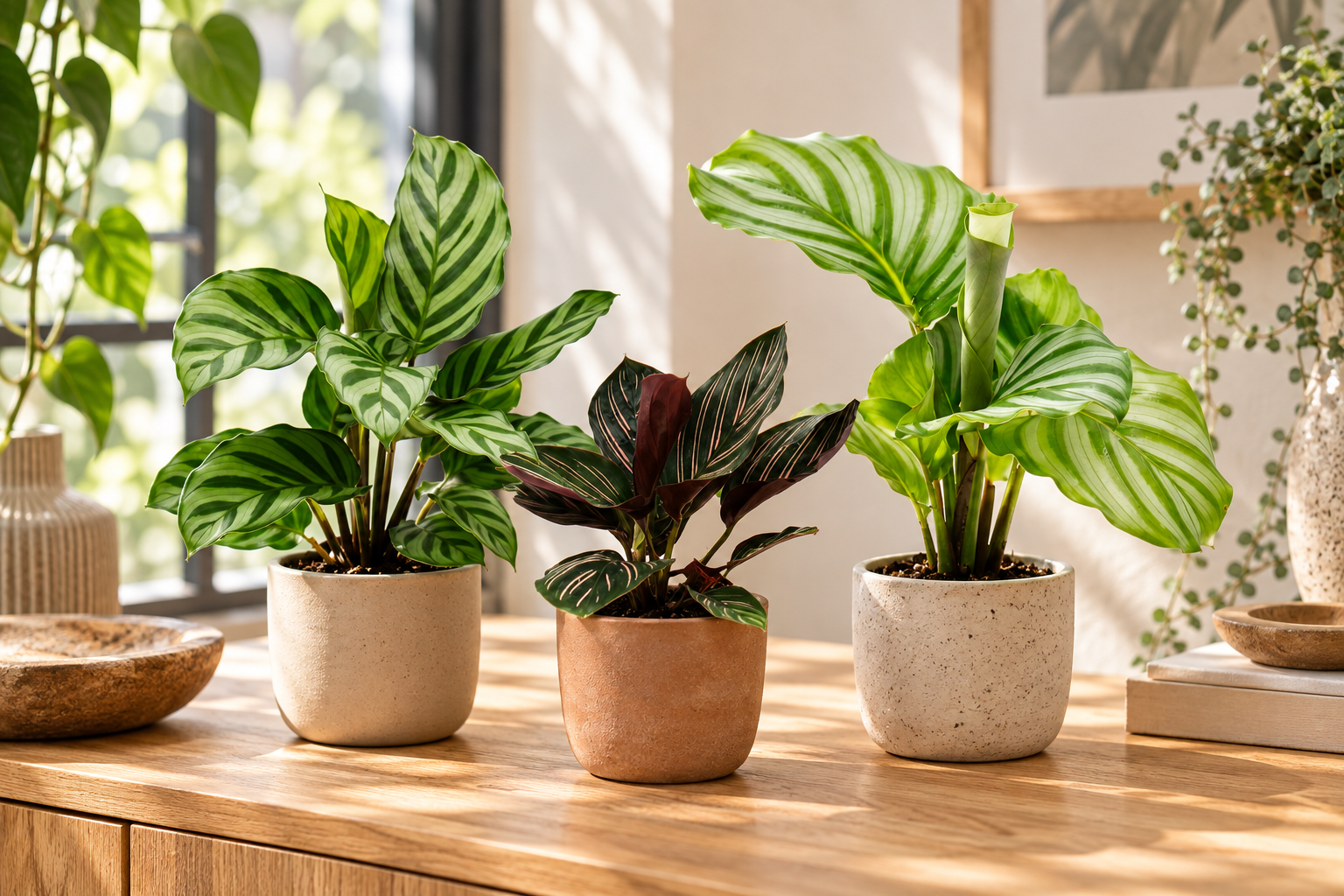
Leaf patterns unfolding side by side
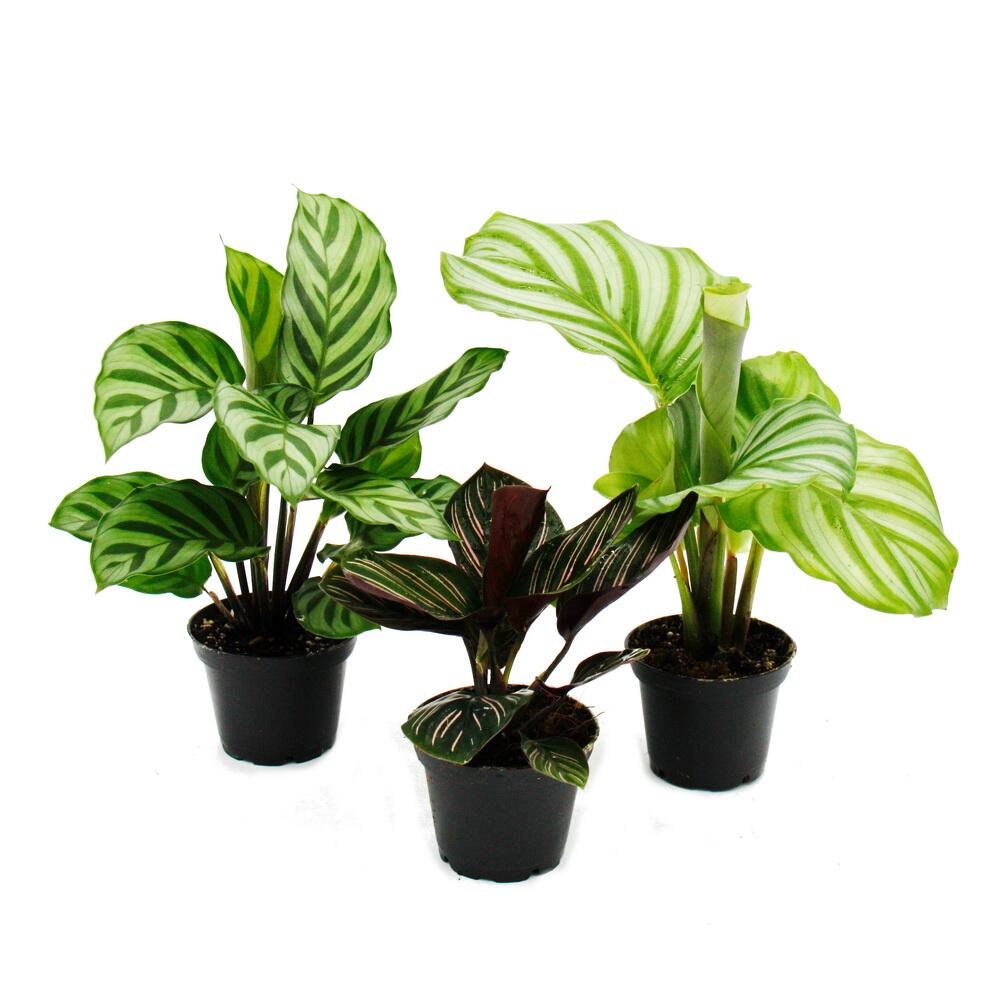
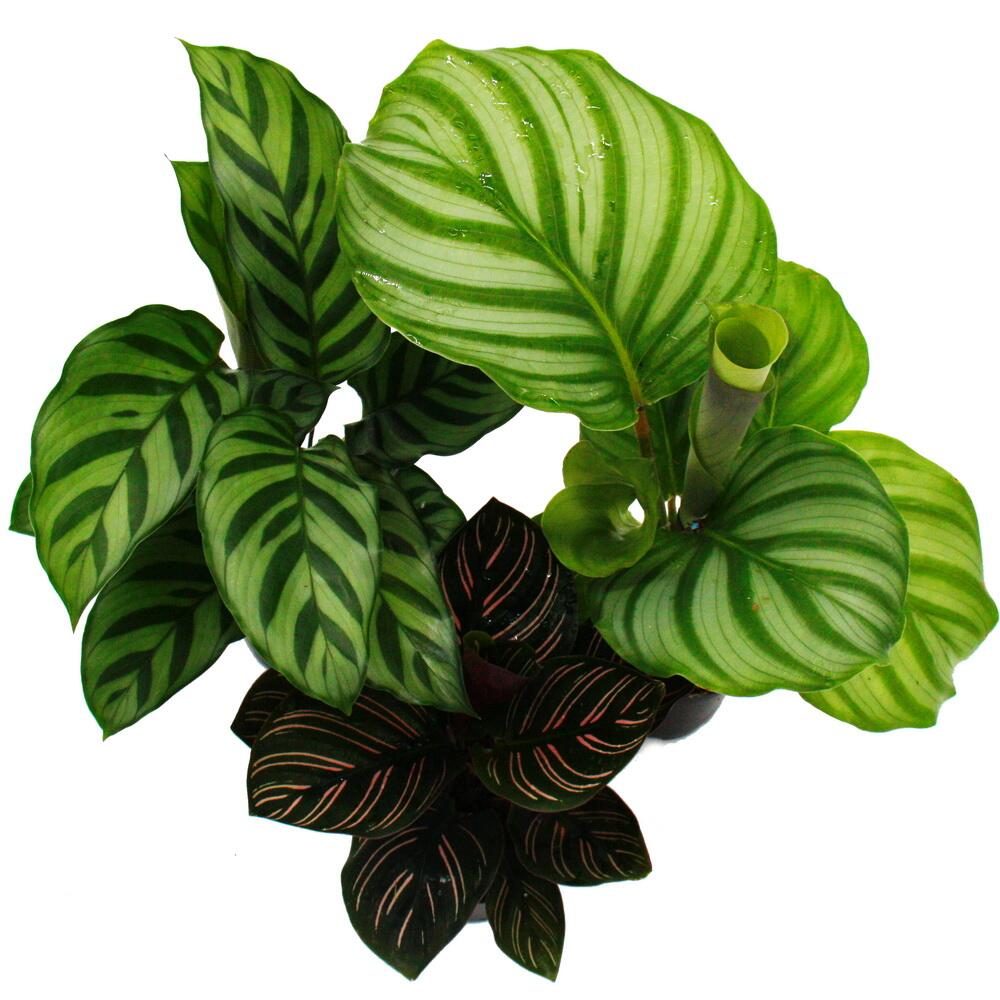
Calatheas invite you to look at a leaf for longer. Pale stripes, darker areas and underside colour give each plant its own expression. The trio brings three such forms together. The original image shows how different young leaves can look despite similar delivery size. We like the group on a bright quiet table or shelf with some space between pots. Plants need no extra colourful decoration. Even a new rolled shoot makes you curious about the pattern that will appear as the leaf unfolds.
The combination may change
Three different Calathea plants are delivered, each in a 7 cm pot at about twenty centimetres overall height. Cultivars are assembled according to available stock. We therefore do not promise three fixed cultivar names from the example photo. The scene also imagines a possible mixture. Decorative containers are not included. Many houseplants sold as Calathea are now classified botanically as Goeppertia. For this set, the specific foliage plant selection matters more than an invented common cultivar name. Keep any labels so individual plants are easier to recognise later.
Shade plant does not mean no daylight
The offer is described as a shade plant set. At home, however, we choose a bright position with filtered daylight. A permanently dark room corner does not suit attractive fresh growth. Strong direct sun behind hot glass is screened. A bright kitchen or light-filled bathroom may suit if warmth and humidity fit. Avoid cold draughts when airing. Look at the position at different times: a table sheltered in the morning may receive strong midday sun. The three plants may receive similar conditions without every pot getting exactly the same brightness.
Support the small root balls evenly
Moisture changes quickly in a 7 cm pot. Check each root ball individually before watering, supply slowly and let excess drain. Repeated complete drying does not suit young calatheas. Permanent wetness is equally unfavourable. Room-temperature water with as little lime as possible helps stable cultivation. A filled cachepot does not usefully increase humidity, but keeps roots in water. If one leaf remains rolled, do not automatically water all three plants again. Consider moisture, warmth and possible strong sun together and account for differences between pots.
More humid air without wet roots
Calatheas like a warm environment with more humid air. Immediately above heating, however, leaf surfaces and small root balls are quickly stressed. A spaced group may help create a more comfortable position. A broad tray of moist pebbles is also possible as long as pots stay above the water. Gentle air exchange belongs with this; foliage should not stay permanently wet in a cramped corner. Many prayer plants move their leaves between day and night. This natural change is not equivalent to sudden limp collapse from dryness or root damage.
New size grows from healthy roots
Repot when roots fill the root ball more densely and the plant needs extra space. Use a loose moisture-retentive mix that still drains well. Move only to an appropriate size; much additional unrooted wet soil makes monitoring harder. While fresh leaves develop, feed sparingly according to the fertiliser label and consider pre-fertilised soil. Remove old completely brown leaves carefully without injuring new growth. Leaf shape is not made uniform through regular trimming. Different patterns and leaf sizes are precisely the attraction of this group. Later final size also depends on the forms actually included.
Consider changes in their whole context
Brown edges may relate to dry air, root-ball moisture or water quality. One symptom does not yet provide a reliable diagnosis. Look at leaf undersides and inspect fresh growth for small pests. In winter the trio remains warm and bright. With less growth, the root ball may stay moist longer while dry heating air stresses leaves at the same time. We therefore do not uniformly change the same water quantity for all three. Small targeted adjustments help more. When new leaves unfold healthily, the set again shows how lively three differently patterned plants can look in a well-chosen shared position.
One plant, several views
Good to know
Which three cultivars will I receive?
Three different Calathea plants are assembled according to stock. The photo does not guarantee a fixed cultivar combination.
Is a dark corner suitable?
No. Bright filtered daylight is a better basis, without strong direct sun.
What is the delivery size?
Each pot is 7 cm in diameter, with roughly 20 cm overall height including the pot.
Why do leaves rise in the evening?
Many prayer plants change leaf position between day and night. This may be natural.
Does water in the cachepot help dry air?
No. Roots need free drainage. Provide more humid surrounding air separately from the root ball.
Must I water all pots together?
Not automatically. Check every small root ball; moisture may differ within the group.
Sources and editorial note
- Exotenherz: offer and original images (02.10.2026)
- RHS: cultivating Calathea and Goeppertia (02.10.2026)
- RHS: calatheas and leaf movement (02.10.2026)
Shop offer, product number, GTIN, availability and originals checked directly on 02.10.2026. Specialist sources read directly. Changing shop selection explicitly retained. Shade label not adopted as dark-room cultivation; no fixed cultivar or final size invented.