This plant at Exotenherz
Check the shop offer for current availability, price and what is included.
Check the shop for the price, current availability and what is included.
Your care table
| Topic | What to do | Why it helps |
|---|---|---|
| Position | Outdoor bonsai year-round with appropriate winter protection. | Permanent indoor cultivation weakens juniper. |
| Light | Bright to sunny, avoid sudden changes. | Healthy dense foliage needs light. |
| Water | Water thoroughly after slight drying. | Green needles are no reliable moisture gauge. |
| Bowl | Check drainage and overheating. | The small root space responds quickly. |
| Cascade | Raised and stable, let branches hang freely. | The shape needs room under the bowl base. |
| Pruning | Shorten selectively and preserve living green on branches. | Bare old areas do not reliably reshoot. |
| Winter | Cool and protected against severe frost and wind. | A bonsai bowl is more sensitive than garden soil. |
| Feed | Moderately by the label during healthy growth. | Nutrition should support care, not force it. |
Check the compost and pot weight. The care table explains how far the compost may dry.
Water only when needed. The water should reach the root ball without spilling over the rim.
Remove surplus water from the saucer or cachepot. Then return the plant to a suitable position.
Deliberately show the tree’s movement
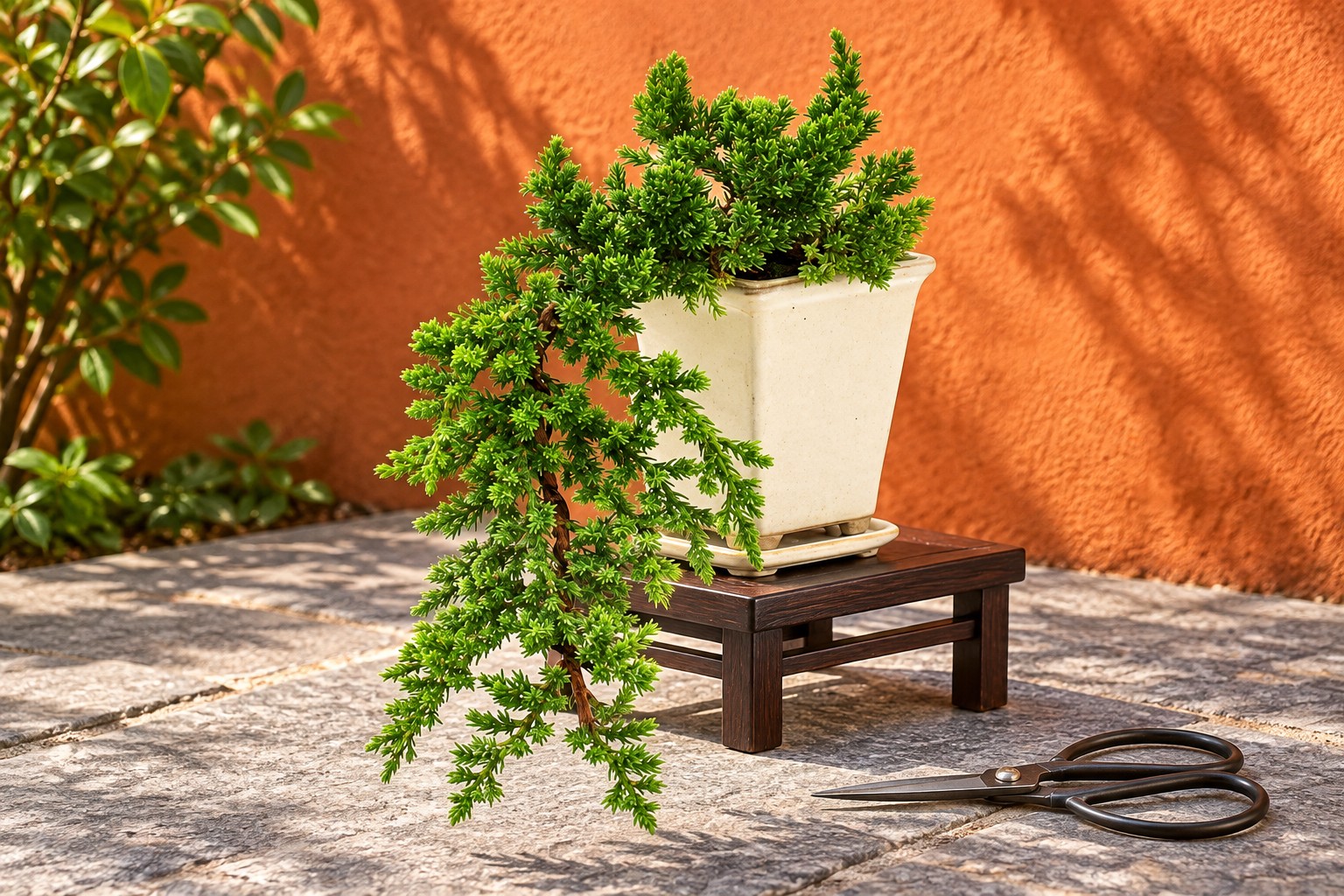
A cascade bonsai is trained so a substantial part of its line leads downwards. This juniper’s visible silhouette extends over the edge and can reach below the bowl base. The offer gives approximately eight to nine years, a bowl around 10 × 10 × 13 cm and an overall dimension around 30 cm. Height above the soil is therefore not the only important measure. A stable raised support creates free room under the container. Branches should neither lie on the ground nor rub against a table edge.
A juniper remains a woody plant for outdoors
Juniperus belongs to the cypress family. Different species and cultivated forms are used as bonsai; this offer names no exact species. The fine green foliage shown is therefore insufficient proof of a particular Japanese or Chinese variety. Care here applies to an evergreen outdoor bonsai. A bright interior provides neither the same light quantity nor a suitable annual cycle long term. Occasionally moving the tree like a decorative object is insufficient. It needs a permanent suitable cultivation place.
Use sunshine and protect the small bowl from extremes
Junipers like plentiful light. A bright to sunny outdoor position promotes dense healthy foliage. After sheltered conditions slowly acclimatise to stronger sun. In midsummer check the small tall bowl for overheating and rapid drying; protection from the sharpest afternoon heat may then help. Its raised support must stand firmly, including in wind. Heavy pots do not belong on narrow wobbly plinths. Occasionally rotate carefully so rear areas also receive enough light without damaging the cascade.
Water by moisture, not by needle appearance
Green foliage does not reliably show whether roots are adequately supplied. Root damage may appear in branches only after a delay. Let the surface dry slightly, then water thoroughly and watch drainage. With compacted compost, water can bypass the sides; check whether the root ball was genuinely moistened. Spraying needles does not replace root supply. The small pot must not repeatedly dry completely. Permanently standing saucer water is equally unsuitable. Use frost-free winter phases for inspection.
Retain green areas rather than cutting everything short
Care for the cascade through targeted pruning. A branch needs healthy green foliage to remain supplied. Do not thoughtlessly cut into fully bare old areas or remove all strong shoot tips at once. Shearing entire foliage pads may leave many brown cuts. Regularly inspect existing wire for constriction. Do not force strong bends, extensive root work and heavy pruning at the same time. When repotting at a suitable spring time, use free-draining bonsai compost, preserve healthy roots and then let the tree establish again under protection.
Put winter rest and brown branches in context
Exact species is unnamed, so no general frost limit is given here. The bonsai bowl needs protection against freezing through severely, drying wind and extreme winter sun. Overwinter cool outside or in suitable unheated protected quarters, not a warm living room. Individual older inner needles may die; whole increasingly dry branches need thorough checking of water, roots and pests. Wire damage and lack of light inside may also contribute. The offer is an ornamental bonsai, not a basis for harvesting your own juniper spice.
One plant, several views
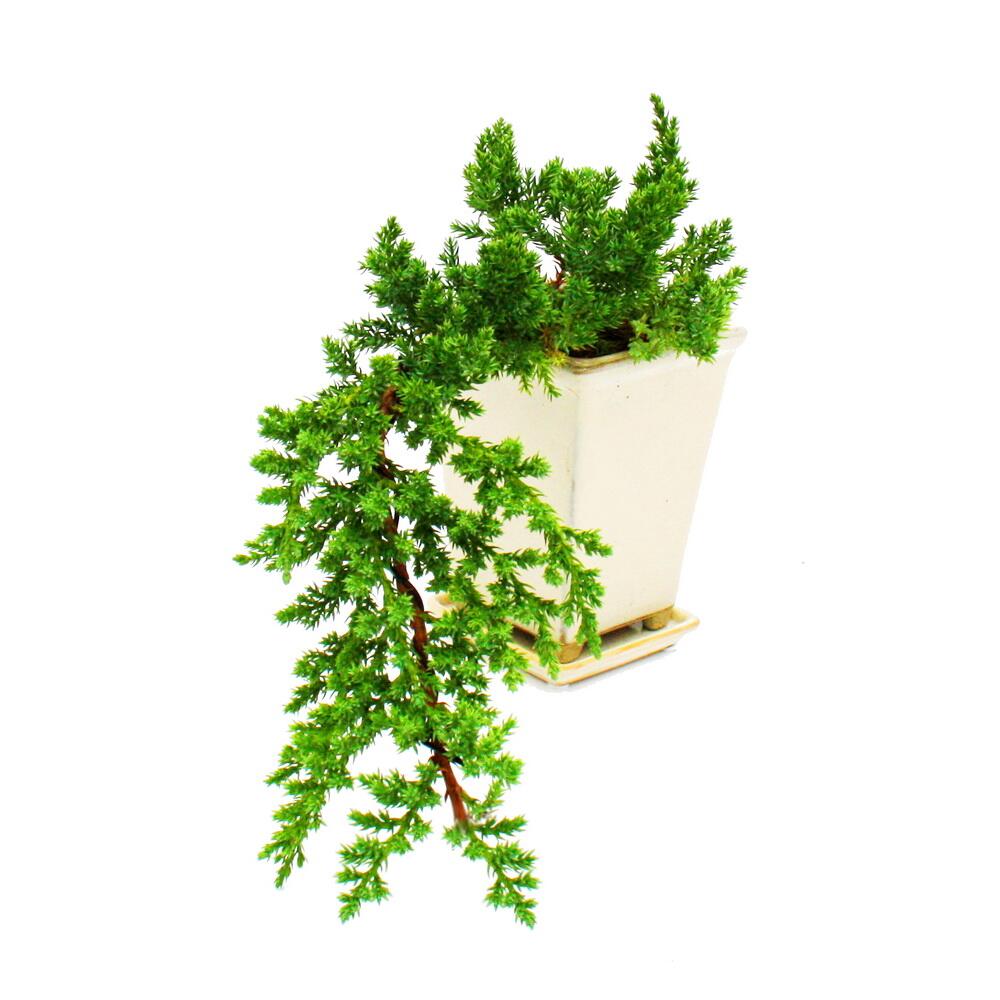
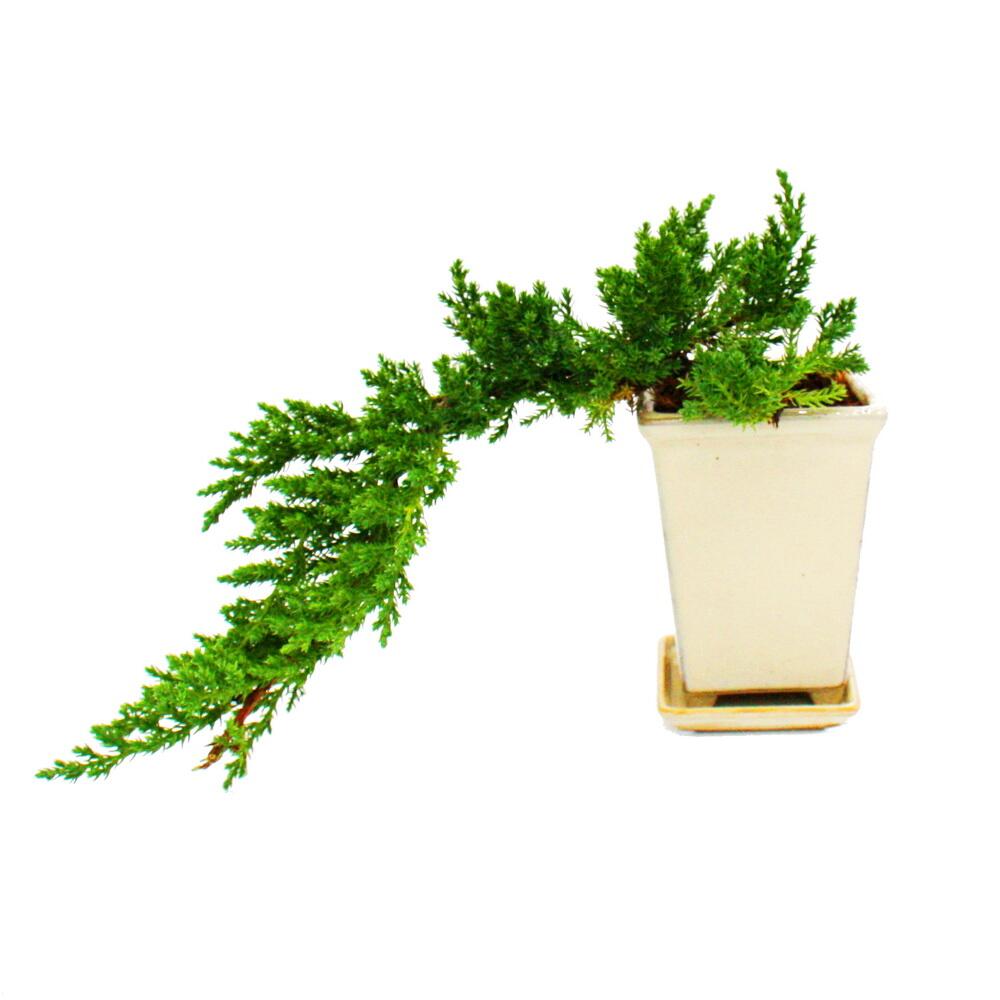
Good to know
Why does this bonsai grow downwards?
The cascade is a form deliberately trained over years. It should extend freely over the edge and, where appropriate, below the bowl base.
May the juniper sit on a living-room table?
Not permanently. It needs a bright outdoor place and winter rest.
Can I simply prune brown areas back to green?
First check the cause. Cutting into bare old wood does not reliably produce new foliage.
Is spraying enough?
No. It does not replace thorough root supply. Check the actual root-ball condition.
Sources and editorial note
- Product and delivery contents: Exotenherz
- Bonsai Empire: species-specific bonsai care
- Royal Horticultural Society: plant and care knowledge
Sources checked: 15 September 2026. Product information and delivery contents follow the linked offer. Care has been checked against the stated specialist sources and remains subject to plant condition, position and season.