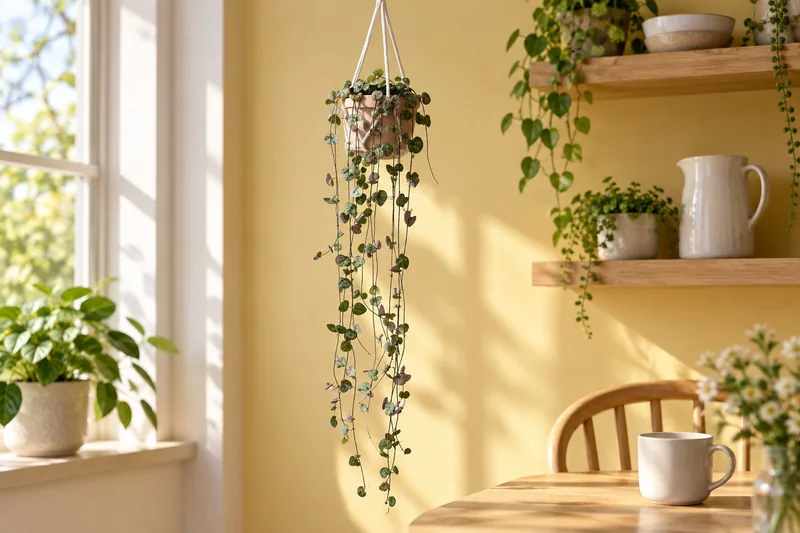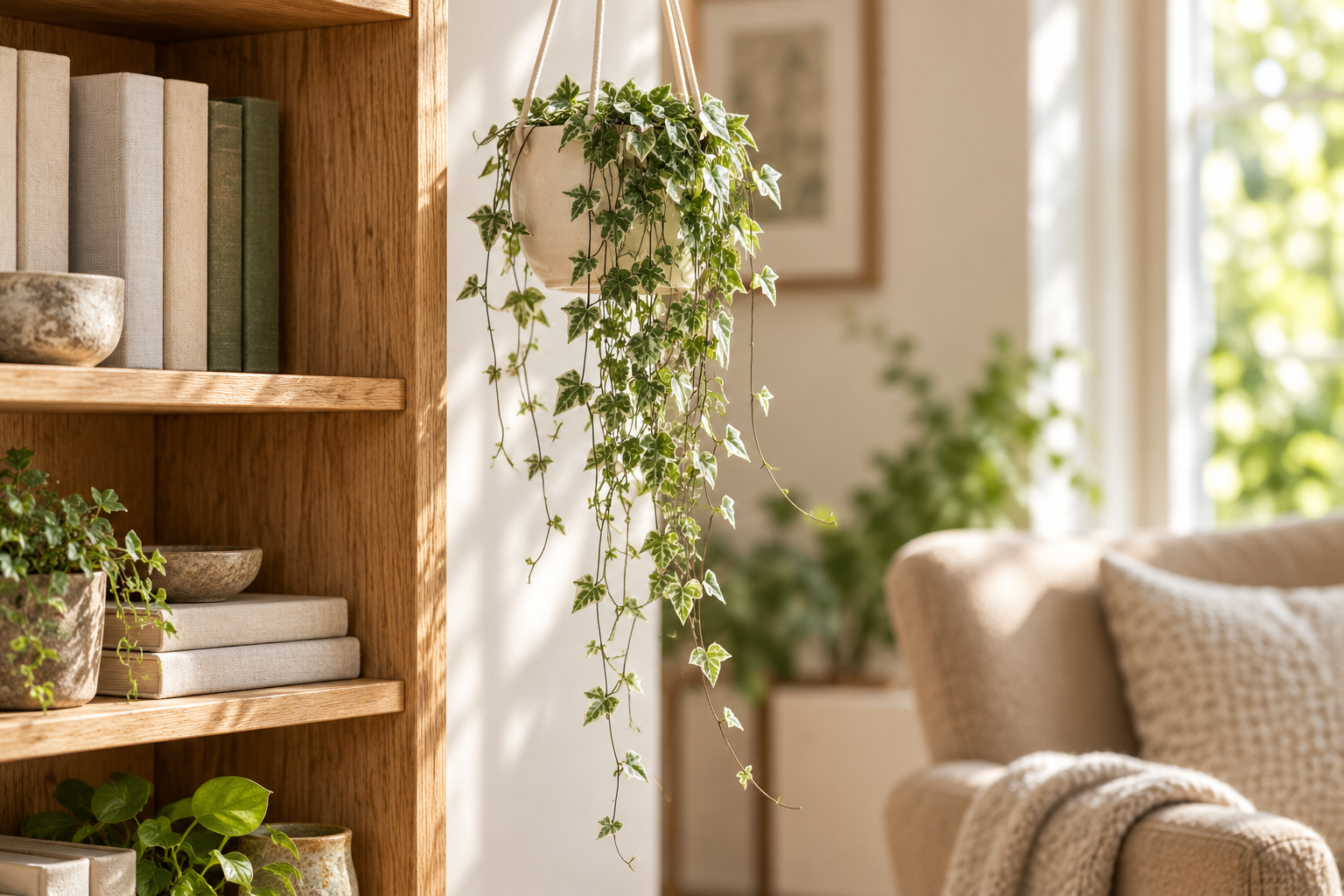
This plant at Exotenherz
Check the shop offer for current availability, price and what is included.
Check the shop for the current price, availability and offer contents.
Your care table
| Topic | What to do | Why it helps |
|---|---|---|
| Light | Choose a bright position where the top of the pot also receives light. | A dark shelf may shade the base although vines hang in light. |
| Moisture | Let soil dry well between waterings. | String of hearts tolerates an airy drying root ball better than constant wetness. |
| Watering | As needed, slowly moisten the root ball thoroughly and let it drain. | Many small sips make moisture distribution difficult to recognise. |
| Hanging pot | Secure the container safely and keep it accessible for checking. | A decorative hanging arrangement must also allow care. |
| Substrate | Use a free-draining succulent mix in a pot with drainage holes. | Fine stems do not mean a preference for permanently wet roots. |
| Nutrients | With new growth, feed sparingly according to the label. | Slowly drying or freshly pre-fertilised soil needs no additional reserve feeding. |
| Vines | When moving it, lay stems loosely down and do not pull on foliage. | Thin threads tangle easily and may break when untangling. |
| Winter | Keep bright and frost-free; reassess water needs. | Less light changes drying and growth. |
Check the compost and pot weight. The care table explains how far the compost may dry.
Water only when needed. The water should reach the root ball without spilling over the rim.
Remove surplus water from the saucer or cachepot. Then return the plant to a suitable position.
Pale leaf edges worth a closer look
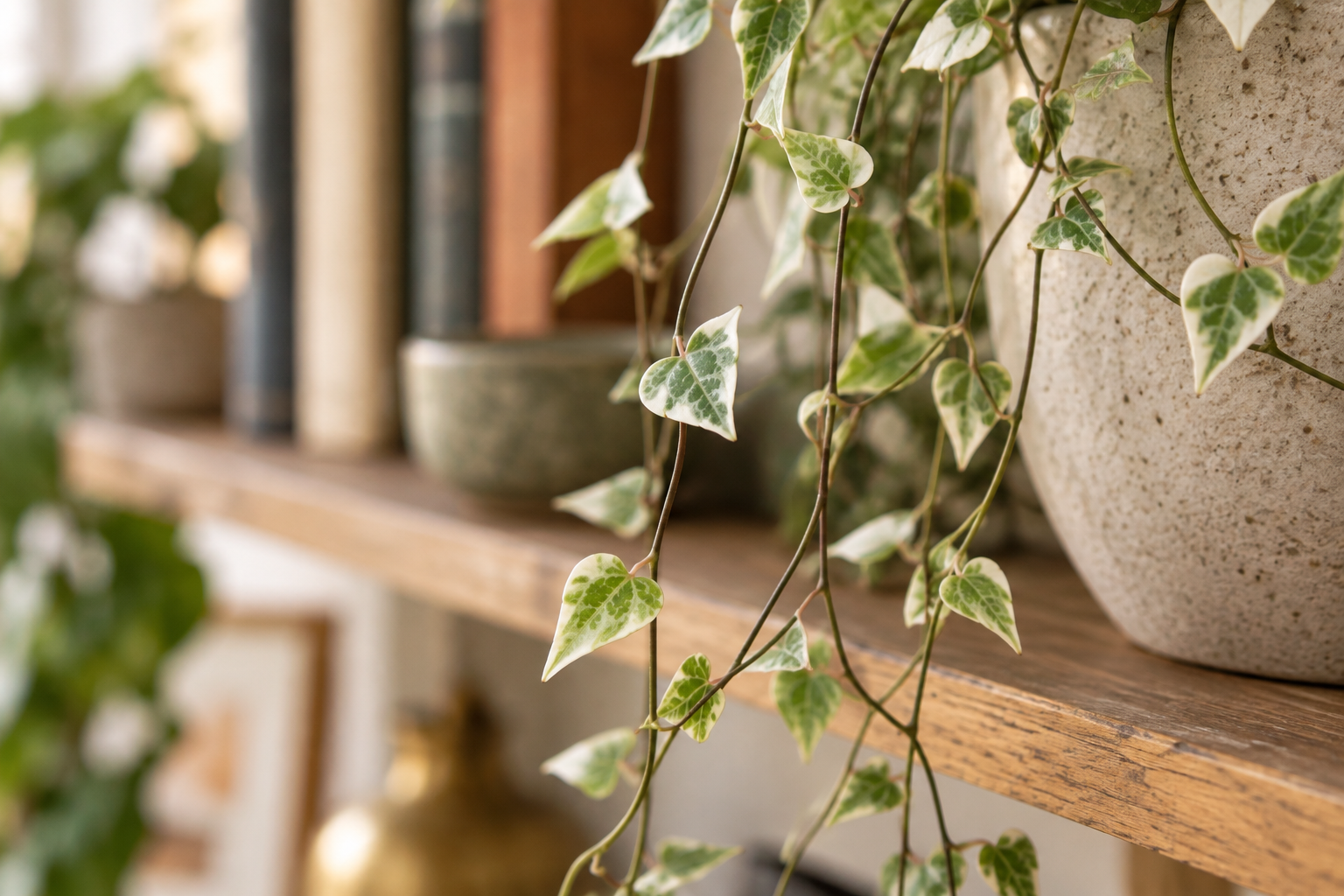
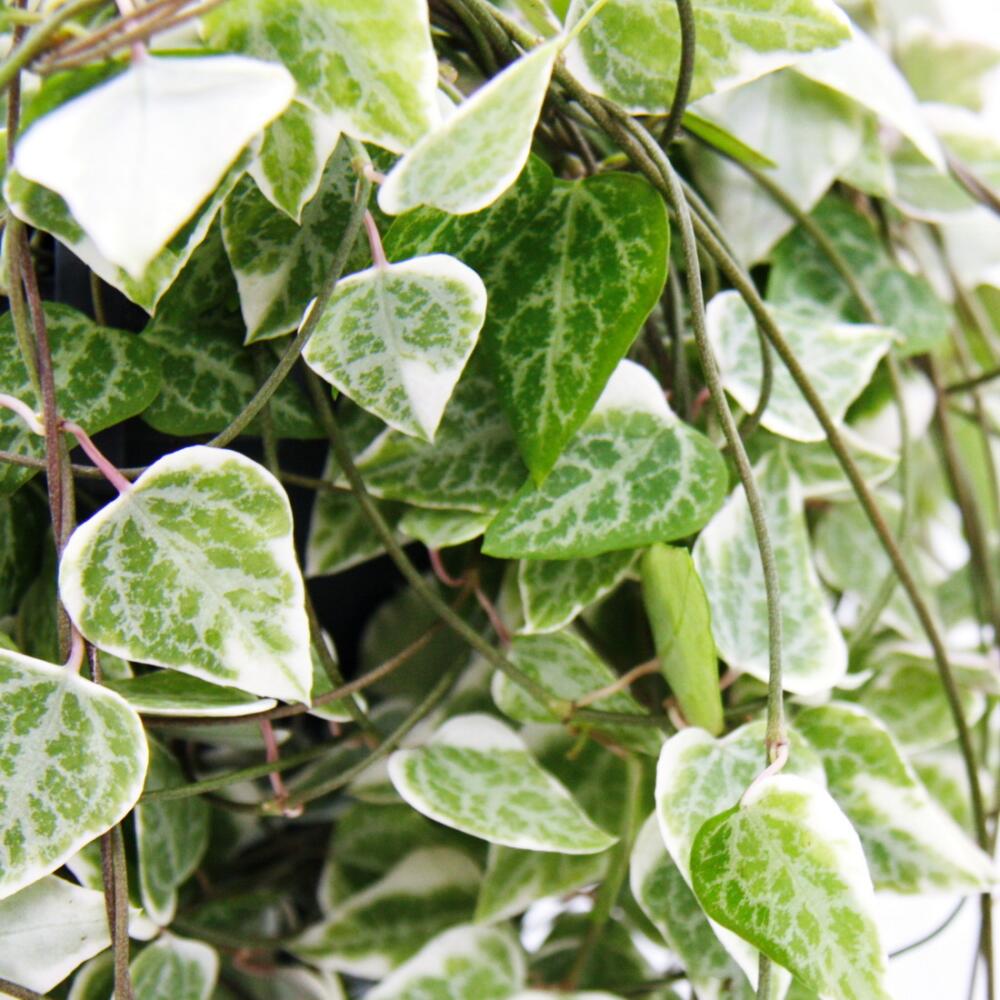
Merel deserves a second look. Small pointed leaves sit in opposite pairs along thin stems. Green and silvery markings blend into pale margins while the fine stems leave much air between leaf surfaces. The shop image shows this light form without a dense wall of foliage. Beside an open bookshelf, it can beautifully complement a quiet plant position. Let stems hang in front of the edge instead of trapping them between book spines. String of hearts thrives visually on its visible gaps and small details.
Merel and the length of the young hanging plant
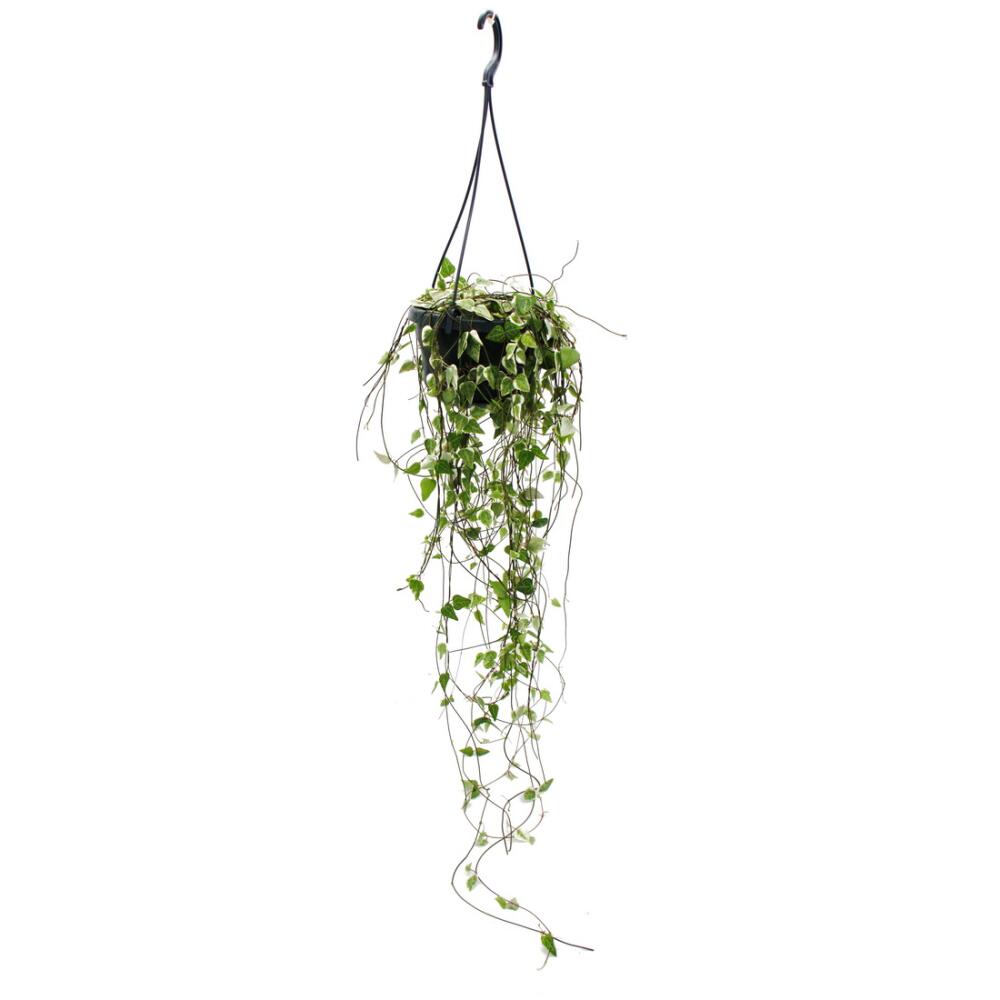
The offer includes a 14 cm hanging pot and lists about 35 to 50 cm overall length. This means its hanging extent, not an upright shrub of that height. The shop names Ceropegia linearis Merel; the cultivar description classifies it as Ceropegia linearis subsp. woodii, also called Ceropegia woodii. The pale-edged cultivar remains distinguishable from green Remy. With good cultivation, stems can keep growing. Exact later length depends on position and care and is not part of the delivery promise.
Let light reach the pot edge
A plant hanging high is not automatically in a bright place. Check whether daylight reaches the top of the pot and the stems emerging there. Above a shelf board these may lie in shade although long vines below are lit. Merel receives a bright place protected from unexpectedly hot sun. After a position change, increase strong exposure slowly. A sideways look at new leaf pairs helps assessment: very long bare gaps are a reason to check the position. White leaf areas are not compensated by extra watering.
Really check the small root ball
Take the pot down for watering where you can see soil and drainage well. Let the mix dry well between waterings and check container weight as well as the surface. Once the root ball is dry enough, water slowly and let excess drain. Only then hang it again. Succulent string of hearts is not a plant for a constantly damp reservoir cachepot. Thinning leaves on a dry root ball need a different response from yellowing foliage over wet roots. A fixed weekday cannot recognise this difference.
Airy soil rather than ever larger pots
A free-draining succulent mix and clear drainage holes help keep water management understandable. Repotting makes sense only when roots actually fill the space or soil structure no longer works. Then choose a container only slightly larger during active development. First untangle loose vines and lay them softly down; pulling foliage does not safely remove the root ball from the pot. Fertiliser is supplied sparingly according to the label. Fresh pre-fertilised soil counts too. A denser plant head does not arise from strong nutrient doses alone.
Fine stems, small flowers and careful hands
The unusual small flowers are an extra attraction when they appear. Merel is presented here for its pale foliage, however; we promise neither a particular flowering time in the living room nor flowers at delivery. Look at individual stems without constantly repositioning them. Thin stems easily catch in neighbouring plants. When tending the shape, work cleanly and do not roughly pull several vines out together. If you want to record development, photograph the same small shoot tip occasionally. Fresh leaf pairs and changes in the pattern become clearly visible.
Keep the hanging pot reachable in winter
In darker weeks the plant still needs daylight and a frost-free place. The root ball often dries more slowly; check before each watering and reduce nutrients when growth is absent. A position change should not coincide with hard pruning and repotting without a specific reason. When taking it down, also look between small leaf pairs. Inspect conspicuous cottony deposits or sticky spots closely and initially consider affected plants separately. A securely attached container and freely hanging undamaged vines make the position attractive and easy to care for.
One plant, several views
Good to know
Are Merel’s white edges normal?
Yes, pale margins belong to the described cultivar. Brown dry areas must be distinguished from them.
Is 35–50 cm a growth height?
The offer gives overall length of the hanging plant. Stems hang and may later become much longer.
Must soil always stay moist?
No. For this string of hearts, let it dry well between waterings and avoid standing water.
Can it go on a bookshelf?
Yes, if the pot area also gets enough daylight, stems hang freely and the container stands or hangs securely.
Will Merel definitely flower after purchase?
Flowering is possible, but not promised for the delivery plant. Patterned foliage remains the attraction.
Why does it lose small leaves?
Check root-ball moisture, drainage, light and possible damage. More water is not an appropriate standard solution for already wet soil.
Sources and editorial note
- Exotenherz: offer and original images (02.10.2026)
- RHS: string of hearts and cultivation (02.10.2026)
- University of Wisconsin: String of Hearts (02.10.2026)
- NC State: Ceropegia woodii (02.10.2026)
- Original Merel cultivar description (02.10.2026)
Shop offer, product number, GTIN, availability and originals checked directly on 02.10.2026. Specialist sources read directly. Cultivar description and original photos confirm small pointed white-edged leaves. Patent measurements and greenhouse flowering dates not transferred as living-room or delivery promises. Delivery measurement explicitly length.