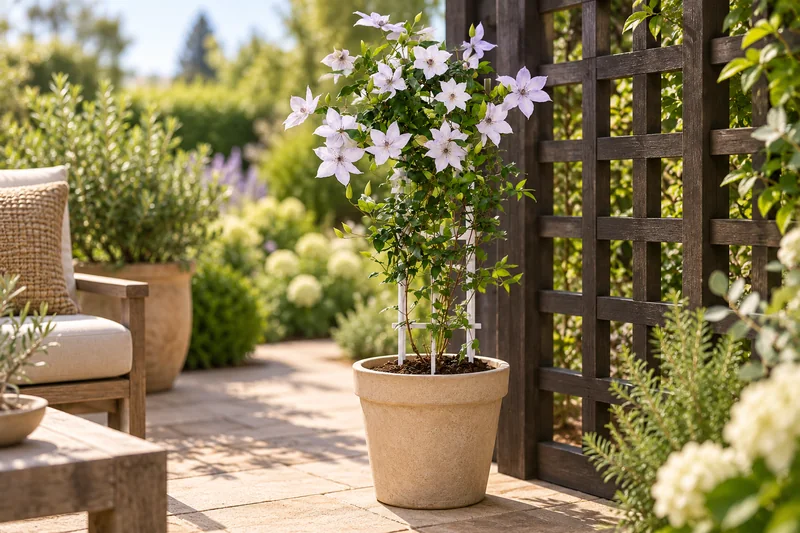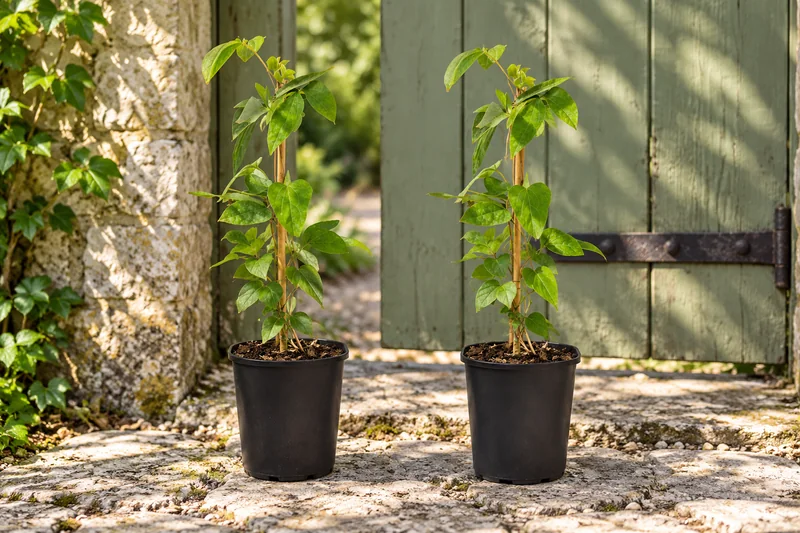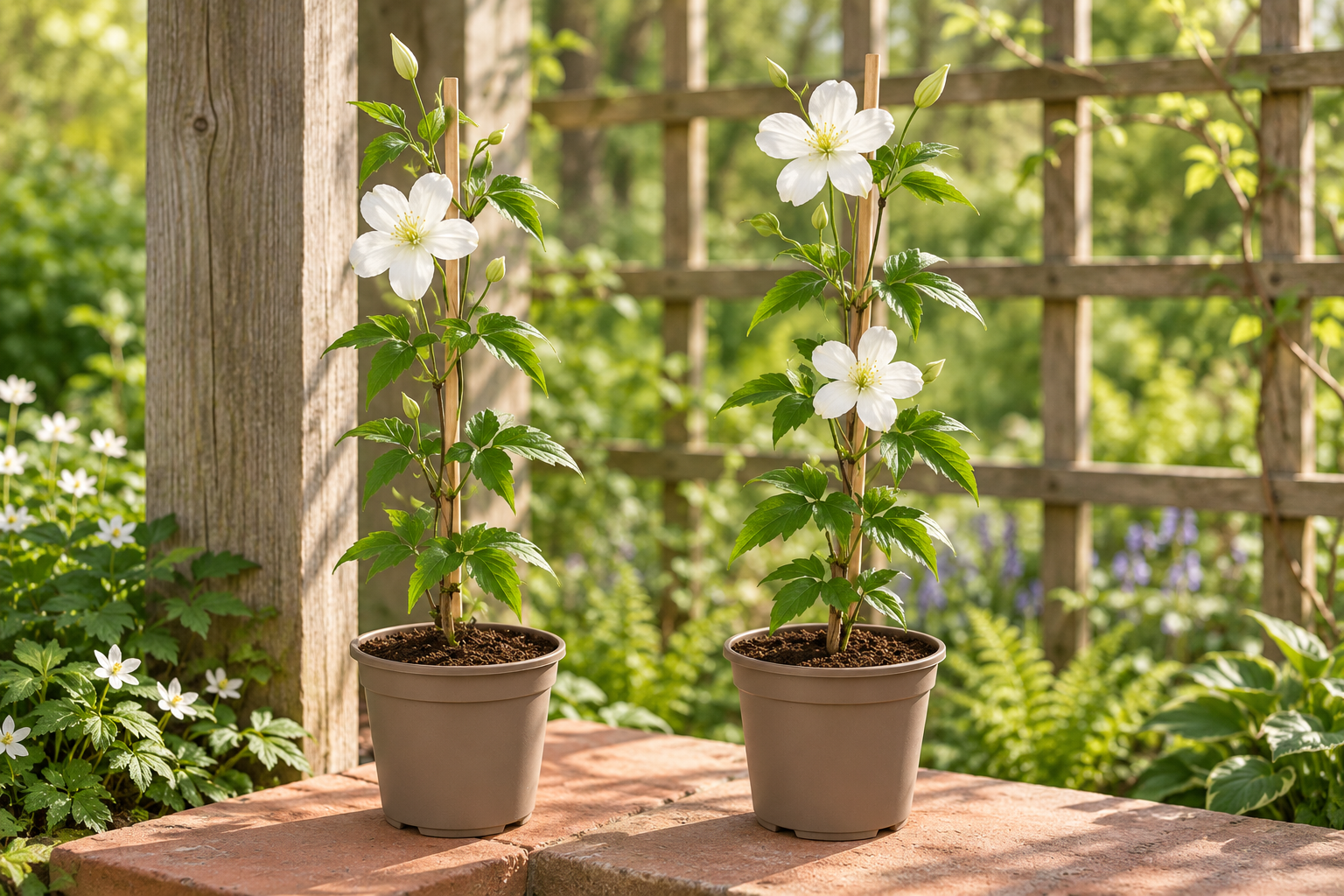
This plant at Exotenherz
Check the shop offer for current availability, price and what is included.
Check the shop for the current price, availability and offer contents.
Your care table
| Topic | What to do | Why it helps |
|---|---|---|
| Arrival | Check ball moisture and carry by the pot. | Young stems and stakes do not carry root weight. |
| Position | Sun to partial shade, keeping the root zone cool and accessible. | Foliage needs light; hot dry roots hinder establishment. |
| Support | Prepare a strong structure and spread young stems loosely. | It does not self-cling to a smooth wall and later becomes vigorous. |
| Planting | Choose frost-free workable soil, set the crown only slightly deeper and water in. | Spring-flowering Montana types do not automatically need the deep planting of large-flowered types. |
| Soil and container | Provide moisture-retentive drained soil and enough lasting root space. | An 11 cm nursery pot cannot support its later large framework. |
| Water | Check directly at the ball and water slowly and thoroughly when needed. | Nearby soil can be wet while the original small ball dries. |
| Feeding | Match nutrition to the soil; container fertiliser according to the label. | Extra fertiliser cannot replace suitable water management. |
| Pruning | Shorten if needed after flowering and remove damaged branches. | Flowers form on previous-year wood; annual hard winter pruning is unsuitable. |
| Winter and checks | Maintain drainage, protect container roots and check on frost-free days. | Leaf fall is normal; root condition and stem injuries need separate assessment. |
For young plants, feel the soil directly at the root ball. The surface and deeper soil may have different moisture levels.
Water thoroughly after planting; later, water according to the soil, weather and establishment rather than a fixed calendar.
Avoid standing water. For plants in containers, also check that water runs out of the drainage hole.
White flowers and vigorous mountain clematis growth
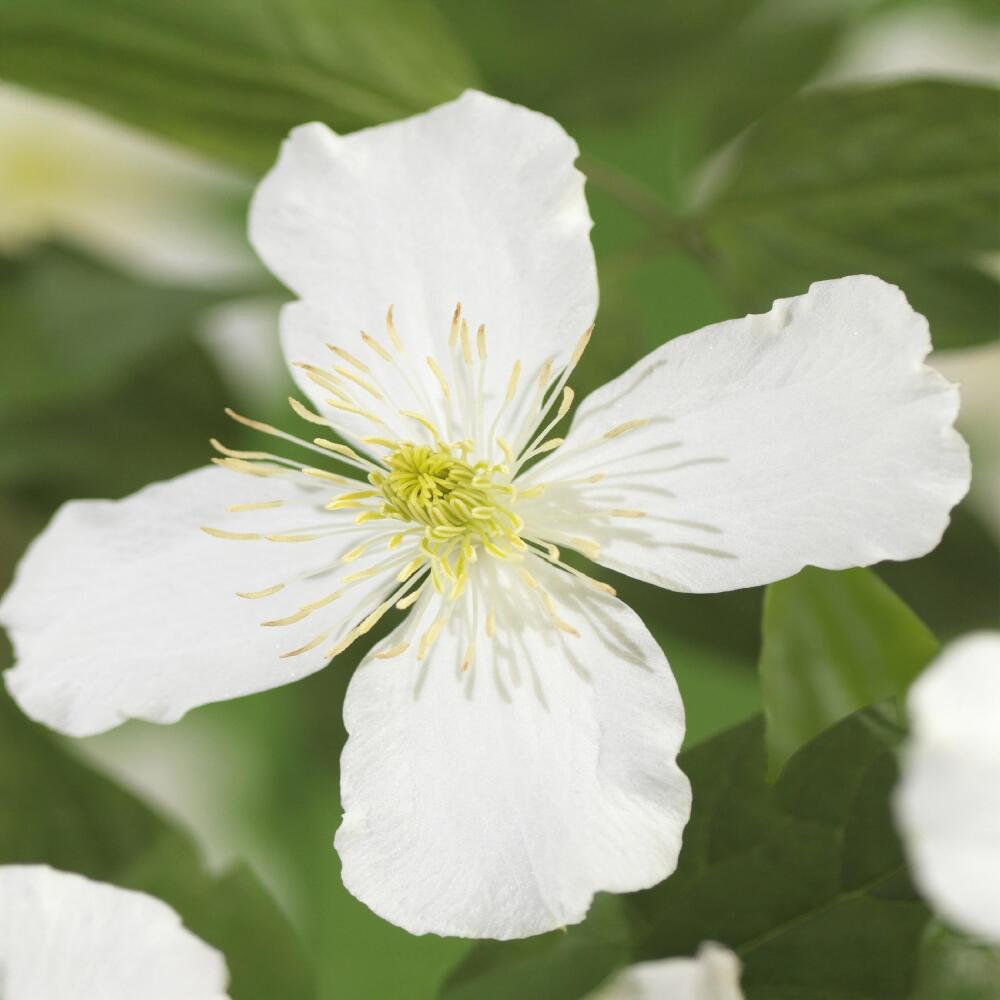
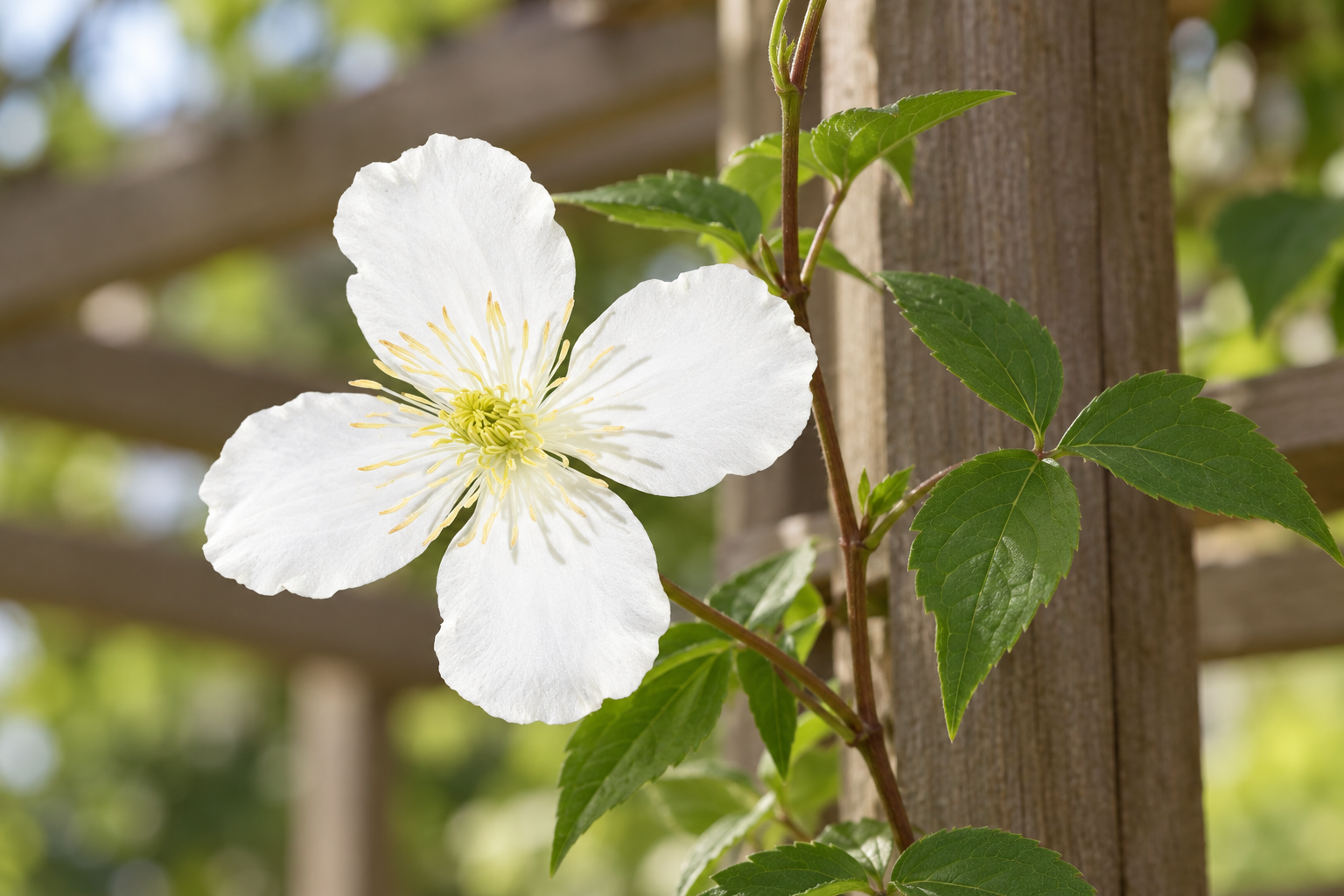
A single white flower with a yellow centre looks almost delicate on a young stem. Grandiflora eventually grows far beyond that small start. Green, usually three-part leaves sit on slender stems; their stalks can wrap around accessible supports. White flowers appear from late spring into early summer, described professionally as up to about seven centimetres across. The offer calls it Clematis montana Grandiflora, also listed botanically as Clematis montana var. grandiflora within Ranunculaceae. This is a deciduous perennial climber. Early flowers develop on shoots grown the previous year. That seasonal cycle determines pruning, unlike the strong annual shortening of summer-flowering clematis.
Forty centimetres becomes a large plant only later
The offer describes two young plants, each in an 11 cm pot and about 40 cm overall height including pot. The original shows small climbers on thin stakes. Visible flowers illustrate a possible stage, not a fixed promise for every delivery. Check the ball after unpacking and gently release stems from packaging. Carry by the pot, not stakes or foliage. A bright sheltered transition position helps monitor moisture and condition. Specialist descriptions later give about eight to twelve metres height and two and a half to four metres width for well-developed Grandiflora on suitable support. These are neither delivery dimensions nor guaranteed one-season growth. Plan the long-term space before planting.
Strong support and a cool root zone
Mountain clematis suits a larger pergola, suitable wires or a sturdy climbing structure. It does not adhere by itself to a smooth wall. Initially guide and distribute young stems loosely; later the structure must carry more leaves and woody branches. Sun to partial shade suits it, while the root zone should not repeatedly bake dry. Low neighbours or a loose soil covering can shade the area without crowding the crown. Choose fertile, moisture-retentive yet well-drained soil. A narrow dry wall edge is less suitable than accessible soil beside it. Later width of roughly two and a half to four metres helps plan the area, but does not prescribe one fixed row spacing: support, neighbours and watering access must work together.
Gently connect the young ball with the soil
Plant in spring or early autumn when soil is frost-free, workable and not waterlogged. Prepare the support first where possible, avoiding repeated stem moves later. Slowly moisten a dry ball and loosen the planting area sufficiently. With this spring-flowering Montana clematis, set the crown only slightly below its former soil level; do not automatically apply the deeper planting used for large-flowered clematis. Firm soil gently and water in thoroughly, avoiding a deep water pit at the crown. An 11 cm nursery pot is not permanent root space. Lasting container culture needs a large stable vessel, open drainage holes, structurally suitable soil and accessible reliable support. Vigorous later growth makes a small balcony trough unsuitable.
Water at the ball, not just by judging neighbouring soil
During the first weeks, original pot soil may be drier than nearby garden soil. Check directly at the ball and water slowly and thoroughly when needed, reaching roots before draining away. Heat, wind and a position under a roof change demand; a fixed weekday does not replace checking. Established garden plants have more soil volume but also need attention during prolonged drought. Container checks remain closer. A loose covering on already moist soil can help the roots, leaving the stem base clear. Feeding depends on existing soil. Suitable base nutrition may help in spring; follow the fertiliser label in a container. Extra fertiliser solves neither standing water nor a dried-out ball.
Guide after flowering, do not remove all last-year shoots
Grandiflora belongs to pruning group 1. An established plant need not be cut low every year. After flowering, identify branches growing too long, densely overlapping or damaged, and selectively shorten to healthy buds. This preserves space and access while allowing new shoots for the next flowering. Hard winter pruning would remove much flowering wood already formed. A young sparsely branched plant may benefit from targeted training to spread several basal stems: a different task from annual care of a covered pergola. Strong rejuvenation of old tangled plants remains a special case after flowering, allowing recovery time. Healthy stems can be layered for home propagation and separated after rooting.
Observe the seasonal cycle at soil and stems
After flowering, watch new shoots, loose ties and root-zone moisture. Deciduous mountain clematis sheds leaves in autumn; a bare winter support therefore does not automatically mean damage. Container roots are more exposed than a well-established garden ball. Shelter pots, keep drainage open and check soil on frost-free days without inferring a fixed frost threshold. Limp leaves first call for checking dry or waterlogged roots. For individual suddenly wilting stems, also check breakages, feeding damage and unusual discolouration rather than replacing the whole plant too soon. Watch young growth for slug damage. Keep the lower area accessible: watering, tying and removing damaged branches are easier on a large climber when access remains.
One plant, several views

Good to know
Is 40 cm its eventual height?
No: roughly 40 cm is the young offered plant’s overall height including pot. Vigorous Grandiflora can later develop several metres on support.
Can it grow straight up a smooth wall?
It needs accessible supports for leaf stalks. Wires or a sturdy climbing structure and initial guiding help.
Why keep the root area shaded?
A cool sufficiently moist ball supports water supply. Foliage can still be sunny; continually hot dry wall edges are unsuitable.
Must I cut everything to 30 cm in winter?
Not established Grandiflora. It is group 1 and flowers on previous-year wood. Necessary limitation is usually after flowering.
How deeply should I plant it?
Set spring-flowering Montana types carefully only slightly below the previous surface. Do not automatically copy deeper planting used for some large-flowered clematis.
Is the small pot enough for the pergola?
For starting and transport, yes; not lasting large growth. Garden soil or a large suitable container, reliable moisture and strong support are needed.
What if young stems are limp?
Check ball moisture, drainage and possible breakages or feeding damage. Do not judge only by damp nearby soil or use fertiliser as the first repair.
Sources and editorial note
- Exotenherz: offer and original photographs
- RHS: mountain clematis var. grandiflora
- RHS: planting and caring for clematis
- RHS: pruning group 1 clematis
The young starting plant and later garden development are described separately. Check shop availability.