This plant at Exotenherz
Check the shop offer for current availability, price and what is included.
Check the shop for the price, current availability and what is included.
Your care table
| Topic | What to do | Why it helps |
|---|---|---|
| Position | Outdoors, bright to sunny with air exchange. | The tree needs seasons. |
| Summer heat | Protect the bowl from extreme heating. | Limited root space heats quickly. |
| Water | Check frequently in growth and water thoroughly in time. | Flowers and fruit increase demand. |
| Drainage | No permanent wetness in the saucer. | Moist roots still need air. |
| Winter | Cool rest; protect the bowl from severe frost. | Bonsai roots are more exposed than garden roots. |
| Fruits | Gently thin excessive fruit set. | A small tree can otherwise exhaust itself. |
| Pruning | Consider flower buds; selectively shorten individual shoots. | General shearing removes future flowers. |
| Repotting | Before spring growth, according to root-ball condition. | Fresh structure supports water and air flow. |
Check the compost and pot weight. The care table explains how far the compost may dry.
Water only when needed. The water should reach the root ball without spilling over the rim.
Remove surplus water from the saucer or cachepot. Then return the plant to a suitable position.
A crabapple is more than a photo with fruit
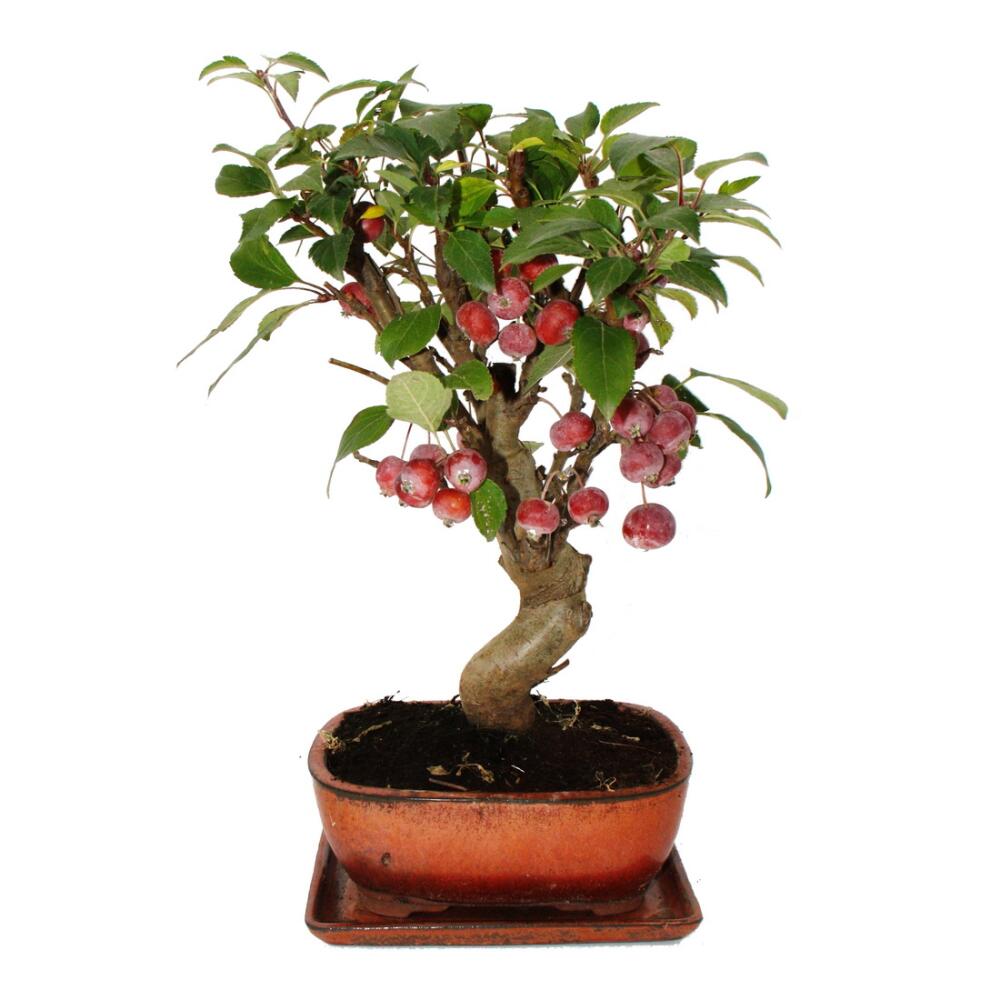
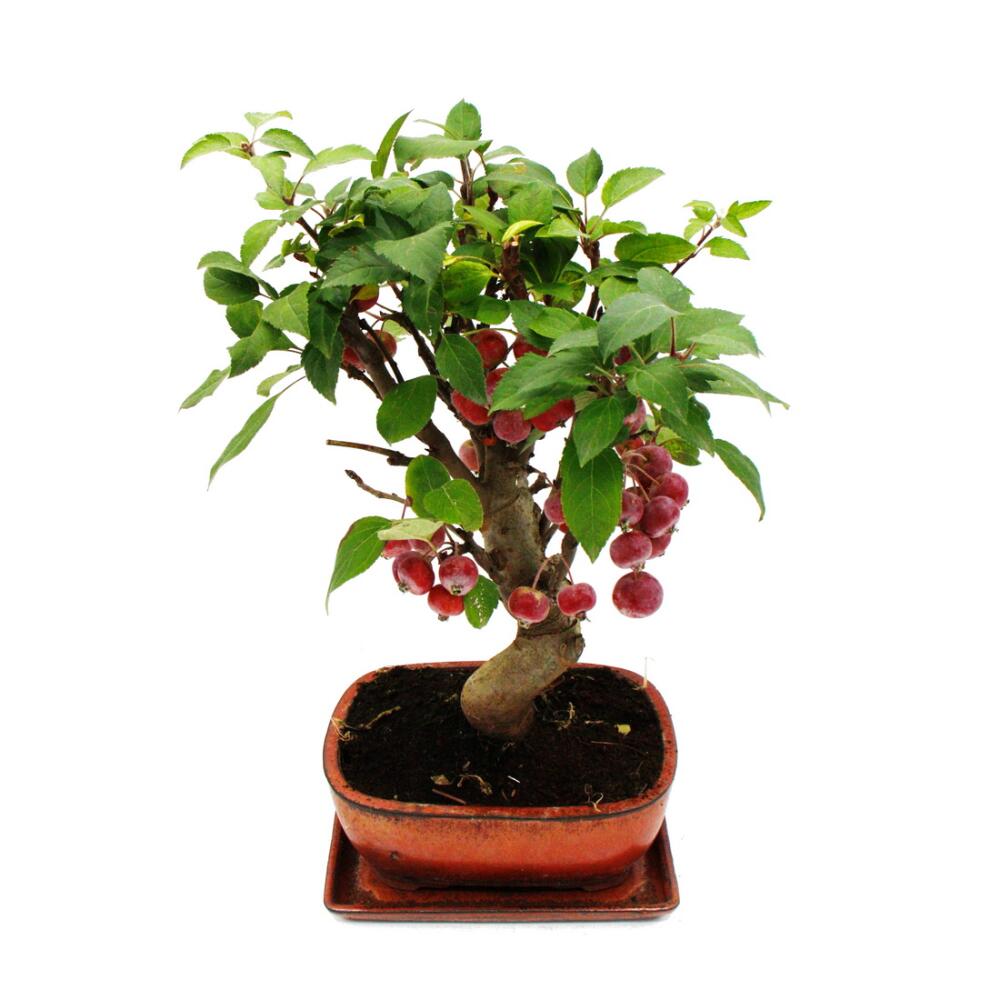
The offer shows an individually trained Malus with small red ornamental apples. An approximately 21 × 16 cm bowl and around 35 to 40 cm overall height are given; the title states an age around twelve years. Trunk and branching remain appealing even when there are no fruits. Spring flowers, foliage development, fruit set and winter rest create different views of the same tree. A fruit-laden photograph is therefore a seasonal example, not a promise for every delivery date.
A small pot alone does not create small fruits
Malus is the apple genus within the rose family. Bonsai often use ornamental forms with naturally small fruits. Exact species or variety is not given for this offer. No general Mediterranean origin can be inferred. Pollination and reliable fruit set also depend on form, suitable partners and conditions during flowering. A small bowl does not automatically turn a large-fruited apple into a crabapple. Here the pictured small fruits are a feature of the offered type.
Stay outside and limit pot heat
A crabapple bonsai needs an outdoor position with plentiful light, air exchange and seasonal temperatures. A warm living room is no year-round place. Sun supports strong growth, but in a shallow bowl by hot walls the root ball can heat considerably. Protection against extreme midday heat and drying wind helps then. During flowering watch for late frost and briefly protect appropriately without bringing the tree into warm indoor air for weeks.
Attentively support water demand during flowers and fruits
A small bowl has little reserve. Check a leafy tree daily, more often when needed on very hot windy days. Once the surface dries slightly, water thoroughly with a fine stream. Water may drain but must not remain in the saucer. Complete drying can affect flowers, fruits and fine roots. Much less water is usually enough in winter, yet even a bare tree must not be forgotten. Actual root-ball moisture decides. Preferably direct the stream onto compost and do not unnecessarily soak delicate flowers.
Consider pruning, fruit load and repotting together
A small tree need not bear as many apples as possible. With heavy set thin individual fruits so fine branches and supply are not overloaded. Before pruning consider which buds and short shoots should remain for next flowering. Selectively shorten long unwanted new shoots instead of shearing the whole crown like a hedge. Repotting and moderate root pruning belong to a suitable phase before strong spring growth, according to root-ball condition. A structurally stable mixture should hold moisture while draining well. Feed during growth according to need and label.
Allow winter rest and distinguish problems early
Autumn leaf fall is normal for this tree. Protect its bowl in winter from severe frost, drying wind and repeated extreme temperature changes. A cool sheltered outdoor area or suitable unheated quarters preserves rest; a heated room disrupts it. Use frost-free days to check moisture. In summer watch aphids, conspicuous leaf spots and diseased shoots. Not every colour change immediately needs a spray. Check findings, remove fallen leaves and keep tools clean. Fruit is a lovely addition; tree health remains the first aim.
One plant, several views
Good to know
Can the apple bonsai live in the living room?
Not permanently. It needs outdoor light and cool winter rest.
Are red apples always present at delivery?
No. Flowers and fruits depend on season and the individual tree. The picture shows a possible seasonal view.
Why does it shed leaves in autumn?
Malus is deciduous. Normal autumn leaf fall belongs to the annual cycle and is no reason for extra feeding.
Should I keep every fruit that sets?
Thinning makes sense with heavy fruit load. The small root reserve and fine branches should not be overloaded.
Sources and editorial note
- Product and delivery contents: Exotenherz
- Bonsai Empire: species-specific bonsai care
- Royal Horticultural Society: plant and care knowledge
Sources checked: 15 September 2026. Product information and delivery contents follow the linked offer. Care has been checked against the stated specialist sources and remains subject to plant condition, position and season.