This plant at Exotenherz
Check the shop offer for current availability, price and what is included.
Product details, availability and delivery information are provided in the shop offer.
Your care table
| Topic | What to do | Why it helps |
|---|---|---|
| Position | Very bright; acclimatise to sunlight gradually. | Insufficient light produces longer, weak shoots. |
| Watering | Wait until the root ball has dried noticeably. | The fleshy leaves store water. |
| Outer pot | Remove all residual water. | Waterlogging is particularly problematic in cool conditions. |
| Compost | Free-draining, structurally stable succulent mix. | Roots need air and moisture that can be monitored. |
| Pruning | Selectively shorten individual healthy shoots. | This keeps the natural branching structure understandable. |
| Feeding | Feed moderately during growth; stop during rest. | Slow, compact development is desirable. |
| Winter | Bright and frost-free; water according to use. | Less growth means lower water needs. |
| Propagation | Carefully root shoot sections after the cut has dried. | Wet, fresh cuts rot more readily. |
Check the compost and pot weight. The care table explains how far the compost may dry.
Water only when needed. The water should reach the root ball without spilling over the rim.
Remove surplus water from the saucer or cachepot. Then return the plant to a suitable position.
A young plant with branching already visible
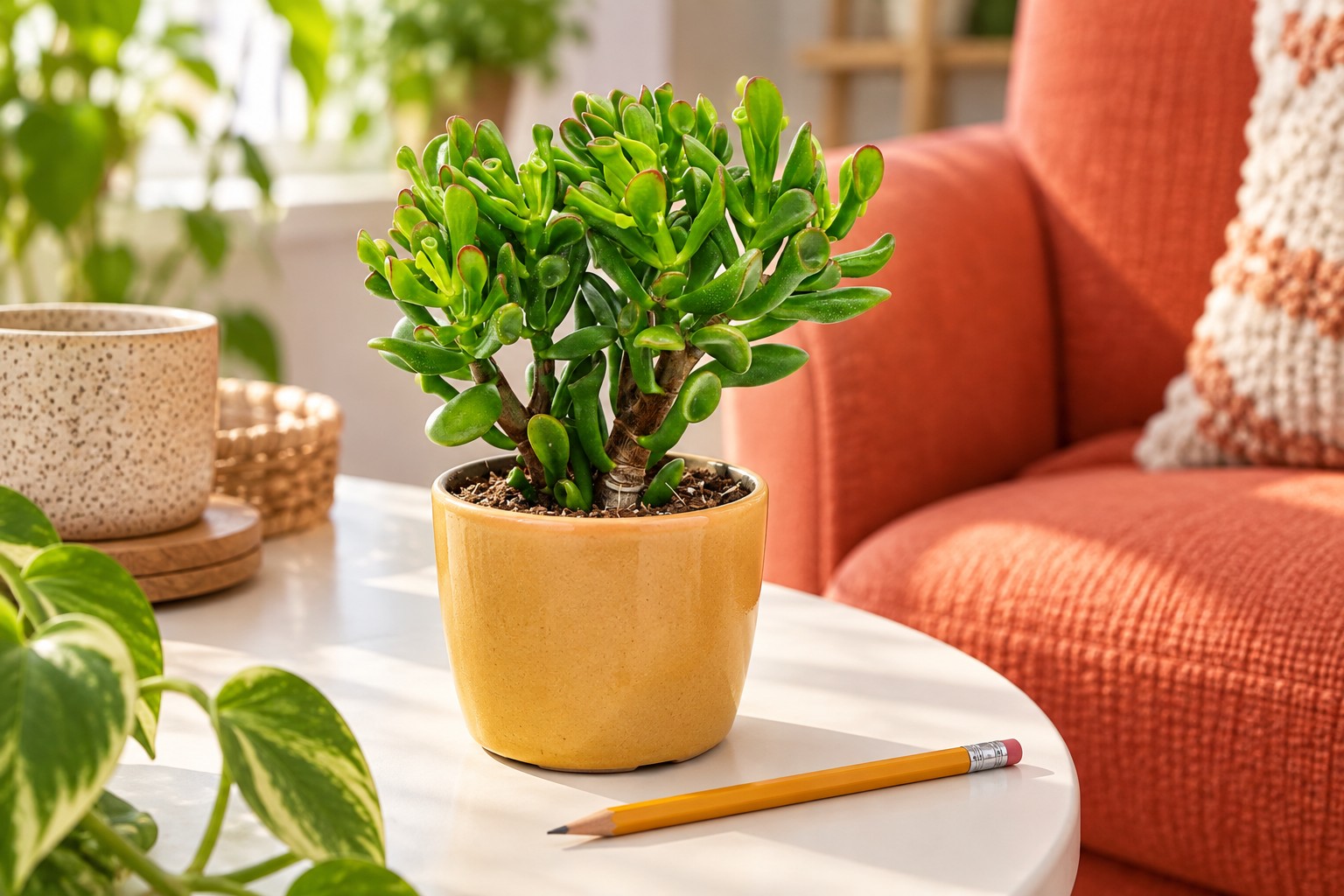
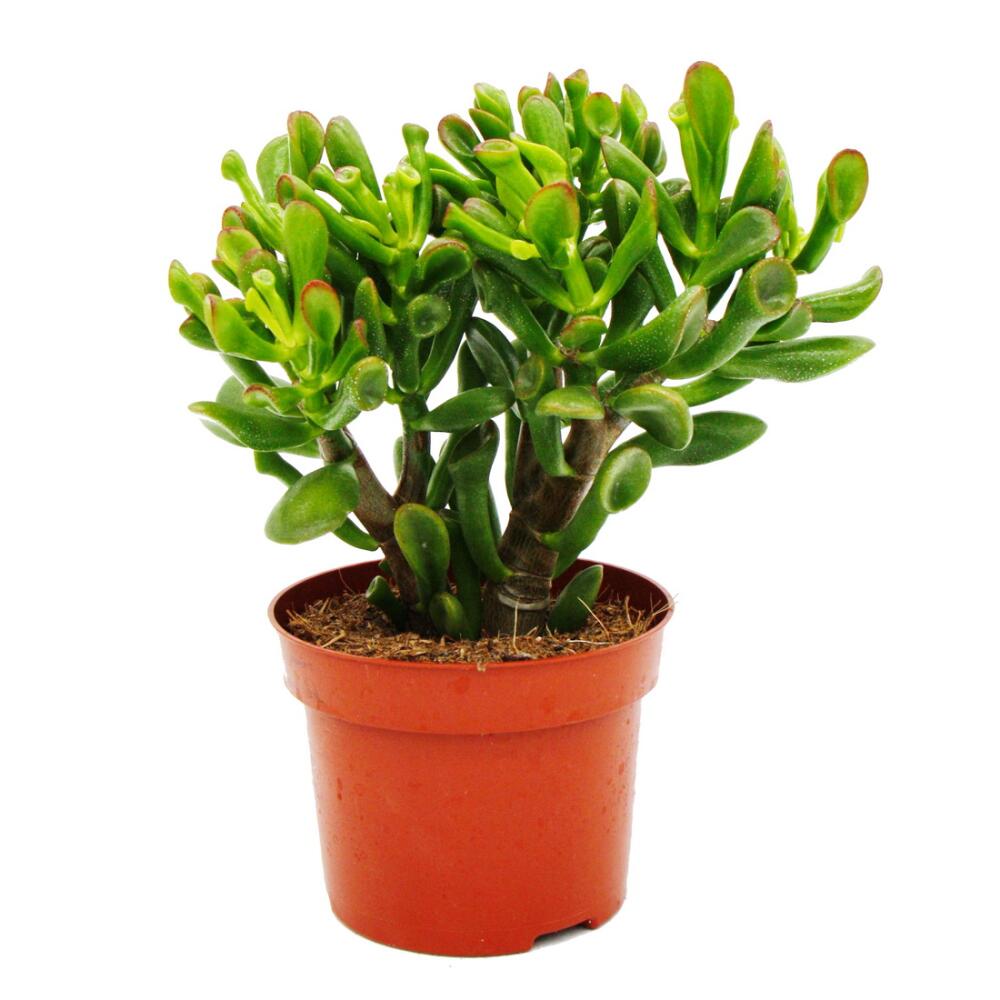
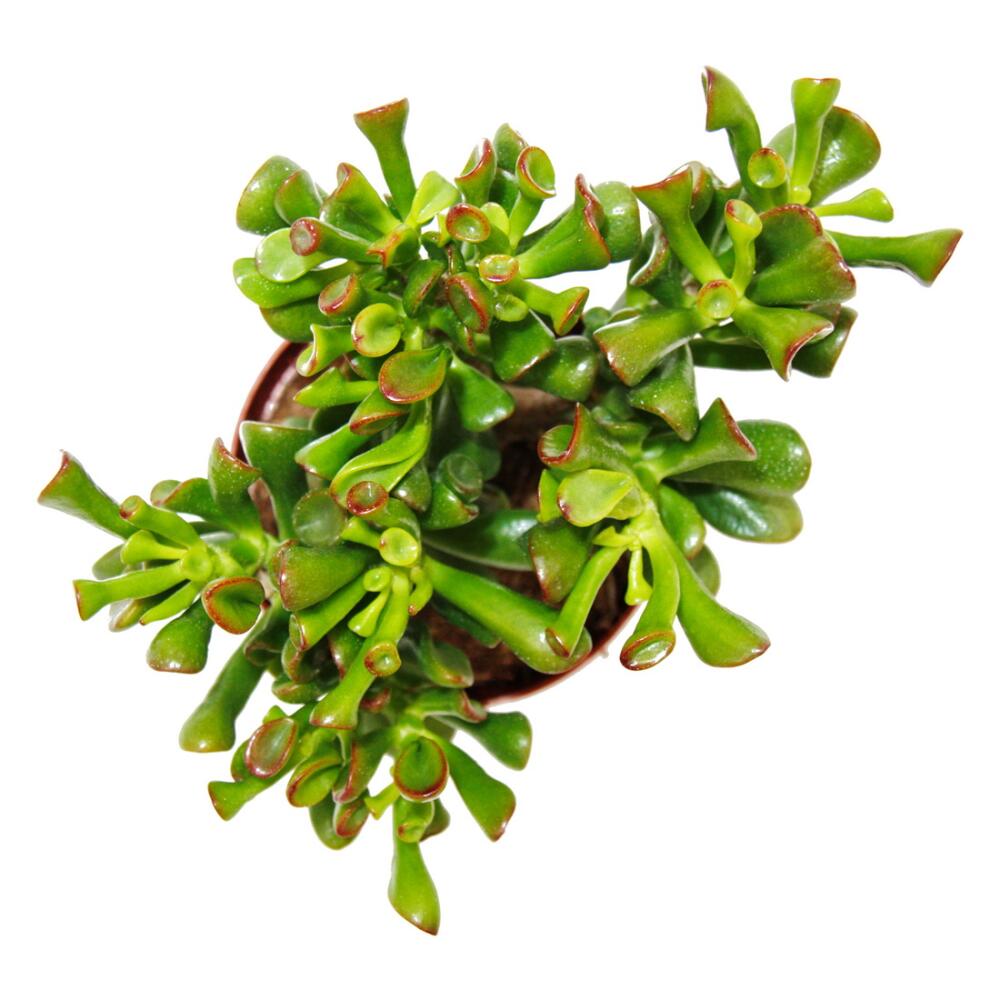
In the shop photograph, fleshy green leaves sit on short branching shoots. Some resemble open spoons, while others are more tightly rolled. The pot diameter is 12 cm. The shop gives differing total-height measurements; taken together, they amount to approximately 15–25 cm. This range is stated openly rather than promising an exact desired height. The scene accordingly shows a small table plant. The age statement alone is no reason to infer an old bonsai with a broad trunk.
Distinguishing Hobbit and Gollum with care
This form belongs to Crassula ovata and therefore to the Crassulaceae family. Historical descriptions document different selections with modified leaves. At the same time, some plant directories include Hobbit under Gollum, and the trade names are not clearly separated everywhere. The specific shop offer and its visible features therefore matter here. A single almost tubular leaf does not automatically make a Hobbit plant a mislabelled Gollum. Transitions can occur within one plant. In any case, the two names do not refer to different African wild species.
Its shape develops with good light
A very bright position supports short gaps and strong shoots. Acclimatise slowly to sunlight, particularly after dark transport or winter conditions. Hobbit can work in a bright corner of the home as long as it actually receives abundant daylight. An attractive position several metres back in a room is often too dark. Occasional turning prevents strongly one-sided growth. For a summer stay outdoors, choose a warm position protected from rain and increase exposure to the sun gradually. Bring it indoors before cold weather.
Combine dry intervals with careful observation
Allow the root ball to dry noticeably before the next watering. Then water thoroughly once and remove all excess water. Pot weight and moisture inside the root ball are more helpful than a rigid weekly schedule. Fleshy leaves lose some firmness when short of water; in wet compost, soft leaves can instead indicate damaged roots. In the latter case, do not add more water. Ordinary indoor air is sufficient. Regular misting does not replace watering the root ball and is not necessary care for this succulent.
Encourage branching without forcing a bonsai
Over time, Hobbit develops firmer older shoots. Allow a compact shrub to establish its roots well first. Healthy shoot tips that have grown too long can be selectively shortened during growth; new shoots may develop at existing nodes. Do not remove all the leaves at once or force the plant into shape with excessive wiring. Healthy broken or cut shoot pieces can be carefully rooted after the cut surface has dried. A free-draining succulent mix in a pot with a drainage hole remains the foundation.
Read a quiet winter and changes correctly
Overwinter in bright, frost-free conditions and reduce watering substantially if kept cool. Feed moderately during active growth and stop in the resting winter period. Repot when the root ball is densely rooted or compacted; an oversized new container dries unnecessarily slowly. Check leaf axils for mealybugs. Individual old leaves may fall, whereas soft, dark areas on stems should be taken seriously. Small pale flowers are possible on older plants, but cannot be reliably expected indoors.
One plant, several views
Good to know
Must all the leaves be equally spoon-shaped?
No. Leaves rolled to different degrees may occur side by side.
Can I shape Hobbit as a small bonsai?
A compact branching form is possible. It is developed slowly and is no reason for immediate radical pruning.
What height is delivered?
The shop lists different ranges. These are transparently combined here as approximately 15–25 cm total height in a 12 cm pot.
Do I need to mist the leaves?
No. Suitable root-ball moisture, drainage and sufficient light are what matter.
Sources and editorial note
- Product and delivery contents: Exotenherz
- International Crassulaceae Network: botanical form description
- Royal Horticultural Society: plant and care information
- SANBI PlantZAfrica: plant profile and cultivation
Sources checked: 15 September 2026. Product information and the contents of delivery follow the linked shop offer. Care advice was checked against the cited specialist sources and should still be adapted to the plant’s condition, position and season.