This plant at Exotenherz
Check the shop offer for current availability, price and what is included.
Check the shop for the price, current availability and what is included.
Your care table
| Topic | What to do | Why it helps |
|---|---|---|
| Light | Very bright, with sunshine after slow acclimatisation. | Good brightness supports compact spacing between leaves. |
| Water | Let soil dry well before each watering. | Fleshy leaves store water. |
| Leaves | Do not constantly soak the leaf stacks when watering. | Moisture lingers in narrow gaps. |
| Soil | Draining succulent mix with water drainage. | Airy roots matter more than a large reserve pot. |
| Winter | Frost-free; water more sparingly with reduced growth. | Demand falls but does not categorically disappear at every location. |
| Fertiliser | Moderately during growth according to the label. | Heavy feeding does not make shoots more stable. |
| Shoots | Do not forcibly straighten trailing shoots. | Leaning belongs to the plant’s development. |
| Checks | Inspect dense leaf pairs for mealybugs and soft areas. | Small problems may begin unnoticed there. |
Check the compost and pot weight. The care table explains how far the compost may dry.
Water only when needed. The water should reach the root ball without spilling over the rim.
Remove surplus water from the saucer or cachepot. Then return the plant to a suitable position.
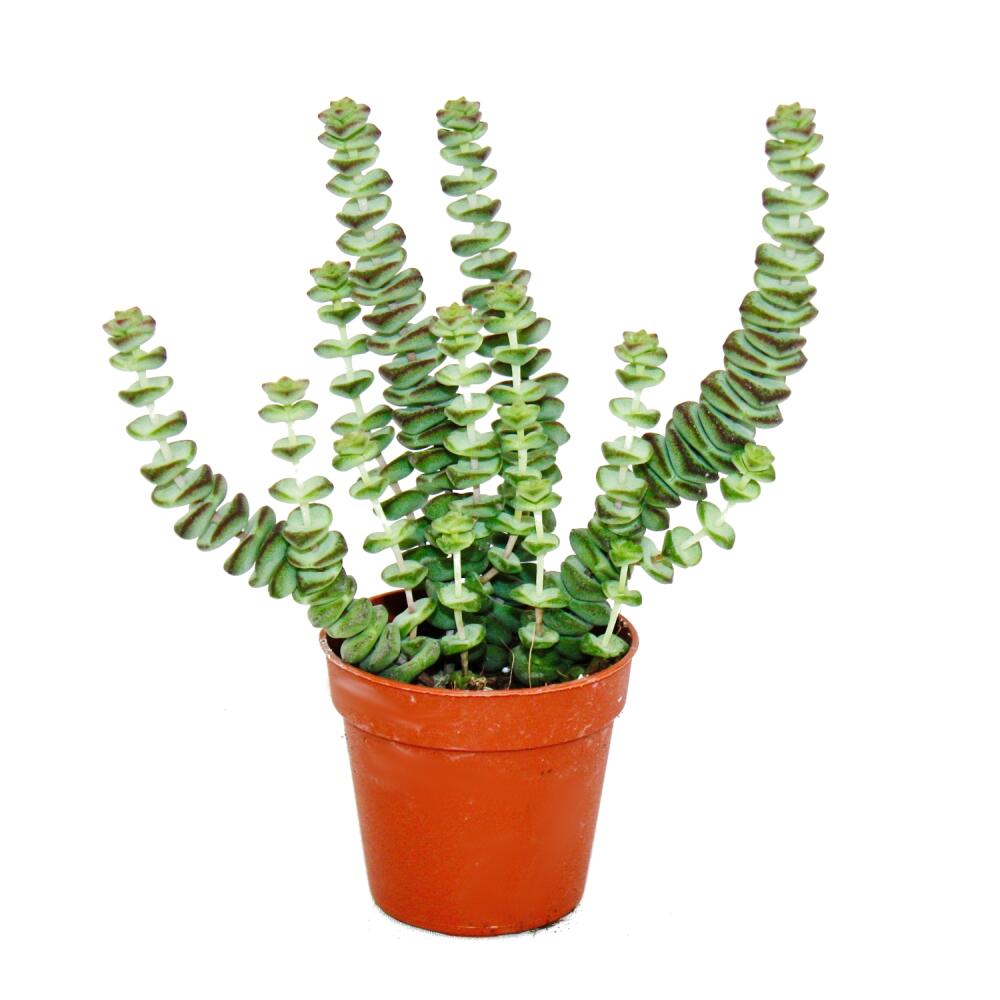
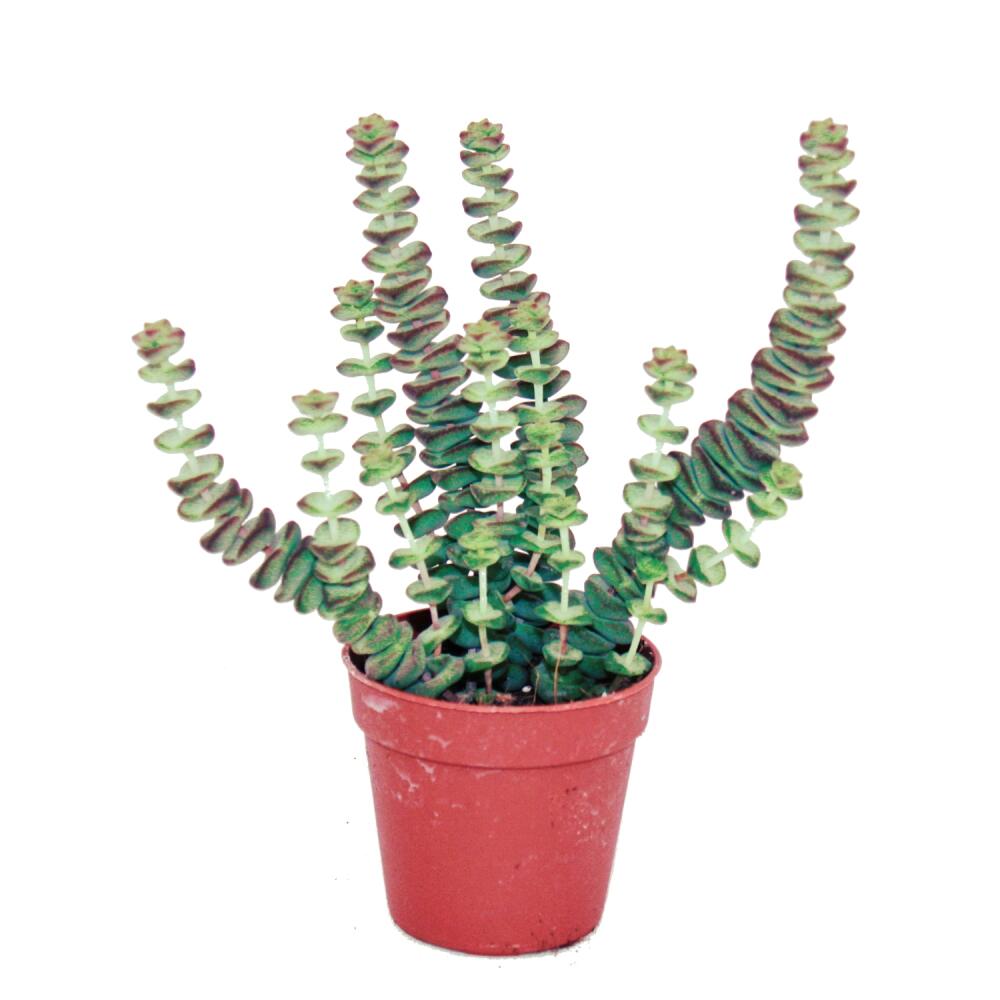
Leaf pairs surround the fine stem
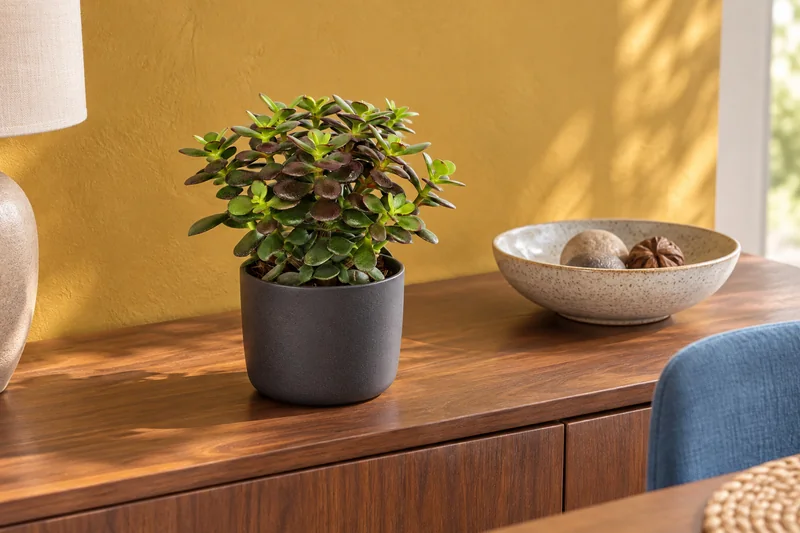
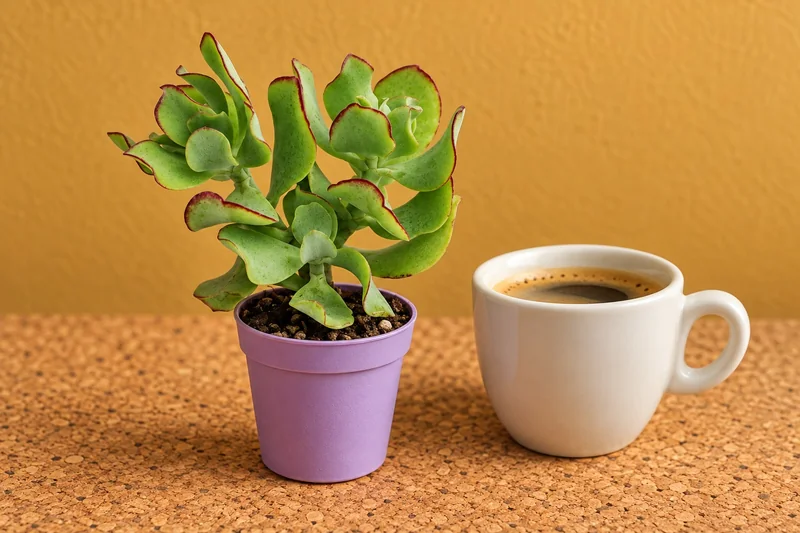
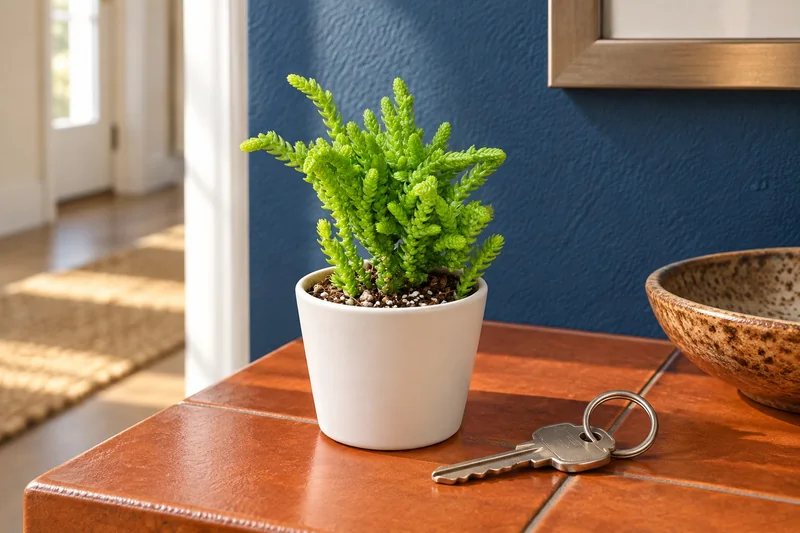
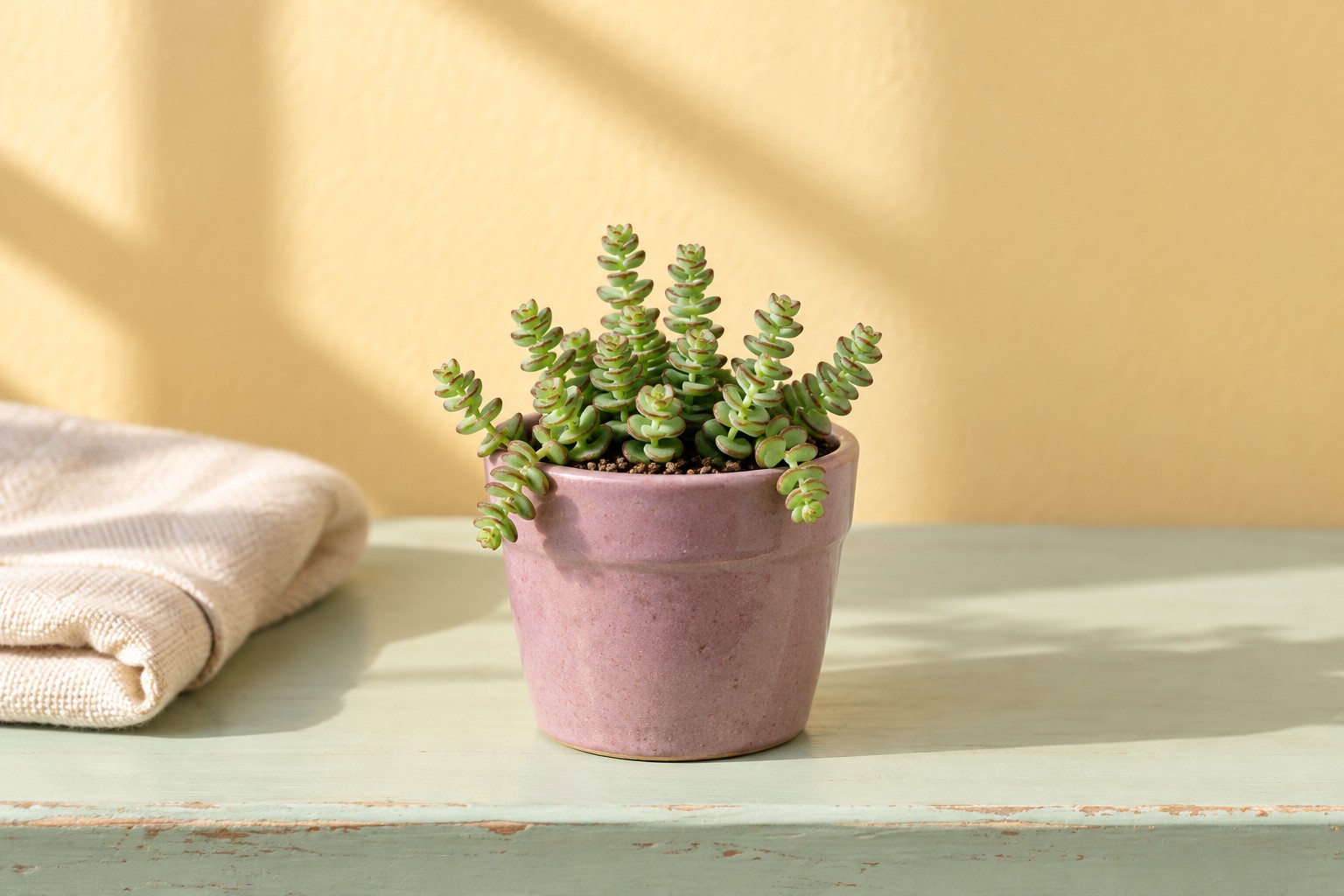
Rounded fleshy leaves sit in pairs so close to the shoot that it is barely visible in places. Each shoot consequently looks like a chain of little green buttons. Margins can turn reddish in suitable conditions. SANBI lists the plant as Crassula rupestris subsp. marnierana; marnieriana and the name Hottentot also occur in the trade. This crassula belongs to the Crassulaceae family. Over time its shoots may spread, trail and root when touching the ground.
Delivered small, gently trailing later
The shop offer specifies an 8.5 cm pot and approximately 8 to 12 cm overall height. The reference image looks taller; the new scene explicitly follows the smaller stated delivery size. A young plant does not yet have a long hanging cascade. Give later shoots some free space at the pot edge without pulling or bending them. A small bright surface displays the fine structure clearly. A decorative outer pot is included only when the shop offer explicitly names it.
Bright light supports short gaps between leaves
A very bright position with sunshine after acclimatisation suits it well. Fleshy leaves may nevertheless scorch in a sudden change from shaded cultivation to hot midday sun. Longer pale shoots with increasing gaps between leaves suggest checking light levels. Naturally trailing later growth, however, is not a care mistake. Keep the plant frost-free; a mild rain-sheltered outdoor position is possible in summer. Bring it back indoors before cold and persistently wet weather phases.
Water sparingly without forgetting the plant
Let soil dry well between waterings, then water the roots. Water should not remain constantly in the dense leaf stacks. Remove excess after watering. Small pots and loose mixes can dry quickly in sunshine; low demand therefore does not mean leaving the plant unchecked for months. Water much more cautiously in winter with less growth. SANBI describes sparing care throughout the year; a rigid completely waterless winter treatment is not inferred from that.
Repot and propagate with a light touch
Use freely draining succulent soil and a pot with a hole. When repotting, support the root ball rather than lifting by thin shoots. A container only slightly larger usually suffices. Feed moderately during active growth according to the label. After the cut surface dries, healthy shoot sections can be laid on a suitable loose mix or inserted shallowly. They can form roots at contact points. Keep such small cuttings monitored and airy; they need no container deeply filled with water.
Recognise the difference between age and damage
Older shoots may lean and become firmer at the lower part. Newly appearing soft dark tissue, a rotten smell or a permanently wet root ball, however, are warning signs. Look for mealybugs within dense leaf pairs and initially separate affected plants. Do not let fallen leaves accumulate inside the damp growth. Small white to pale pink flowers are possible but not expected every year indoors. The main ornament remains the carefully constructed leaf form, interesting even without flowers.
One plant, several views
Good to know
Why do the shoots look like chains?
Densely arranged rounded leaf pairs surround the fine stem and create the distinctive impression.
Is trailing a sign of disease?
Not necessarily. Older healthy shoots may naturally spread and lean over the rim. Soft rotten areas must be distinguished from this.
What size does the offer describe?
An 8.5 cm pot and approximately 8 to 12 cm overall height are specified.
Must the plant stay completely dry all winter?
A blanket obligation of months of dryness is unsuitable here. Water very sparingly with reduced growth and check the root ball and plant condition.
Sources and editorial note
- Product and delivery contents: Exotenherz
- SANBI PlantZAfrica: plant profile and cultivation
- Royal Horticultural Society: plant and care information
Sources checked: 15 September 2026. Product information and the contents of delivery follow the linked shop offer. Care advice was checked against the cited specialist sources and should still be adapted to the plant’s condition, position and season.