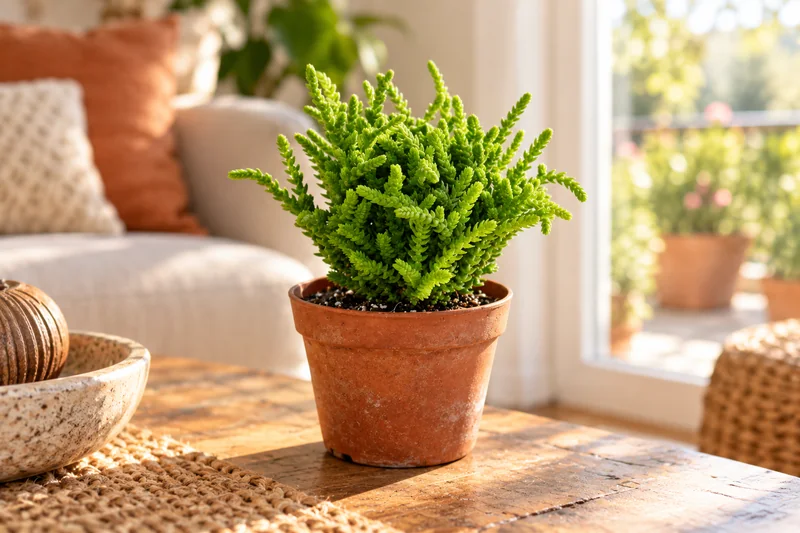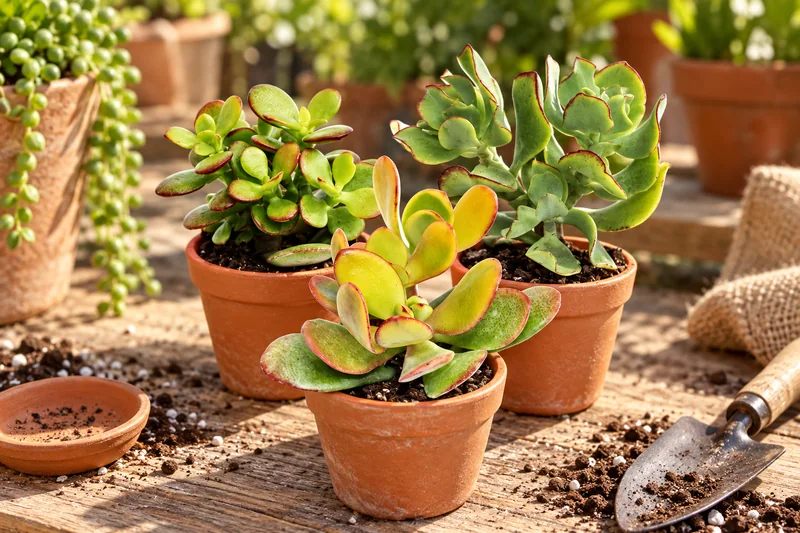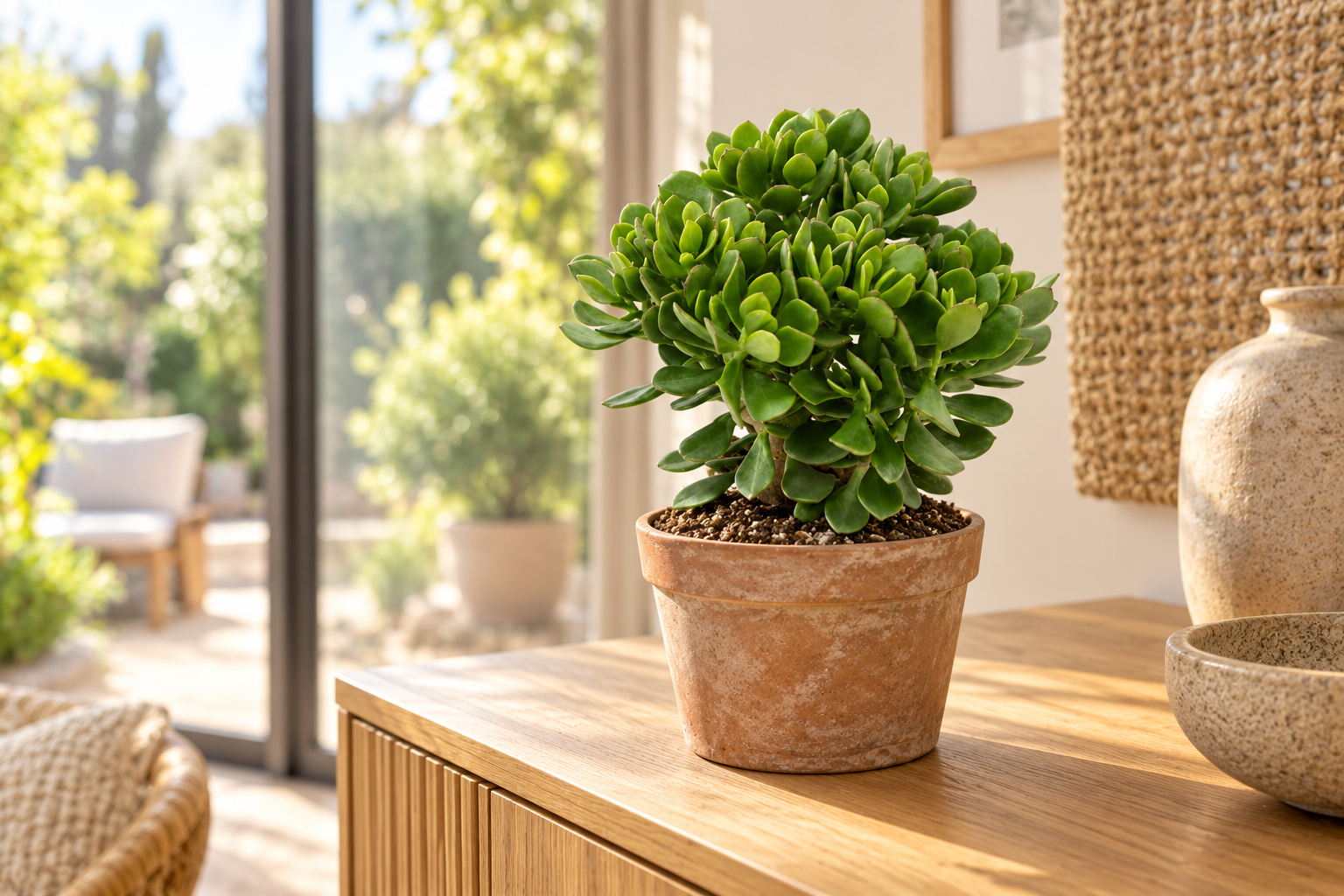
This plant at Exotenherz
Check the shop offer for current availability, price and what is included.
Check the selected shop offer for price, availability and delivery contents.
Your care table
| Topic | What to do | Why it helps |
|---|---|---|
| Position | Very bright, introduce sun gradually. | The dense crown needs enough light. |
| Root ball | Let dry well between waterings. | First check the actual moisture condition. |
| Water | When needed, water thoroughly and then let drain. | No hidden wetness in the pot cover. |
| Mix | Free-draining structured succulent substrate. | Make root airflow and drying easier. |
| Pot | Increase only moderately when needed. | Limit unrooted wet soil. |
| Pruning | Shorten individual extended healthy shoots selectively. | Natural branching remains visible. |
| Fertiliser | Sparingly according to label during growth. | More food does not replace light. |
| Winter | Bright and frost-free, water less according to use. | Summer and winter needs differ. |
Check the compost and pot weight. The care table explains how far the compost may dry.
Water only when needed. The water should reach the root ball without spilling over the rim.
Remove surplus water from the saucer or cachepot. Then return the plant to a suitable position.
A little crown catches the light
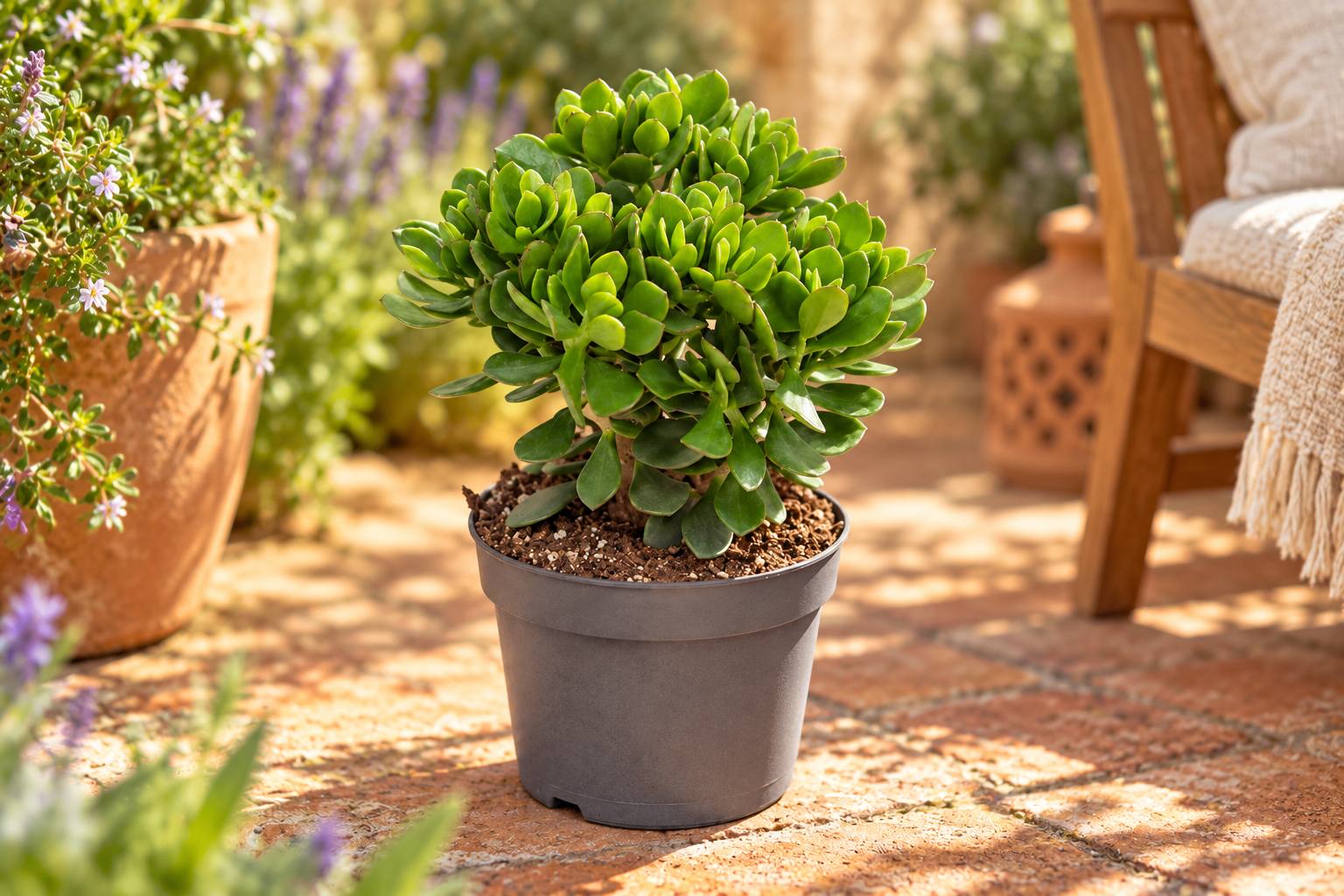
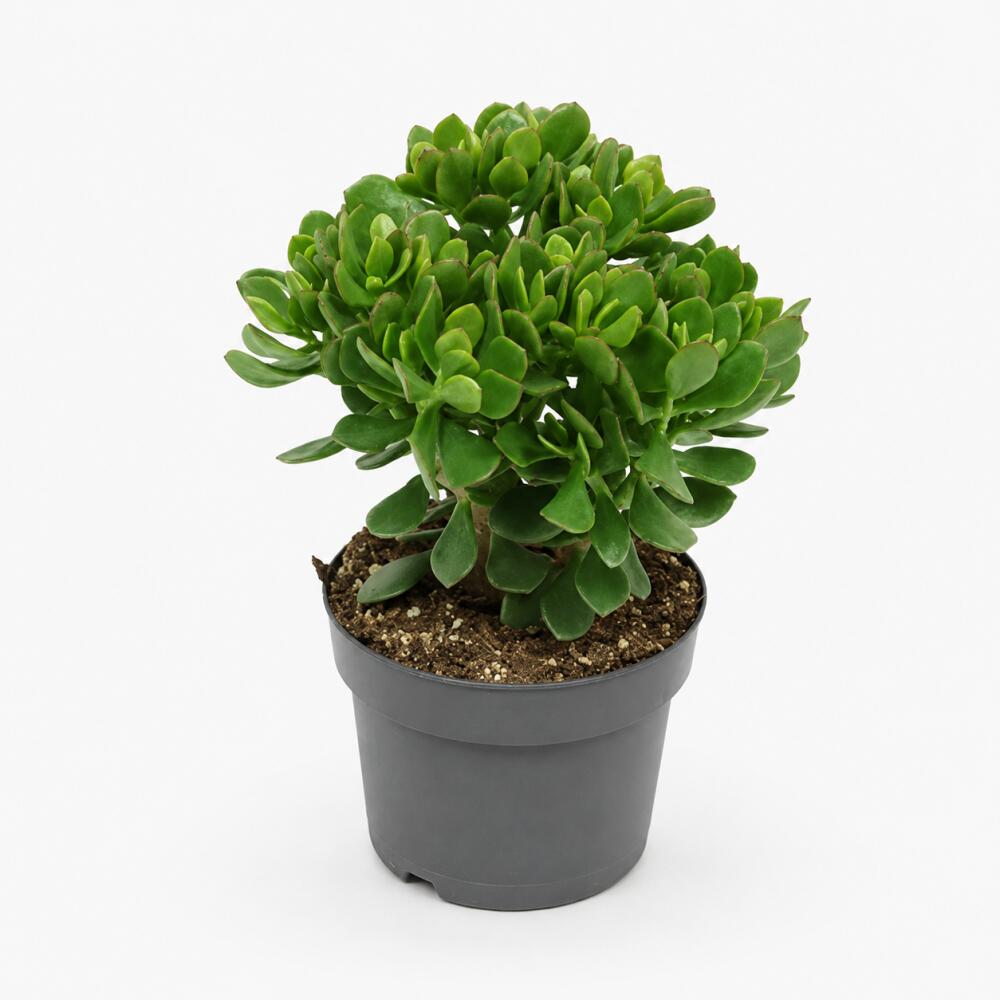
Many short branches carry fleshy oval leaves that shine softly in the light. They form a dense green crown whose individual leaves remain easy to recognise. Crassula Minova already looks like a small branching shrub as a young potted plant. The shop calls it a jade plant and uses Minova as its name. Minova trade forms also appear in breeders’ assortments. We do not turn that into an independent wild species with an invented origin here. The focus is the specific compact plant shown, with green crown and small root space.
Thirty centimetres describe the start
The offer lists a seventeen-centimetre pot and about thirty centimetres overall height. A low bright table or sideboard near a large light opening shows the crown well. On a dark shelf it might look decorative but would not have a suitable permanent position. Support the container when unpacking. Dense fleshy shoots should not be trapped between packaging and hand. Take a moment for root ball and leaves before the first watering. Otherwise an unchanged fixed calendar starts with uncertain initial moisture.
The dense crown needs light inside too
Choose a very bright position and accustom the plant gently to direct sun. Compact growth alone is no proof that it manages with little light. Watch whether new shoots become distinctly longer and looser than the previous crown. An occasional small turn can balance one-sided growth but does not replace sufficient brightness. In summer a sheltered outdoor position is possible after acclimatisation. Persistent rain, abrupt sun and cold do not belong to this transition. Before cool autumn periods, return the plant to a bright frost-free position.
Stored moisture helps; it does not replace roots
Fleshy leaves can store reserves. A dry root ball still needs reliable water supply eventually. Check soil and weight, let the mix dry well between waterings and then water in a controlled way. Remove excess. Very small daily top-ups often make it harder to track because surface and deeper roots remain differently moist. Assess wrinkled leaves alongside the root ball. If that has already been wet for a long time, more water would be no sensible automatic answer. The actual cause then deserves a closer look.
A stable pot carries the branching structure
Use a free-draining succulent mix and a container with clear outlets. Repot when space is needed, only moderately larger so that much unrooted wet soil does not surround the little crown. During active growth, restrained nutrition suitable for the label is enough. Healthy short shoots need not be constantly trimmed. If an extension disrupts shape, plan a clean targeted cut. The new structure should remain understandable. Inspect tight branching for conspicuous white accumulations too; small unwelcome visitors are easily overlooked there.
Winter shows how well the position was chosen
With little light and slow growth, water demand falls. Keep the plant bright and frost-free and neither water by a summer calendar nor add food to compensate for darkness. Individual older inner leaves should be judged differently from the sudden loss of many leaves. Record position, repotting and new branch development in the plant book. A photo from the same side shows whether the green crown stays dense or stretches. The offer’s thirty centimetres are a starting point, not a promised permanently unchanged final height.
One plant, several views
Good to know
Is Minova a new wild species?
This portrait uses Minova as the name of the trade form offered in the shop.
Is thirty centimetres the mature height?
No. It means the listed overall height of the assortment plant.
Is a dark shelf suitable?
The compact crown needs a very bright permanent growing position.
Must I trim the crown often?
Healthy short branches may grow; disruptive extensions are shortened selectively.
Why can wrinkled leaves appear despite wet soil?
Damaged roots may also impair supply; check the root ball first.
Sources and editorial note
- Exotenherz: offer and original images (03.10.2026)
- RHS – Indoor succulents, light and root space (03.10.2026)
- Ovata – Minova in the breeder’s Crassula assortment (03.10.2026)
- RHS – Crassula ovata as a horticultural care reference for jade plants (03.10.2026)
Shop offer, article number, GTIN, availability and original images checked directly on 02.10.2026; specialist acceptance 03.10.2026. Specialist sources read directly. SKU, original images, dimensions and orderability checked directly in the shop on 03.10.2026. Relevant specialist sections read directly; trade names and species references distinguished. No Wawi, server or tool changes. Currently not orderable: knowledge portrait without purchase link; social drafts not approved for sending.