This plant at Exotenherz
Check the shop offer for current availability, price and what is included.
Check the selected shop offer for price, availability and delivery contents.
Your care table
| Topic | What to do | Why it helps |
|---|---|---|
| Light | Very bright, introduce sun gradually. | Fine new shoots need suitable brightness. |
| Colour | Compare tones in the same light. | No intense pink colour promised year-round. |
| Water | Check the root ball after drying. | Shoot colour does not measure soil moisture. |
| Drainage | Remove excess. | No hidden wetness in the decorative pot. |
| Mix | Free-draining structured succulent substrate. | Combine drying with air at the roots. |
| Pruning | Shorten damaged or extended shoots selectively. | Do not change the entire form simultaneously. |
| Nutrients | Sparingly according to label during healthy growth. | Do not force more pink through high doses. |
| Winter | Bright and frost-free, lower consumption counts. | No cold experiments for colour effect. |
Check the compost and pot weight. The care table explains how far the compost may dry.
Water only when needed. The water should reach the root ball without spilling over the rim.
Remove surplus water from the saucer or cachepot. Then return the plant to a suitable position.
Pink can be a quiet shade too
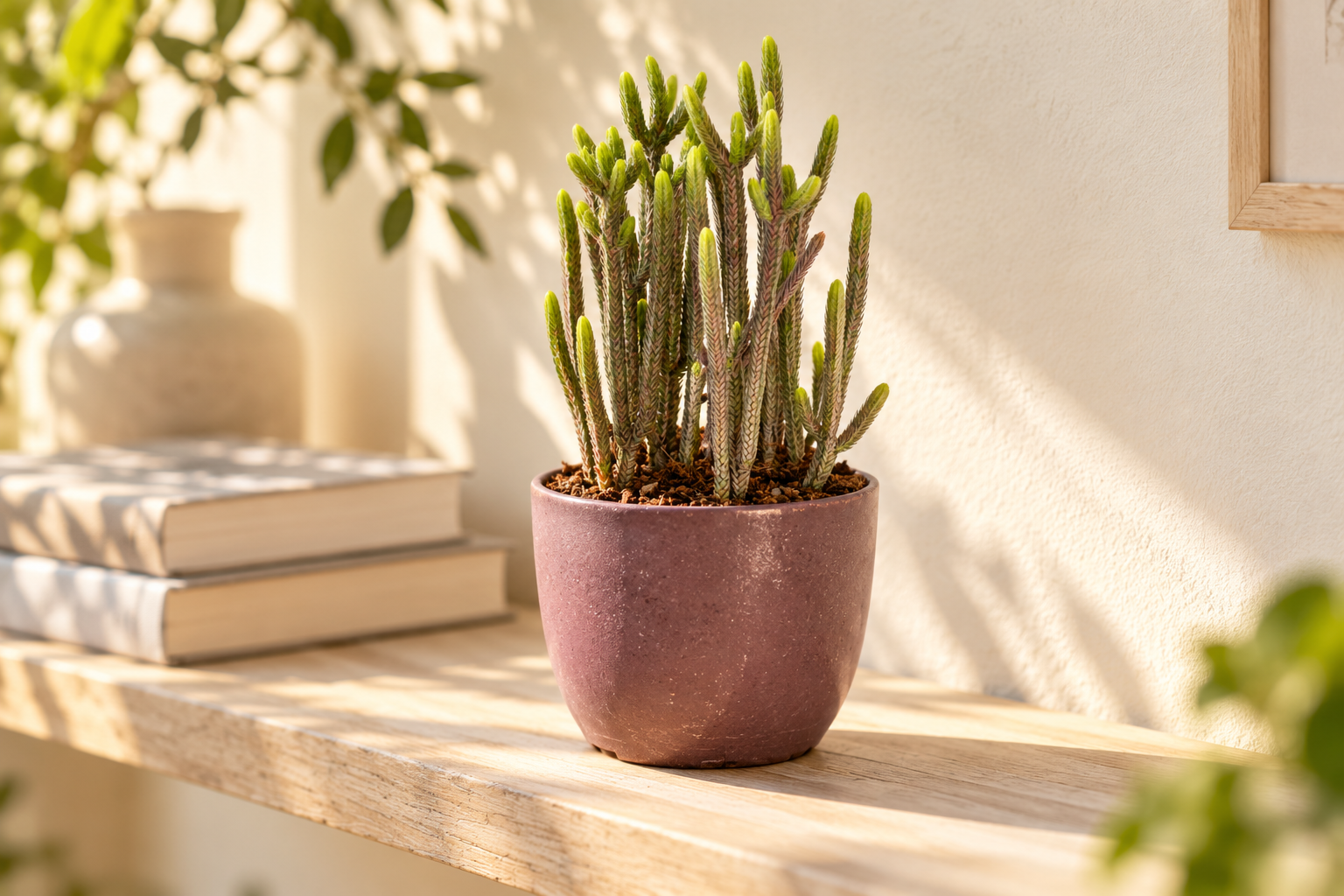
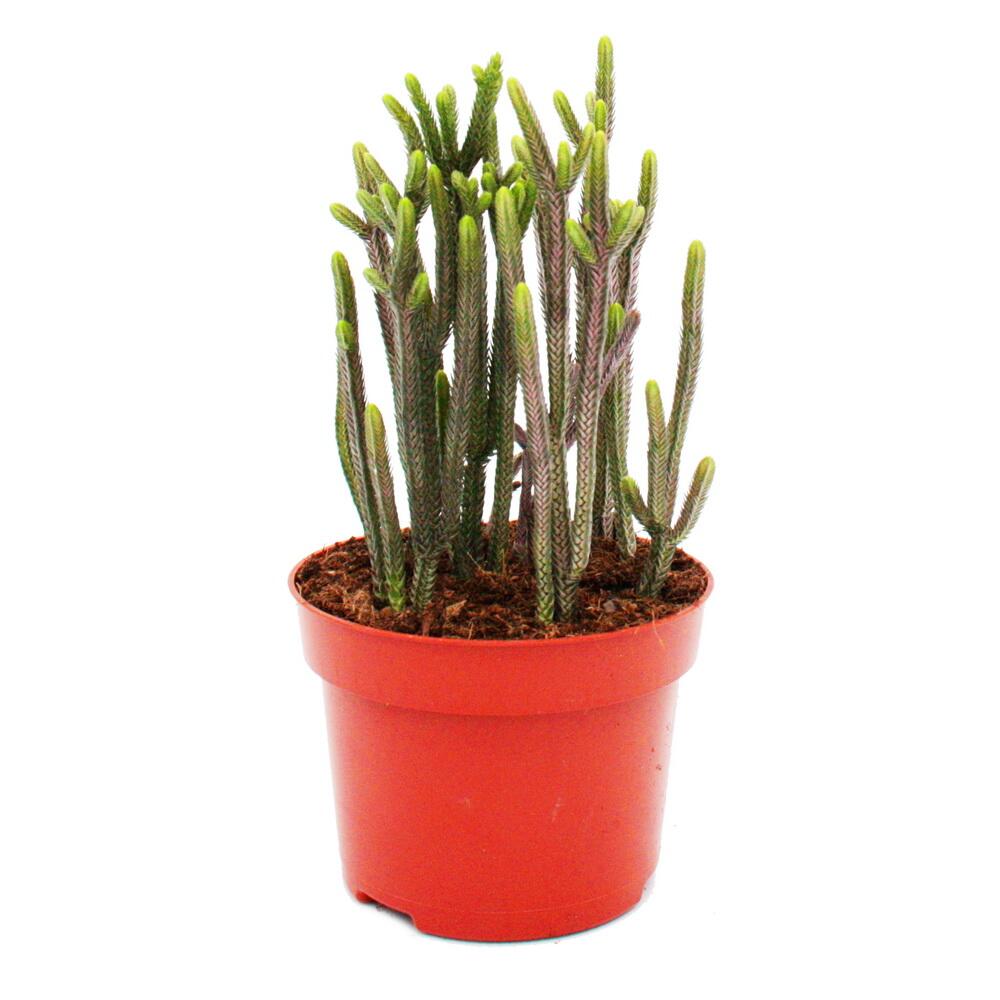
The slender upright shoots show muted grey-green and pink-grey tones in the original photograph. Fresh tips appear brighter green. Rhapsody in Pink is therefore no promise of a plant densely covered with bright pink leaves. The interplay of fine branching, restrained colour and new growth is interesting. The shop names Crassula lycopodioides as its botanical reference. This older species name is now assigned to Crassula muscosa. The specific trade form remains recognisable through its own name and shown surface without turning it into an independently confirmed wild species.
Protect the slender structure on arrival
The offer describes a ten-centimetre pot and approximate age of two to three years. No overall height is quantified. Carry the plant by its container and release packaging from the thin branches rather than clasping them firmly together. A small stable container and bright reachable position help the first root-ball check. Individual shoot height may change later. A picture with a huge cover pot would explain this small starting size poorly. We therefore keep the fine structure and actual assortment proportions central.
Observe colour without forcing stress
A very bright growing position supports the succulent form. Introduce stronger sun gradually. There is no need to cause strong drought stress or cold nights to force more pink. Assess actual colour alongside new tips and shoot condition. A dark position does not become suitable because a muted shade looks particularly decorative there. Watch hot glass surfaces and air movement too. Healthy development is a better measure than trying to hold each shoot tip permanently at exactly the shade of its name.
Check moisture rather than watering by colour
Let soil dry well between waterings. When needed, supply the little root ball evenly and then let drip. No residual water stays in an impermeable cover pot. The grey-pink shade alone does not tell how moist deeper roots are. With soft dark areas, check root ball and drainage before watering again. Warm bright days can create different needs from low-light winter. Constant small top-ups or deliberately prolonged drying are no reliable ways to preserve the desired colour.
An airy mix supports fine branches
Choose free-draining succulent substrate with structural components. Plan repotting according to root needs and keep the increase moderate so unrooted soil does not remain wet long. During healthy growth, feed sparingly according to a suitable fertiliser label. Individual overlong or damaged shoots can be shortened cleanly without rebuilding the whole plant in one step. Examine the dense base for dead parts and new conspicuous accumulations. An older dry area does not freshen with extra fertiliser. What matters is whether the next green tips keep growing healthily.
Winter rest makes small changes visible
A bright frost-free winter position and smaller waterings according to use suit slower development. Keep away from direct heating warmth and cold draughts. The name Rhapsody in Pink is not read as an exact temperature or colour promise. In the plant book, a detail photo under the same light alongside a whole-plant picture is useful. It makes a real change easier to distinguish from different lighting. Record position changes too. New shoot tips, branching and subtle colour remain an observed yearly progression instead of becoming a continuously forced decorative ideal.
One plant, several views

Good to know
Is it a Sansevieria?
No. The checked offer is a Crassula trade form.
Must the entire plant be bright pink?
The original photograph shows muted tones and green tips, not a fixed strong pink colour.
How tall is it according to the offer?
No overall height is quantified; the stated pot diameter is ten centimetres.
Can I force more colour with drought stress?
Care follows healthy development and root-ball condition, not forced stress.
Why take pictures in the same light?
Different light can strongly change the restrained tones.
Sources and editorial note
- Exotenherz: offer and original images (03.10.2026)
- RHS – Cacti and succulents, light and free-draining root space (03.10.2026)
- RHS – Crassula muscosa and synonym lycopodioides (03.10.2026)
Shop offer, article number, GTIN, availability and original images checked directly on 02.10.2026; specialist acceptance 03.10.2026. Specialist sources read directly. SKU, original images, dimensions and orderability checked directly in the shop on 03.10.2026. Relevant specialist sections read directly; trade names and species references distinguished. No Wawi, server or tool changes. Currently not orderable: knowledge portrait without purchase link; social drafts not approved for sending.