This plant at Exotenherz
Check the shop offer for current availability, price and what is included.
Check the shop for the price, current availability and what is included.
Your care table
| Topic | What to do | Why it helps |
|---|---|---|
| Light | Place very brightly and gradually acclimatise to sun. | Sudden strong radiation can damage the surface. |
| Water | Let compost dry well between waterings. | The cactus stores water in its stems. |
| Watering method | Water directly onto compost and drain excess. | Folds and roots should not remain constantly wet. |
| Compost | Cultivate free-draining with mineral structure. | Airy spaces ease drying. |
| Winter | Bright and frost-free; very sparing water in cool conditions. | Wetness and cold together are particularly stressful. |
| Bloom | Do not rub or treat with shine products. | The natural wax layer is sensitive. |
| Repotting | Enlarge moderately and keep fans free from pressure. | Pressure marks remain visible on older plant parts. |
| Inspection | Check folds for mealybugs and soft spots. | Dense crested surfaces may hide problems. |
Check the compost and pot weight. The care table explains how far the compost may dry.
Water only when needed. The water should reach the root ball without spilling over the rim.
Remove surplus water from the saucer or cachepot. Then return the plant to a suitable position.
A widened growth point creates the crest
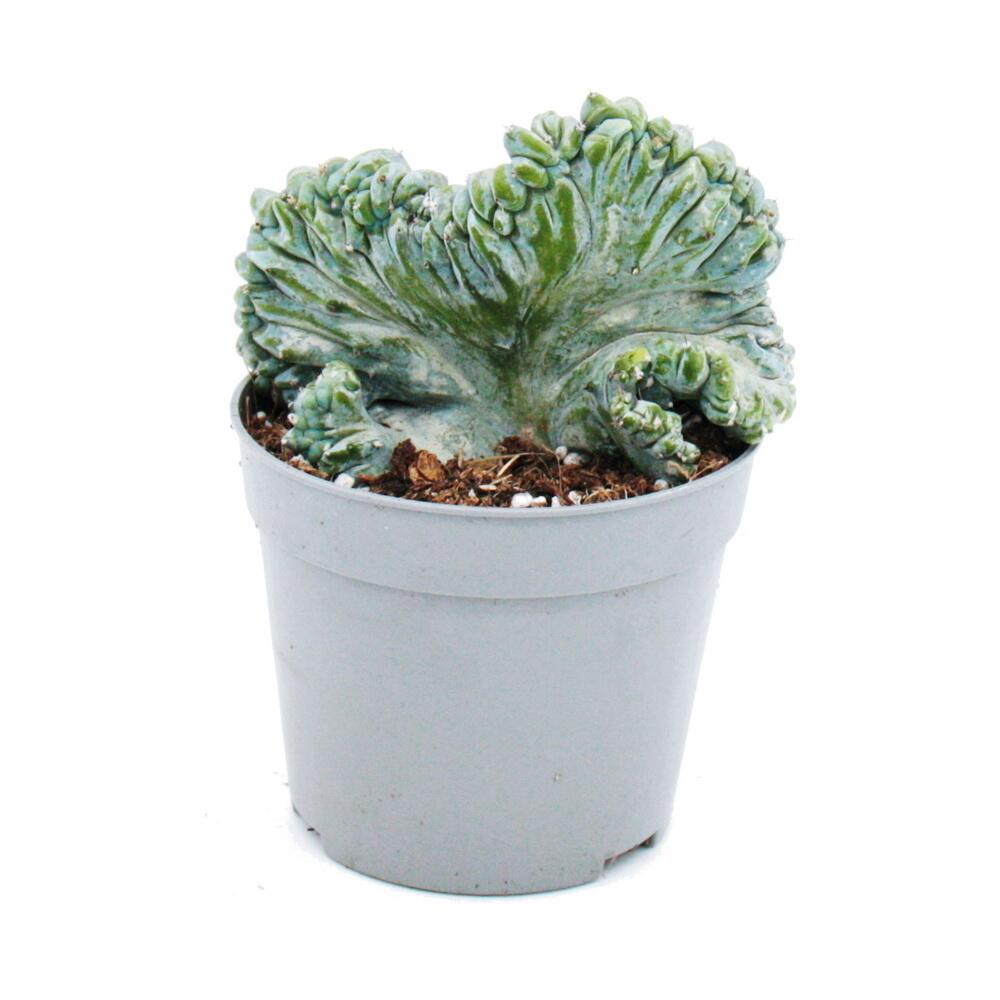
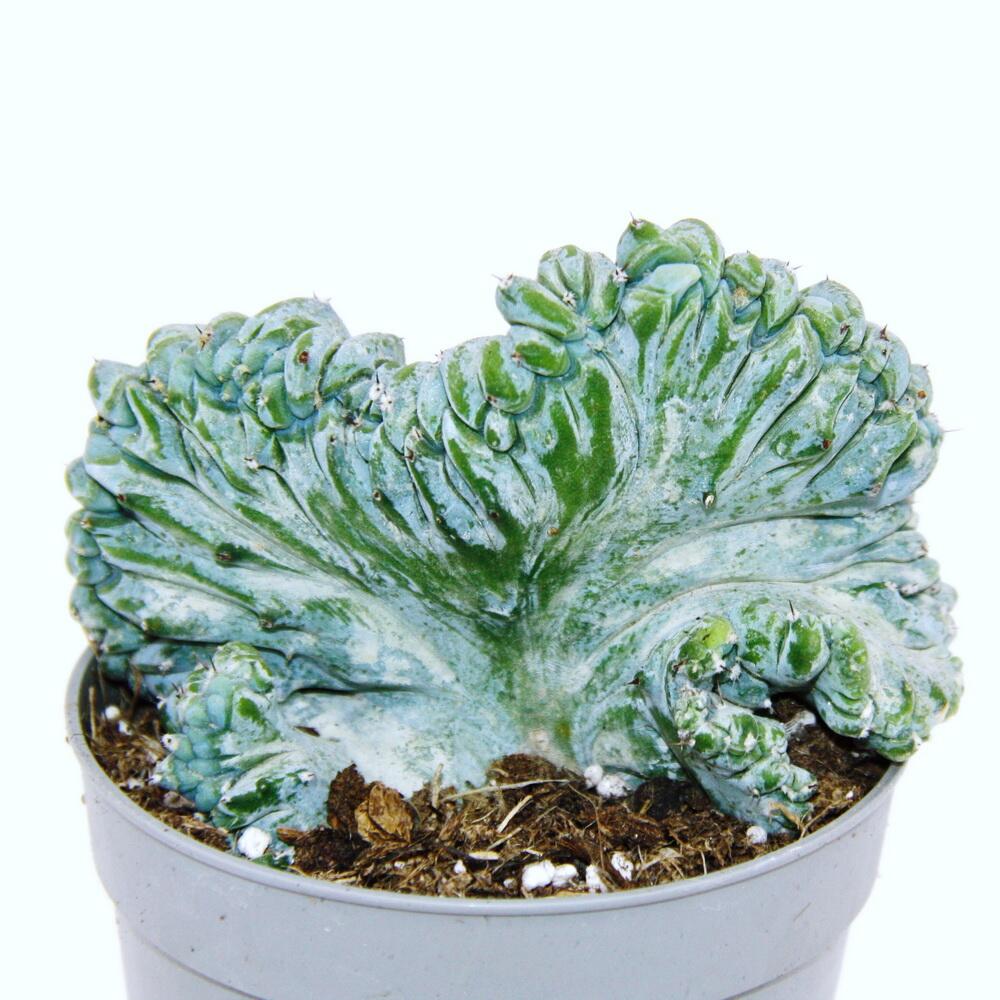
Myrtillocactus geometrizans normally grows in columns. In the crested form, growth follows a widened zone and forms wavy fans. Exact lines vary between plants. Cristata therefore does not promise every specimen the photograph’s silhouette. Nor is this form equated with every other unusually shaped variety of the genus. The underlying species comes from Mexico and belongs to the cacti.
The small crest remains appropriately sized in the image
A 6.5 cm pot and approximately 8 to 10 cm total height are offered. The scene accordingly shows a compact young crested form. It is no large floor sculpture and is not artificially placed on an unrelated tall stem. Natural blue-green and a pale wax layer belong to the surface; strong artificial blue does not. Furnishings show a living-space example. Form, fold number and small scars may vary in living plants.
Gently preserve the pale bloom
Choose a very bright position and slowly acclimatise to direct sun. Do not put immediately in hot midday sun after shipping. Touch may rub off natural waxy bloom, which does not simply renew at once on old areas. Do not polish, treat with leaf shine or regularly handle. Hold the pot when moving. A permanent position deep in a dark room favours unsuitable thinner fresh growth rather than preserving compact character.
Water should reach the root ball then leave
Water only once compost has dried well. During active growth, water the root ball deliberately and drain excess completely. Crest folds should not stay wet unnecessarily long. A closed decorative pot therefore needs a removable plant with drainage. Water markedly less in cooler low-light winter and keep frost-free. The small pot reacts faster to cold and wet than a large established specimen in a warm native region.
Repot without pressing the fans
A free-draining mineral-structured cactus mix supports healthy roots. Repot only when needed into a moderately larger container. Use suitable protection and do not firmly press tongs into sensitive crested surfaces. Feed sparingly during active growth according to the label; continual excess nutrients are unnecessary. An ordinary straight side shoot may occasionally occur. Before cutting, check whether removal is actually necessary and how to handle safely.
Flowers are possible, not a fruit delivery
The genus name refers to the species’ berry-like fruits. This does not imply a guaranteed harvest on this young crest. Flowers and fruit on the offered ornamental plant depend on age and cultivation conditions. Inspect protected folds for mealybugs and unusual soft discolouration. Assess dry firm scars differently from spreading soft areas. Propagation and major corrective cuts on crested forms require experience; for everyday care, undisturbed healthy growth is a more sensible goal.
One plant, several views
Good to know
Why does my plant differ from the photograph?
Crests grow individually. Fold number, width and pattern differ slightly in every specimen.
Is the blue colour sprayed on?
This portrait describes natural blue-green bloom. Artificially strong blue colour is not shown.
Can I soon harvest bilberries?
No. The name refers to fruits of the cactus species, not a harvest promise for the young crest.
How large is the offered plant?
A 6.5 cm pot and approximately 8 to 10 cm total height are stated.
Sources and editorial note
- Product and delivery contents: Exotenherz
- Giromagi cactus nursery: botanical form description
- Royal Horticultural Society: plant and care knowledge
Sources checked: 15 September 2026. Product information and delivery contents follow the linked shop offer. Care has been checked against the stated specialist sources and remains subject to plant condition, position and season.