This plant at Exotenherz
Check the shop offer for current availability, price and what is included.
Product and delivery details are given in the individual offer.
Your care table
| Topic | What to do | Why it helps |
|---|---|---|
| Unpacking | Check pieces and their moisture before arranging. | Shape and size vary; the actual pieces determine the display. |
| Position | Sheltered, without hot direct sun or dry heating airflow. | General moss cultivation follows moist, often shaded conditions. |
| Moisture check | Gently check cushion edge and supporting surface together. | A drier-looking top does not prove that water is missing below. |
| Moistening | Carefully add small amounts of water when needed. | Pieces should remain evenly slightly moist without floating in water. |
| Support | Prepare a moist contact surface and place cushions loosely. | Hard pressing damages the fine visible structure. |
| Glass and air | Open and observe if strong condensation persists or the base is completely wet. | Closed containers lose water more slowly than open bowls. |
| Nutrients | Use no additional fertiliser for initial setup. | An unidentified moss group receives no unverified species-specific feeding plan. |
| Checks | Check unusual areas and the support; gently release loose remains. | Brown colour alone explains neither cause nor later development. |
| Season | Check moisture again after moving and near heating. | Actual evaporation matters more than a fixed watering calendar. |
Check the compost and pot weight. The care table explains how far the compost may dry.
Water only when needed. The water should reach the root ball without spilling over the rim.
Remove surplus water from the saucer or cachepot. Then return the plant to a suitable position.
Look closely at the small green hills
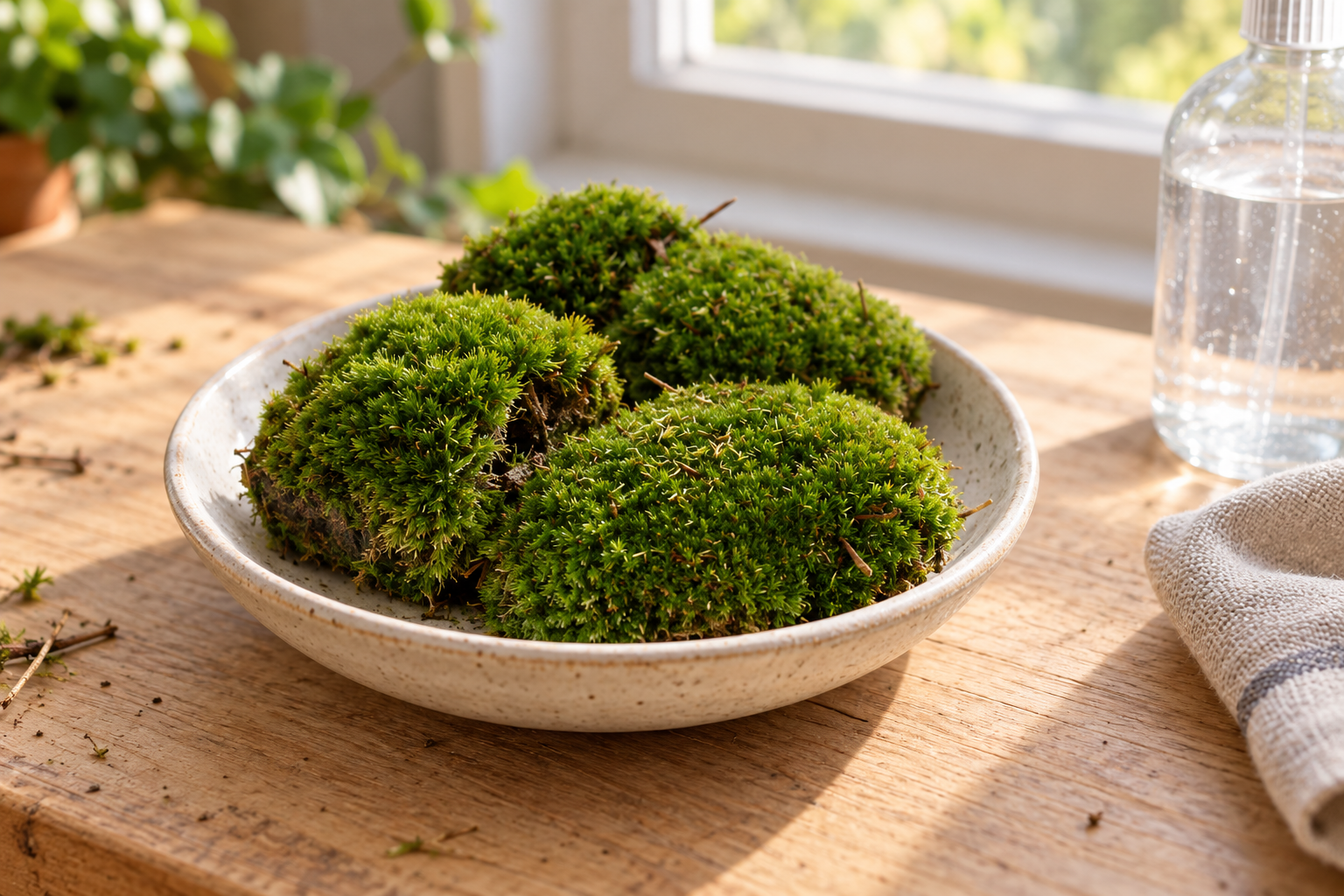
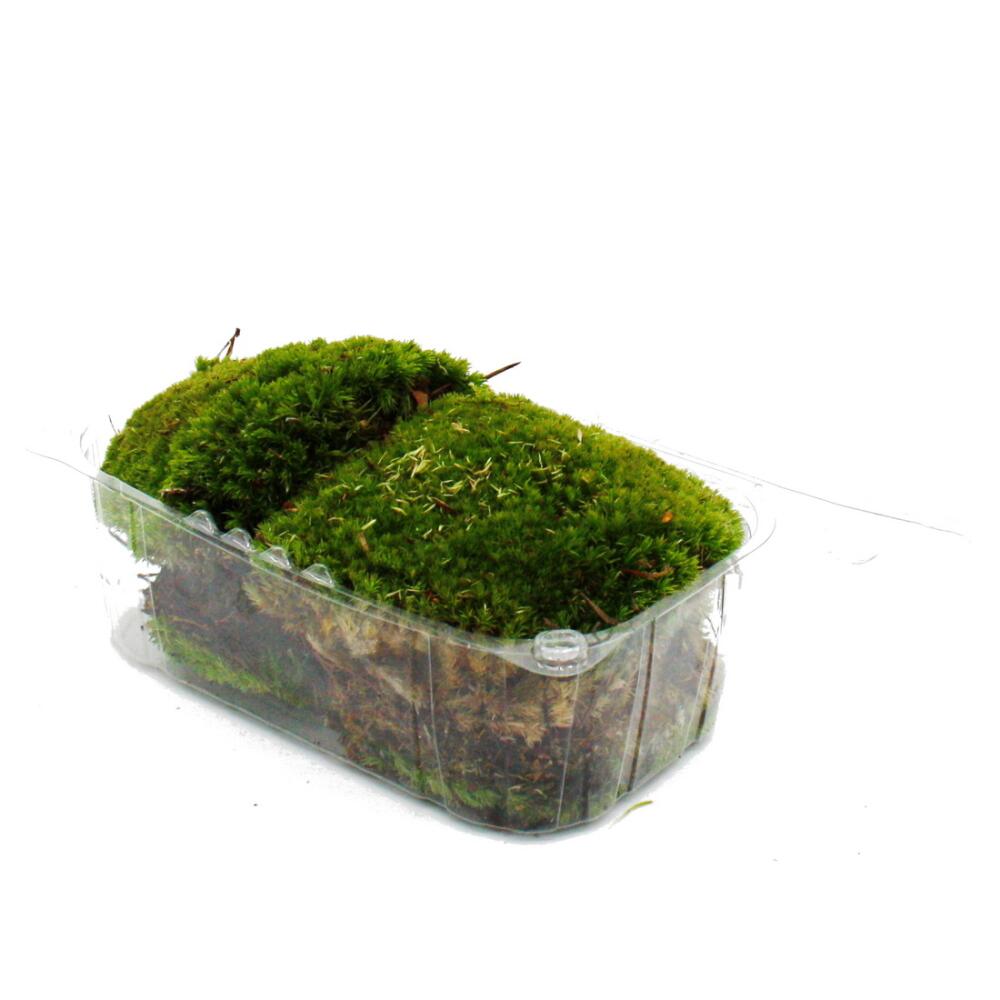
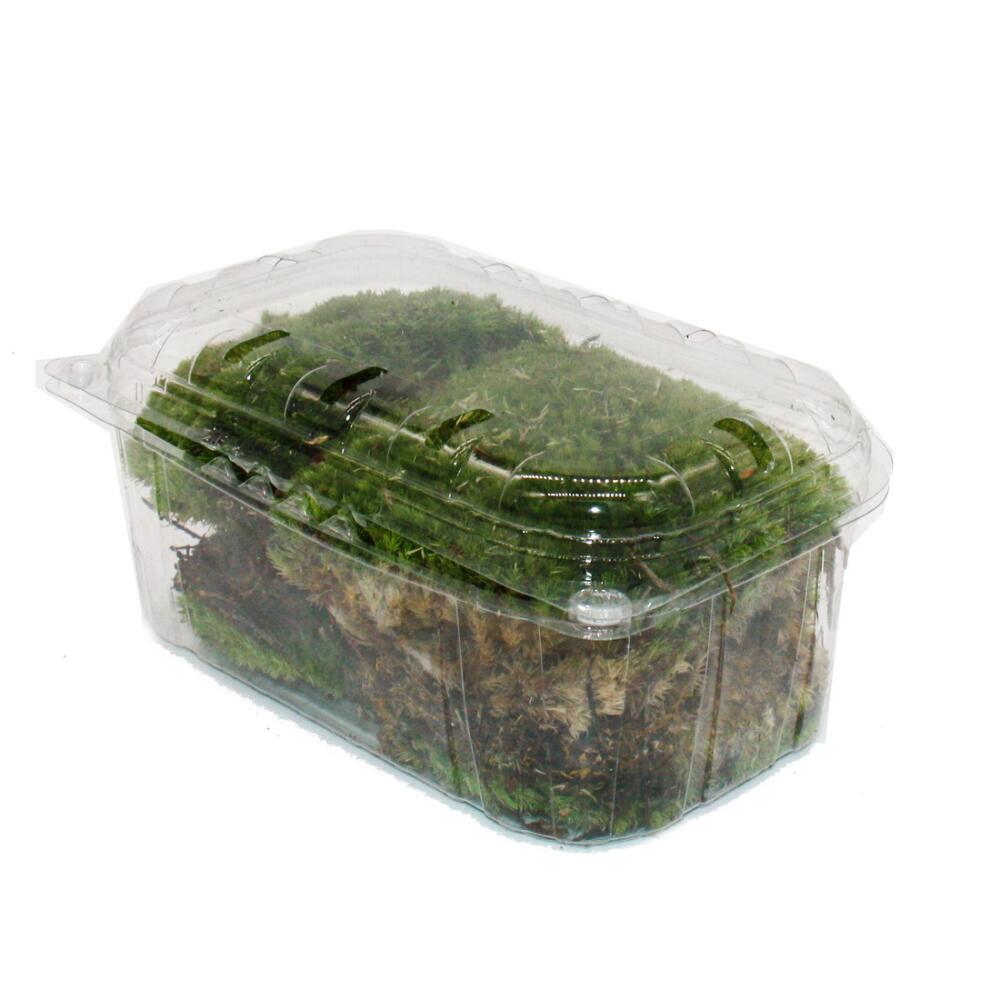
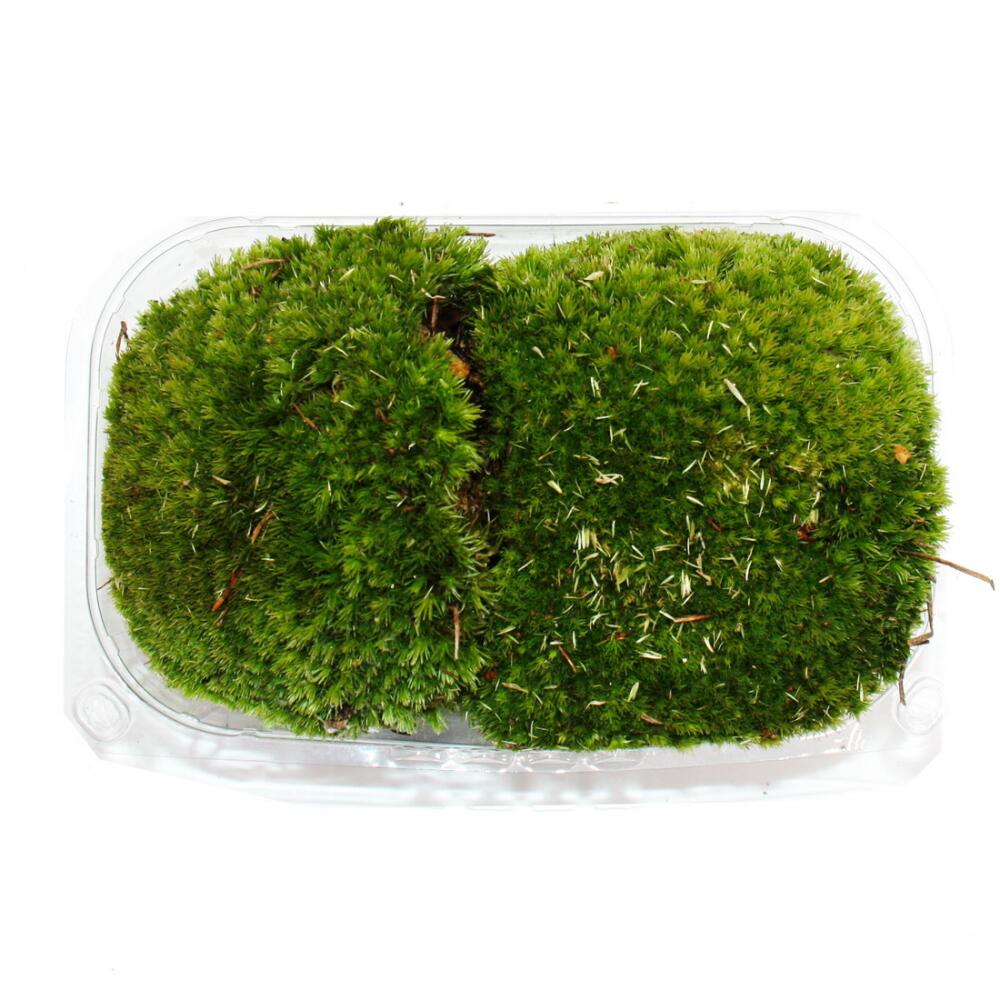
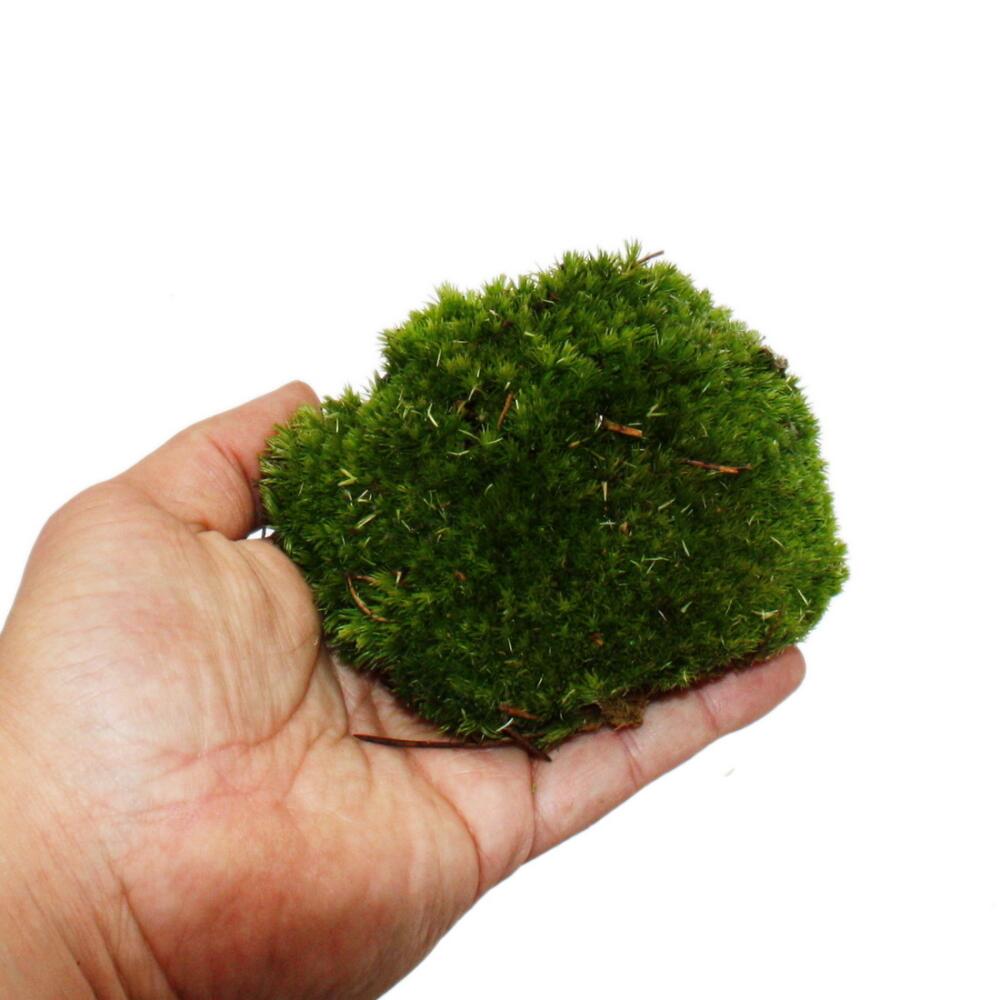
Cushion moss looks like a green miniature landscape, but its structure only becomes clear close up. Many tiny leaves stand densely together, forming rounded cushions of uneven sizes. In the shop originals, darker areas alternate with yellow-green patches, with occasional fine twig remains between them. The pieces are not a set of evenly stamped hemispheres. Their irregular edges make a small bowl look more natural when arranged slightly apart. A shallow, pale ceramic bowl highlights structure without tall container walls blocking the view. In the AI image, bowl, table and accessories provide a design idea and are not additional contents of the offered moss box.
Keep trade names and packaging size separate
The shop offer names Kugelmoos, Bollenmoos, Weißmoos and Ballenmoos. These terms describe dense cushion material here, not a reliably identified wild species. Similar moss forms cannot reliably be identified to species from a photograph alone. The shop describes material as fresh and untreated and lists planted bowls, glass containers and moist terrariums as uses. The approximately twenty by twelve by twelve centimetres refer to the outer box. The title’s approximately thirty cubic centimetres is not a confirmed fill volume and is not converted into another quantity. Plan the display according to the actual pieces, their thickness and open areas in the container; packaging gives no plant height.
A moist position can still be easy to observe
For a first display, a small, clearly visible area helps. Mosses are generally associated with moist, often shaded habitats. Indoors this means shelter from hot direct sun and dry heating or ventilation airflow. A bottle garden behind strongly sunlit glass can heat up even if the moss was previously moist. Do not therefore place such a container in hot window sun without thought. In a bright position with subdued light, surfaces are easier to check. A closed display initially needs observation: persistent strong condensation, dripping walls and a thoroughly saturated base differ from a merely slightly moist cushion.
Check moisture in the cushion and add water carefully
Mosses do not form ordinary root balls like potted flowering plants. Their fine anchoring organs are called rhizoids; care centres on the moss and its immediate support. Gently feel an accessible edge and also check underneath. The surface of an open bowl may look drier while plenty of water remains below. When a piece becomes drier, add water carefully in small amounts until the material is evenly slightly moist again. A fine spray can wet the surface but does not replace looking at the support. Do not submerge cushions as floating decorations or supply water by a fixed weekday. Consumption and evaporation change with container, room air and light.
Prepare the support without pressing the pieces
First place a few pieces loosely on the prepared moist surface and look from above and the side. Their undersides should make contact without compressing the dense upper structure. Larger neighbouring plants must not squash moss with a heavy pot or trunk support. In a shared planting, leave other plant bases visible and accessible so their own water supply can be checked. Remove loose twig remains only gently; the material may contain natural associated elements. It need not be washed for an immaculate appearance or separated into individual leaves. A simple initial arrangement makes it easier to see later whether moisture collects at an edge or one area dries faster.
Observation matters more than forcing a dense carpet
Strong liquid feed or constant additional watering does not automatically make a cushion prettier. As the offered material’s species remains unidentified, no feeding plan from a named woodland moss is adopted. For initial setup, work without additional fertiliser and assess moisture, lighting and ventilation carefully. If an area turns brown or the support smells unusual, first check condition and position rather than blindly increasing water. According to the shop, material kept dry may become paler or brownish. This provides no reliable promise that every dry piece will grow or turn green again after moistening. Green colour alone likewise cannot replace observing further development.
Accompany a small display through the seasons
In winter, nearby heating and dry room air can dry an open bowl faster while a closed glass still holds plenty of moisture. In summer, heating near the window becomes more important. Check more often after moving and adapt small water supplies to actual condition. Persistent dark or discoloured pieces can be gently removed without tearing neighbouring cushions apart. The offered Kugelmoos is real moss material; garden Sternmoos, by contrast, is a flowering plant, and a moss pole has a different role as climbing support. A small bowl invites close observation of surfaces and changes without assuming a fixed future carpet or a particular lifespan.
One plant, several views

Good to know
Is Kugelmoos a particular species here?
No. The offer describes an unidentified dense cushion trade group. Kugelmoos, Weißmoos and Ballenmoos do not reliably identify a Leucobryum species.
What does the box size mean?
Approximately 20 × 12 × 12 cm describes the outer packaging. It establishes neither plant height nor the size or number of individual cushions.
Can I convert the title quantity into litres?
The approximately 30 cm³ figure is not treated as confirmed fill volume. Plan according to the pieces actually delivered and ask the supplier for precise quantity planning.
How do I check water needs?
Gently check an accessible cushion edge and its support together. Add a little water when needed; do not let moss float in a deep layer of water.
Can the bowl stand in full sun?
A sheltered position without hot direct sun is sensible for initial setup. Especially behind glass, a moist display can still heat up considerably.
Will dry brown moss definitely turn green again?
This cannot be promised for this material. The shop describes changes when kept dry; these do not establish certain regeneration or new growth.
Is this the same as Sternmoos or a moss pole?
No. Garden Sternmoos is a flowering plant, while a moss pole is used as climbing support. Here the material is loose dense moss cushions for small planted displays.
Sources and editorial note
- Exotenherz: own moss box and original gallery (05.10.2026)
- Carnivorous Plant Society: Sphagnum material and dish cultivation (05.10.2026)
- US Botanic Garden: living and dried cultivation material (05.10.2026)
- BIBS: current identification limits for white mosses (05.10.2026)
- BBS: supplementary identification key for white mosses (05.10.2026)
- RHS: general moss features and cultivation conditions (05.10.2026)
Shop offer, original images and expert sources checked on 05.10.2026. Current availability in the shop.