This plant at Exotenherz
Check the shop offer for current availability, price and what is included.
Check the shop for the price, current availability and what is included.
Your care table
| Topic | What to do | Why it helps |
|---|---|---|
| Light | Bright year-round, protected from strong sun in summer. | Narrow leaves need light without overheating. |
| Water | Regularly during growth, after slight drying. | Bark mix and roots should not remain constantly wet. |
| Draining | Allow complete drainage after watering or soaking. | Standing water threatens fleshy roots. |
| Temperature | Grow rather cool; often around 10–14 °C in winter. | Many common hybrids dislike constant heated-room warmth. |
| Summer | After acclimatisation, place outdoors sheltered and bring back before cold. | Milder days and cooler nights support buds. |
| Substrate | Structurally stable bark-based orchid substrate. | Compacted decomposed mix loses air pores. |
| Fertiliser | Feed active plants moderately with orchid fertiliser. | Avoid salt accumulation and overfeeding. |
| After flowering | Cut the faded spike and retain healthy foliage. | The plant gathers reserves for further development. |
Check the compost and pot weight. The care table explains how far the compost may dry.
Water only when needed. The water should reach the root ball without spilling over the rim.
Remove surplus water from the saucer or cachepot. Then return the plant to a suitable position.
An orchid with storage shoots and narrow foliage
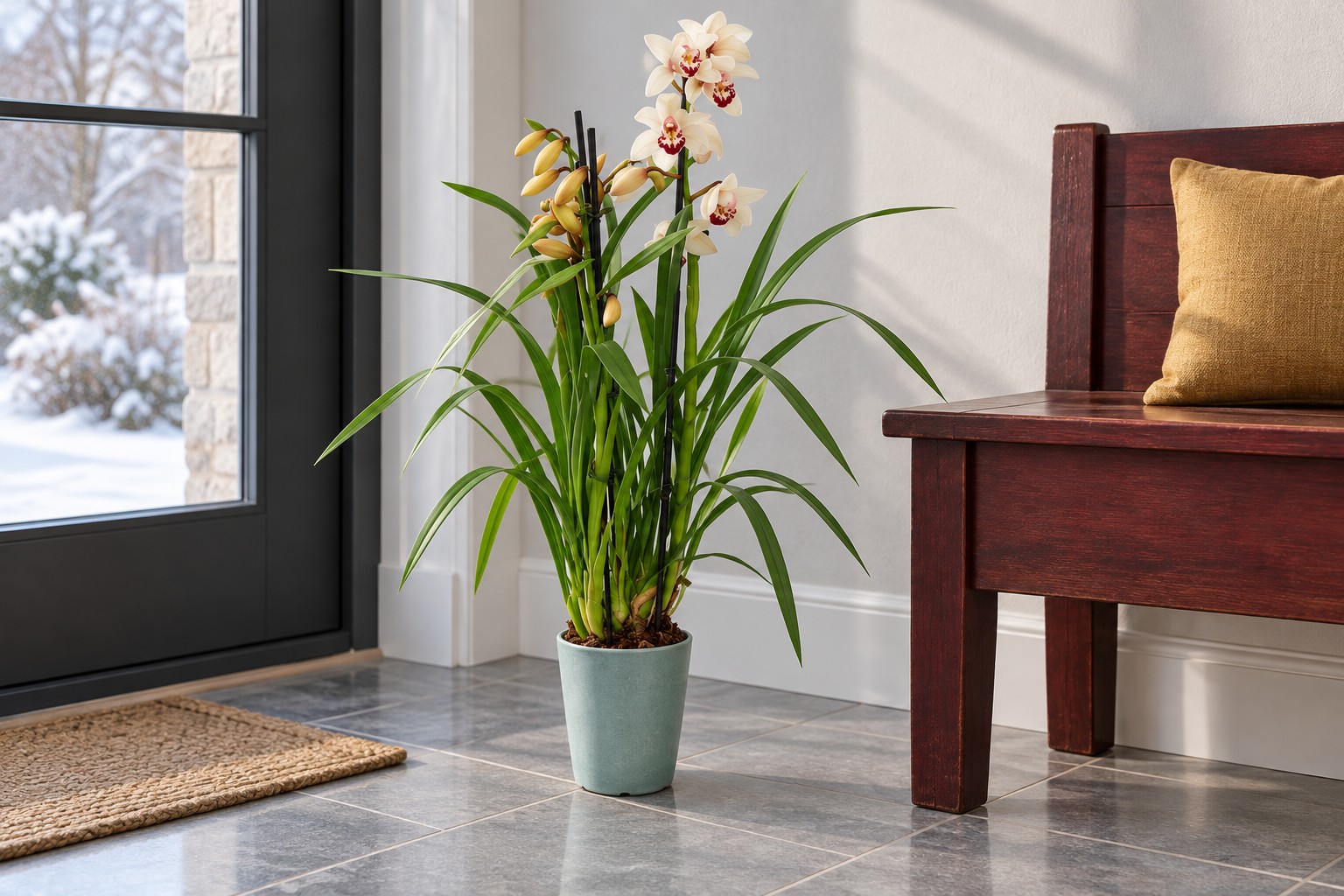
Cymbidiums form dense tufts of long narrow leaves. At their bases sit thickened shoots known as pseudobulbs. These store reserves for growth and flowering and are not treated like flower bulbs. Flowers stand on their own spikes, showing different colours and markings depending on the hybrid. This offer names no specific variety. The portrait therefore keeps to Cymbidium hybrids and does not turn an illustrative cream flower spike into a fixed colour guarantee for every delivery.
One plant from a selection of colours
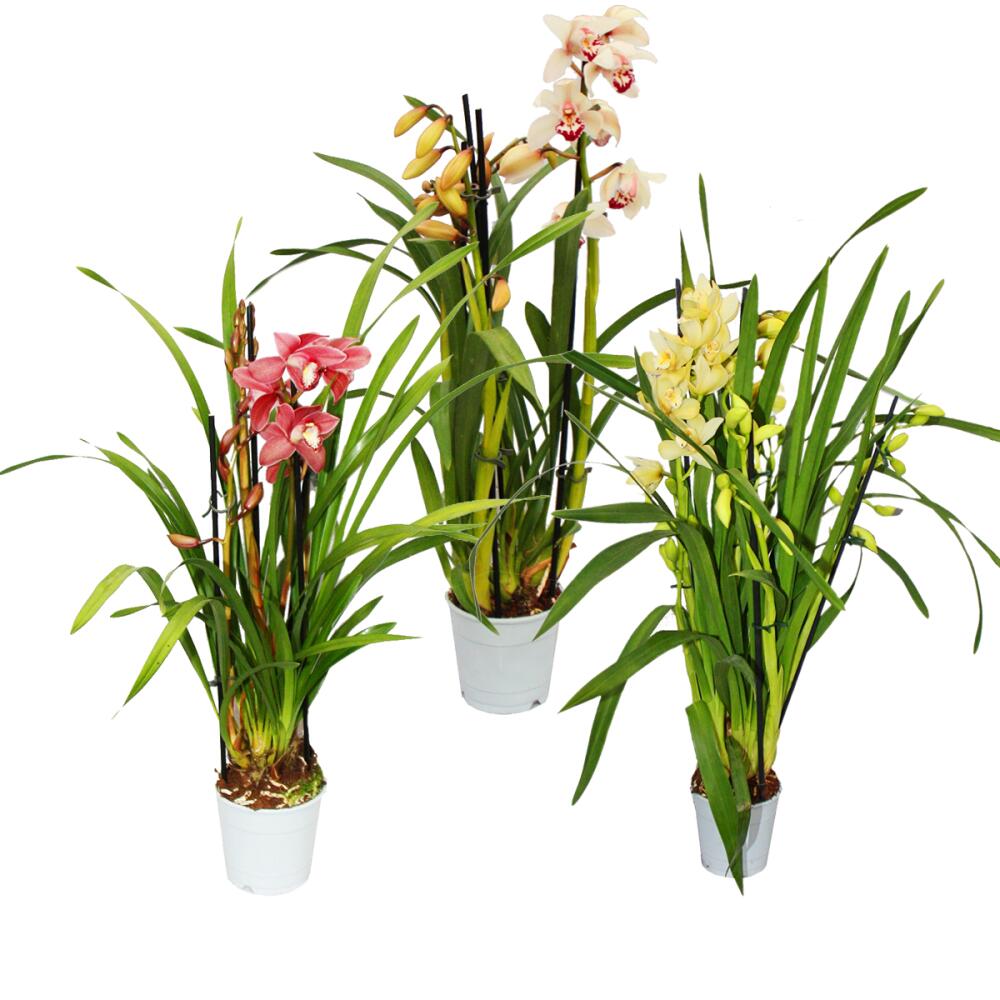
A 12 cm pot and approximately 60 to 80 cm overall height are specified. The original shop image shows several different colour forms, but the offer describes one plant. The scene therefore contains a single specimen. Narrow leaves can spread far sideways. A bright cool conservatory, well-lit stairwell or lightly heated room often offers more suitable space than a narrow windowsill. Tall flower spikes need a stable position and careful support if necessary.
Cool nights belong to the annual cycle
Cymbidiums need plenty of light throughout the year, but protection from sharp midday sun in summer. Many common hybrids can be grown well between approximately 10 and 24 °C. A sheltered summer outdoor stay with milder days and cooler nights can encourage bud formation. Acclimatise the plant slowly to its outdoor position and bring it back before cold nights. In winter, approximately 10 to 14 °C is often better than constant heating warmth. A specific variety recommendation on the plant label takes priority.
Assess bark pieces and roots together
Water regularly during active growth, but let the substrate dry a little before the next application. The plant must not stand permanently in water. If soaked, allow careful drainage afterwards and do not reuse the same water for multiple orchids without checking. This reduces transfer of possible pathogens. Demand falls markedly in cool winter conditions. Shrinking storage shoots can be associated with thirst but also damaged roots. With wet substrate, inspect first before watering again.
Repot and divide with new growth in mind
Cymbidiums grow in structurally stable bark-based orchid substrate. Once it becomes heavily decomposed or there is no room for the next development, after flowering is a good time to repot. Remove dead soft roots with clean tools and protect healthy roots as much as possible. Divisions need several healthy storage shoots and sufficient roots; a newly bought small specimen is not taken apart as a precaution. Feed active plants moderately with orchid fertiliser according to the label and flush occasionally with clean water so salts do not accumulate unnecessarily.
Enjoy flowers and prepare the next season
After flowering has completely finished, cut the old spike near the base. Healthy leaves and firm older storage shoots remain. A warm display position can shorten flowering; also avoid abrupt changes during bud development. When returning from the garden, check particularly for slugs and other hitchhikers, as well as aphids at leaf bases. If flowers are absent the following year, first check light, summer growth and the day-night difference. A strong plant without flowers does not automatically need more nitrogen.
One plant, several views
Good to know
Does a Cymbidium need the same warmth as a Phalaenopsis?
Many common Cymbidium hybrids prefer distinctly cooler conditions, especially at night and in winter.
Are all three plants in the shop photo included?
The photo shows different colour forms. The offer describes one plant; check specific colour and delivery contents in the shop.
Why does it produce only leaves?
Insufficient light or too small a difference between day and night temperatures may impair bud formation, among other causes.
Should I cut off old storage shoots?
Firm healthy storage shoots generally remain. They contain reserves; dead or rotten parts must be distinguished from them.
Sources and editorial note
- Product and delivery contents: Exotenherz
- Royal Horticultural Society: plant and care information
- Royal Horticultural Society: plant and care information
Sources checked: 15 September 2026. Product information and the contents of delivery follow the linked shop offer. Care advice was checked against the cited specialist sources and should still be adapted to the plant’s condition, position and season.