This plant at Exotenherz
Check the shop offer for current availability, price and what is included.
Product details, availability and delivery information are provided in the shop offer.
Your care table
| Topic | What to do | Why it helps |
|---|---|---|
| Light | Bright; gentle sunshine after acclimatisation. | Low light slows growth and water use. |
| Water | Water thoroughly after the root ball dries noticeably. | The firm leaves store reserves. |
| Drainage | Empty the outer pot after watering. | Wet roots can rot unnoticed. |
| Compost | Free-draining succulent mix. | Air in the root ball supports the roots. |
| Temperature | Warm and frost-free; avoid cold draughts. | Cold intensifies problems in wet compost. |
| Fertiliser | Sparingly during growth, following the label. | Slow growth does not require high doses. |
| Pruning | Preserve healthy leaf tips. | Cut tips do not regrow unchanged. |
| Repotting | Move to a moderately larger pot only when needed. | Too much damp compost makes monitoring difficult. |
Check the compost and pot weight. The care table explains how far the compost may dry.
Water only when needed. The water should reach the root ball without spilling over the rim.
Remove surplus water from the saucer or cachepot. Then return the plant to a suitable position.
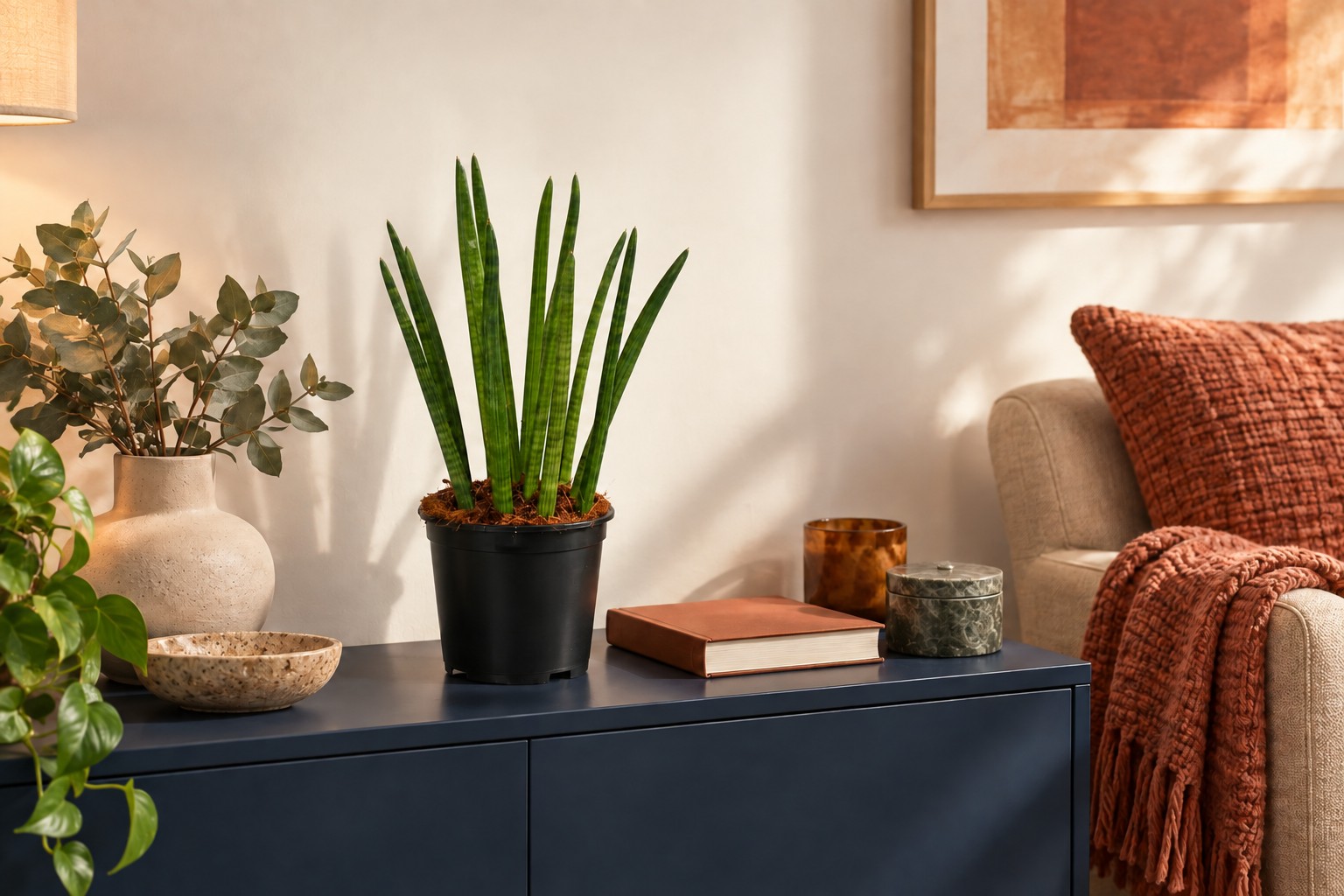
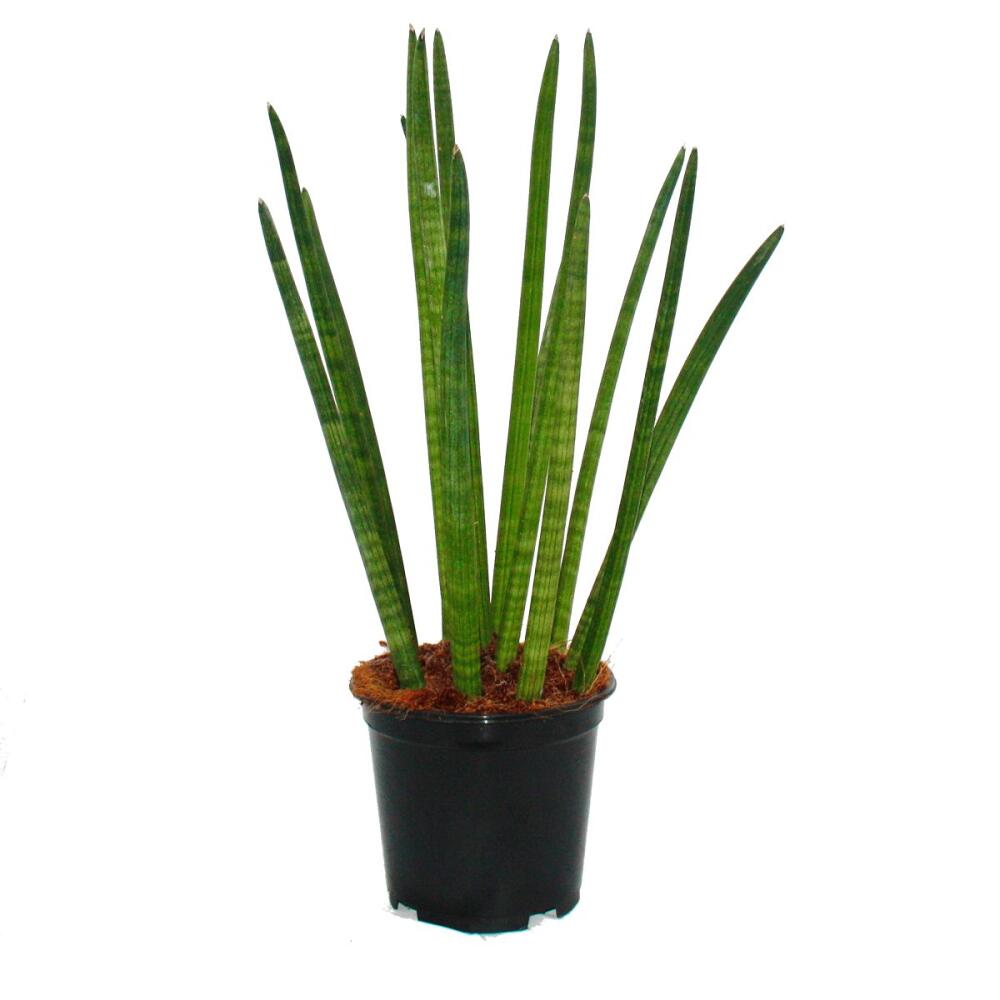
Straight leaves with a clear silhouette
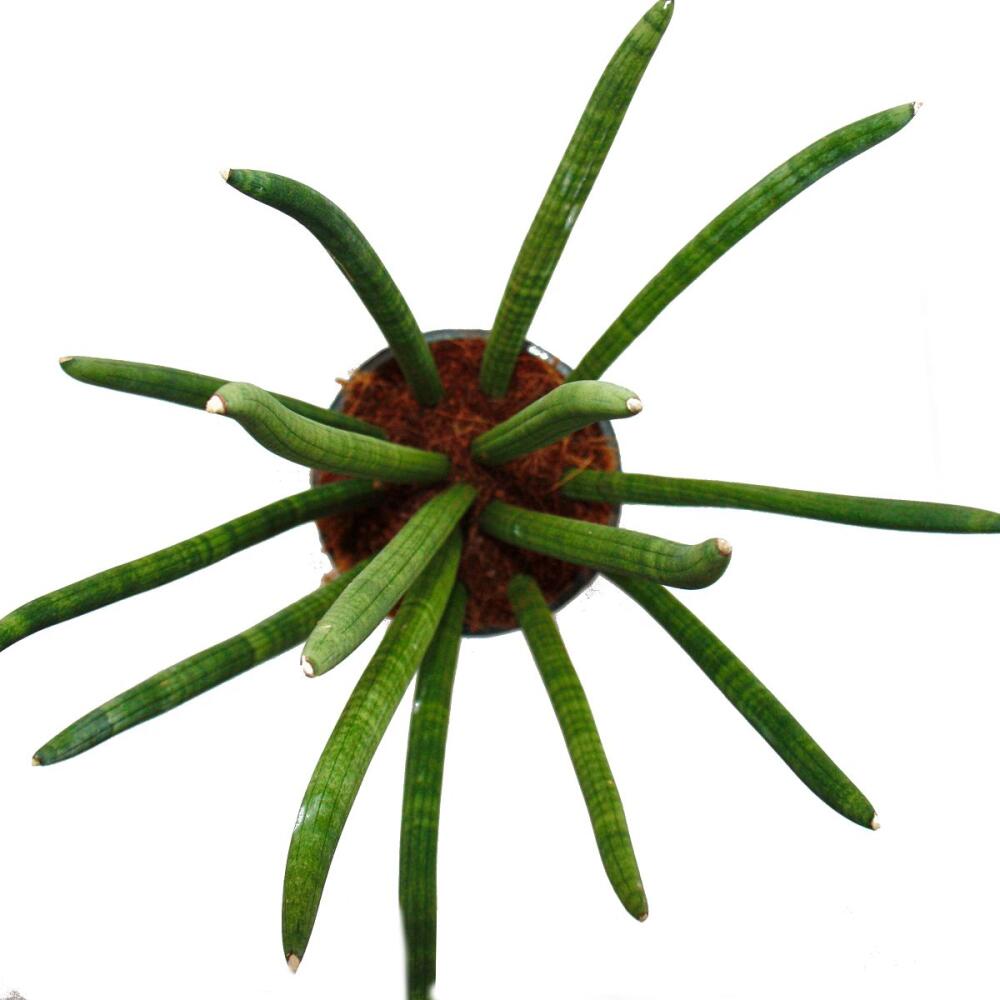
The slender green leaves stand upright and taper to a point. Fine markings and slight longitudinal grooves can be seen up close. The offer lists approximately 50 cm total height. For the pot, the title states 19 cm while the detailed information states 17 cm; this difference is noted transparently. The scene follows a medium example size. The plant remains a manageable single specimen and is not shown as a room-height snake plant.
Connecting Sansevieria and Dracaena
The familiar name Sansevieria cylindrica is now botanically classified under Dracaena angolensis. The species belongs to the Asparagaceae family. Kew lists Angola, Zambia and Zimbabwe as its natural background, not Arabia. The firm leaves store water, while underground rhizomes may produce new shoots. Rooted individual leaves are also offered in the trade. From the outside, it is not always certain whether a particular pot consists of such leaves or already connected shoots. Later new growth may stand in a fan differently from the original arrangement.
Little water does not mean little light
A bright, warm position supports healthy new growth. Gentle sun is possible after acclimatisation, but a sudden move into hot midday sun is unsuitable. In darker areas, the plant grows much more slowly and uses less water. A windowless corner is not an equivalent permanent position. In summer, it can stand sheltered outdoors but must be brought back before cool nights. Ordinary room air is enough, and frequent misting is not necessary.
Check first, then water thoroughly
Allow the root ball to dry noticeably between waterings. Also check the depth and pot weight, not just the dry top layer. Then water evenly and remove all residual water. Intervals usually become longer during the darker part of the year. Small daily amounts keep the root zone unnecessarily moist. Even firm leaves may still look good while the roots are already too wet. Check the outer pot regularly and avoid cold, wet feet.
Protect root space and leaf tips
A free-draining succulent mix and a container with a drainage hole make care easier. Repot only when the root ball is densely rooted or the compost exhausted. Strong rhizomes may be given space, but an oversized pot dries slowly. Do not trim healthy leaf tips decoratively; an individual leaf does not simply recreate its natural tip. When dividing, each piece needs a viable base of its own. Feed sparingly according to the label during growth and stop in the resting winter period.
Put slow growth into perspective
A snake plant does not need to produce new leaves constantly to be healthy. Firm leaves and a stable root collar are good signs. Yellow, soft bases, an unpleasantly wet root ball or leaves suddenly falling over require inspection. Dry creases may be mechanical damage. Remove dust carefully with a soft, slightly damp cloth without damaging the tips. Flowers are possible but rarely predictable. This portrait also does not promise measurable indoor-air purification from a single pot.
One plant, several views
Good to know
Why is Sansevieria now called Dracaena?
The botanical classification has changed. Both names lead to the same plant portrait here.
Is the pot 17 or 19 cm?
The shop measurements currently contradict one another. Both are stated visibly here.
Can the plant go in a dark corner?
A bright permanent position is better. Very low light reduces growth and increases the risk of wetness if watering remains unchanged.
Can I shorten the tips?
It is better to preserve healthy tips. A shortened leaf does not regain its original shape.
Sources and editorial note
- Product and delivery contents: Exotenherz
- Royal Botanic Gardens, Kew: botanical classification
- NC State Extension: plant profile
Source check: 16 September 2026. Product information and the contents of delivery follow the linked shop offer. Care has been checked against the cited specialist sources and must be adapted to the plant’s condition, position and season.