This plant at Exotenherz
Check the shop offer for current availability, price and what is included.
Check the shop for the price, current availability and what is included.
Your care table
| Topic | What to do | Why it helps |
|---|---|---|
| Light | Keep bright and gradually acclimatise to stronger sunshine | This supports strong leaves |
| Water | Let the root ball dry well between waterings | Fleshy leaves help bridge dry periods |
| Drainage | Remove remaining water after watering | Persistent substrate moisture damages rhizomes |
| Warmth | Keep warm, preferably above 15 °C, and frost-free | Cold and wet conditions are an unfavourable combination |
| Compost | Use free-draining succulent compost and a pot with a drainage hole | Roots need air |
| Fertiliser | During active growth, feed moderately according to the label | Fertiliser cannot replace missing light |
| Propagation | Divide a healthy daughter rosette with a piece of rhizome | This generally preserves the desired form better |
| Handling | Do not bend the leaves or eat the plant | Damage stays visible and saponins can cause discomfort |
Check the compost and pot weight. The care table explains how far the compost may dry.
Water only when needed. The water should reach the root ball without spilling over the rim.
Remove surplus water from the saucer or cachepot. Then return the plant to a suitable position.
Silvery green is a living leaf colour
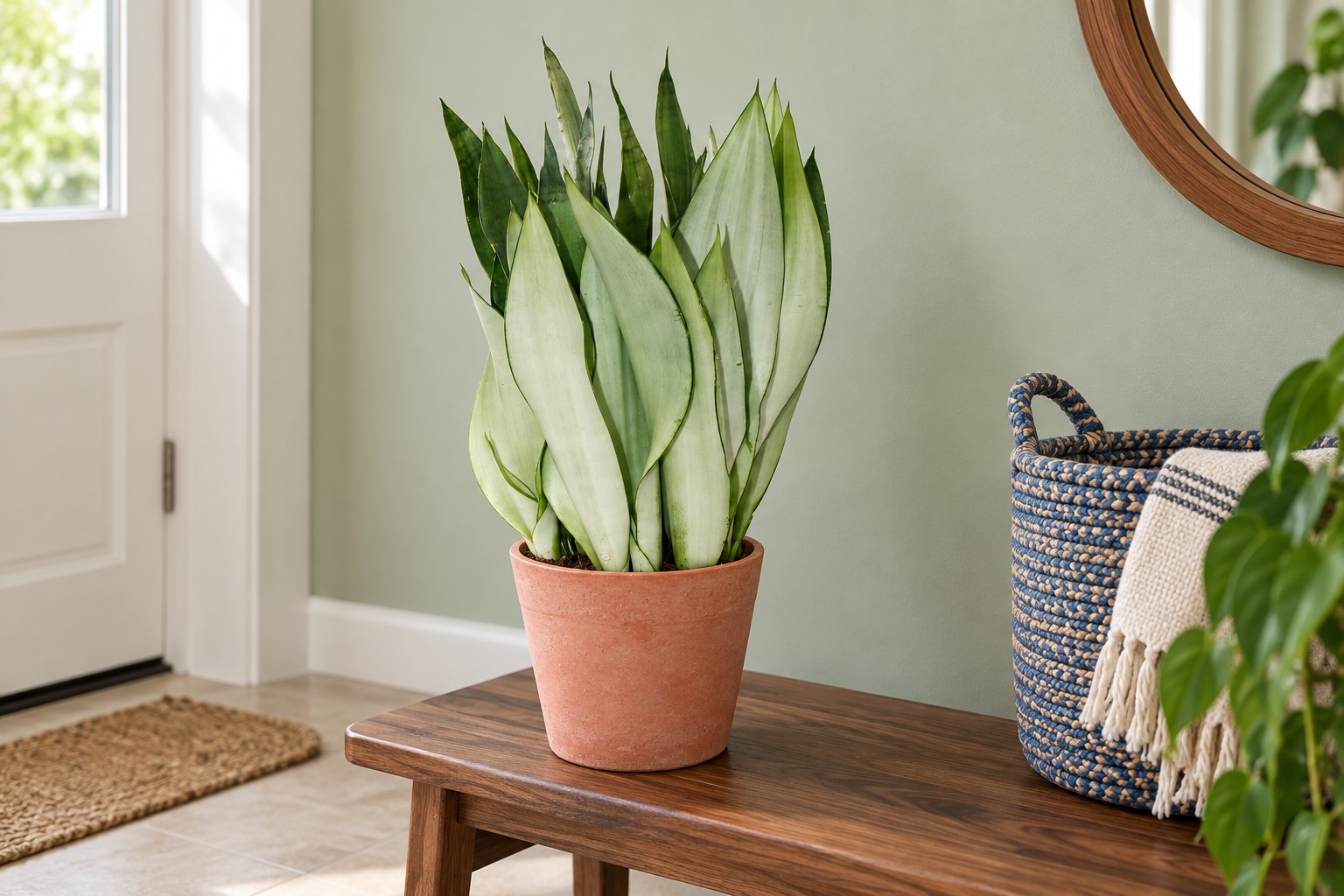
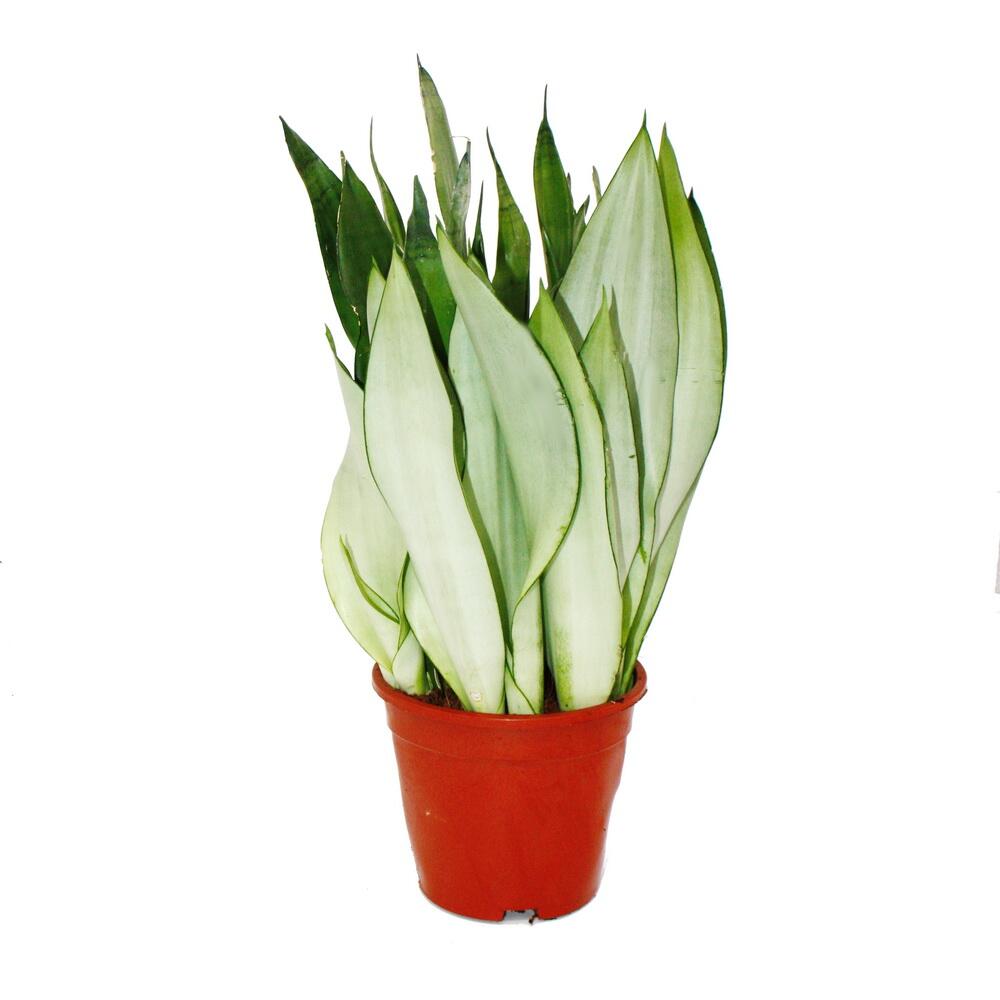
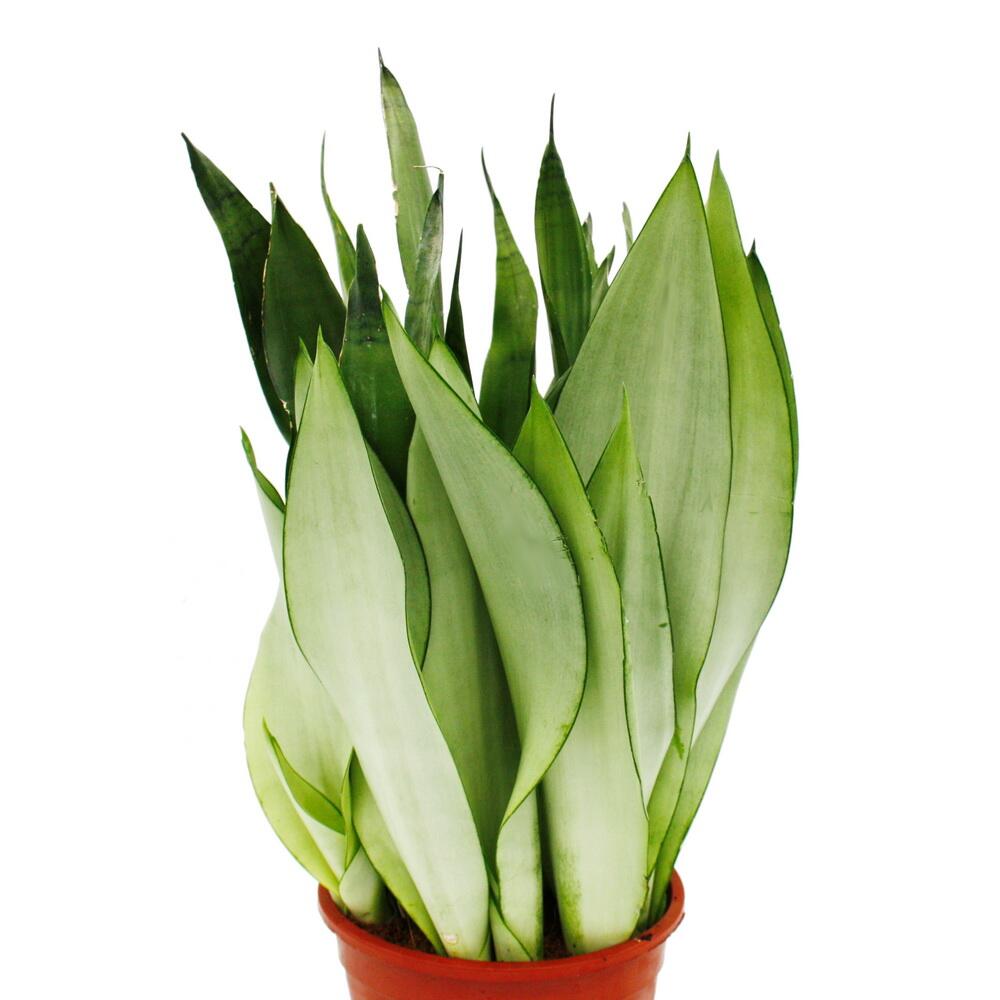
Moonshine has broad upright leaves whose pale surfaces appear silver or light green depending on the light. A narrow darker edge can emphasise the outline. Older leaves may darken; not every colour change means damage. Its botanical name is Dracaena trifasciata, although it is still often sold as Sansevieria. It belongs to the asparagus family. Contrary to an origin statement in the shop, the species comes from West and west-central Africa, not East Africa or the Arabian Peninsula.
Plan for the delivery size
This offer specifies a pot 17 cm in diameter and approximately 50 cm overall height. It therefore fits a stable low bench or a sufficiently large console. In our scene it stays correspondingly compact rather than appearing as a metre-tall specimen. The fleshy leaves are firm, but bending can damage them permanently. Lift underneath the pot when moving it. Underground rhizomes and new daughter rosettes are possible; the root system needs space over time.
A bright position supports good development
Bright daylight without sudden hot midday sunshine is a good starting point. Slightly lower light is often tolerated but slows growth. A windowless room is not a suitable permanent solution. After shaded cultivation, acclimatise gradually to sun. Normal warm indoor conditions suit it well; in winter, protect the root ball from cold windowsills and draughts. Keep above 15 °C where possible and never expose to frost. Pale leaf colour is no reason to compensate with particularly heavy feeding.
Little water means checking carefully first
Let the root ball dry well between waterings. Consider not just the surface but also pot weight and moisture slightly deeper in the compost. When needed, water the root zone evenly and let all remaining water drain away. Do not leave a reserve in the decorative pot. Avoid watering into the tightly packed leaf bases. Water use falls considerably on darker or cooler days; a fixed weekly watering date can then quickly be excessive. Misting does not replace watering the roots and is normally unnecessary here.
Repot and divide with care for the rhizomes
A free-draining succulent mix and a pot with a drainage hole make care easier. Repot only when densely rooted or when the rosettes are crowded, preferably during the growing season. A slightly larger stable container is enough. Healthy daughter rosettes can be separated with an appropriate piece of rhizome and existing roots. To retain the desired form, this is usually more reliable than a leaf cutting. Feed moderately during active growth according to the label; do not force feeding during winter dormancy.
Keep an eye on firm leaves and healthy roots
Remove dust with a soft, slightly damp cloth while supporting the leaf. Soft yellow leaf bases together with wet soil suggest a root-zone problem. Do not continue watering; check the root ball and drainage instead. Leaves may curl during prolonged drought, so establish the actual moisture condition first. Mealybugs like hiding at leaf bases. The snake plant is ornamental, not food: its saponins may cause discomfort if eaten. Measurable air purification in everyday living conditions is not promised here.
One plant, several views
Good to know
Why are the silvery leaves becoming greener?
Older leaves can naturally darken. Check the light too; extra fertiliser is not a solution for preserving the silvery shade.
Can Moonshine manage without daylight?
No. Lower light may be tolerated temporarily, but a windowless room is not a suitable permanent position.
What is the delivery size?
The offer specifies a 17 cm pot and approximately 50 cm overall height, including the pot.
Can it form new rosettes?
Yes, underground rhizomes can produce daughter rosettes. This does not mean a promise that the plant cannot spread.
Sources and editorial note
- Product and delivery contents: Exotenherz
- NC State Extension: plant profile
- Royal Horticultural Society: plant and care information
Sources checked: 15 September 2026. Product information and the contents of delivery follow the linked shop offer. Care advice was checked against the cited specialist sources and should still be adapted to the plant’s condition, position and season.