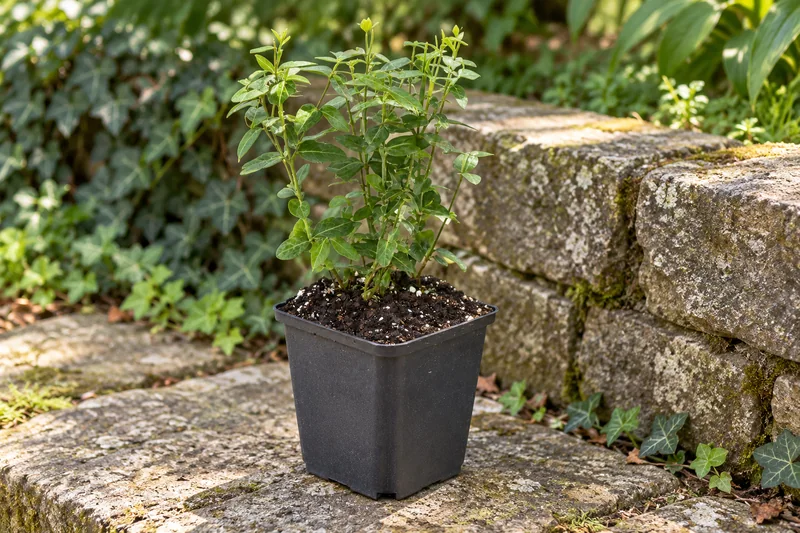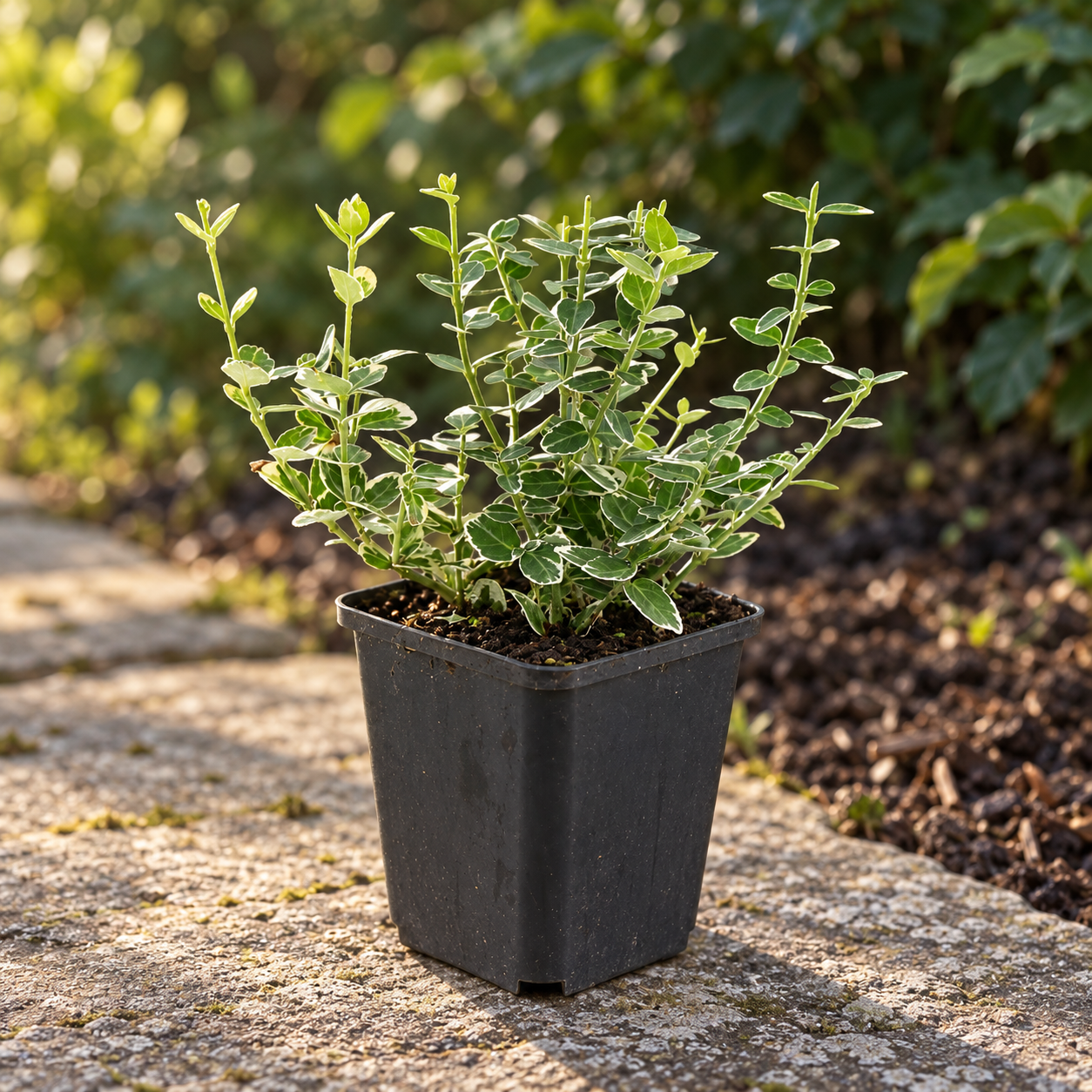
This plant at Exotenherz
Check the shop offer for current availability, price and what is included.
Check the shop for the current price, availability and offer contents.
Your care table
| Topic | What to do | Why it helps |
|---|---|---|
| Position | Sun or bright partial shade with suitable soil moisture. | The pale pattern and little rootball need good provision. |
| Arrival | Check the rootball and gently remove the pot. | Fine branches must not carry the weight of root soil. |
| Soil | Prepare moisture-retentive well-drained soil. | Persistently wet or dust-dry roots complicate establishment. |
| Planting | Set at the existing rootball level and slowly water in. | Water and soil contact support new roots. |
| Spacing | 30–40 cm group guidance, accounting for later width and edges. | A little pot does not describe an older shrub’s space needs. |
| Water | Check directly at the rootball during establishment; continue container checks. | Older drought tolerance does not replace a good water start. |
| Nutrition | Feed sparingly as needed in good beds; container feed by label. | More feed cannot solve damaged roots or unsuitable position. |
| Pruning | Shape individual branches; remove green reversions at their origin. | Healthy margins look better than sheared leaves. |
| Winter and handling | Protect containers, continue frost-free rootball checks, wear gloves. | Evergreen foliage and exposed roots need winter attention. |
For young plants, feel the soil directly at the root ball. The surface and deeper soil may have different moisture levels.
Water thoroughly after planting; later, water according to the soil, weather and establishment rather than a fixed calendar.
Avoid standing water. For plants in containers, also check that water runs out of the drainage hole.
White belongs to the leaf, not a flower
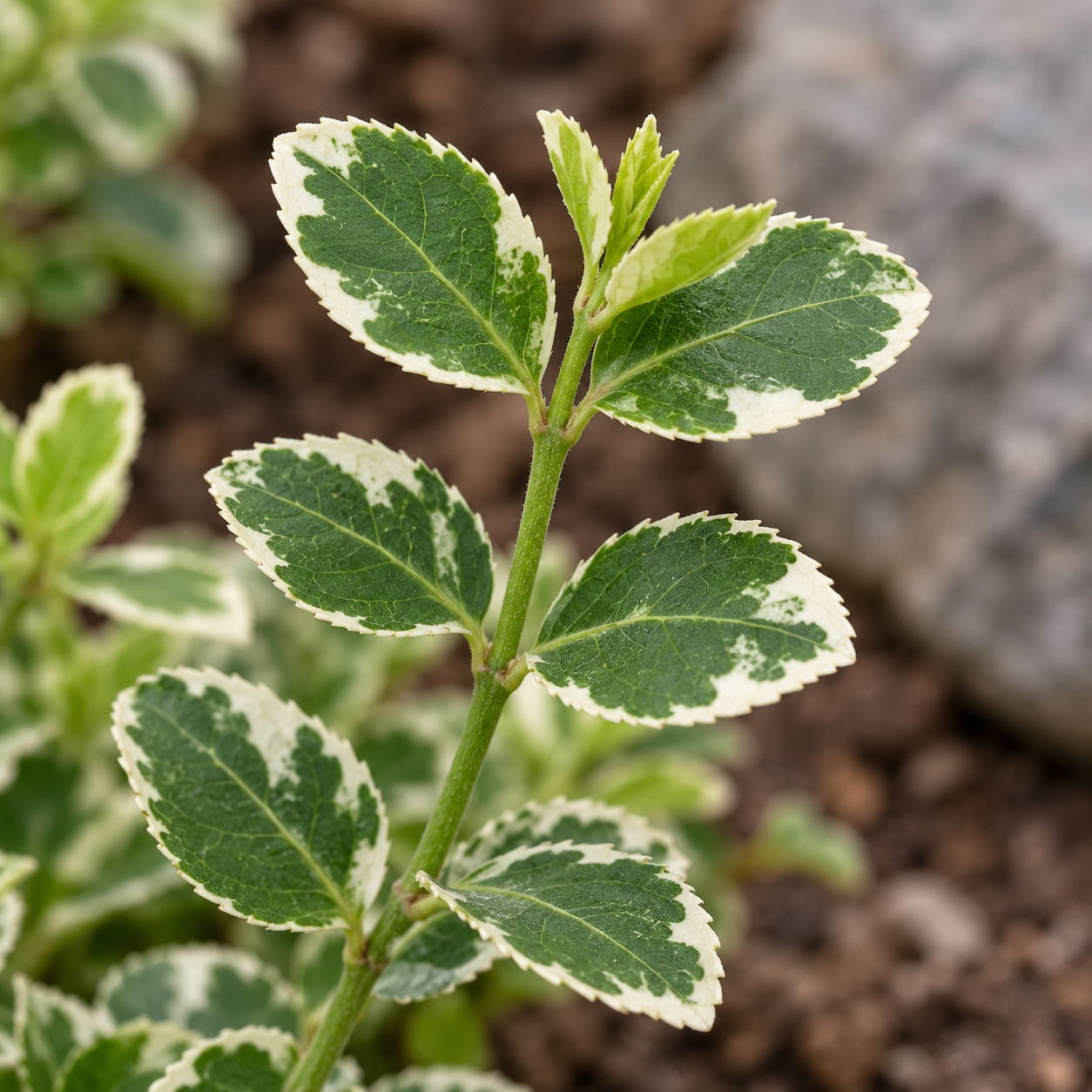
Small rounded-oval leaves have green centres and irregular white to cream margins. They sit in pairs on fine shoots; pale-green tips show new growth. Emerald Gaiety belongs to Euonymus fortunei and is mainly planted for its evergreen pattern. Pale areas may blush pink in cold periods: possible seasonal colour, not a constant shade. Flowers appear rarely. A low garden border therefore offers a more predictable foliage effect than a conspicuous flower season.
A little pot begins a larger plant
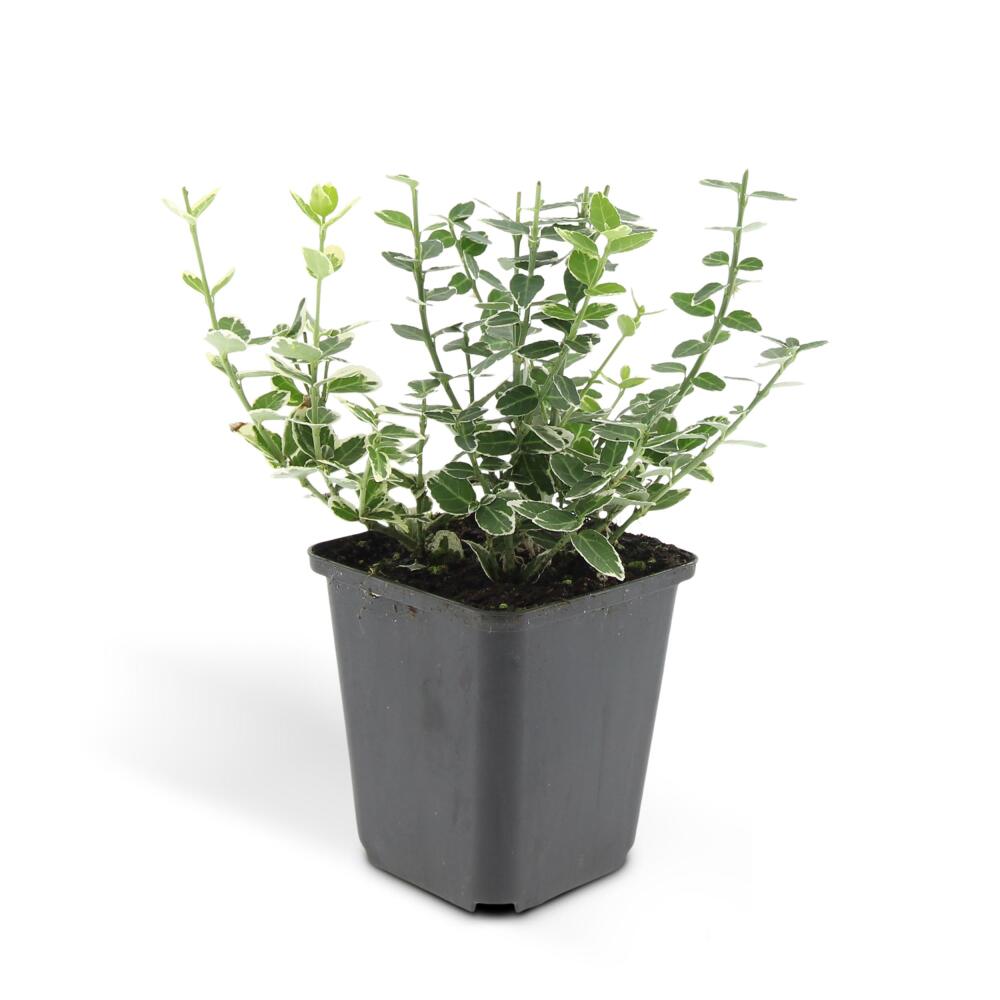
Current choices include single plants and sets of six or twelve, each in a 9 cm pot. Total height is about 10–25 cm including pot. Check the rootball first when unpacking and gently release tangled branches. Support soil when removing the pot; do not use an upper branch as a handle. Later a free shrub may reach about half a metre to a metre tall and considerably wider. The young delivery must build this shape first. Laying out pots does not instantly create closed groundcover.
Watch light throughout the day
Sun or bright partial shade suit pale-edged foliage. Choose soil retaining moisture while draining surplus. A narrow sunny pocket beside heated paving dries faster than an open bed. Under woody plants check root competition as well as shade: the little rootball can stay dry although surroundings look cool. Very deep shade is less favourable for strongly patterned evergreen cultivars. Long-term choose an outdoor place where light and root space fit together.
Lay out the border before planting
Set plants on the prepared area first. The shop gives 30–40 cm as group guidance. Potential later width of 1–1.5 m still requires planning edges and neighbours: where will a path stay clear and little perennials remain visible? Plant in spring or early autumn with workable frost-free soil. Slowly moisten a dry rootball, set at its existing level and water in. Loosen compacted sites sideways too; a little surface gravel alone does not improve drainage.
New roots need a reliable water start
During dry periods after planting check directly at the former pot rootball. It initially has fewer reserves than an established shrub. If needed water slowly and thoroughly so moisture reaches inside. Later wintercreeper may cope better with temporary dryness; prolonged dry periods still call for checks. Container reserves remain limited. A freely draining pot with enough new root room simplifies cultivation. Regular feeding is usually unnecessary in good garden soil. With weak growth check light, roots and moisture first.
Cut branches instead of tearing leaves
Targeted pruning keeps Emerald Gaiety manageable. Later spring suits light shaping. Cut individual troublesome branches rather than shearing through all leaves; damaged edges may brown. Before pruning inspect dense bushes for occupied bird nests. If permanently solid-green vigorous shoots develop, follow them to their base and remove there. Their larger green area may compete with white-edged growth. The plant may climb a wall; include this direction in space planning.
Evergreen foliage needs winter observation
The pattern stays visible in winter though individual leaves age. Check soil in frost-free weather, especially pots under roofs and after drying wind. Small containers face more frost than garden soil and need a sheltered place with free drainage. With yellow speckles, leaf loss or feeding marks also inspect undersides and shoots for pests. Distinguish white deposits from the fixed pale pattern. Parts are not edible; wear gloves for pruning and transplanting.
One plant, several views
Good to know
Does it stay white and green in winter?
Evergreen foliage may persist; pale margins may blush pink in cold weather. Individual old leaves are still replaced.
Is it only flat groundcover?
It can form a little bush and climb a wall. Position and selective pruning accompany the desired shape.
Why does a wholly green branch grow vigorously?
Reversion to green foliage may occur. Follow the shoot to its origin and remove so it does not displace patterned branches.
Is 10–25 cm its later bed height?
No: total delivery height includes the 9 cm pot. A free developed shrub may reach about 0.5–1 m high and 1–1.5 m wide.
Does a new plant need little water?
The young rootball needs controlled moisture while establishing. Only larger established roots reach more soil; containers need ongoing checks.
When should I prune?
Light shaping suits later spring. Selectively remove troublesome or damaged branches and first check for occupied nests.
Can it stay in the living room?
Long-term cultivation is for gardens or outdoor containers. A warm room cannot replace light, root space and seasonal outdoor rhythm.
Sources and editorial note
- Exotenherz: parent offer, originals and delivery form (read03.10.2026)
- Directly read specialist source gaiety-rhs (03.10.2026)
- Directly read specialist source euonymus-growing (03.10.2026)
- Exotenherz: directly read 6-plant child offer (03.10.2026)
- Exotenherz: directly read 12-plant child offer (03.10.2026)
Current parent and child offers directly read publicly03.10.2026; unchanged HTMLhashes and originalfiles isolated. Specialist sources directly read, clean originals actually opened. Delivery separated from garden development. Shared view and publication require Root acceptance.