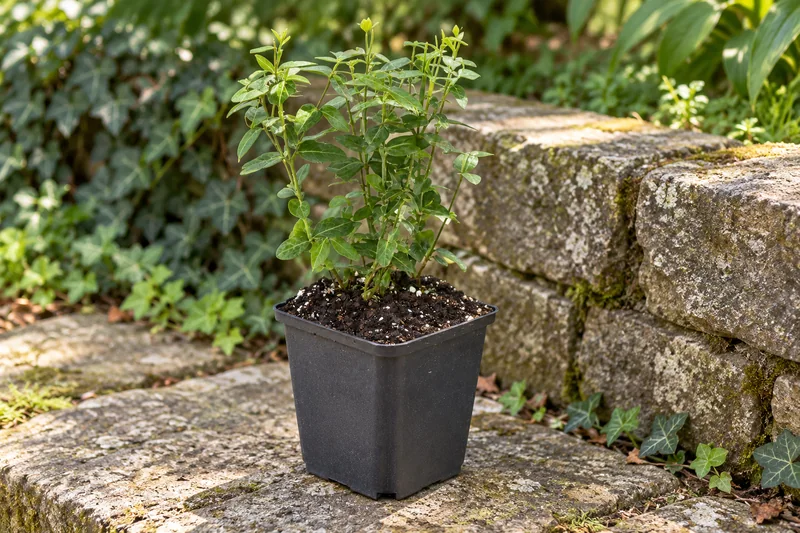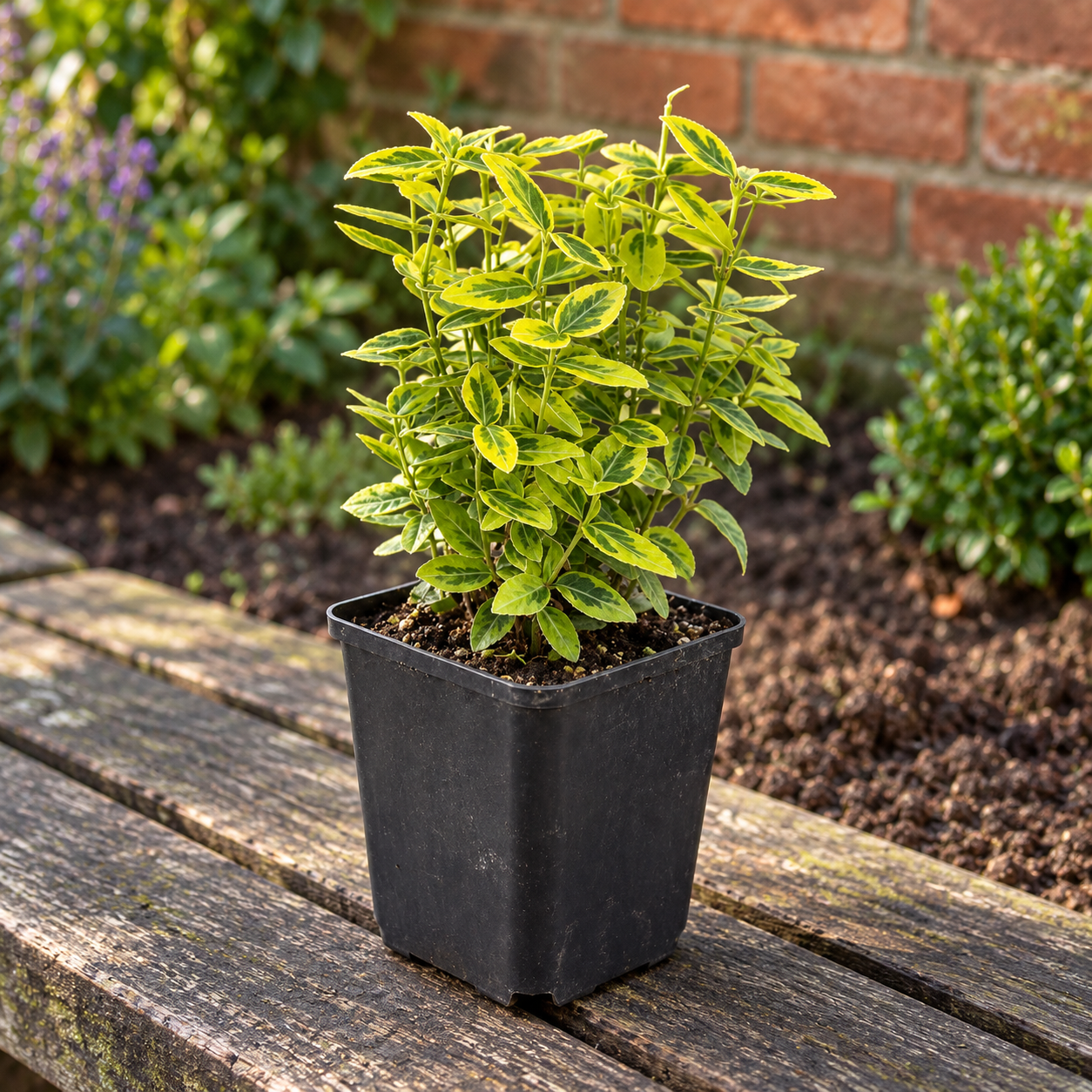
This plant at Exotenherz
Check the shop offer for current availability, price and what is included.
Check the shop for the current price, availability and offer contents.
Your care table
| Topic | What to do | Why it helps |
|---|---|---|
| Position | Sun or bright partial shade with moisture-retentive soil. | Light and available moisture together determine a suitable place. |
| Arrival | Gently remove the pot and check the small rootball. | Fine branches must not carry soil weight. |
| Soil | Prepare drained soil without permanent waterlogging. | Standing water prevents a healthy root start. |
| Planting | Set at existing rootball height and water in slowly. | Moisture and good soil contact promote establishment. |
| Spacing | 30–40 cm group guidance, allowing later width. | Delivery size does not show spreading shrub space needs. |
| Water | Check directly at the rootball during dry phases; inspect pots regularly. | A young plant only gradually explores more soil. |
| Nutrition | Feed sparingly as needed in good beds; container feed by label. | High fertiliser doses cannot replace a suitable position. |
| Pruning | Limit individual branches and remove green reversions at base. | Yellow patterns and accessible boundaries need observation. |
| Winter | Protect pots and check rootball moisture on frost-free days. | Evergreen foliage may lose water during winter. |
For young plants, feel the soil directly at the root ball. The surface and deeper soil may have different moisture levels.
Water thoroughly after planting; later, water according to the soil, weather and establishment rather than a fixed calendar.
Avoid standing water. For plants in containers, also check that water runs out of the drainage hole.
Yellow edges with changing nuances
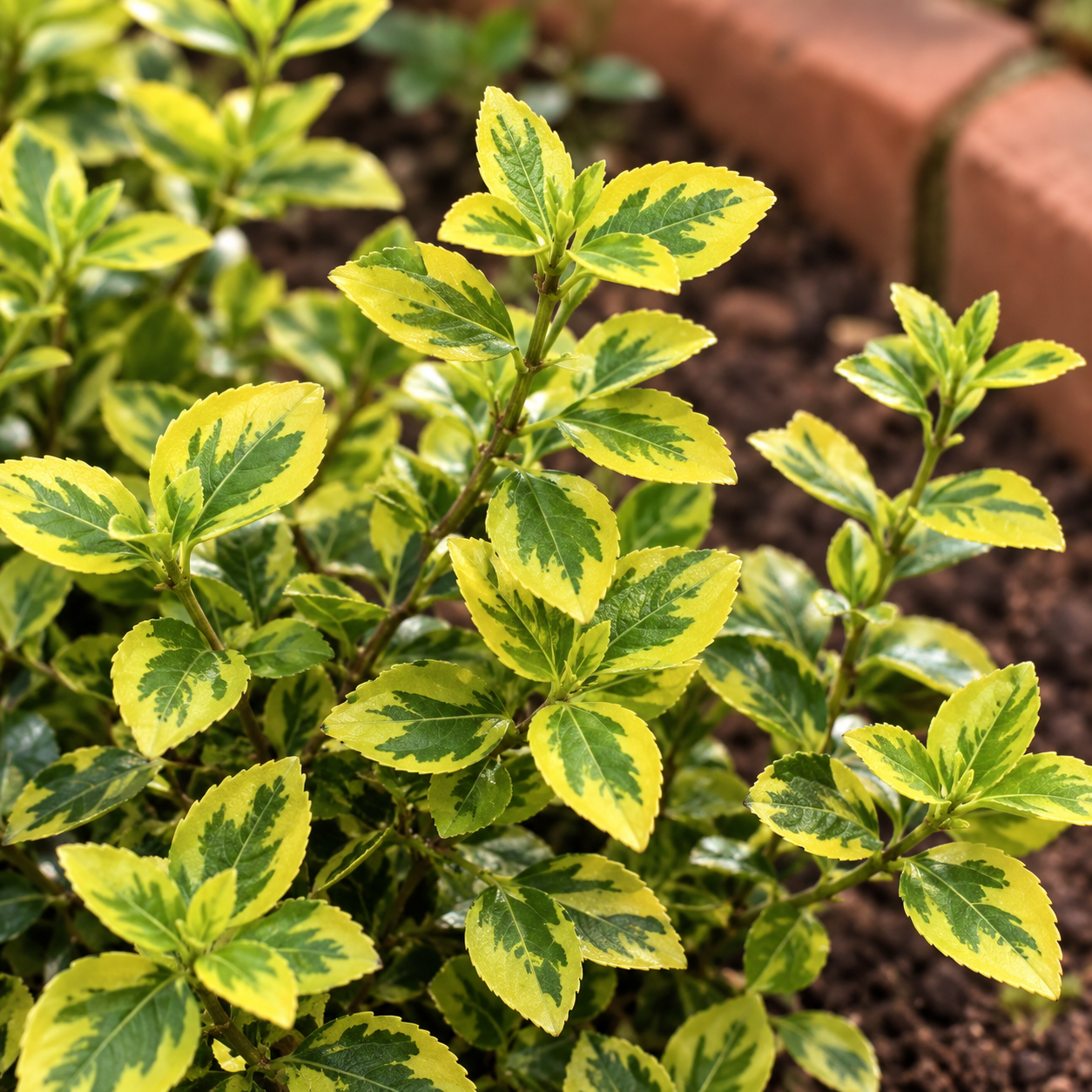
Small oval leaves have green centres and broad yellow margins. Their pattern stays when neighbouring perennials have no flowers. Yellow areas may tint pink in the cold season; sun, season and leaf age change the impression. The offer calls it Emerald Gold. Specialist naming uses Euonymus fortunei Emerald ’n’ Gold for this yellow-edged wintercreeper. Its flowers are rare and inconspicuous. Plan a foliage shrub whose many little leaves make a living pattern, not reliably flowering bed fill.
Delivery plant and later shrub need different scales
Singles and sets of six or twelve are offered, each in a 9 cm pot. About 10–25 cm total height includes the pot. On arrival check the rootball and shoots and gently pull off the container. An older free shrub may become about 0.5–1 m tall and 1–1.5 m wide. It needs roots, several growth phases and a suitable position. The clean original gallery shows developed-plant leaf features: it illustrates the pattern, not the young delivery’s size or density.
Choose light and soil moisture together
Sun to bright partial shade supports a visible pattern. In a sunny place soil should hold moisture without staying wet. Near warm paving, walls and shallow containers a little rootball dries quickly. Root competition in tree shade can have the same effect. It grows in many garden soils, but compact wet ground is still unsuitable. Check a planned position after rain and on dry days. Deep shade suits strongly patterned evergreens less than a bright place with balanced water provision.
Plan the yellow border over the area
The shop gives 30–40 cm for groups. Lay out pots first and consider where spreading shrubs may extend later. Little perennials, path edges and drains should stay accessible. Spring or early autumn helps establishment if soil and the rootball are frost-free. Slowly moisten a dry rootball before planting. Set at its old level, make good contact with loosened soil and water in. The surface may retain moisture; leave mulch a little away from the stem. At a wall wintercreeper may explore further directions.
Check the former pot rootball during establishment
The young plant initially has limited root space. During dry periods check directly where its ball sits. Slow thorough watering reaches the centre better than a few daily surface drops. Established plants cope better with temporary dryness but still need attention during prolonged dry periods. Container reserves remain limited. Choose free drainage and added root room rather than leaving a persistently wet outer pot. Good garden soil usually needs no constant feed; containers are fed as needed during growth by label.
Preserve yellow patterns by targeted pruning
Individual cuts contain spreading branches. Later spring suits light shaping. Secateurs cleanly cut branches; sheared leaf edges may turn brown. Inspect dense woody plants for occupied nests before working. Follow vigorous wholly green reversions to their origin and remove there. Their larger green area may displace patterned branches. This check remains useful for established plants. Lower water needs replace neither observation of patterns nor maintenance of desired bed edges.
Look carefully at winter foliage and leaf problems
Evergreen does not mean every leaf lasts forever. Old leaves are replaced and cold periods may change colour. Check soil in frost-free weather, especially pots under roofs or after dry wind. Small containers need a sheltered place with free drainage. Distinguish yellow speckles, feeding and leaf loss from regular yellow margins. Inspect undersides and shoots for pests; wipeable white deposits are not a cultivar pattern. It is not food. Wear gloves when transplanting and pruning.
One plant, several views

Good to know
Why is it also called Emerald ’n’ Gold?
That is the specialist cultivar name for this yellow-edged wintercreeper, shortened to Emerald Gold in the current shop offer.
Can yellow look pink in winter?
Yes, yellow areas may blush pink in cold weather. Colour strength is no fixed promise for every place.
Is 10–25 cm its garden height?
This describes delivery including a 9 cm pot. A developed free shrub may reach about 0.5–1 m tall and 1–1.5 m wide.
Does the original gallery show delivery density?
The clean leaf view shows a developed plant’s pattern. A young nursery pot must build its later density first.
What about wholly green branches?
Follow them to their base and remove so they cannot permanently overgrow patterned branches.
Does it need no care after establishment?
Even established plants need checks in prolonged dryness. Spreading branches, bed edges and green reversions remain tasks.
Is it suitable for an outdoor container?
Possible in an adequately sized freely draining container. Rootball moisture remains a regular task; protect the pot in winter.
Sources and editorial note
- Exotenherz: parent offer, originals and delivery (read03.10.2026)
- Directly read specialist source gold-rhs (03.10.2026)
- Directly read specialist source euonymus-growing (03.10.2026)
- Directly read specialist source euonymus-ncsu (03.10.2026)
- Exotenherz: directly read 6-plant child offer (03.10.2026)
- Exotenherz: directly read 12-plant child offer (03.10.2026)
Current parent and child offers directly read publicly03.10.2026; unchanged HTMLhashes and originalfiles saved in isolation. Specialist sources directly read, clean originals actually opened. Delivery separated from garden development. Shared view and publication require Root acceptance.