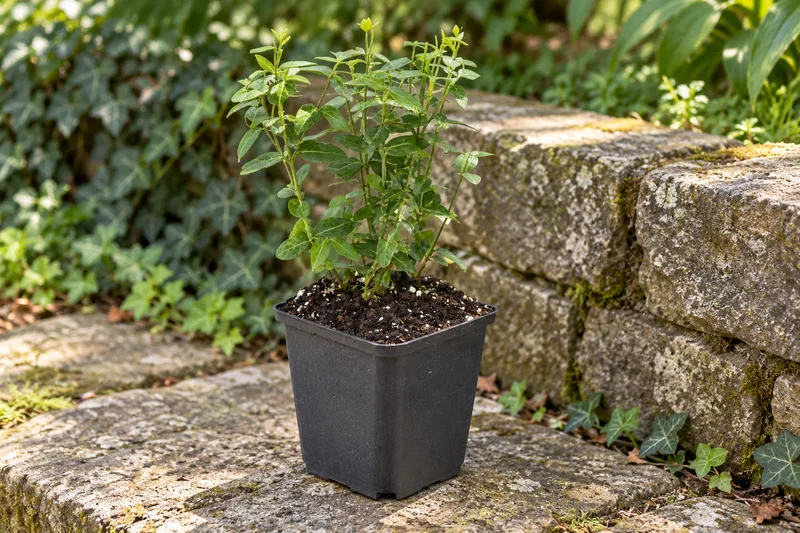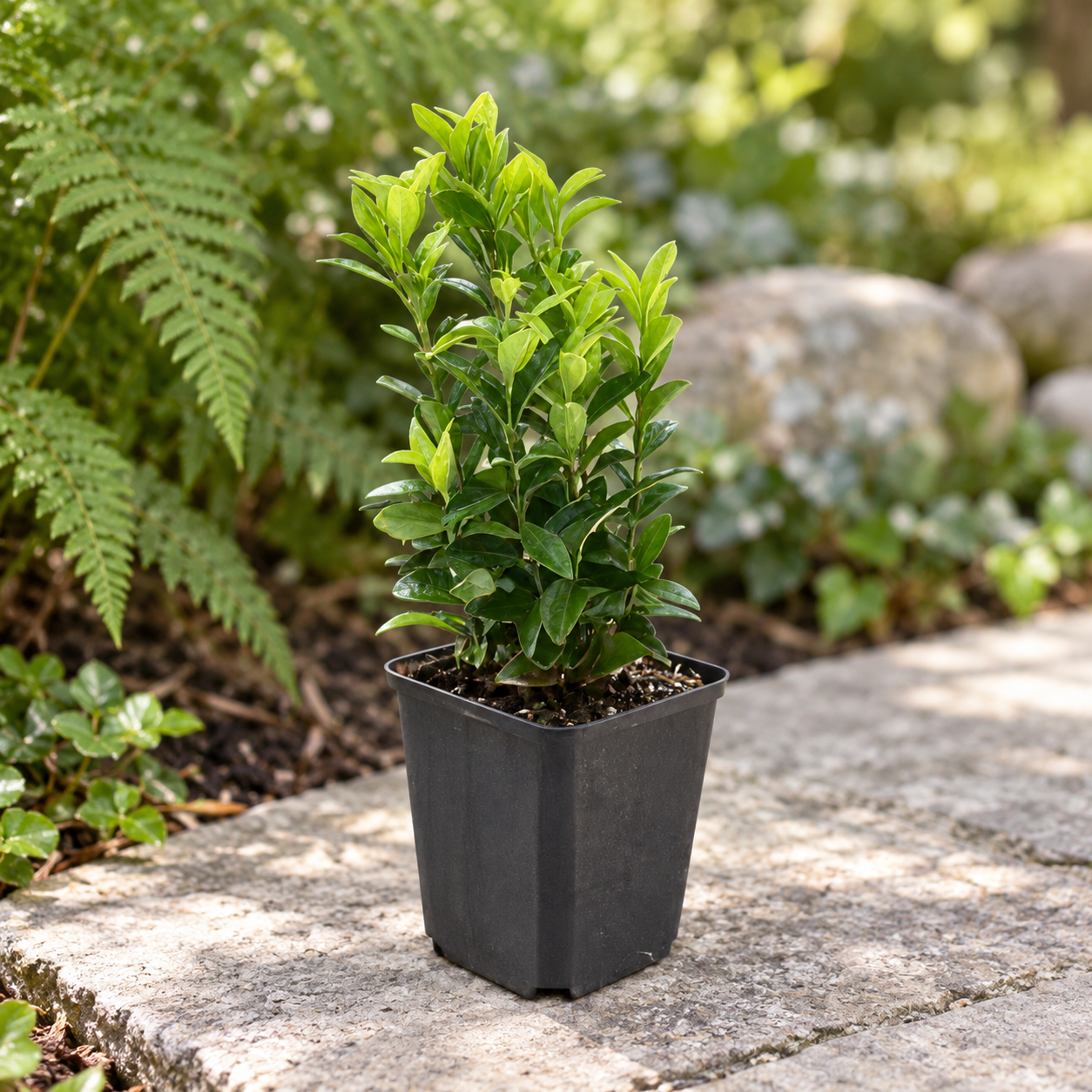
This plant at Exotenherz
Check the shop offer for current availability, price and what is included.
Check the shop for the current price, availability and offer contents.
Your care table
| Topic | What to do | Why it helps |
|---|---|---|
| Position | Sun or partial shade in a wind-sheltered outdoor spot. | Evergreen leaves should not constantly face cold dry wind. |
| Rootball | Check moisture after unpacking and gently remove the pot. | Narrow shoots must not carry root-soil weight. |
| Soil | Prepare moisture-retentive well-drained soil. | Persistent wetness harms the root start. |
| Planting | Set at existing height and slowly water in. | Good soil contact supports new roots. |
| Spacing | Use 30–40 cm only as clipped-row guidance. | Free old shrubs need considerably more space and height. |
| Water | Check inside the rootball during establishment; continue regular container checks. | Young root space has limited reserves. |
| Nutrition | Sparingly as needed in beds; by fertiliser label in pots. | More feed cannot replace a suitable position. |
| Pruning | Maintain desired height, cut individual branches and check nests first. | A low hedge is a maintained form of upright woody growth. |
| Winter | Protect containers and check moisture in frost-free weather. | Evergreen winter foliage may still lose water. |
For young plants, feel the soil directly at the root ball. The surface and deeper soil may have different moisture levels.
Water thoroughly after planting; later, water according to the soil, weather and establishment rather than a fixed calendar.
Avoid standing water. For plants in containers, also check that water runs out of the drainage hole.
Branches build their shape upwards
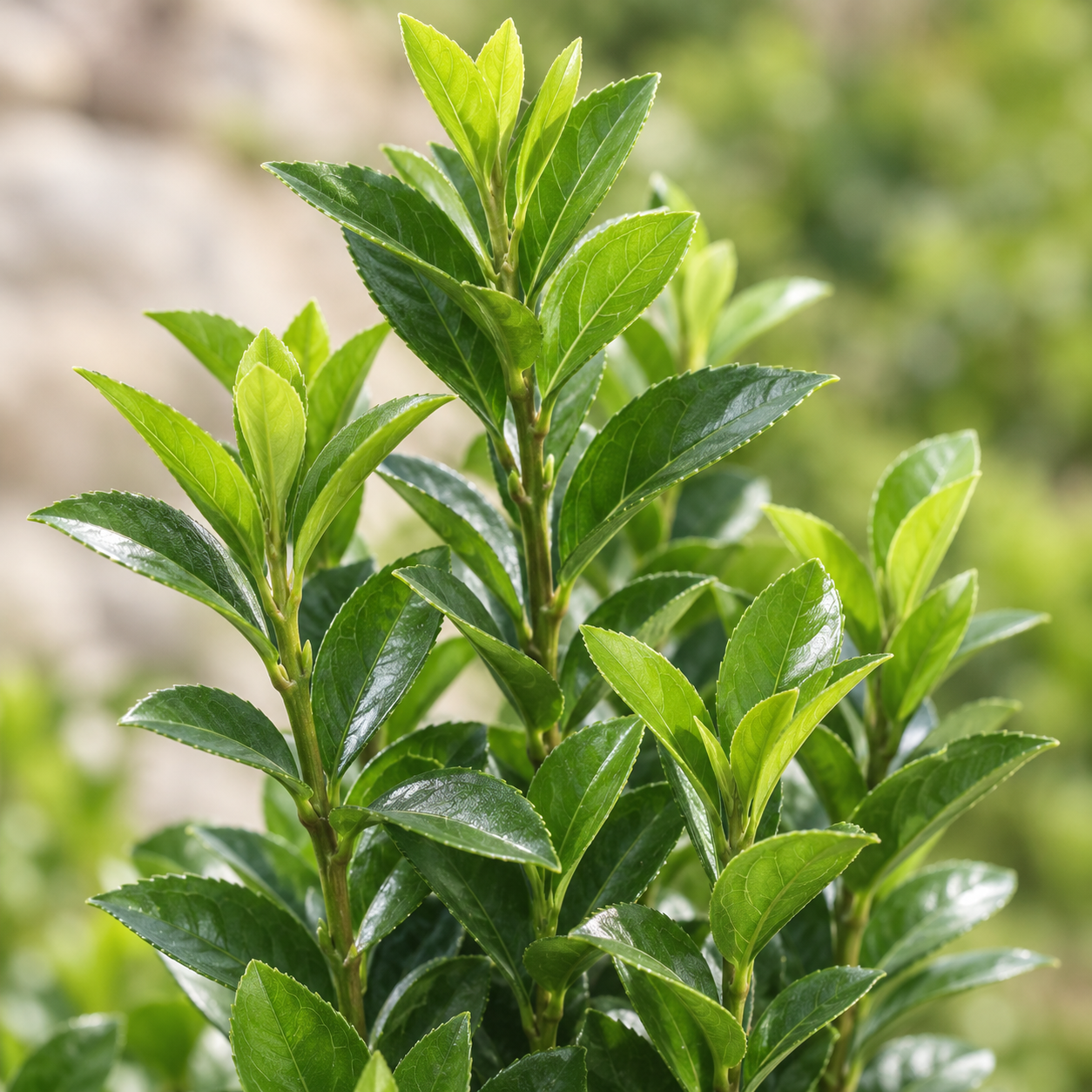
Fine upright shoots carry glossy oval to elliptical green leaves. Fresh growth is initially paler, older foliage providing a darker background. Green Spire belongs to Japanese spindle Euonymus japonicus and stands out for strongly upright branching. An older introduction used the descriptive designation Bekomasaki; the documented cultivar name is Green Spire. This history explains its horticultural-selection background. In the garden the main question is whether it grows freely as a narrow shrub or forms a regularly clipped line.
A low edge is created through care
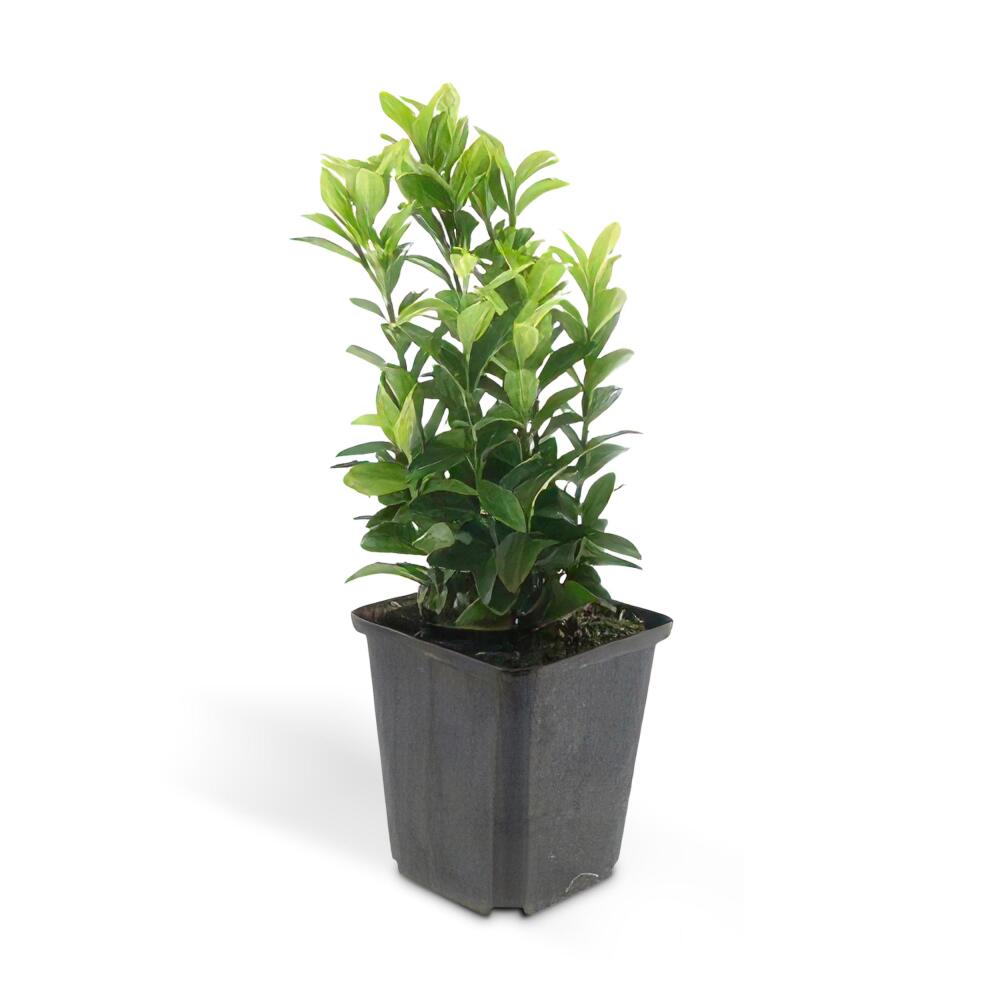
Current delivery begins in a 9 cm pot. Singles and sets each contain little plants about 10–25 cm total height including pot. These measurements say nothing about permanent final height of a free shrub. A documented 21-year-old specimen reached about 4.4 m high and 1.8 m wide. Position and pruning considerably alter development. Plan future care from the start for a low border. A free specimen needs long-term space above young shoot tips too; narrow window areas or little passageways suit it less well.
A sheltered position with reliable drainage
Sun or partial shade suits it if soil retains enough moisture and drains surplus. Choose a garden spot sheltered from cold drying wind for steady development. Beside walls and paving check whether rain actually reaches the rootball. A dark house corner may have more root competition and less light than a green hedge effect suggests. Various ordinary garden soils are possible. Improve compact wet spots before planting. Pale young tips are expected; persistently pale older leaves call for checking roots, moisture and feeding together.
Try the row before planting
The offer gives 30–40 cm for clipped rows. Lay out pots first, allowing space to water, prune and reach neighbouring plants. A free shrub needs different area planning from this tight row. Plant in spring or early autumn with frost-free workable soil. Carefully moisten a dry rootball and set at the existing height. Bring loosened soil into contact and slowly water in. Hold soil when removing the pot rather than pulling narrow branches. Loose surface cover stays away from shoot bases.
Small roots need observation, not calendar watering
Check directly at the former rootball after planting. In dry phases water thoroughly so moisture reaches its interior. A fixed weekly amount ignores weather and different soils. Established roots use more ground, but prolonged dry periods still need checks. Container reserves are limited, so check regularly without outer-pot water. An adequately large freely draining container simplifies cultivation. Feed sparingly as needed in good garden soil. With weak growth inspect position and roots before adding more fertiliser.
Develop a clear line with individual cuts
Later spring suits light shaping. For a border follow the desired height and shorten troublesome branches selectively. Clean individual cuts protect the foliage; cut-across leaves may brown at edges. Before work inspect denser shrubs for occupied bird nests. Not every young specimen instantly makes a closed hedge. New branching and sideways connections form over several growth phases. A free shrub gets less shaping but regular checks for damaged, misplaced or path-reaching branches.
Evergreen means checking the rootball in winter too
Observe soil moisture in frost-free weather, especially containers under roofs and after dry wind. Pots protect the rootball less well from frost than garden soil; retain shelter and open drainage. Respond to winter leaf loss or brown tips by checking weather, moisture and roots. Speckled leaves and sticky deposits may also require looking at undersides and shoots. It is not food. Wear gloves when pruning and transplanting; do not eat plant parts.
One plant, several views
Good to know
Does it naturally stay under a metre?
A low border needs pruning. Free-grown old plants may reach several metres; small delivery is no permanent height measure.
Why is Bekomasaki in older sources?
It was an early descriptive designation for this introduction. Green Spire is the documented Japanese-spindle cultivar name.
Can it replace box hedging?
A clipped green border is possible. Upright growth, long-term height and necessary pruning must suit the space.
What does the offered 10–25 cm describe?
Approximate total height of the young delivery including its 9 cm pot, neither later hedge height nor free final height.
Is pale new growth a problem?
Young tips can be lighter than older glossy dark-green leaves. Persistently pale old foliage or loss requires additional position and rootball checks.
How often must I water?
Decide by rootball moisture, especially dry phases after planting. Check pots regularly; weather and container alter demand.
Will a low row still need space?
Yes. An accessible side for pruning and watering plus neighbour space remains important. Free cultivation needs much more room.
Sources and editorial note
- Exotenherz: parent offer, originals and delivery (read03.10.2026)
- Directly read specialist source spire-rhs (03.10.2026)
- Directly read specialist source spire-usna (03.10.2026)
- Directly read specialist source euonymus-growing (03.10.2026)
- Exotenherz: directly read 6-plant child offer (03.10.2026)
- Exotenherz: directly read 12-plant child offer (03.10.2026)
Current parent and child offers directly read publicly03.10.2026; unchanged HTMLhashes and originals isolated. Specialist sources directly read, clean originals opened. Delivery separated from garden development. Shared view and publication require Root acceptance.