This plant at Exotenherz
Check the shop offer for current availability, price and what is included.
Check the shop for the price, current availability and what is included.
Your care table
| Topic | What to do | Why it helps |
|---|---|---|
| Light | Very bright; introduce direct sun slowly. | Compact growth requires enough light. |
| Water | Let compost dry well between waterings. | Succulent stems store water. |
| Drainage | Remove remaining water completely. | Persistent wetness threatens the roots. |
| Compost | Free-draining mineral-structured mix. | Air in the root ball helps drying. |
| Winter | Bright and frost-free, with less water. | Reduced growth lowers consumption. |
| Feed | Sparingly in growth; pause at rest. | A small root ball is easily oversupplied. |
| Position | Place safely away from careless reaching hands. | Spines can injure. |
| Handling | Protect skin and eyes from escaping milky sap. | Euphorbia sap is irritating and poisonous. |
Check the compost and pot weight. The care table explains how far the compost may dry.
Water only when needed. The water should reach the root ball without spilling over the rim.
Remove surplus water from the saucer or cachepot. Then return the plant to a suitable position.
A euphorbia from northern South Africa
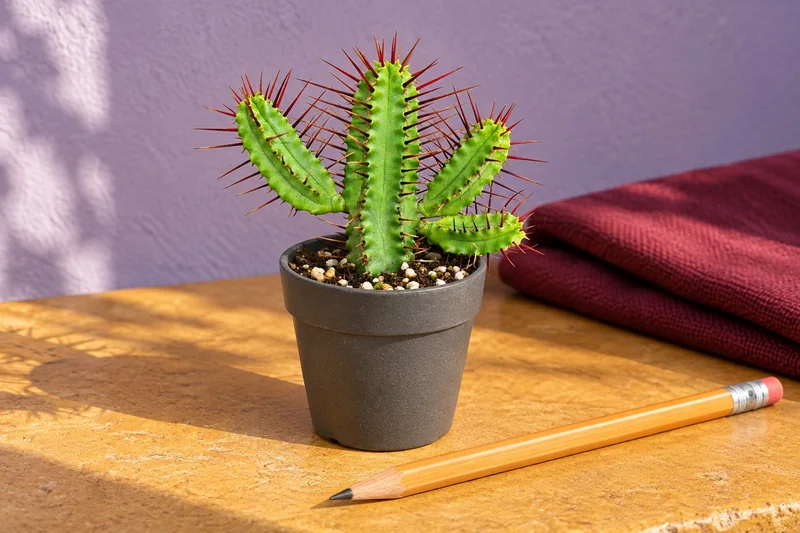
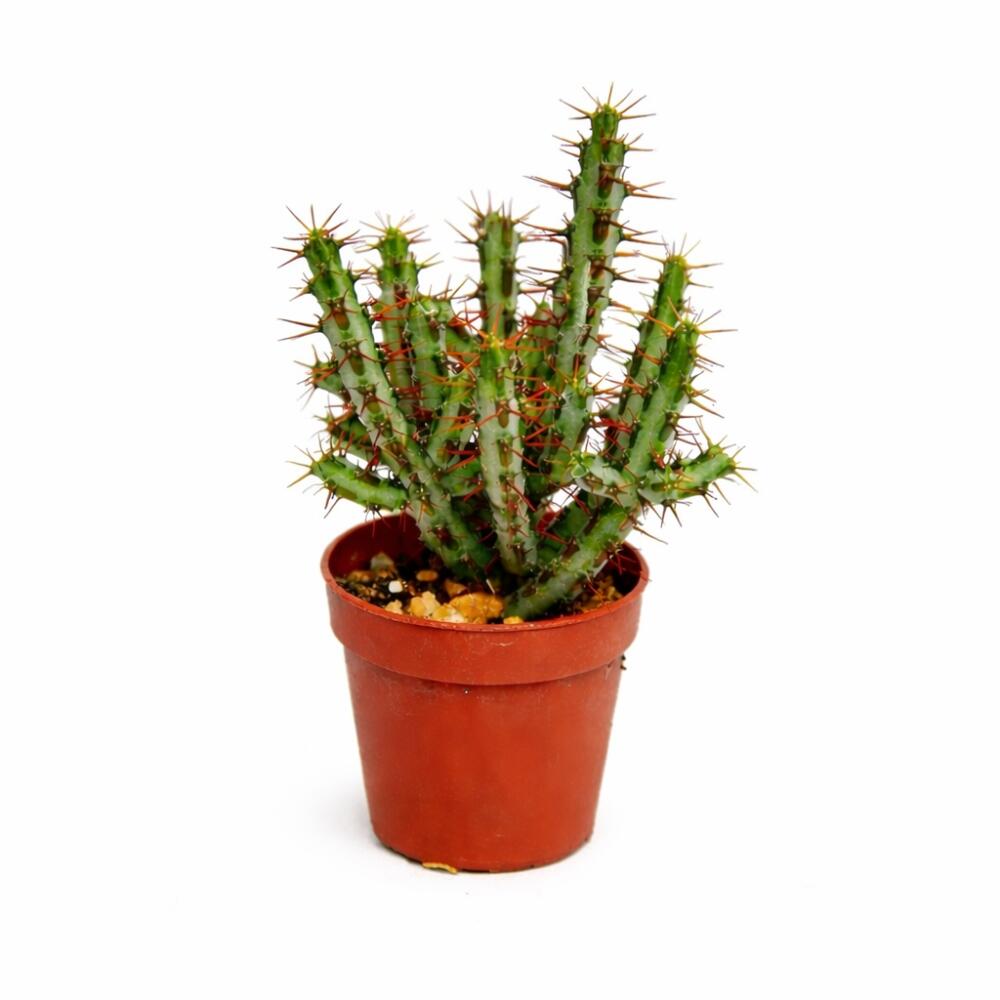
Kew names northern Limpopo as the natural home of Euphorbia aeruginosa. The species is a succulent subshrub in the euphorbia family. Its slender angular stems branch and bear striking reddish-brown spines. Blue-green tissue stores water. Despite its cactus-like shape, the plant is not a cactus. This distinction helps in everyday care because injured euphorbia stems can release irritating milky sap.
A small branching plant rather than a large shrub
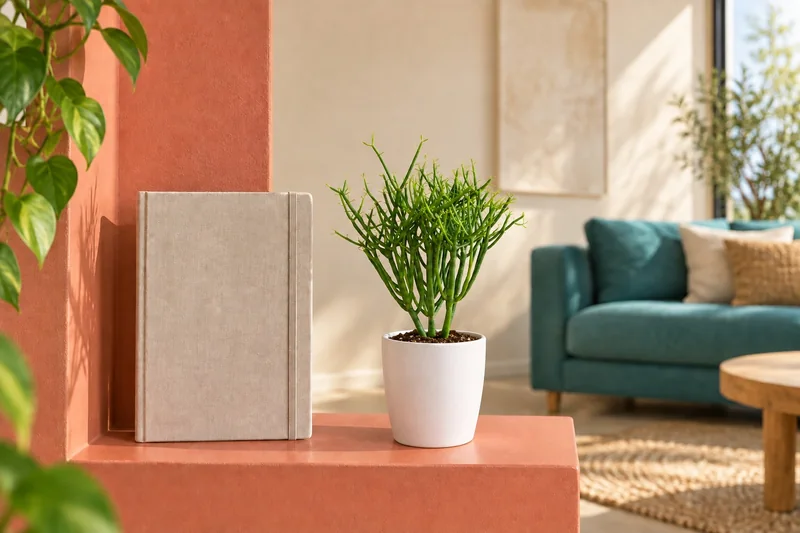
The shop states a 5.5 cm pot and approximately 10 cm total height. The scene respects this small size; the plant should not look like a tall candelabra. Branching and spine colour can vary naturally. For permanent display, choose a stable safe position where hands and pets will not accidentally encounter the stems. Decorative outer pot and furnishings show a design example. Move the plant by its pot rather than pulling the thin branches.
Brightness matters more than the room’s name
A very bright position supports compact growth. Introduce direct sun gradually, especially after shipping or a long period in shade. A dark shelf deep in the room is less suitable. A closed humid plant cabinet is also not a good standard solution for this drought-adapted euphorbia. Steady warmth during growth and a bright frost-free winter position make sense. Do not expose it to cold without checking simply because some succulent species tolerate cooler periods.
Water sparingly and check where water goes
Let the compost dry well between waterings. During active growth, water the root ball deliberately and remove remaining water afterwards. The small pot can dry rapidly in summer, but in winter with reduced demand the same amount may remain for a long time. Do not water on a rigid calendar. With limp or softening stems, first check whether the root ball is dry or already wet. Persistent wetness cannot be offset with extra sun or fertiliser.
Airy compost and little feed are enough
A free-draining mineral-structured succulent mix makes the change between watering and a dry interval easier. Unobstructed drainage holes are essential. Repot only slightly larger and work with suitable tools applying little pressure so branches do not break. Feed sparingly during active growth according to the label. Pause at rest and in low light. Decorative spines need neither leaf-shine cleaning nor regular misting.
Keep healthy branches and inspect safely
The small young plant needs no regular shaping cuts. Broken or unhealthy-looking stems require particularly careful handling because of the sap. Protect skin and eyes and keep children and animals away during work. Inspect tight branches for mealybugs and spreading soft areas. Small inflorescences may occur with suitable development but are not guaranteed. An intact compact plant matters more in daily care than the fastest possible height gain.
One plant, several views

Good to know
Is Euphorbia aeruginosa a cactus?
No. It belongs to the euphorbia family despite its cactus-like appearance.
Can it go in a closed humid terrarium?
That is not suitable standard cultivation. It needs an airy bright position and dry intervals in the root ball.
How large is the offered plant?
A 5.5 cm pot and approximately 10 cm total height are stated.
Must I regularly cut off long stems?
The young plant needs no routine shaping. Before cutting, consider possible contact with irritating milky sap as well.
Sources and editorial note
- Product and delivery contents: Exotenherz
- Royal Botanic Gardens, Kew: botanical classification
- SANBI PlantZAfrica: plant profile and cultivation
- Royal Horticultural Society: plant and care knowledge
Sources checked: 15 September 2026. Product information and delivery contents follow the linked shop offer. Care has been checked against the stated specialist sources and remains subject to plant condition, position and season.