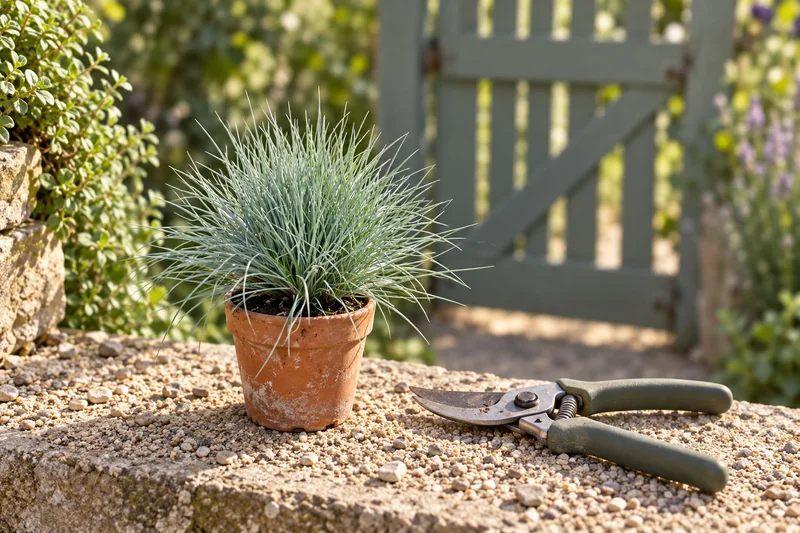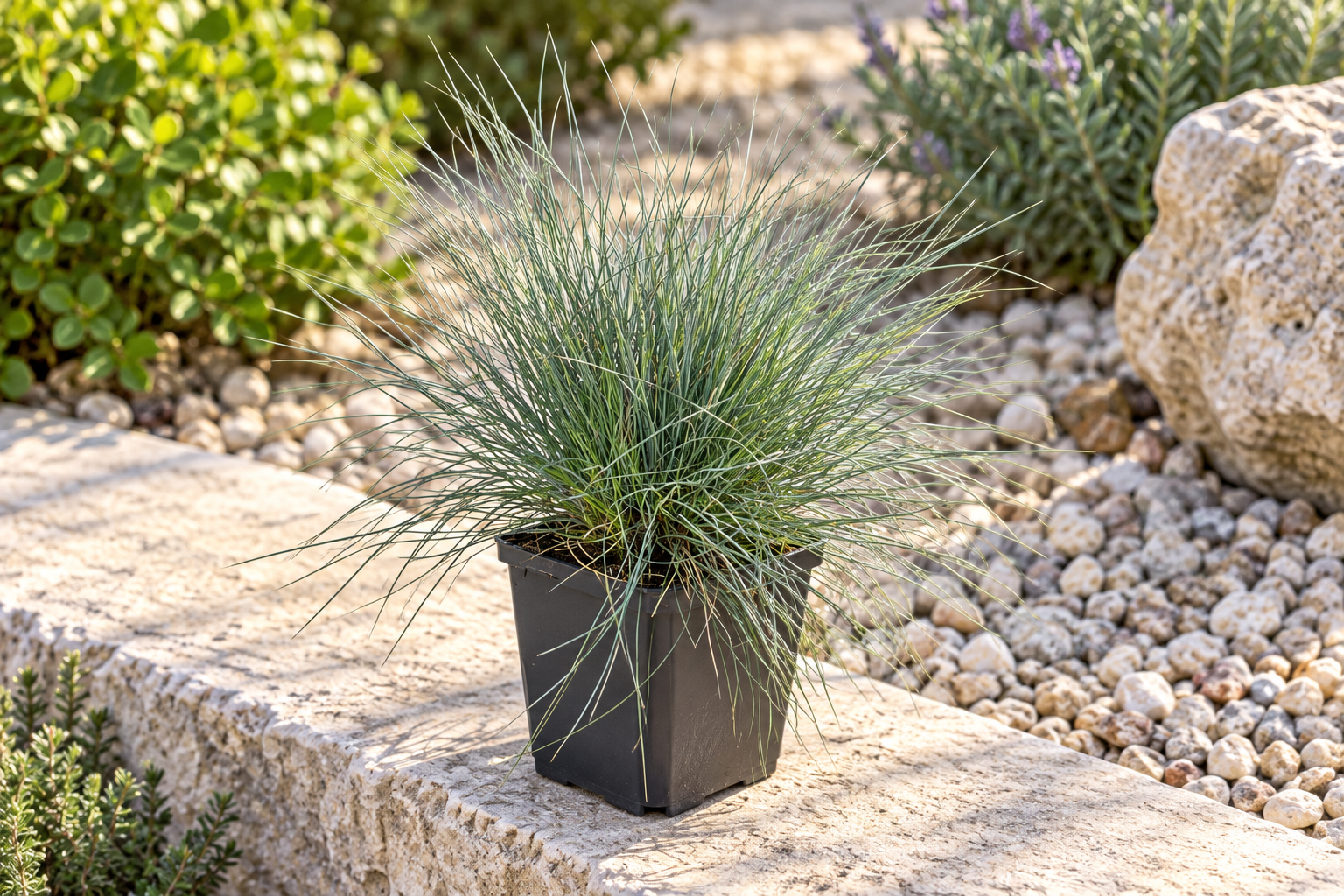
This plant at Exotenherz
Check the shop offer for current availability, price and what is included.
Product and delivery details are given in the individual offer.
Your care table
| Topic | What to do | Why it helps |
|---|---|---|
| Light | Choose a sunny place for the blue effect. | In more shade foliage can become greener. |
| Soil | Use poor to moderately supplied free-draining soil. | Wetness and heavy compacted ground shorten lifespan. |
| Planting | Set balls at previous height in frost-free ground. | Clump bases should not disappear into a wet hollow. |
| Spacing | Plan 20–30 cm as shop guidance for groups. | Small clumps form a sequence of fine leaf balls. |
| Water | Check young balls; consider dry periods after establishment. | Lower later demand does not automatically apply to new deliveries. |
| Nutrition | Avoid heavy reserve feeding; add moderately only as needed. | Extra nutrition cannot force blue colour. |
| Cleaning | Comb out dead leaves in spring and remove brown tips. | Keep healthy evergreen foliage wherever possible. |
| Division | Replant vigorous edge portions in spring if the centre becomes bare. | This rejuvenates the clump and preserves the cultivar. |
| Container and winter | Keep drainage clear and protect small balls from severe chilling. | A gravel surface prevents neither wet roots nor container frost. |
For young plants, feel the soil directly at the root ball. The surface and deeper soil may have different moisture levels.
Water thoroughly after planting; later, water according to the soil, weather and establishment rather than a fixed calendar.
Avoid standing water. For plants in containers, also check that water runs out of the drainage hole.
Many fine threads create a quiet shape
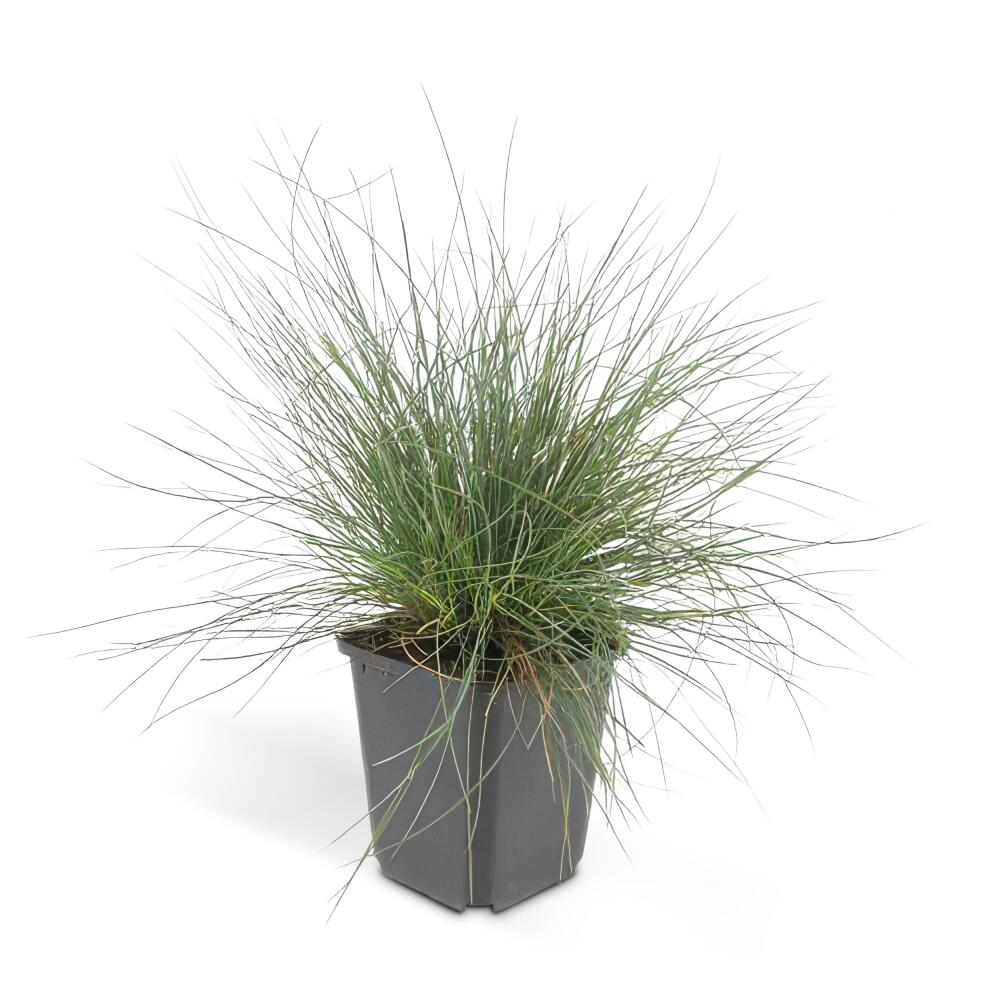
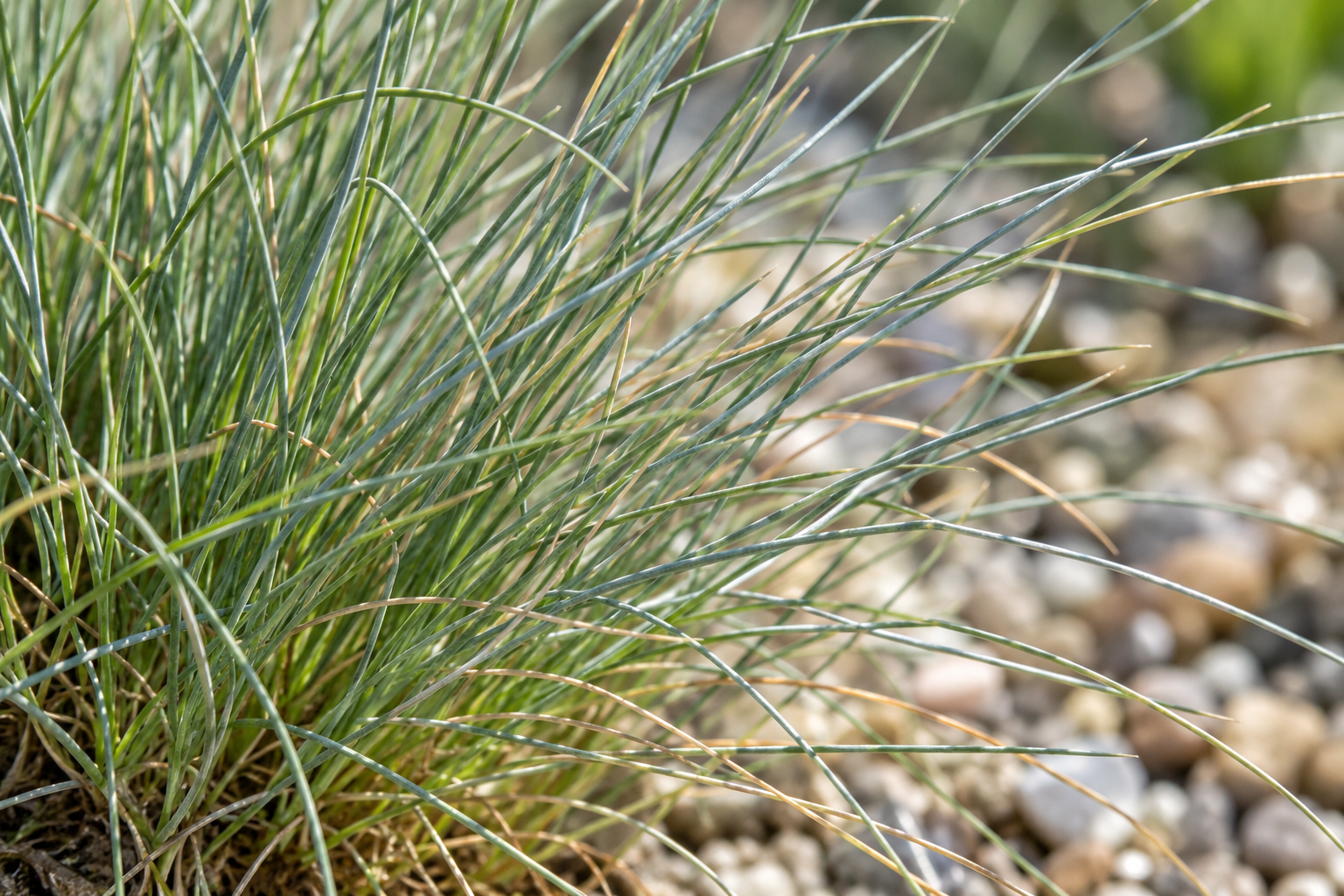
Elijah Blue is a named blue fescue cultivar with very narrow rolled leaves. They extend outward from the clump into a small round body whose surface looks almost thread-like in side light. I particularly like this texture beside pale stones. Foliage can look silvery to icy blue but also becomes greener depending on season and conditions. A young shop photograph with rather grey-green leaves therefore does not automatically contradict the cultivar name. Colour is living, not paint that looks identical every month.
Put the small delivered plant in context
Plants arrive individually in 9-cm pots; quantity depends on set selection. The approximately 10–25 cm total delivery height includes the pot. Later a roughly 25–30 cm leaf clump develops, while fine flower stems can rise above this leaf ball. Gently untangle thin leaves when unpacking rather than pulling the whole tuft from its pot. Check the ball before planting. A young plant need not yet form an even hemisphere; its shape develops after roots connect with new soil.
Sun and open soil fit together
A sunny place favours the blue effect. In deeper shade foliage often becomes greener and the desired compact impression can weaken. Soil should drain well and be rather poor to moderately supplied. Permanent wetness, heavy compacted clay and hot humid conditions can shorten lifespan. Gravel on top alone does not solve this. I inspect soil beneath and do not plant the clump base in a hollow collecting rain. In a trough drainage counts just as much as attractive stone colour.
Plant a line with small clumps
Spring or early autumn are suitable in frost-free workable soil. Set the lightly moistened ball at previous level and water in deliberately. The shop gives 20–30 cm spacing for clump groups. This creates a sequence of individual small grass forms at a bed edge. Leaves may touch later while plant bases stay airy. Fine leaf remains would be hidden beneath thick damp mulch. I therefore keep an easily checked surface between clumps and remove troublesome young weeds in time.
Less water after rooting in
Sunny blue fescue in suitable draining soil tolerates temporary drought after establishment. Fresh 9-cm balls and small outdoor containers have little reserve instead. In dry weather I check directly at the ball and water as needed without keeping it constantly wet. A rigid weekly schedule considers neither rain nor heat. If many leaf parts turn brown, I also check wetness and air at the clump. More water or feed on suspicion can worsen the cause. Blue foliage alone cannot show sufficient supply.
Comb in spring rather than shear healthy leaves
Elijah Blue is maintained as evergreen grass. In spring gently comb out loose dead leaves and selectively shorten brown tips or firmly attached damaged parts. Preserve healthy living leaves wherever possible. A blanket close-to-ground cut does not fit the usual cleaning of this small leaf ball. Blue-green panicles appear roughly from late spring to summer and later turn golden brown. Those preferring foliage alone can remove old flower stems. Small winter colour changes are no reason to immediately replace the whole clump.
When the centre empties after some years
Older blue fescue can become bare centrally while strong leaves remain outside. Rejuvenation in spring then helps: lift the clump, divide healthy edge portions and discard the dead centre. Specialist sources give roughly two to three years as guidance; actual condition decides. Cultivars are preserved through division since seedlings can have different colours. This small job belongs to long-term care as much as cleaning. Relatively low water needs therefore do not make Elijah Blue a grass whose condition should go unchecked for years.
One plant, several views
Good to know
Why is my young Elijah Blue rather grey-green?
Light, season and development affect colour. It can look greener in winter or later in the year.
Is Elijah Blue just another pot of ordinary blue fescue?
No. The named cultivar is independently documented and selected for particularly silvery to blue foliage.
Does the clump grow a metre tall?
No. Foliage stays about 25–30 cm high; individual flower stems rise above it.
Should I cut everything down to ground level in spring?
Usually not. Gently comb out dead material and selectively shorten damaged leaves; preserve healthy foliage.
Why does the centre become bare?
Older clumps can die out centrally. Healthy edge portions can be divided and replanted in spring.
Can I grow the same colour from my own seed?
Seedling colour can vary. Division is the suitable method to preserve cultivar characteristics.
Sources and editorial note
- Exotenherz: parent offer, measurements and original images (accessed 03.10.2026)
- Specialist reference: elijah-rhs (read directly 03.10.2026)
- Specialist reference: festuca-wisconsin (read directly 03.10.2026)
- Specialist reference: grasses-cutting (read directly 03.10.2026)
- Specialist reference: grasses-growing (read directly 03.10.2026)
- Exotenherz: checked 6-plant child offer (accessed 03.10.2026)
- Exotenherz: checked 12-plant child offer (accessed 03.10.2026)
- Exotenherz: checked 20-plant child offer (accessed 03.10.2026)
- Exotenherz: checked 40-plant child offer (accessed 03.10.2026)
- Exotenherz: checked 60-plant child offer (accessed 03.10.2026)
Parent offer and all associated child offers directly read on 03.10.2026; product numbers, GTIN where present in child offer, availability and files documented separately. Total delivery height 10–25 cm including 9-cm pot explicitly separated from later garden height. Quantity variants do not count as new plant identity. Specialist sources directly read, full reference portraits fargesia-rufa-guide and heidelbeere-jersey-guide compared. Clean original view adopted unchanged; stamped views and montages excluded. Scene shows one young reference plant regardless of set quantity. Draft; joint page and browser acceptance still pending.