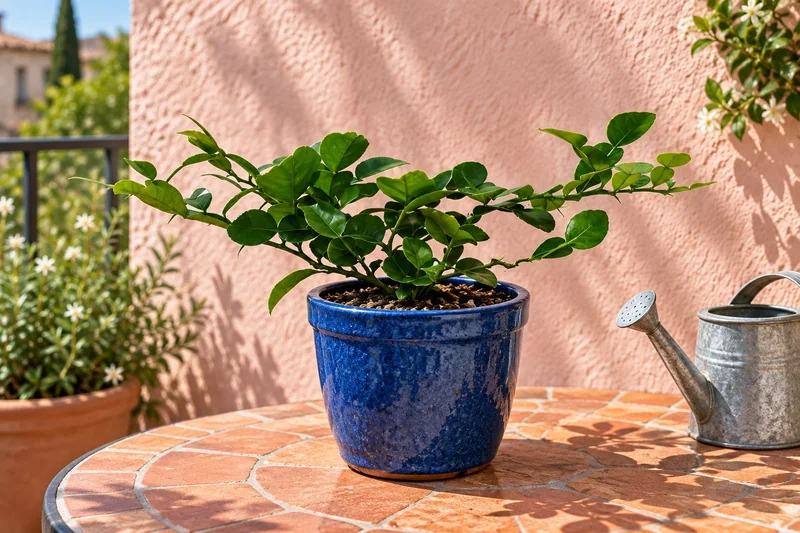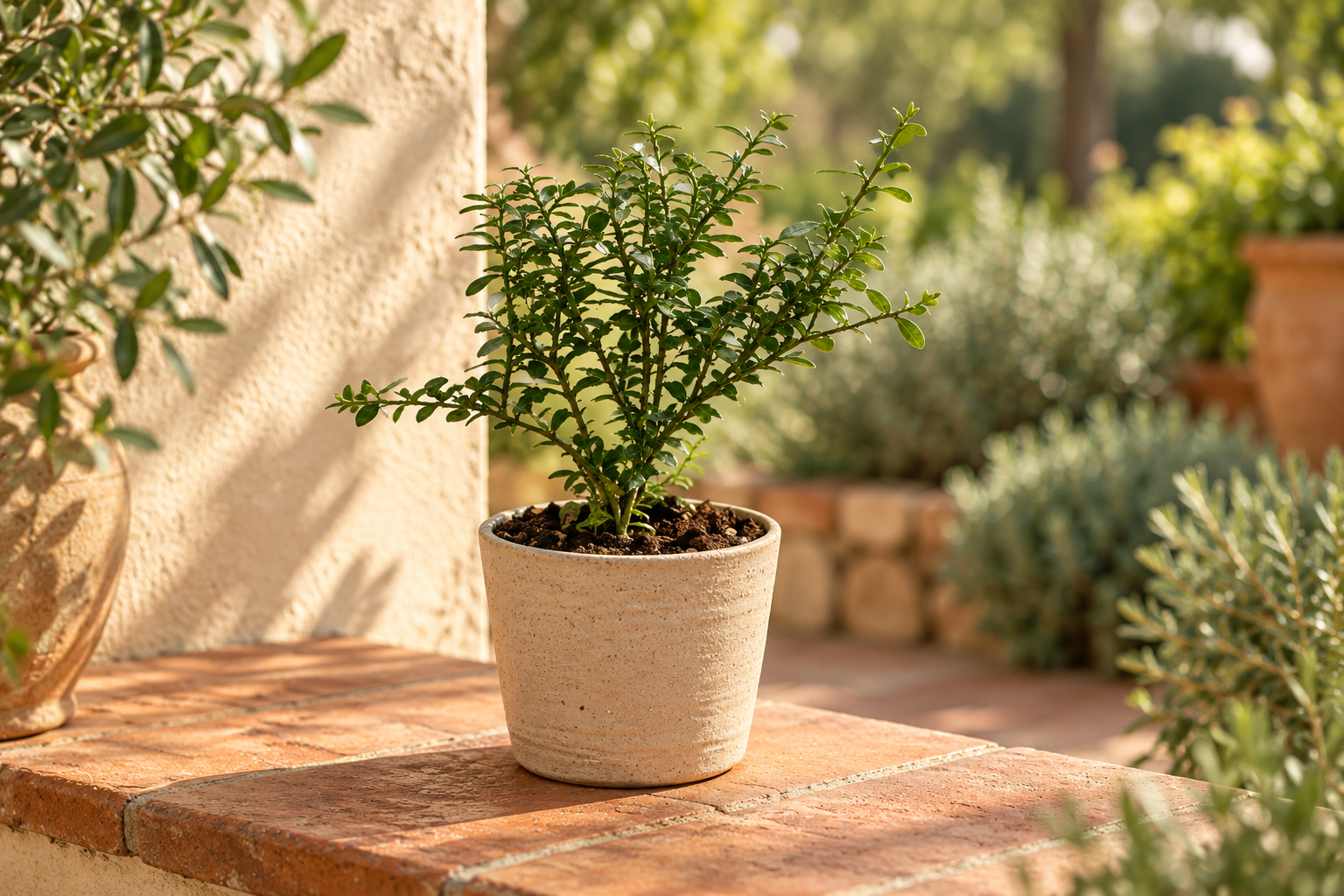
This plant at Exotenherz
Check the shop offer for current availability, price and what is included.
Check the shop for the current price, availability and offer contents.
Your care table
| Topic | What to do | Why it helps |
|---|---|---|
| Summer position | Choose a bright to sunny sheltered place. | Acclimatise gradually to outdoor light. |
| Winter | Keep very bright and frost-free. | The young pot root ball is not a frost-hardy outdoor tree. |
| Water | Reliably supply the root ball during growth. | The small pot can dry quickly. |
| Drainage | Allow water to drain and empty the cover pot. | Avoid permanently wet roots. |
| Compost | Choose structurally stable free-draining citrus compost. | Moisture and air belong together. |
| Repotting | Give only a little more room in spring when roots fill the pot. | An oversized pot waterlogs more easily. |
| Nutrients | Use suitable citrus fertiliser according to the label. | Consider light and growth condition. |
| Shoots | Handle possible thorns carefully. | Do not unnecessarily shape the young shrub heavily. |
Check the compost and pot weight. The care table explains how far the compost may dry.
Water only when needed. The water should reach the root ball without spilling over the rim.
Remove surplus water from the saucer or cachepot. Then return the plant to a suitable position.
It begins as a fine green shrub
A young finger lime initially appeals through its small leaves and fine branching. The elongated fruits, with flesh consisting of small juicy pearls, give the plant its name. The specific original, however, shows a young green plant, not a heavily cropping fruit tree. We therefore show no invented harvest on the assortment plant. The colour of ripe fruits and their pearls depends on variety; no named selection is evidenced here. Citrus australasica and the shop name Microcitrus australasica refer to the same plant, not two different delivery plants.
Twenty centimetres is a beginning, not a tree limit
The offer states a 12 cm pot and around twenty centimetres total height. Small branches look appealing on a sheltered terrace. The species can later grow substantially larger; pot and cultivation influence its development. When unpacking, do not pull the crown out by thin shoots. Handle thorny parts carefully. Place the nursery pot in its cover pot so you can reach soil and drainage. Decoration in the scene is a design idea and says nothing about supplied fruits or accessories.
Summer light with a sheltered transition
A bright to sunny sheltered summer position suits container cultivation. Gradually acclimatise a plant from protected surroundings to direct sun and wind. Year-round planting in a German garden is not promised. Slight frost tolerance at an Australian natural site provides no reliable protection for a young pot root ball. Plan the winter position before autumn. A dark warm indoor corner is no more a complete citrus solution than an unprotected frosty balcony. Light, temperature and space belong together in the position decision.
The young root ball should not dry out in summer
Check the soil during growth and supply the small root ball reliably. Prefer rainwater and let excess drain freely. It must not stand inside closed cover pots. Beneath a roof, a rain shower may not reach the roots. In winter the surface may dry slightly before the next watering; cooler conditions and less light often reduce consumption. Assess leaf fall alongside root-ball moisture and position. Do not keep watering wet heavy soil simply because a leaf looks sad.
Container structure supports later growth
Structurally stable free-draining citrus compost is a suitable starting point. Give only slightly more pot space in spring when roots clearly fill the container. A very large pot around a small root ball easily stays wet too long. During suitable growth, feed according to an appropriate citrus fertiliser label and account for pre-feeding. Do not constantly prune healthy fine branches into an artificial standard. Individual interfering or dead shoots can be removed selectively. Check leaves and bases for unusual deposits; extra nutrients do not replace this short observation.
The fruit story needs patience
A young-plant offer does not promise harvesting next summer. Age, propagation method, cultivation and light influence entry into fruiting. Seedlings can take a very long time; a grafted origin is not claimed here. First document new branches in the plant book and later any flowers. Australia lies in the other hemisphere, so its harvest months are not transferred unchanged to a German calendar. Enjoying the fine plant begins well before its first finger lime.
One plant, several views



Good to know
Why is it called caviar lime?
The pearl-like flesh of ripe finger limes resembles small caviar beads.
Does the young delivery plant already bear fruit?
The specific original shows a green young plant; fruits are not promised.
What colour are the fruits?
The unnamed variety permits no fixed fruit or flesh colour.
Can it overwinter in the garden?
Plan a very bright frost-free winter position for this young container plant.
Are Microcitrus and Citrus different plants?
Microcitrus australasica is a commonly used older name for the finger lime described here.
Sources and editorial note
- Exotenherz: offer and original photographs (03.10.2026)
- Australian National Botanic Gardens – finger lime, species and juvenile phase (03.10.2026)
- RHS – container citrus through the year (03.10.2026)
Shop offer, article number, GTIN, availability and original images checked directly on 02.10.2026; specialist acceptance on 03.10.2026. Specialist sources read directly. SKU, pot reference, original photographs and orderability checked in the shop on 03.10.2026. Delivery height and species development separated. Specialist sources actually read; six individual sections, eight care points and five FAQs editorially compared. Currently not orderable: informational portrait without a purchase link or social-send clearance. No tool, Wawi or server changes. Currently not orderable: informational portrait without a purchase link; social drafts not cleared for sending.