This plant at Exotenherz
Check the shop offer for current availability, price and what is included.
Product and delivery details are given in the individual offer.
Your care table
| Topic | What to do | Why it helps |
|---|---|---|
| Unpacking | Carefully examine tufts and existing moisture. | Natural pieces differ in shape, colour and thickness. |
| Position | Keep sheltered in subdued daylight. | Hot direct sun and dry heating airflow make even moisture harder to maintain. |
| Checks | Check an accessible tuft edge and support together. | A dry tip and a wet underside may occur together. |
| Moistening | Slowly add small amounts of water when needed. | Even slight moisture does not require deep water. |
| Arrangement | Lay undersides loosely on moist contact surfaces. | Firm pressing takes the fine shoots’ loose structure away. |
| Neighbours | Leave plant bases accessible and check their substrate separately. | A moist moss layer does not describe another plant’s root-ball condition. |
| Nutrients | Use no additional liquid fertiliser for initial setup. | The unidentified trade group receives no transferred wild-species feeding plan. |
| Glass display | Observe persistent condensation and standing water. | A closed container retains water longer than an open bowl. |
| Ongoing care | Compare moisture and visible structure again after moving. | Evaporation and warming change with light, room air and season. |
Check the compost and pot weight. The care table explains how far the compost may dry.
Water only when needed. The water should reach the root ball without spilling over the rim.
Remove surplus water from the saucer or cachepot. Then return the plant to a suitable position.
Pointed leaves and irregular tufts
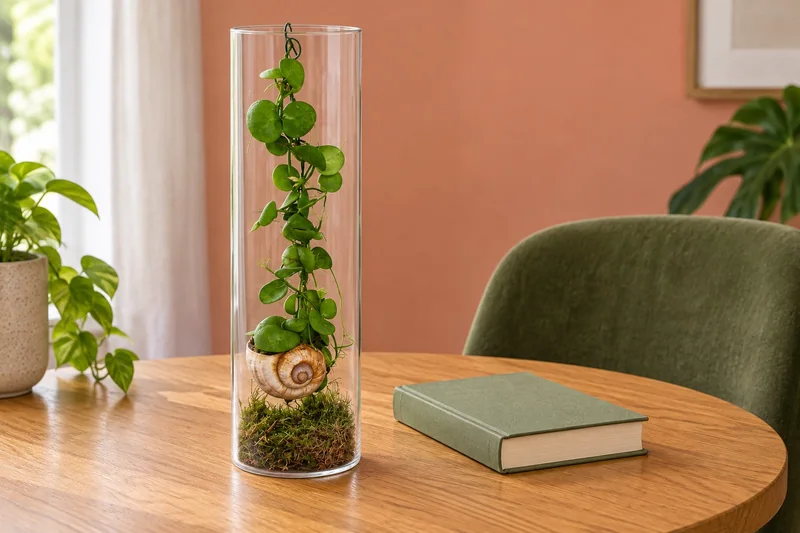
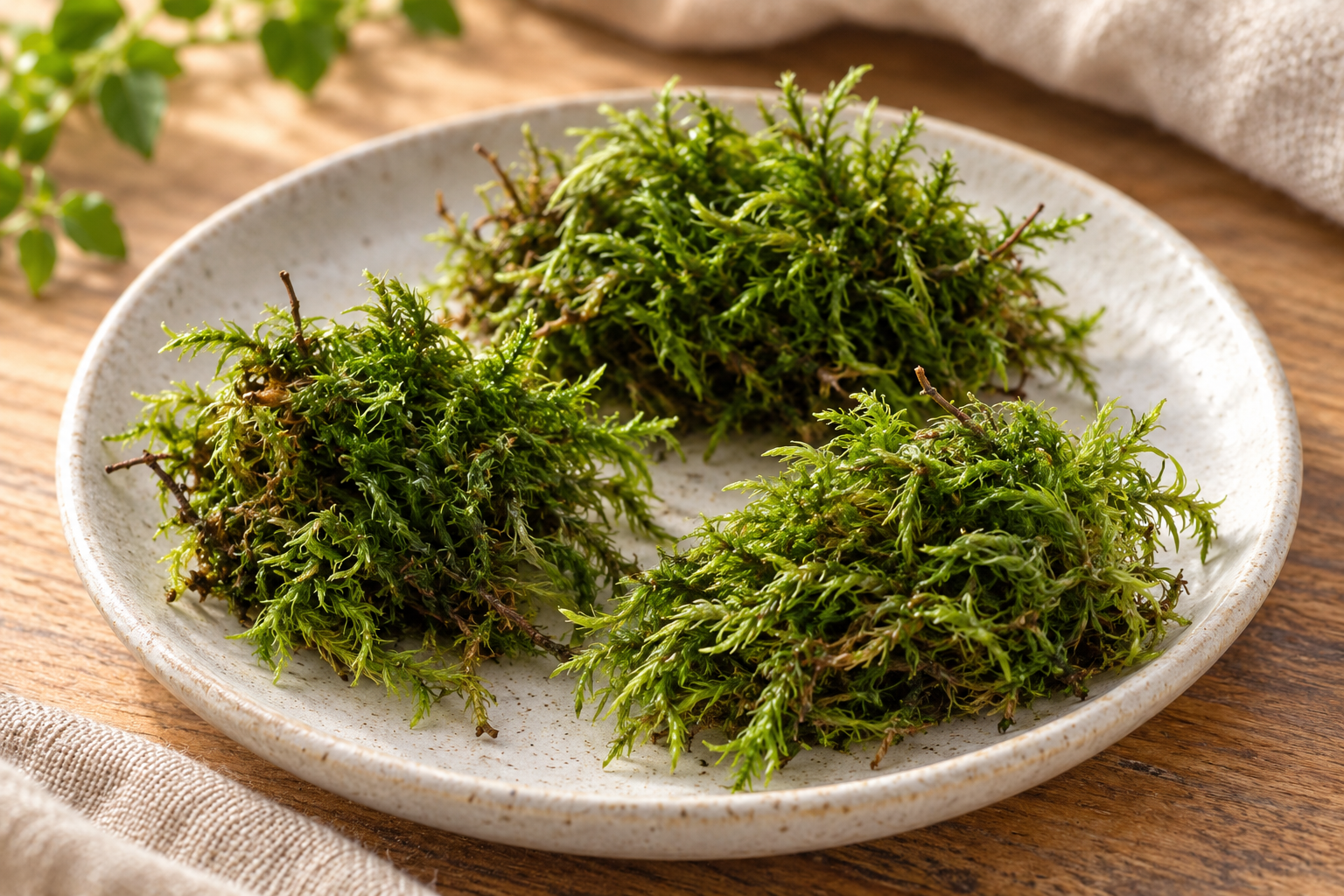
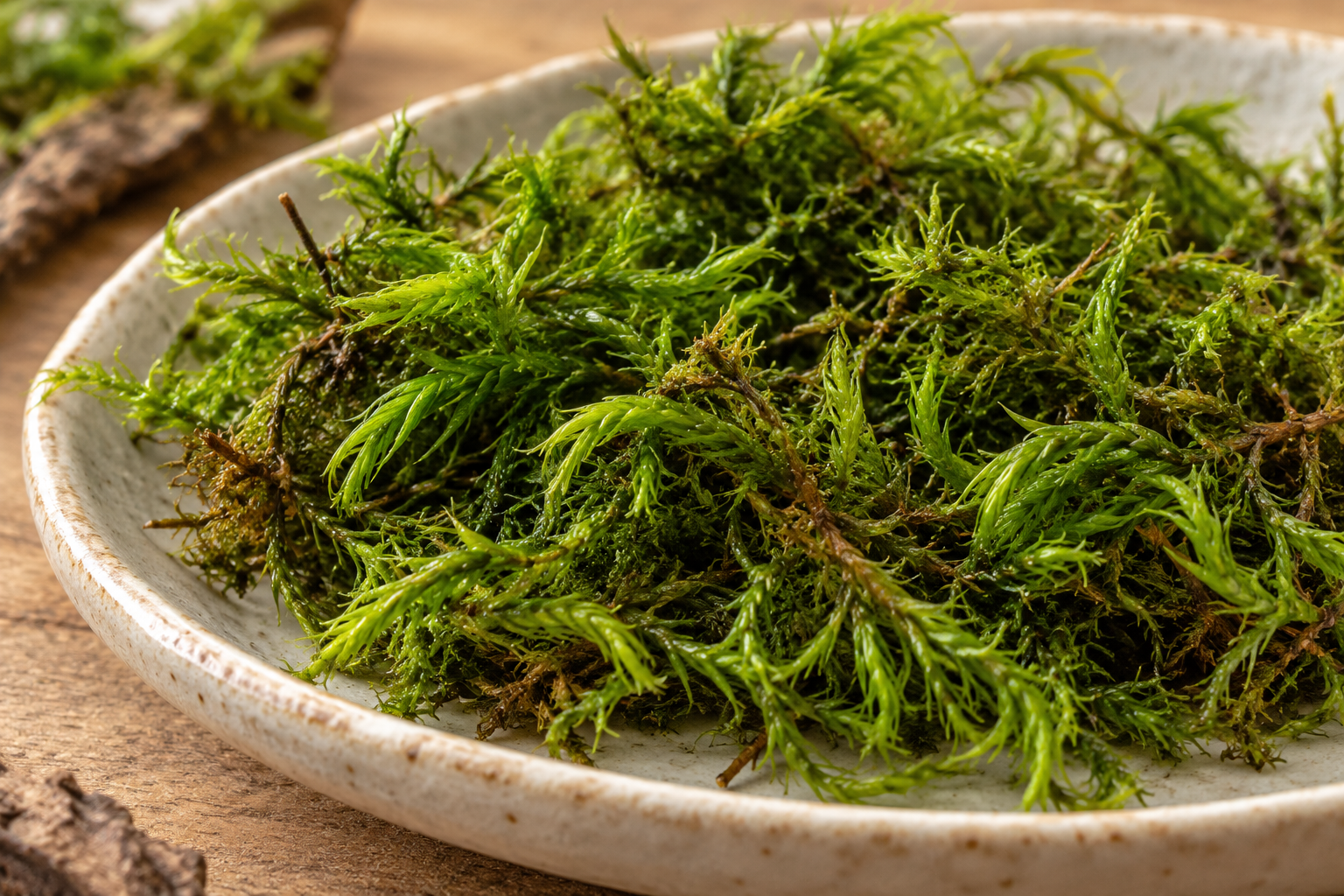
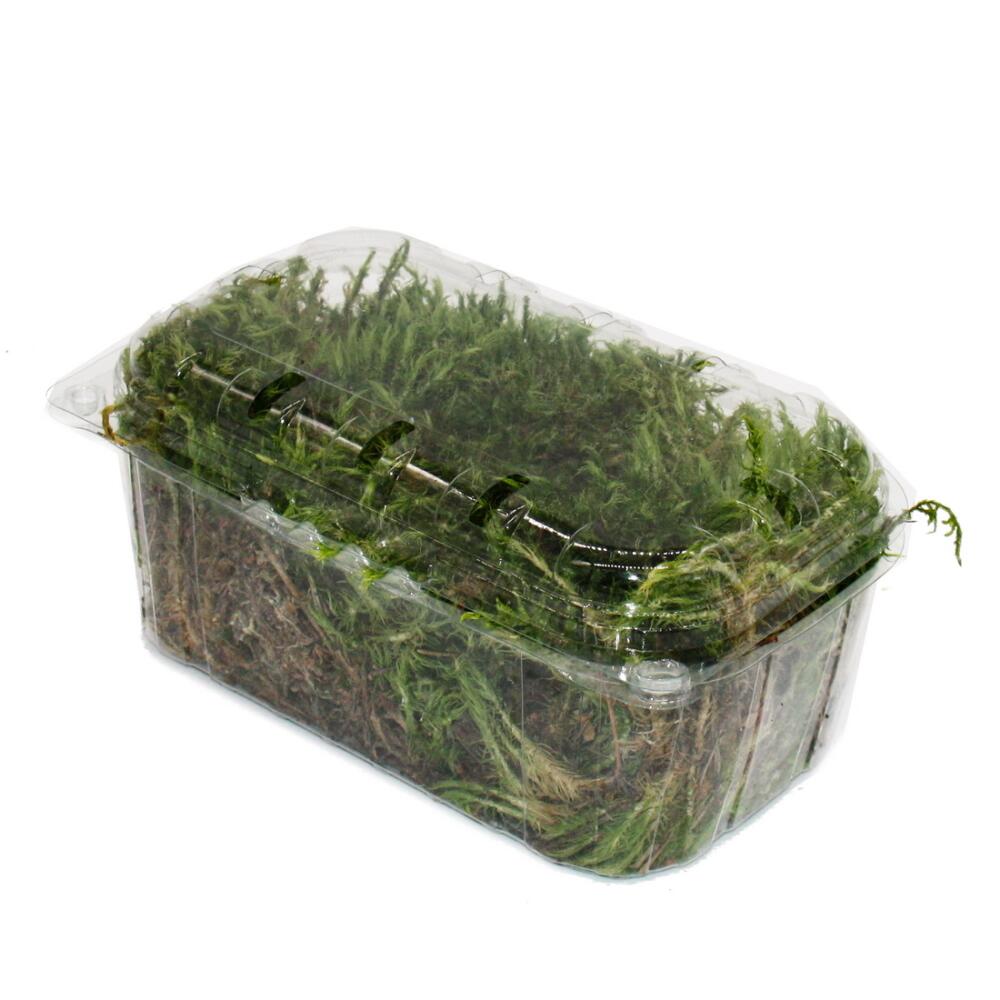
In this small box, Gabelzahnmoos has a lively, slightly tousled surface. Many narrow pointed leaves sit on short shoots; some visibly lean in the same direction. Darker green areas sit beside yellow-green tips and brown undersides. Small twigs remain visible between them. When you gently lift a piece, it looks less like a smooth mat than a bundle of fine shoots. This irregular structure is especially attractive in a planted bowl: a few loosely arranged tufts leave small spaces and show leaves from different sides. The AI scene takes up this design; its ceramic bowl and planting table are decoration, not additional delivery items.
What the name and small box describe
The offer lists the material as Gabelzahnmoos and also names Dicranales. This botanical term denotes an order, not an individual species. The portrait therefore remains with the offered trade group. Similar-looking mosses may require precise examination of leaf features; a photograph fixes no particular Dicranum species here. According to the shop description, the material comes fresh and untreated for decorating and planting. The approximately twenty by twelve by twelve centimetres belong to the outer packaging. The accompanying quantity of approximately thirty cubic centimetres is not a confirmed fill volume. Plan with actual pieces rather than deriving bowl area, plant height or piece count. Shape, moisture and small natural associated elements may vary from box to box.
Choose shelter with a view of the surface
For initial setup, a clearly visible container that needs no rearranging to inspect helps. General moss displays combine moisture with a sheltered, often shaded position. Indoors, subdued daylight without hot window sun or direct dry heating airflow suits. Fine shoot tips lie in the air and are exposed differently from undersides. Even moist material may heat up behind strongly sunlit glass. An open small bowl makes these differences easier to reach than a deep glass planted densely at once. Initially check more often how surface and contact layer respond before making a larger display or moving the container.
Moisten moss and contact surface together
There is no ordinary pot root ball here to judge by inner-pot weight. Mosses carry fine leaves on shoots and have rhizoids rather than usual plant roots. Check an accessible tuft edge and the support together. If some upper tips are drier but wet areas remain below, do not immediately flood the whole bowl. Add a little water slowly when needed and observe its distribution. The goal is evenly slightly moist contact, not deep water with floating pieces. A short spray may wet visible tips but does not show actual underside moisture. Timing follows material and container, not a fixed number of weekly watering sessions.
Preserve the loose form when arranging
First prepare a small moist contact area and lay a tuft on it without pressing its tips firmly into the support. The browner underside may rest against it while the green structure remains loose. Do not pull large pieces apart merely to obtain a seamless carpet. You may arrange them with gaps and move them later if some edges dry faster. Loose twig remains can be removed gently; the material need not look entirely free of every natural associated part. In a shared bowl, tufts must not cover neighbouring plant bases so densely that their condition is hidden. Check their substrate supply separately. Moisture in a moss surface layer is no reliable substitute for checking other plants underneath.
Interpret changes calmly without a quick cure
According to the shop, moss kept dry becomes lighter and browner. This observation does not explain every individual shoot’s condition. Brown undersides may already be present on unpacking; a later unusual area may prompt closer checks of light, moisture and support. Green foliage gives no certain continued-growth promise, just as dryness provides no guaranteed revival with water. Begin without extra liquid fertiliser and without a feeding plan from an unidentified wild species. Constantly adding water is not an answer to every colour change. If the support smells unusual or water visibly collects, check setup and air exchange before combining further care actions.
Accompany small displays over time
Glass containers and open bowls lose moisture at different rates. In a closed container, strong persistent condensation, dripping walls and completely wet contact surfaces mean moisture and air exchange need another look. In winter, heating warmth may put greater stress on exposed tips; in summer, window heating matters more. Check both sides of pieces again after moving. Do not use an expected future carpet as your standard; observe the existing tufts and their delicate form. This material differs from dense Kugelmoos cushions and Sphagnum with star-like heads. The small bowl remains an accessible display where moisture and visible structure can be followed carefully.
One plant, several views


Good to know
Is this definitely Dicranum scoparium?
No. Gabelzahnmoos is an unidentified trade group here. Dicranales denotes an order; the shop box is not assigned to a particular Dicranum species.
What does 20 × 12 × 12 cm mean?
This is the outer packaging. It describes neither tuft height nor number or later area.
How do I plan the quantity?
The approximately 30 cm³ stated is not confirmed fill volume. Ask the supplier for exact planning and account for the pieces actually present when arranging.
Should moss stay underwater?
No. Keep material and contact surface slightly moist without floating pieces in deep water. Check underside and tips together.
Is daily spraying enough?
A spray may wet the surface but says nothing about the support. Actual condition decides; there is no fixed daily or weekly plan here.
Will every tuft keep growing in the bowl?
This is not promised for the offered pieces. Fresh and untreated describes material but proves neither continued growth nor reliable regeneration.
Why are brown areas still visible?
The originals already show green tips and browner undersides. For changes, check moisture, light and support; colour alone is not a complete diagnosis.
Sources and editorial note
- Exotenherz: exact material box and own gallery (05.10.2026)
- BIBS: Dicranum as an identification comparison (05.10.2026)
- RHS: general moss design (05.10.2026)
- GBIF: Dicranales, order rank (05.10.2026)
- RHS: mosses and lichens, general classification (05.10.2026)
Shop offer, original images and expert sources checked on 05.10.2026. Current availability in the shop.