This plant at Exotenherz
Check the shop offer for current availability, price and what is included.
Check the selected shop offer for price, availability and delivery contents.
Your care table
| Topic | What to do | Why it helps |
|---|---|---|
| Position | Choose sun or bright partial shade with leaf surfaces free. | Low perennial should keep light among neighbours. |
| Arrival | Check rootball moisture and plant base; unpot carefully. | A few juvenile leaves do not yet describe summer planting. |
| Soil | Prepare moderately nutrient-rich soil with reliable drainage. | A gravel covering replaces no drained root zone. |
| Planting | Set at former rootball depth and water thoroughly. | Soil should contact without deeply burying leaf base. |
| Spacing | Assess about 40–50 cm guidance and consider neighbours. | Sideways growth needs more room than the 9 cm pot. |
| Water | During rooting check small rootball; slowly moisten thoroughly as needed. | Later drought tolerance develops only in greater soil space. |
| Feeding | In good garden soil usually start without extra fertiliser. | Weak growth may equally involve light, moisture or roots. |
| Pruning | Remove old flower stems and unattractive leaves; preserve new basal growth. | Fresh foliage and possible further flowers gain room. |
| Winter | Spare perennial base, ensure drainage and protect small containers. | Deciduous leaves die back; buds and roots stay alive. |
For young plants, feel the soil directly at the root ball. The surface and deeper soil may have different moisture levels.
Water thoroughly after planting; later, water according to the soil, weather and establishment rather than a fixed calendar.
Avoid standing water. For plants in containers, also check that water runs out of the drainage hole.
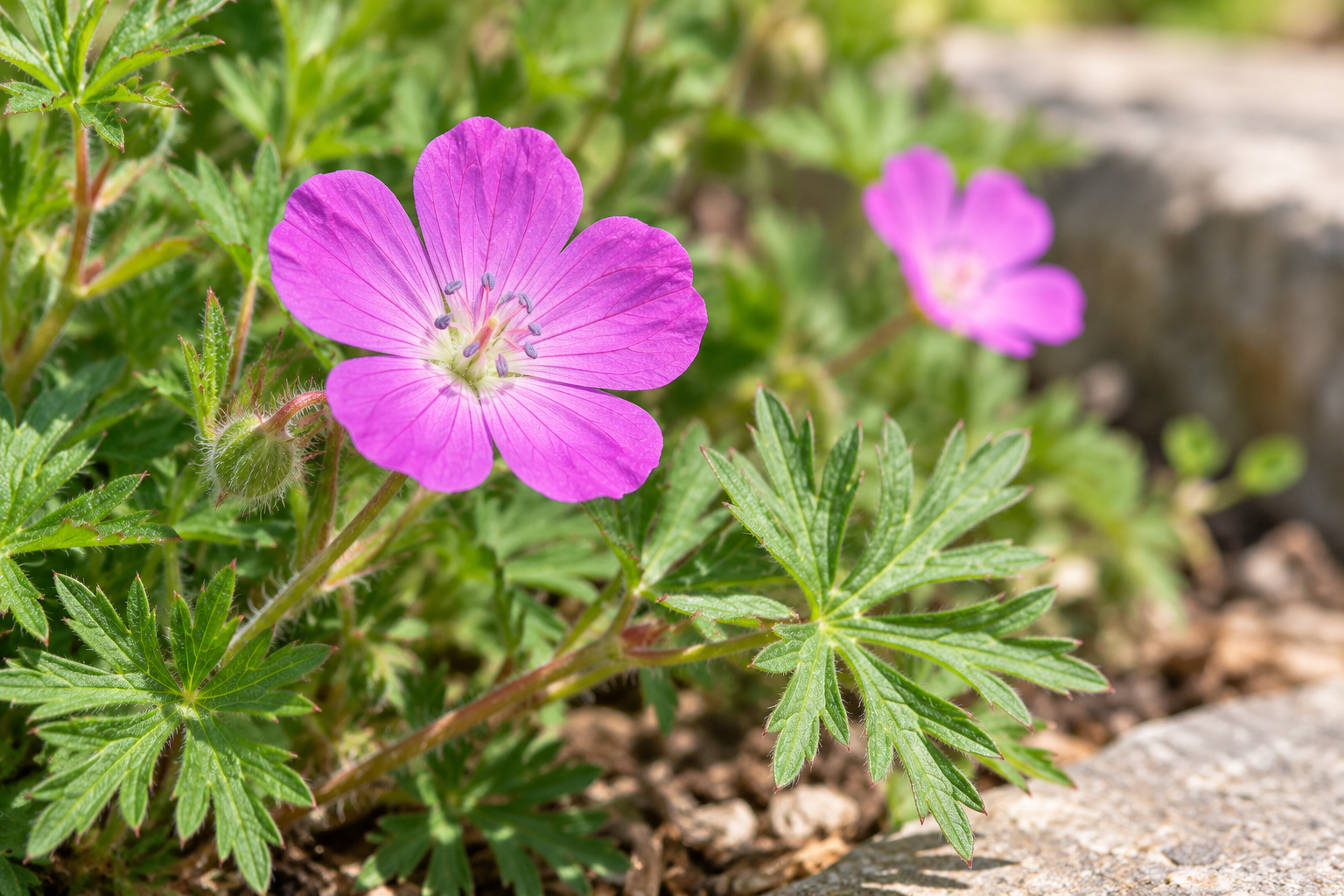
Dark veins draw the flower bowl
Open bloody-cranesbill flowers have five broad magenta-pink petals. Darker veins lead to a pale centre with fine stamens. Surrounding green leaves divide into narrow deeply cut lobes. Light remains visible between foliage even as the perennial grows into a small cushion. A low garden edge makes details accessible. Geranium sanguineum belongs to Geraniaceae and originates from temperate Europe to western Siberia and the Caucasus. It is a persistent garden perennial; balcony pelargoniums often offered as geraniums have different cultivation habits.
Look calmly at the little plant first
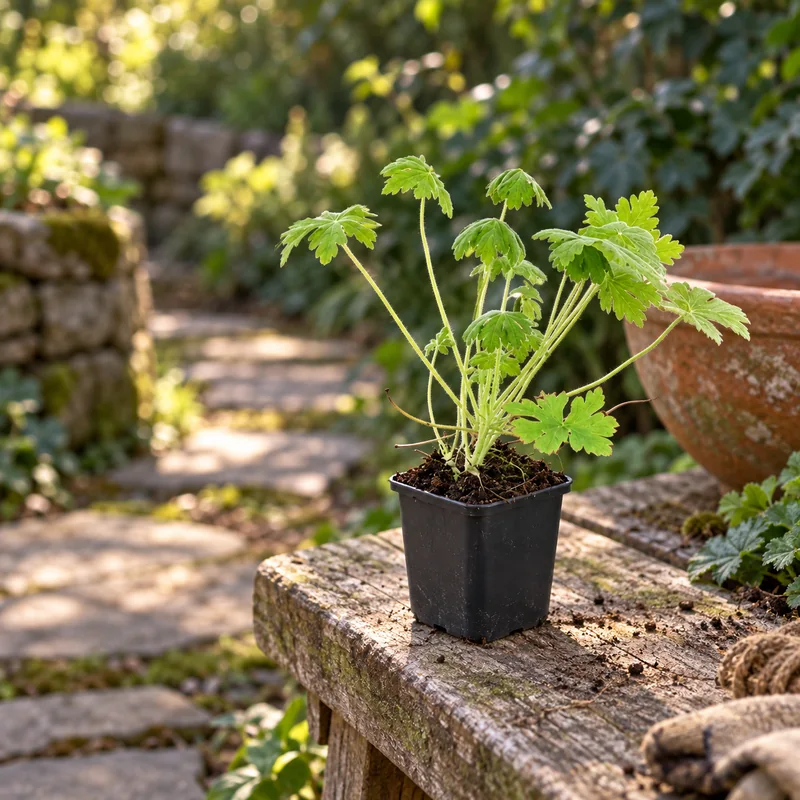
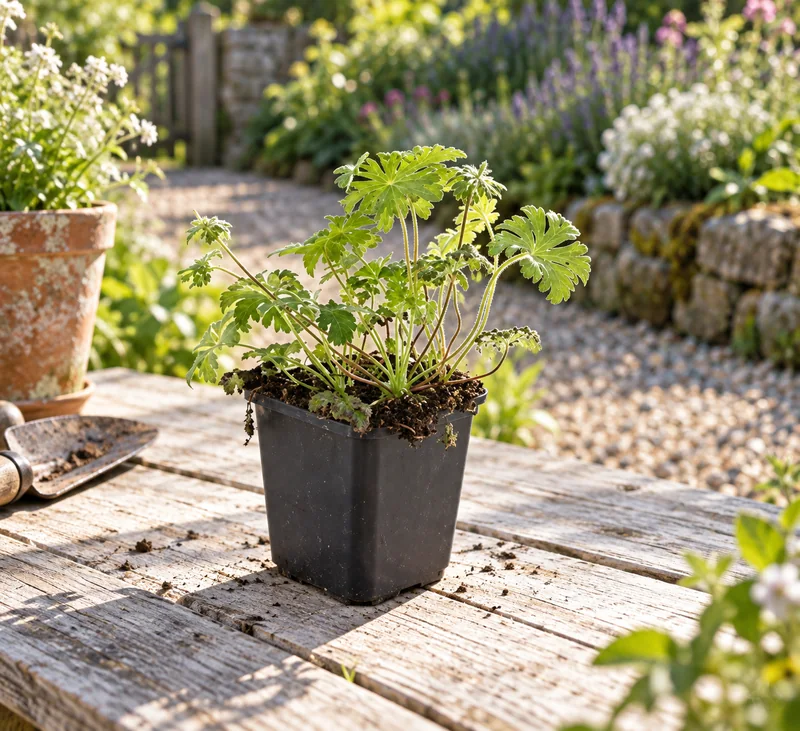
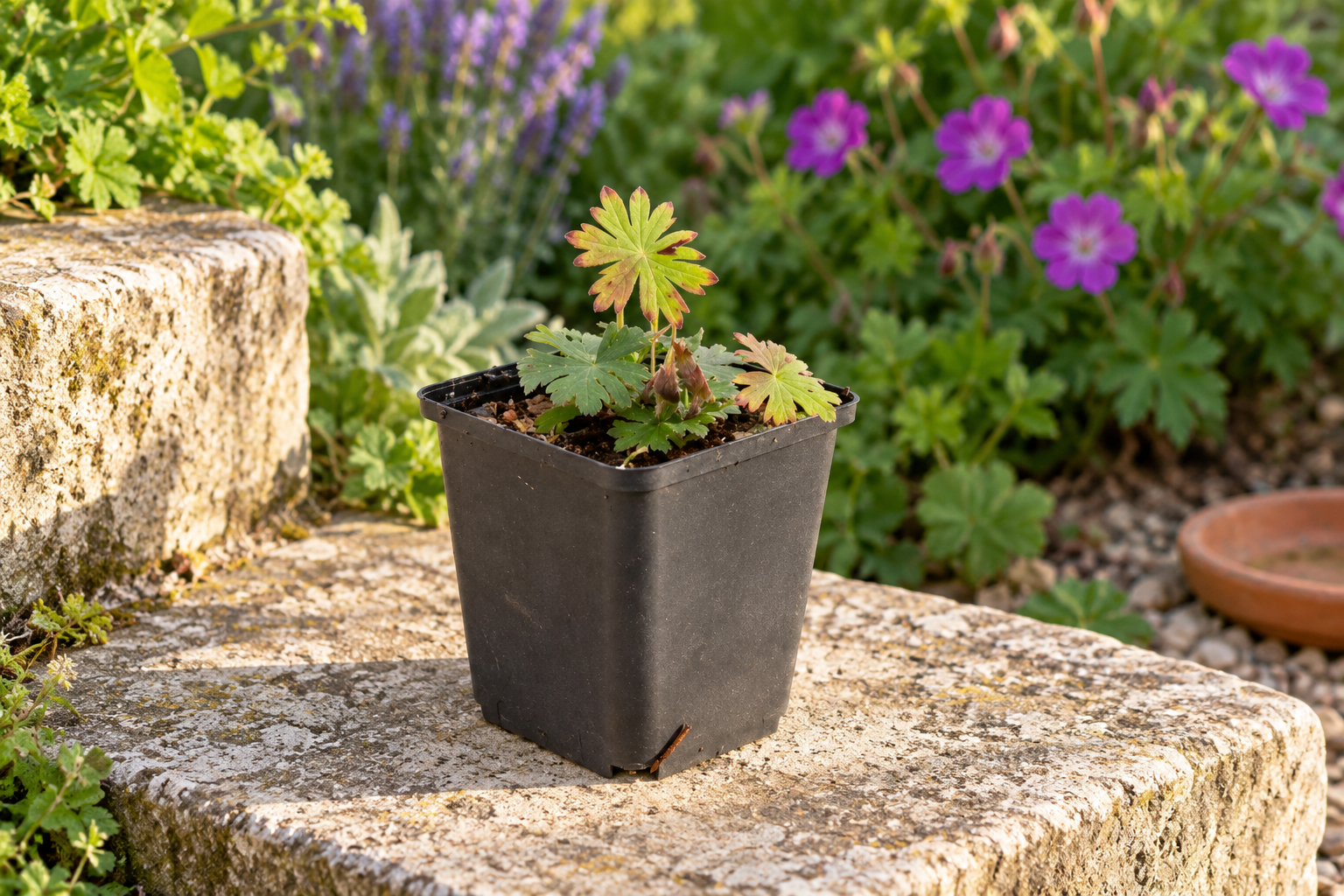
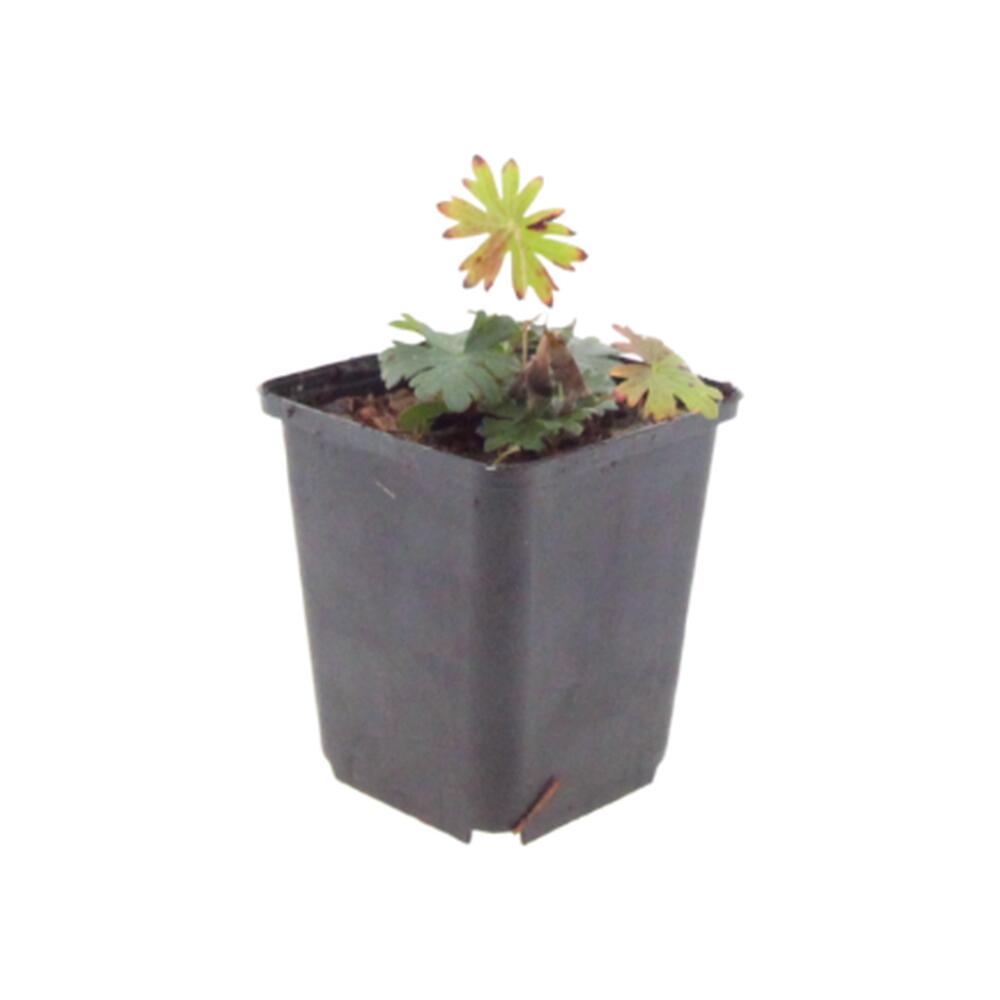
Offers contain young plants in 9 cm pots at around 10–25 cm total height including pot. Choose quantity for the intended area; currently linked sets have six, twelve, 24, 48 or 60 plants. Clean original shows a small start with few lobed leaves, still without summer flowers. This condition is a reasonable starting point. After unpacking inspect rootball moisture and base. Hold rootball when unpotting and release a stuck pot carefully instead of pulling fine stems. Later garden height about 20–50 cm describes developed planting.
The sunny edge needs soil beneath stones
Sun or bright partial shade suits this species. Beside a path or among lower companions flowers stand out well. Soil may be moderately nutrient-rich and should drain excess water. Loamy soil can suit too provided no constantly wet planting spot develops. Check actual root zone below decorative gravel. A compacted layer is not made permeable by surface stones. Conversely a dusty dry narrow gap is no good start for a little delivery rootball. Taller neighbours should not later entirely cover low foliage.
Distribute first, then set rootballs
Stand pots loosely on prepared area first. Around 40–50 cm between planting positions is horticultural guidance based on possible later width around 50–60 cm. How loose an edge stays also depends on neighbours. Set at previous rootball depth, connect soil at the sides and water thoroughly. Spring eases start; early autumn may fit well-drained soil too. With heavy winter-wet soil spring is better. Frost, heat and sodden soil are poor workdays. Gaps remain initially open and need checks for competing wild plants.
A dry summer needs a look below foliage
Established bloody cranesbill can tolerate temporary drought. Newly planted specimens initially use only a small rootball and need reliable checks in their first spring and summer. Inspect moisture there and water slowly thoroughly as needed. Many little splashes chiefly wet the surface; a well-moistened root zone is more useful. In containers reserves stay limited, so rootball checks and free drainage remain important. Properly prepared garden soil usually needs no extra fertiliser. Assess weak growth alongside soil, light and moisture before adding appropriate fertiliser by label.
After flowers make room for fresh leaves
Faded stems and unattractive older foliage can be removed. Look below the cushion before cutting: fresh basal leaves should remain. Gentle tidying can encourage new growth and further flowers but secures no complete second flush. In dry weather check soil moisture after stronger cutting too. Older planting can be divided in spring or suitable autumn if too wide. Healthy rooted pieces return to prepared positions and receive their own initial water care. Beak-shaped seed capsules explain the German name; under suitable conditions the species can also self-seed.
Red autumn foliage is part of the yearly picture
Leaves may take red to burgundy tones in autumn before deciduous planting retreats. One red leaf alone is therefore no reason for extra fertiliser. In winter living buds and roots remain below the dormant surface. Protect small outdoor containers from heavy freezing through and prolonged wetness; roots are more exposed than in garden soil. In spring carefully remove dead remnants. With notable leaf spots, coatings or feeding damage check plant health and soil together. A wilting pot may be dry but may also have damaged roots. More water on suspicion solves neither reliably.
One plant, several views
Good to know
Is bloody cranesbill a balcony geranium?
Geranium sanguineum is a perennial garden plant. Usual balcony pelargoniums belong to another plant group.
When should I expect flowers?
Early summer and summer, often June–August. Warm locations may start earlier; young delivery need not yet flower.
How much room does a group need?
About 40–50 cm between positions is horticultural guidance from later sideways growth. Allow more room for loosely spaced single cushions.
Does it tolerate drought immediately after planting?
Small rootball initially needs controlled moisture. Drought tolerance described for established plants does not replace this water start.
Must each individual flower be removed?
Usually unnecessary. Tidy faded stems and unattractive foliage as needed without cutting fresh basal leaves.
Are red autumn leaves damage?
They can be seasonal colour. Also assess rootball, roots and fresh shoots if wilting happens outside the usual yearly pattern.
Sources and editorial note
- Exotenherz: current plant offer and original gallery (03.10.2026)
- Directly read specialist reference: sanguineum-rhs (03.10.2026)
- Directly read specialist reference: geranium-growing (03.10.2026)
- Directly read specialist reference: sanguineum-ncsu (03.10.2026)
- Directly read specialist reference: sanguineum-kew (03.10.2026)
- Exotenherz: directly checked 6-plant child offer (03.10.2026)
- Exotenherz: directly checked 12-plant child offer (03.10.2026)
- Exotenherz: directly checked 24-plant child offer (03.10.2026)
- Exotenherz: directly checked 48-plant child offer (03.10.2026)
- Exotenherz: directly checked 60-plant child offer (03.10.2026)
Public shop offer, originals and directly read specialist sources checked on 03.10.2026. Young deliveries, later development and winter care separated. Shared page view and publication still require Root acceptance.